• Wyszukiwanie zaawansowane
  • Kategorie
  • Kategorie BISAC
  • Książki na zamówienie
  • Promocje
  • Granty
  • Książka na prezent
  • Opinie
  • Pomoc
  • Załóż konto
  • Zaloguj się

Monetary Economics » książka


zaloguj się | załóż konto
Logo Krainaksiazek.pl

koszyk

konto

szukaj
topmenu
Księgarnia internetowa
Szukaj
Książki na zamówienie
Promocje
Granty
Książka na prezent
Moje konto
Pomoc
 
 
Wyszukiwanie zaawansowane
Pusty koszyk
Bezpłatna dostawa dla zamówień powyżej 20 złBezpłatna dostawa dla zamówień powyżej 20 zł

Kategorie główne

• Nauka
 [2946600]
• Literatura piękna
 [1856966]

  więcej...
• Turystyka
 [72221]
• Informatyka
 [151456]
• Komiksy
 [35826]
• Encyklopedie
 [23190]
• Dziecięca
 [619653]
• Hobby
 [140543]
• AudioBooki
 [1577]
• Literatura faktu
 [228355]
• Muzyka CD
 [410]
• Słowniki
 [2874]
• Inne
 [445822]
• Kalendarze
 [1744]
• Podręczniki
 [167141]
• Poradniki
 [482898]
• Religia
 [510455]
• Czasopisma
 [526]
• Sport
 [61590]
• Sztuka
 [243598]
• CD, DVD, Video
 [3423]
• Technologie
 [219201]
• Zdrowie
 [101638]
• Książkowe Klimaty
 [124]
• Zabawki
 [2473]
• Puzzle, gry
 [3898]
• Literatura w języku ukraińskim
 [254]
• Art. papiernicze i szkolne
 [8170]
Kategorie szczegółowe BISAC

Monetary Economics

ISBN-13: 9780860105626 / Angielski / Miękka / 1985 / 372 str.
Brian Kettell; B. Kettell
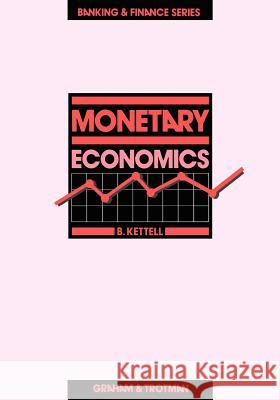
Monetary Economics Brian Kettell B. Kettell 9780860105626 Graham & Trotman, Limited - książkaWidoczna okładka, to zdjęcie poglądowe, a rzeczywista szata graficzna może różnić się od prezentowanej.

Monetary Economics

ISBN-13: 9780860105626 / Angielski / Miękka / 1985 / 372 str.

Brian Kettell; B. Kettell
cena 201,72 zł
(netto: 192,11 VAT:  5%)

Najniższa cena z 30 dni: 192,74 zł
Termin realizacji zamówienia:
ok. 22 dni roboczych
Bez gwarancji dostawy przed świętami

Darmowa dostawa!

rhe Banking and Finance Series has been written for students who are preparing for the Associateship of the Institute of Bankers. The structure of the series follows the syllabus closely. Although the emphasis is on the Institute of Bankers' examinations the series is also relevant to students for other professional examinations such as the different Accountancy Bodies, Chartered Secretaries, Diploma in Public Administration, undergraduate business courses, BTEC, BEC, HND, DMS, Stock Exchange courses, Associ- ation of Corporate Treasurers, Institute of Freight Forwarders, Institute of Export. Brian Kettell May 1985 Series Editor xi Preface This book has been written for students who are preparing for the Associate- ship of the Institute of Bankers. The structure of the book follows closely the syllabus for Monetary Economics, but is also relevant for some of the Stage I papers. In addition it is also directly relevant to the Monetary Economics Paper for the Association of Corporate Treasurers. Although the emphasis has been on the Institute of Bankers examination the book covers the monetary economics courses taught in Advanced Level Economics, and is relevant to students for the finals of other professional examinations such as the different Accountancy Bodies, the Chartered Secretaries, and the Diploma in Public Administration.


Kategorie:
Nauka, Ekonomia i biznes
Kategorie BISAC:
Business & Economics > Ekonomia monetarna
Business & Economics > Finance - General
Business & Economics > Makroekonomia
Wydawca:
Graham & Trotman, Limited
Seria wydawnicza:
Seabed Minerals Series
Język:
Angielski
ISBN-13:
9780860105626
Rok wydania:
1985
Wydanie:
Softcover Repri
Numer serii:
000157131
Ilość stron:
372
Waga:
1.50 kg
Wymiary:
25.4 x 17.8
Oprawa:
Miękka
Wolumenów:
01

1 The Concept of Money.- Money — evolution and functions.- From paper money to bank deposits.- The cheque clearing system.- The characteristics of money.- Liquidity.- The quantity theory of money — the basis of monetarism.- How money affects the economy — the transmission mechanism.- The measurement of the money supply.- Domestic credit expansion.- A key issue in monetary theory.- Appendix 1.- Measuring changes in the value of money-price index numbers.- Monetary statistics.- 2 The United Kingdom Financial System.- The functions of a financial system.- The monetary sector.- Recognised banks.- The Bank of England.- Policy and markets.- Corporate services.- Finance and industry.- Banking supervision.- Operations.- The functions of the Bank of England.- The banking role.- The note issue.- The gilt-edged market.- Balance sheet management of the clearing banks.- The balance sheet items of the clearing banks: definitions.- Other financial institutions (OFIs).- Building societies.- Life insurance and pension funds.- Unit trusts and investment trusts.- The 1979 UK Banking Act — The background to the legislation.- The Banking Act 1979 — The legislation.- The supervision and monitoring proposals — the post-banking Act position.- Appendix 1.- Summary Capital Accounts and Financial Surplus or Deficit: Analysis by Sector.- 3 Money Markets.- What is a money market?.- The London money market.- The discount market.- Functions of the discount houses.- The parallel markets.- The inter-bank market.- The local authority market.- The inter-company market.- Finance house market.- The Eurocurrency markets.- Money markets and the financial press.- Appendix 1.- Assets held by the discount market 1962–1984.- 4 The Money Supply.- The bank credit multiplier.- Can the banks manufacture money indefinitely?.- The major influences on UK money supply changes.- The public sector.- The private sector.- The external sector.- The major controls influencing recent monetary growth.- Monetary control implications.- Recent developments.- Can the authorities control the money supply?.- Appendix 1.- External and foreign currency counterparts relationship with the balance of payments.- Appendix 2.- Links between balance of payments financing, External Finance of the PSBR and Sterling M3 in 1982.- 5 Interest Rates.- Function of interest rates.- Determination of interest rates, demand and supply of funds.- The supply of funds.- The demand for funds.- Interest rate determination.- International factors affecting interest rates.- The term structure of interest rates.- Default risk.- The role of inflation.- Indexation — is it desirable?.- The determination of retail bank’s base rate.- Appendix 1.- Price and yield — a key relationship.- 6 Aspects of Monetary Theory.- Monetarists and the quantity theory of money.- An extension of the quantity equation: the Cambridge k.- Measuring velocity.- The classical dichotomy and the neutrality of money.- The modern quantity theory: monetarism.- Cost push versus demand pull.- Keynes, money and inflation.- Macro-economic policy — is it necessary?.- The new classicists and the rational expectations school.- The Phillips curve and inflation.- The monetarists versus the Keynesian debate: its implications for monetary targets.- Experience with monetary targets.- Fiscal policy.- The role of the exchange rate.- Monetarist and Keynesian views: some further considerations.- The monetarist claim revisited.- The Keynesian claim revisited.- Classicists, monetarists and Keynesians: who is right?.- 7 Controlling Money Supply.- Criteria of efficiency in monetary control.- The goals of monetary policy.- The targets of monetary policy.- Exchange rate targets and monetary targets: the need for choice.- Intermediate indicators of monetary policy.- Instruments of monetary policy: market forces versus portfolio constraints.- Advantages of relying on market forces for monetary control.- Disadvantages of relying on market forces for monetary control.- Advantages of relying on portfolio constraints for monetary control.- Disadvantages of relying on portfolio constraints for monetary control.- Market operations: the techniques.- Portfolio constraints: the techniques.- The Public Sector Borrowing Requirement (PSBR).- Lags.- The efficiency of monetary control.- The medium-term financial strategy.- 8 International Trade and the Balance of Payments.- Why do countries trade?.- How has world trade evolved?.- What is the balance of payments and why is it important?.- The structure of the balance of payments.- The current account.- The capital account.- Official financing.- The changing nature of UK trade and payments.- North sea oil: its contribution to the UK balance ofpayments and to GNP.- The adjustment problem.- (1) Automatie adjustment.- (2) Discretionary adjustment.- Are import controls desirable?.- The arguments against.- The arguments in favour.- Appendix 1.- The invisibles account.- Appendix 2.- The capital account.- Appendix 3.- Official financing.- 9 The Foreign Exchange Market.- Exchange rate regimes.- The breakdown of the Bretton Woods system.- The impact of OPEC on the international economy.- Floating exchange rates and the new role of the IMF.- The European monetary system — the intervention systems.- Has the EMS been a success?.- Should Britain join the EMS.- The arguments in favour of EMS membership.- The arguments against membership.- Fixed versus flexible exchange rates.- The arguments for fixed exchange rates.- Arguments in favour of floating exchange rates.- Overshooting — an argument for fixed exchange rates.- Forecasting exchange rates.- The medium/long term.- Short-term influences on exchange rates.- Forecasting exchange rates by using one single variable.- 10 International Liquidity.- The International Monetary Fund.- Foreign exchange.- Central Bank gold holdings.- Special drawing rights.- How have international reserves grown over time?.- What characteristics should areserve asset possess.- Gold versus SDRs.- The “privatisation” of the creation of new international liquidity.- Lending from the first oil shock to 1981.- 11 The Euro-Currency Markets.- What are Eurocurrencies?.- Why do Eurocurrency markets exist?.- Structure of Eurocurrency interest rates.- The relationship between Eurocurrency interest rates and domestic interest rates.- The effects of controls on capital flows.- The relationship between Euromarkets and the foreign exchange market — the forward exchange market.- The Eurodollar credit multiplier.- Should the Eurocurrency markets be controlled?.- Appendix 1.- Interest arbitrage and the determination ofthe forward exchange rate.- Appendix 2.- The eurodollar credit multiplier revisited.- Further Reading.

Kettell, Brian Brian Kettell has a wealth of experience in the ar... więcej >


Udostępnij

Facebook - konto krainaksiazek.pl


Opinie o Krainaksiazek.pl na Opineo.pl

Partner Mybenefit

Krainaksiazek.pl w programie rzetelna firma Krainaksiaze.pl - płatności przez paypal

Czytaj nas na:

Facebook - krainaksiazek.pl
  • książki na zamówienie
  • granty
  • książka na prezent
  • kontakt
  • pomoc
  • opinie
  • regulamin
  • polityka prywatności

Zobacz:

  • Księgarnia czeska

  • Wydawnictwo Książkowe Klimaty

1997-2025 DolnySlask.com Agencja Internetowa

© 1997-2022 krainaksiazek.pl
     
KONTAKT | REGULAMIN | POLITYKA PRYWATNOŚCI | USTAWIENIA PRYWATNOŚCI
Zobacz: Księgarnia Czeska | Wydawnictwo Książkowe Klimaty | Mapa strony | Lista autorów
KrainaKsiazek.PL - Księgarnia Internetowa

Polityka prywatnosci - link
Krainaksiazek.pl - płatnośc Przelewy24
Przechowalnia Przechowalnia





