• Wyszukiwanie zaawansowane
  • Kategorie
  • Kategorie BISAC
  • Książki na zamówienie
  • Promocje
  • Granty
  • Książka na prezent
  • Opinie
  • Pomoc
  • Załóż konto
  • Zaloguj się

Molecular Modelling and Synthesis of Nanomaterials: Applications in Carbon- And Boron-Based Nanotechnology » książka

zaloguj się | załóż konto
Logo Krainaksiazek.pl

koszyk

konto

szukaj
topmenu
Księgarnia internetowa
Szukaj
Książki na zamówienie
Promocje
Granty
Książka na prezent
Moje konto
Pomoc
 
 
Wyszukiwanie zaawansowane
Pusty koszyk
Bezpłatna dostawa dla zamówień powyżej 20 złBezpłatna dostawa dla zamówień powyżej 20 zł

Kategorie główne

• Nauka
 [2946600]
• Literatura piękna
 [1856966]

  więcej...
• Turystyka
 [72221]
• Informatyka
 [151456]
• Komiksy
 [35826]
• Encyklopedie
 [23190]
• Dziecięca
 [619653]
• Hobby
 [140543]
• AudioBooki
 [1577]
• Literatura faktu
 [228355]
• Muzyka CD
 [410]
• Słowniki
 [2874]
• Inne
 [445822]
• Kalendarze
 [1744]
• Podręczniki
 [167141]
• Poradniki
 [482898]
• Religia
 [510455]
• Czasopisma
 [526]
• Sport
 [61590]
• Sztuka
 [243598]
• CD, DVD, Video
 [3423]
• Technologie
 [219201]
• Zdrowie
 [101638]
• Książkowe Klimaty
 [124]
• Zabawki
 [2473]
• Puzzle, gry
 [3898]
• Literatura w języku ukraińskim
 [254]
• Art. papiernicze i szkolne
 [8170]
Kategorie szczegółowe BISAC

Molecular Modelling and Synthesis of Nanomaterials: Applications in Carbon- And Boron-Based Nanotechnology

ISBN-13: 9783030327255 / Angielski / Twarda / 2020 / 594 str.
Ihsan Boustani
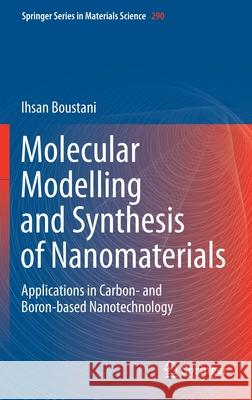
Molecular Modelling and Synthesis of Nanomaterials: Applications in Carbon- And Boron-Based Nanotechnology Boustani, Ihsan 9783030327255 Springer - książkaWidoczna okładka, to zdjęcie poglądowe, a rzeczywista szata graficzna może różnić się od prezentowanej.

Molecular Modelling and Synthesis of Nanomaterials: Applications in Carbon- And Boron-Based Nanotechnology

ISBN-13: 9783030327255 / Angielski / Twarda / 2020 / 594 str.

Ihsan Boustani
cena 605,23 zł
(netto: 576,41 VAT:  5%)

Najniższa cena z 30 dni: 578,30 zł
Termin realizacji zamówienia:
ok. 22 dni roboczych
Bez gwarancji dostawy przed świętami

Darmowa dostawa!
inne wydania
Kategorie:
Technologie
Kategorie BISAC:
Technology & Engineering > Nanotechnology & MEMS
Science > Fizyka matematyczna
Science > Nanoscience
Wydawca:
Springer
Seria wydawnicza:
Springer Materials Science
Język:
Angielski
ISBN-13:
9783030327255
Rok wydania:
2020
Wydanie:
2020
Numer serii:
000904288
Ilość stron:
594
Waga:
1.02 kg
Wymiary:
23.39 x 15.6 x 3.33
Oprawa:
Twarda
Wolumenów:
01
Dodatkowe informacje:
Wydanie ilustrowane


Foreword
Preface
I Molecular Modelling & Magic Clusters
1. Molecular Modelling
1.1. Concepts of Molecular Modelling
1.1.1. Areas of Molecular Modelling
1.1.2. The Basics of Molecular Modelling
1.2. Molecular Mechanics
1.2.1. Force Field Equation
1.2.2. Minimization Procedure
1.2.3. Optimization Methods
1.2.4. Gradient Methods
1.2.5. General Newton-Raphson Method
1.3. Molecular Dynamics
1.3.1. Trajectory and Equation of Motion
1.3.2. Initialization of Positions and Velocities
1.3.3. Verlet Algorithm
1.3.4. Leap-Frog Algorithm
1.4. Ab Initio Quantum Chemical Methods
1.4.1. Some Basics of Quantum Mechanics
1.4.2. The Hamiltonian
1.4.3. Time-dependent Schrödinger Equation
1.4.4. Hartree-Fock Theory
1.4.5. Post Hartree-Fock
1.5. Density Functional Theory
1.5.1. Kohn-Sham Equations
1.5.2. Local (Spin) Density Approximation
1.5.3. Non-Local Density-Gradient Corrections
1.5.4. Hybrid Functionals
1.5.5. Chemistry Software
2. Magic Numbers & Clusters
2.1. Atomic Clusters and Magic Numbers
2.2. What are Orbitals and Shells
2.2.1. The Structure of Atom
2.2.2. Shell Structure of Nucleons
2.2.3. Shell Structure of Condensed Clusters
2.2.4. Shell Structure of Hollow Clusters
2.3. Magic Numbers in Nature
2.3.1. Magic Numbers of Electron Shells
2.3.2. Magic Numbers of Nuclear Shells
2.3.3. Magic Electronic Shells of Clusters
2.3.4. Magic Filled Shells of Clusters
2.3.5. Magic Hollow Shells of Clusters
2.3.6. Magnetic Shells of Electrons
3. Alkali Metal Clusters
3.1. Alkali Metals
3.2. Lithium Metal Clusters
3.2.1. Production of Metal Clusters
3.2.2. Lithium Atom
3.2.3. Lithium Clusters
3.2.4. Experimental Evidence
3.2.5. Lin Clusters For n ≤ 6
3.2.6. Lin Clusters For n ≤ 14
3.2.7. Lin Clusters For n ≤ 20
3.2.8. Lin Clusters For n ≤ 26
3.3. Sodium Metal Clusters
3.3.1. Sodium Atom
3.3.2. Sodium Clusters
3.3.3. First Study on Small Na Clusters
3.3.4. Electronic Shells of Na Clusters
3.3.5. Jellium Model for Na Clusters
3.3.6. Mass Spectra of Na Clusters
3.4. Geometrical Structures of Nan Clusters
3.4.1. Nan Clusters for n ≤7
3.4.2. The Structure of the Magic Cluster Na8
3.4.3. Raman Spectra of the Magic Cluster Na8
3.4.4. Basics of Photoabsorption
3.4.5. Nan Clusters for 3≤n≤8
3.4.6. Nan Clusters for 9≤n≤14
3.4.7. Nan Clusters for 13≤n≤380
II The p-Block Non-Metal Clusters
4. The Element Boron
4.0.1. History of Boron
4.0.2. Energetic Boron
4.0.3. Boron Materials
4.0.4. Chemistry of Boron
4.1. Icosahedral-Based Crystalline Boron
4.1.1. First Crystalline
4.1.2. Rhombohedral Boron
4.1.3. Orthorhombic & Tetragonal Boron
4.2. Non-icosahedral Boron Clusters Bn (2 ≤ n ≤ 14)
4.2.1. Small Boron clusters
4.2.2. Prediction of Planarity & Aufbau Principle
4.2.3. Theoretical Confirmations
4.2.4. Experimental Confirmations
4.2.5. Hydrocarbon and Boron Clusters
4.2.6. Coulomb Explosion
4.3. Neutral and Charged Boron Clusters Bn (n ≤ 40)
4.3.1. Boron Clusters Bn (15 ≤ n ≤ 25)
4.3.2. Boron Clusters Bn (26 ≤ n ≤ 36)
4.3.3. Boron Clusters Bn (37 ≤ n ≤ 40)
4.4. The Largest Predicted Quasi-Planar Cluster B84
5. The Element Carbon
5.0.1. History of Carbon
5.0.2. Chemistry of Carbon
5.0.3. Carbon Allotrope
5.1. Carbon Clusters
5.1.1. Mass Spectra of Carbon Clusters
5.1.2. Small Carbon Clusters Cn (2 ≤ n ≤ 10)
5.1.3. Small Carbon Clusters Cn (12 ≤ n ≤ 32)
III Modelling of Nanostructures
6. Two-Dimensional Sheets
6.1. Boron-Based Nano-Sheets (BNSs)
6.1.1. What is Nano ?
6.1.2. What is Nano-Structure ?
6.1.3. The "Aufbau Principle" & Nano-Sheets
6.1.4. The First Boron Nano-Sheet
6.1.5. Prediction of BNSs via Theory
6.1.6. BNSs on Substrates via Theory
6.2. Confirmation of BNSs via Experiment
6.2.1. Synthesis of Ultra-Thin BNSs
6.2.2. Synthesis of Amorphous BNSs
6.2.3. Synthesis of Buckled BNSs
6.2.4. Synthesis of g-B28-Sheets
6.2.5. Synthesis of b12-Sheets (g-Sheets)
6.3. Carbon-Based Nano-Sheets (CNSs)
6.3.1. Graphene : The Atom-Thick Sheet
6.3.2. Graphene Derivatives
6.3.3. Synthesis of Graphene
6.3.4. Quantum Hall-Effect of Graphene
6.3.5. Graphene Nanoribbons
6.3.6. Half-Metals & Electric Field
6.3.7. Halfmetallicity by Chemical Modification
7. One-Dimensional Nanotubes
7.1. Boron-Based Nanotubes (BNTs)
7.1.1. Prediction of BNTs via Theory
7.1.2. Armchair and Zigzag Boron Nanotubes
7.1.3. Electronic and Elastic Properties of BNTs
7.1.4. Prediction Double-Walled BNTs via Theory
7.2. Confirmation of BNTs via Experiment
7.2.1. Synthesis of SWBNTs
7.2.2. Synthesis of DWBNTs via CVD
7.2.3. Synthesis of MWBNTs via CVD
7.2.4. Synthesis of MWBNTs via ThEM
7.3. Carbon-Based Nanotubes (CNTs)
7.3.1. Synthesis of CNTs
7.3.2. CNTs Versus BNTs
7.3.3. Carbon Nanocones
7.3.4. Growth of MWCNTs
7.3.5. Functionalization of CNTs
7.3.6. Cholestrol@CNTs
7.3.7. Mechanical Properties of CNTs
7.3.8. Young’s Modulus of SWCNTs
7.3.9. Bending Modulus of MWCNTs
7.3.10. Wall Defects in CNTs
7.3.11. Electrical Conductivity of CNTs
7.3.12. X- & Y-Junctions in CNTs
7.3.13. Buckling in CNTs
8. Three-Dimensional Fullerenes
8.1. Boron-Based Fullerenes
8.1.1. Boron-Hydride Fullerenes
8.1.2. Bare Boron Fullerenes
8.1.3. The 24n2 and 32n2 a-Boron Cages
8.1.4. Unusually Highly Stable B100 Fullerenes
8.1.5. The (32 + 8k) Family of Boron Fullerenes
8.1.6. The 60n2 Family of B60 Fullerenes
8.1.7. The 80n2 Family of B80 Fullerenes
8.1.8. Condensed Boron Fullerenes
8.1.9. The Electron Counting Rules of Fullerenes
8.1.10. Synthesis Smallest Boron Fullerene B40
8.2. Carbon-Based Fullerenes
8.2.1. Short History of Fullerenes
8.2.2. Synthesis of C60 Fullerene
8.2.3. Fullerene Cages
8.2.4. Goldberg’s Series of Polyhedra
8.2.5. Solid Forms of C60 Fullerene
8.2.6. Deposition of C60 Fullerenes on Graphene
8.2.7. Cluster Forms of (C60)n Fullerene
IV Potential Application in Nanotechnology
9. Nano Battery
9.1. What is a Battery
9.2. Basis of a Battery
9.3. Lithium Ion battery
9.4. Graphene-Based Nano Battery
9.5. Dendritic lithium and Battery Fires
9.6. Borophene-Based Nano Battery
10. Nanosensors and Fullerens
10.1. Nano@Sensors
10.2. Carbon-Based Nano-Sensors
10.2.1. CNT Ethanol Nano-Sensors
10.2.2. CNT Oxygen Nano-Sensors
10.2.3. CNT Mechanical Nano-Sensors
10.2.4. CNT Nanomechanical Mass-Sensors
10.2.5. CNT & Graphene NH3 Nano-Sensors
10.2.6. Graphynes Based Chemical Nano-Sensors
10.3. Boron-Based Nano-Sensors
10.3.1. NH3@B36 Ammonia@Cluster
10.3.2. NH3@B40 Ammonia@Fullenere
10.3.3. O3@B80 Ozone@Fullenere 
11. Semi-Emperical Methods
11.1. Concepts of Semiempirical Methods
11.2. Basic Models
11.3. Semiempirical Model MNDO
11.4. Semiempirical Models AM1, PM3, PDDG/PM3
11.4.1. Parameters
11.4.2. Core Repulsion Function
INDEX

This book presents nanomaterials as predicted by computational modelling and numerical simulation tools, and confirmed by modern experimental techniques. It begins by summarizing basic theoretical methods, then giving both a theoretical and experimental treatment of how alkali metal clusters develop into nanostructures, as influenced by the cluster's "magic number" of atoms. The book continues with a discussion of atomic clusters and nanostructures, focusing primarily on boron and carbon, exploring, in detail, the one-, two-, and three-dimensional structures of boron and carbon, and describing their myriad potential applications in nanotechnology, from nanocoating and nanosensing to nanobatteries with high borophene capacity. The broad discussion of computational modelling as well as the specific applications to boron and carbon, make this book an essential reference resource for materials scientists in this field of research.


Udostępnij

Facebook - konto krainaksiazek.pl


Opinie o Krainaksiazek.pl na Opineo.pl

Partner Mybenefit

Krainaksiazek.pl w programie rzetelna firma Krainaksiaze.pl - płatności przez paypal

Czytaj nas na:

Facebook - krainaksiazek.pl
  • książki na zamówienie
  • granty
  • książka na prezent
  • kontakt
  • pomoc
  • opinie
  • regulamin
  • polityka prywatności

Zobacz:

  • Księgarnia czeska

  • Wydawnictwo Książkowe Klimaty

1997-2025 DolnySlask.com Agencja Internetowa

© 1997-2022 krainaksiazek.pl
     
KONTAKT | REGULAMIN | POLITYKA PRYWATNOŚCI | USTAWIENIA PRYWATNOŚCI
Zobacz: Księgarnia Czeska | Wydawnictwo Książkowe Klimaty | Mapa strony | Lista autorów
KrainaKsiazek.PL - Księgarnia Internetowa

Polityka prywatnosci - link
Krainaksiazek.pl - płatnośc Przelewy24
Przechowalnia Przechowalnia







