• Wyszukiwanie zaawansowane
  • Kategorie
  • Kategorie BISAC
  • Książki na zamówienie
  • Promocje
  • Granty
  • Książka na prezent
  • Opinie
  • Pomoc
  • Załóż konto
  • Zaloguj się

Molecular Biological Technologies for Ocean Sensing » książka


zaloguj się | załóż konto
Logo Krainaksiazek.pl

koszyk

konto

szukaj
topmenu
Księgarnia internetowa
Szukaj
Książki na zamówienie
Promocje
Granty
Książka na prezent
Moje konto
Pomoc
 
 
Wyszukiwanie zaawansowane
Pusty koszyk
Bezpłatna dostawa dla zamówień powyżej 20 złBezpłatna dostawa dla zamówień powyżej 20 zł

Kategorie główne

• Nauka
 [2946600]
• Literatura piękna
 [1856966]

  więcej...
• Turystyka
 [72221]
• Informatyka
 [151456]
• Komiksy
 [35826]
• Encyklopedie
 [23190]
• Dziecięca
 [619653]
• Hobby
 [140543]
• AudioBooki
 [1577]
• Literatura faktu
 [228355]
• Muzyka CD
 [410]
• Słowniki
 [2874]
• Inne
 [445822]
• Kalendarze
 [1744]
• Podręczniki
 [167141]
• Poradniki
 [482898]
• Religia
 [510455]
• Czasopisma
 [526]
• Sport
 [61590]
• Sztuka
 [243598]
• CD, DVD, Video
 [3423]
• Technologie
 [219201]
• Zdrowie
 [101638]
• Książkowe Klimaty
 [124]
• Zabawki
 [2473]
• Puzzle, gry
 [3898]
• Literatura w języku ukraińskim
 [254]
• Art. papiernicze i szkolne
 [8170]
Kategorie szczegółowe BISAC

Molecular Biological Technologies for Ocean Sensing

ISBN-13: 9781617799143 / Angielski / Twarda / 2012 / 295 str.
Sonia Tiquia-Arashiro
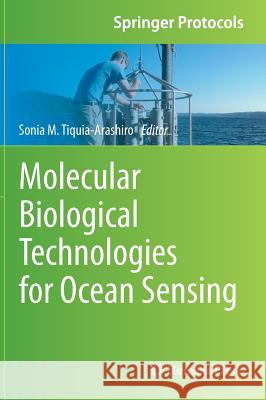
Molecular Biological Technologies for Ocean Sensing Sonia Tiquia-Arashiro 9781617799143 Humana Press - książkaWidoczna okładka, to zdjęcie poglądowe, a rzeczywista szata graficzna może różnić się od prezentowanej.

Molecular Biological Technologies for Ocean Sensing

ISBN-13: 9781617799143 / Angielski / Twarda / 2012 / 295 str.

Sonia Tiquia-Arashiro
cena 403,47 zł
(netto: 384,26 VAT:  5%)

Najniższa cena z 30 dni: 385,52 zł
Termin realizacji zamówienia:
ok. 22 dni roboczych
Bez gwarancji dostawy przed świętami

Darmowa dostawa!

The development of ocean sensors remains a ripe area for future investigation from science, policy and systemsengineering standpoints. Clearly, there are many options forrealizing integrated molecular analytical sensing systems. The definition of key target molecules, detection methodsand signal transduction models largely remain to be determined.Moreover, there remains ahuge challenge of merging this new class of instrument with different deployment platforms, and supplying necessarypower and data telemetry infrastructure for their operation. Molecular Biological Technologies for Ocean Sensing features methods papers on the application of ecogenomic sensors on autonomous platforms in the ocean. Topics include the use of ecogenomic sensors as a tool in whole-cell and cell-free based detection and monitoring a suite of pathogens and biotoxins that are of public health concern; documenting species diversity, evolution and metabolic function; identification and quantification of aquatic organisms; and inferring metabolic potential and activities of microorganisms in the ocean. Each contribution focuses on the (1) functional requirements for detecting specific microorganisms and the genes that they harbor and express;(2) examples of research activities that take advantage of molecular detection technologies;(3) some of the challenges faced when projecting development and use of novel instruments that will utilize molecular techniques onboard autonomous platforms;and future directions. Bringing these advancements on autonomous platforms, monitoring required sample collection and processing schemes will differ from those currently used (i.e. biomedical diagnostics). This book is the first of its kind to compile current technologies for studying organisms in situ. It will aid in transfer technology to oceanographers, ecologists, microbiologists, and environmental scientists with needs for a remote, in-water sensing capability and for integration with larger scale observatory operations. With this network in place, there is a potential to bridge the gap among regulatory agencies and academics about how this kind of technology can be used for research and monitoring purposes.


Kategorie:
Nauka, Biologia i przyroda
Kategorie BISAC:
Science > Life Sciences - Ecology
Science > Mikrobiologia
Science > Earth Sciences - Oceanography
Wydawca:
Humana Press
Seria wydawnicza:
Springer Protocols Handbooks
Język:
Angielski
ISBN-13:
9781617799143
Rok wydania:
2012
Wydanie:
2012
Numer serii:
000389047
Ilość stron:
295
Waga:
0.63 kg
Wymiary:
25.65 x 18.29 x 2.29
Oprawa:
Twarda
Wolumenów:
01
Dodatkowe informacje:
Bibliografia
Wydanie ilustrowane

From the reviews:

"This is the first book containing detailed information about the use of molecular methods integrated in complex devices/ robots able to act as complex (bio) sensors on autonomous platforms in the ocean. ... The detailed and compact information of the present volume can help various kinds of professionals (oceanographers, ecologists, microbiologists or environmental scientists) to both fuel their interest in beginning to work with this kind of devices and contribute to their further development." (Ioan I. Ardelean, Romanian Journal of Biochemistry, Vol. 51 (1), 2014)

Chapter 1. Genome-enabled microbial sensors on ocean platforms.- Chapter 2. Development of a Capillary Waveguide Biosensor Analytical Module for use with the MBARI Environmental Sample Processor.- Chapter 3. MicrofabricatedFlow-Through Device For In Situ Gene Analysis.- Chapter 4. Method for the Quantification of Aquatic Primary Production and Net Ecosystem Metabolism Using In Situ Dissolved Oxygen Sensors.- Chapter 5. DNAzyme-Based Sensing for Metal Ions in Ocean Platform.- Chapter 6. Ultrasensitive Visual Fluorescence Detection of Heavy Metal Ions in Water Based on DNA-Functionalized Hydrogels.- Chapter 7. The Use of Peptide Nucleic Acids in Surface Plasmon Resonance for Detection of Red Tide Algae.- Chapter 8. Immobilization of Fluorescent Aptamer Biosensors on Magnetic Microparticles and Its Potential Application for Ocean Sensing.- Chapter 9. Functional Gene Arrays for Analysis of Microbial Communities on Ocean Platform.- Chapter 10. Bioluminescence detection for ATP quantification using microfluidic device.- Chapter 11. Use of Biosensors as Alternatives to Current Regulatory Methods for Marine Biotoxins.- Chapter 12. Electrochemical Detection of Harmful Algae by Means of a Sandwich Hybridization Assay on an Electrode Surface.- Chapter 13. Waterborne Pathogen Detection Using a MagnetoresistiveImmuno-Chip

Back cover copy


The development of ocean sensors remains a ripe area for future investigation from science, policy and systems engineering standpoints. Clearly, there are many options for realizing integrated molecular analytical sensing systems. The definition of key target molecules, detection methods and signal transduction models largely remain to be determined. Moreover, there remains a huge challenge of merging this new class of instrument with different deployment platforms, and supplying necessarypower and data telemetry infrastructure for their operation.


Molecular Biological Technologies for Ocean Sensing features methods papers on the application of ecogenomic sensors on autonomous platforms in the ocean.  Topics include the use of ecogenomic sensors as a tool in whole-cell and cell-free based detection and monitoring a suite of pathogens and biotoxins that are of public health concern; documenting species diversity, evolution and metabolic function; identification and quantification of aquatic organisms; and inferring metabolic potential and activities of microorganisms in the ocean.  Each contribution focuses on the (1) functional requirements for detecting specific microorganisms and the genes that they harbor and express; (2) examples of research activities that take advantage of molecular detection technologies; (3) some of the challenges faced when projecting development and use of novel instruments that will utilize molecular techniques onboard autonomous platforms;and future directions.  Bringing these advancements on autonomous platforms, monitoring required sample collection and processing schemes will differ from those currently used (i.e. biomedical diagnostics).


This book is the first of its kind to compile current technologies for studying organisms in situ.  It will aid in transfer technology to oceanographers, ecologists, microbiologists, and environmental scientists with needs for a remote, in-water sensing capability and for integration with larger scale observatory operations.  With this network in place, there is a potential to bridge the gap among regulatory agencies and academics about how this kind of technology can be used for research and monitoring purposes.



Udostępnij

Facebook - konto krainaksiazek.pl


Opinie o Krainaksiazek.pl na Opineo.pl

Partner Mybenefit

Krainaksiazek.pl w programie rzetelna firma Krainaksiaze.pl - płatności przez paypal

Czytaj nas na:

Facebook - krainaksiazek.pl
  • książki na zamówienie
  • granty
  • książka na prezent
  • kontakt
  • pomoc
  • opinie
  • regulamin
  • polityka prywatności

Zobacz:

  • Księgarnia czeska

  • Wydawnictwo Książkowe Klimaty

1997-2025 DolnySlask.com Agencja Internetowa

© 1997-2022 krainaksiazek.pl
     
KONTAKT | REGULAMIN | POLITYKA PRYWATNOŚCI | USTAWIENIA PRYWATNOŚCI
Zobacz: Księgarnia Czeska | Wydawnictwo Książkowe Klimaty | Mapa strony | Lista autorów
KrainaKsiazek.PL - Księgarnia Internetowa

Polityka prywatnosci - link
Krainaksiazek.pl - płatnośc Przelewy24
Przechowalnia Przechowalnia




