• Wyszukiwanie zaawansowane
  • Kategorie
  • Kategorie BISAC
  • Książki na zamówienie
  • Promocje
  • Granty
  • Książka na prezent
  • Opinie
  • Pomoc
  • Załóż konto
  • Zaloguj się

Modern Special Relativity: A Student's Guide with Discussions and Examples » książka


zaloguj się | załóż konto
Logo Krainaksiazek.pl

koszyk

konto

szukaj
topmenu
Księgarnia internetowa
Szukaj
Książki na zamówienie
Promocje
Granty
Książka na prezent
Moje konto
Pomoc
 
 
Wyszukiwanie zaawansowane
Pusty koszyk
Bezpłatna dostawa dla zamówień powyżej 20 złBezpłatna dostawa dla zamówień powyżej 20 zł

Kategorie główne

• Nauka
 [2946600]
• Literatura piękna
 [1856966]

  więcej...
• Turystyka
 [72221]
• Informatyka
 [151456]
• Komiksy
 [35826]
• Encyklopedie
 [23190]
• Dziecięca
 [619653]
• Hobby
 [140543]
• AudioBooki
 [1577]
• Literatura faktu
 [228355]
• Muzyka CD
 [410]
• Słowniki
 [2874]
• Inne
 [445822]
• Kalendarze
 [1744]
• Podręczniki
 [167141]
• Poradniki
 [482898]
• Religia
 [510455]
• Czasopisma
 [526]
• Sport
 [61590]
• Sztuka
 [243598]
• CD, DVD, Video
 [3423]
• Technologie
 [219201]
• Zdrowie
 [101638]
• Książkowe Klimaty
 [124]
• Zabawki
 [2473]
• Puzzle, gry
 [3898]
• Literatura w języku ukraińskim
 [254]
• Art. papiernicze i szkolne
 [8170]
Kategorie szczegółowe BISAC

Modern Special Relativity: A Student's Guide with Discussions and Examples

ISBN-13: 9783030543518 / Angielski / Miękka / 2022 / 466 str.
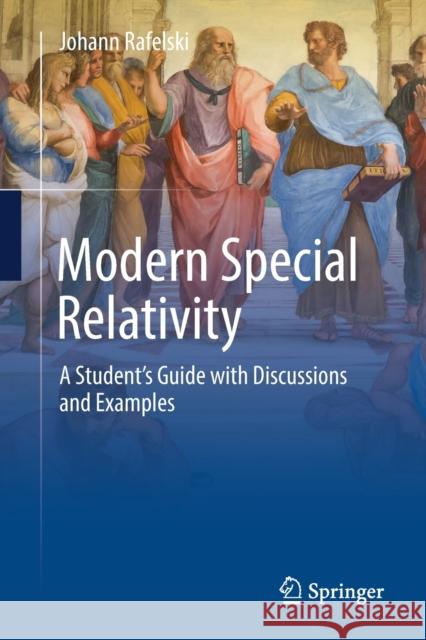
Johann Rafelski
Modern Special Relativity: A Student's Guide with Discussions and Examples Rafelski, Johann 9783030543518 Springer Nature Switzerland AG - książkaWidoczna okładka, to zdjęcie poglądowe, a rzeczywista szata graficzna może różnić się od prezentowanej.

Modern Special Relativity: A Student's Guide with Discussions and Examples

ISBN-13: 9783030543518 / Angielski / Miękka / 2022 / 466 str.

Johann Rafelski
cena 221,90 zł
(netto: 211,33 VAT:  5%)

Najniższa cena z 30 dni: 212,02 zł
Termin realizacji zamówienia:
ok. 22 dni roboczych
Bez gwarancji dostawy przed świętami

Darmowa dostawa!
Kategorie:
Nauka, Fizyka
Kategorie BISAC:
Science > Fizyka matematyczna
Science > Fizyka relatywistyczna
Science > Prąd
Wydawca:
Springer Nature Switzerland AG
Język:
Angielski
ISBN-13:
9783030543518
Rok wydania:
2022
Wydanie:
2021
Ilość stron:
466
Waga:
0.66 kg
Wymiary:
23.39 x 15.6 x 2.46
Oprawa:
Miękka
Wolumenów:
01
Dodatkowe informacje:
Wydanie ilustrowane

I Space-Time, Light and the aether 1

1 What is (Special) Relativity? . . . . . . . . . . . . . . . . . . . . . . . . . . . . . 3
1.1 Principle of Relativity . . . . . . . . . . . . . . . . . . . . . . . . . . . . . 3
1.2 Time, a 4th coordinate . . . . . . . . . . . . . . . . . . . . . . . . . . . . . 7
1.3 Path toward Lorentz coordinate transformations . . . . . . . . . . . . . . 10
1.4 Highlights: How did relativity happen? . . . . . . . . . . . . . . . . . . . 13

2 Light and the aether . . . . . . . . . . . . . . . . . . . . . . . . . . . . . . . . . . 15
2.1 Measuring space and time: SI unit system . . . . . . . . . . . . . . . . . . 15
2.2 Speed of light . . . . . . . . . . . . . . . . . . . . . . . . . . . . . . . . . . 17
2.3 Essay: aether and Special Relativity . . . . . . . . . . . . . . . . . . . . . 25

3 Material Bodies in SR . . . . . . . . . . . . . . . . . . . . . . . . . . . . . . . . . 33
3.1 The Michelson-Morley Experiment . . . . . . . . . . . . . . . . . . . . . . 33
3.2 Body contraction and time dilation . . . . . . . . . . . . . . . . . . . . . . 36
3.3 Is the Lorentz-FitzGerald body contraction measurable? . . . . . . . . . . 38
3.4 Experiments require understanding of body contraction . . . . . . . . . . 40
3.5 Resolving misunderstandings of SR . . . . . . . . . . . . . . . . . . . . . . 42

II Time Dilation, and Lorentz-Fitzgerald Body Contraction 47

4 Time Dilation . . . . . . . . . . . . . . . . . . . . . . . . . . . . . . . . . . . . . . 49
4.1 Proper time of a traveler . . . . . . . . . . . . . . . . . . . . . . . . . . . . 49
4.2 Relativistic light-clock . . . . . . . . . . . . . . . . . . . . . . . . . . . . . 52
4.3 Talking about time (dilation) . . . . . . . . . . . . . . . . . . . . . . . . . 56

5 The Lorentz-FitzGerald Body Contraction . . . . . . . . . . . . . . . . . . . . . . 61
5.1 Light-clock moving parallel to light path . . . . . . . . . . . . . . . . . . . 61
5.2 Body contraction . . . . . . . . . . . . . . . . . . . . . . . . . . . . . . . . 63
5.3 Arbitrary orientation of the light clock . . . . . . . . . . . . . . . . . . . . 66

III The Lorentz Transformation 73

6 Relativistic Coordinate Transformation . . . . . . . . . . . . . . . . . . . . . . . 75
6.1 Derivation of the Lorentz coordinate transformation . . . . . . . . . . . . 75
6.2 Explicit form of the Lorentz transformation . . . . . . . . . . . . . . . . . 79
6.3 The nonrelativistic Galilean limit . . . . . . . . . . . . . . . . . . . . . . . 84
6.4 The inverse Lorentz coordinate transformation . . . . . . . . . . . . . . . 85

7 Some Consequences of Lorentz Transformation . . . . . . . . . . . . . . . . . . . 88
7.1 Invariance of proper time . . . . . . . . . . . . . . . . . . . . . . . . . . . 88
7.2 Relativistic addition of velocities . . . . . . . . . . . . . . . . . . . . . . . 92
7.3 Two Lorentz coordinate transformations in sequence . . . . . . . . . . . . 99
7.4 Rapidity . . . . . . . . . . . . . . . . . . . . . . . . . . . . . . . . . . . . . 102

IV Measurement 111

8 Time Measurement and Lorentz Transformation . . . . . . . . . . . . . . . . . . 113
8.1 Graphic representation of Lorentz Transformation . . . . . . . . . . . . . 113
8.2 Time dilation and simultaneity . . . . . . . . . . . . . . . . . . . . . . . . 114

9 Methods of Measuring Spatial Separation . . . . . . . . . . . . . . . . . . . . . . 119
9.1 Introductory remarks . . . . . . . . . . . . . . . . . . . . . . . . . . . . . 119
9.2 Determination of spatial separation . . . . . . . . . . . . . . . . . . . . . . 120
9.3 Light illumination emitted in the rest-frame of the observer . . . . . . . . 123
9.4 Train in the tunnel . . . . . . . . . . . . . . . . . . . . . . . . . . . . . . . 126

10 The Bell Rockets . . . . . . . . . . . . . . . . . . . . . . . . . . . . . . . . . . . . 130
10.1 Rockets connected by a thread . . . . . . . . . . . . . . . . . . . . . . . . 130
10.2 The thread breaks . . . . . . . . . . . . . . . . . . . . . . . . . . . . . . . 132
10.3 Lorentz-FitzGerald body contraction measured . . . . . . . . . . . . . . . 133

V Space, Time, Doppler Shift 139

11 The Light-Cone . . . . . . . . . . . . . . . . . . . . . . . . . . . . . . . . . . . . . 141
11.1 The future . . . . . . . . . . . . . . . . . . . . . . . . . . . . . . . . . . . 141
11.2 The past . . . . . . . . . . . . . . . . . . . . . . . . . . . . . . . . . . . . 144

12 Space-time . . . . . . . . . . . . . . . . . . . . . . . . . . . . . . . . . . . . . . . 149
12.1 Timelike and spacelike event separation . . . . . . . . . . . . . . . . . . . 149
12.2 Time dilation revisited . . . . . . . . . . . . . . . . . . . . . . . . . . . . . 153
12.3 Essay: Quantum entanglement and causality . . . . . . . . . . . . . . . . 156

13 SR-Doppler Shift . . . . . . . . . . . . . . . . . . . . . . . . . . . . . . . . . . . . 162
13.1 Introducing the nonrelativistic Doppler shift . . . . . . . . . . . . . . . . . 162
13.2 Misunderstanding of the relativistic Doppler eect . . . . . . . . . . . . . 164
13.3 SR-Aberration of light . . . . . . . . . . . . . . . . . . . . . . . . . . . . . 167
13.4 SR-Doppler shift . . . . . . . . . . . . . . . . . . . . . . . . . . . . . . . . 173

VI Mass, Energy, Momentum 177

14 Mass and Energy . . . . . . . . . . . . . . . . . . . . . . . . . . . . . . . . . . . . 179
14.1 Energy of a body at rest . . . . . . . . . . . . . . . . . . . . . . . . . . . . 179
14.2 Relativistic energy of a moving body . . . . . . . . . . . . . . . . . . . . . 182
14.3 Mass of a body . . . . . . . . . . . . . . . . . . . . . . . . . . . . . . . . . 183

15 Particle Momentum . . . . . . . . . . . . . . . . . . . . . . . . . . . . . . . . . . 186
15.1 Relation between energy and momentum . . . . . . . . . . . . . . . . . . 186
15.2 Particle rapidity . . . . . . . . . . . . . . . . . . . . . . . . . . . . . . . . 193

16 Generalized Mass-Energy Equivalence . . . . . . . . . . . . . . . . . . . . . . . . 201
16.1 Where does energy come from? . . . . . . . . . . . . . . . . . . . . . . . . 201
16.2 Mass equivalence for kinetic energy in a gas . . . . . . . . . . . . . . . . . 202
16.3 Potential energy mass equivalence . . . . . . . . . . . . . . . . . . . . . . 203
16.4 Atomic mass defect . . . . . . . . . . . . . . . . . . . . . . . . . . . . . . . 205
16.5 Rotational energy mass equivalence . . . . . . . . . . . . . . . . . . . . . 206
16.6 Chemical energy mass defect . . . . . . . . . . . . . . . . . . . . . . . . . 207
16.7 Nuclear mass defect . . . . . . . . . . . . . . . . . . . . . . . . . . . . . . 208
16.8 Origin of energy . . . . . . . . . . . . . . . . . . . . . . . . . . . . . . . . 210

VII Collisions, Decays 213

17 Preferred Frame of Reference . . . . . . . . . . . . . . . . . . . . . . . . . . . . . 215
17.1 The center of momentum frame (CM-Frame) . . . . . . . . . . . . . . . . 215
17.2 The Lorentz transformation to the CM-frame . . . . . . . . . . . . . . . . 217
17.3 Particle decay in the CM-frame . . . . . 228 . . . . . . . . . . . . . . . . . . . 220
17.4 Decay energy balance in CM-frame . . . . . . . . . . . . . . . . . . . . . . 222
17.5 Decay of a body in flight . . . . . . . . . . . . . . . . . . . . . . . . . . . 223

18 Particle Reactions . . . . . . . . . . . . . . . . . . . . . . . . . . . . . . . . . . . 228
18.1 Elastic two body reactions . . . . . . . . . . . . . . . . . . . . . . . . . . . 228
18.2 Compton Scattering . . . . . . . . . . . . . . . . . . . . . . . . . . . . . . 230
18.3 Elastic bounce from a moving wall . . . . . . . . . . . . . . . . . . . . . . 233
18.4 Inelastic two-body reaction threshold . . . . . . . . . . . . . . . . . . . . . 237
18.5 Energy available in a two body collision . . . . . . . . . . . . . . . . . . . 241
18.6 Inelastic collision and particle production . . . . . . . . . . . . . . . . . . 247

VIII SR-Tests & Open Questions 251

19 Tests of Special Relativity . . . . . . . . . . . . . . . . . . . . . . . . . . . . . . . 253
19.1 Overview: Testing SR . . . . . . . . . . . . . . . . . . . . . . . . . . . . . 253
19.2 The Michelson-Morley experiment today . . . . . . . . . . . . . . . . . . . 254
19.3 How constant is the speed of light? . . . . . . . . . . . . . . . . . . . . . . 255
19.4 Tests of SR material body properties . . . . . . . . . . . . . . . . . . . . . 256
19.5 Doppler effect and tests of the Lorentz coordinate transformation . . . . . 258
19.6 Time . . . . . . . . . . . . . . . . . . . . . . . . . . . . . . . . . . . . . . . 260

20 Acceleration . . . . . . . . . . . . . . . . . . . . . . . . . . . . . . . . . . . . . . . 264
20.1 Accelerated motion . . . . . . . . . . . . . . . . . . . . . . . . . . . . . . . 264
20.2 Can there be acceleration in SR? . . . . . . . . . . . . . . . . . . . . . . . 265
20.3 Evidence for the existence of acceleration . . . . . . . . . . . . . . . . . . 266
20.4 Small and large acceleration . . . . . . . . . . . . . . . . . . . . . . . . . . 268
20.5 Achieving strong acceleration . . . . . . . . . . . . . . . . . . . . . . . . . 269

IX Lorentz Force and Particle Motion 275

21 Acceleration and Lorentz Force . . . . . . . . . . . . . . . . . . . . . . . . . . . . 277
21.1 Newton's second Law . . . . . . . . . . . . . . . . . . . . . . . . . . . . . 277
21.2 Motion in magnetic and electric elds . . . . . . . . . . . . . . . . . . . . 280
21.3 Variational principle . . . . . . . . . . . . . . . . . . . . . . . . . . . . . . 287
21.4 Electron Coulomb orbits . . . . . . . . . . . . . . . . . . . . . . . . . . . . 291

22 Electrons Riding a Plane Wave . . . . . . . . . . . . . . . . . . . . . . . . . . . . 298
22.1 Fields and potentials for a plane wave . . . . . . . . . . . . . . . . . . . . 298
22.2 Role of conservation laws . . . . . . . . . . . . . . . . . . . . . . . . . . . 302
22.3 Surng the plane wave . . . . . . . . . . . . . . . . . . . . . . . . . . . . . 305

X Space Travel 311

23 Spaceship Travel in the Milky Way . . . . . . . . . . . . . . . . . . . . . . . . . . 313
23.1 Space travel with constant acceleration . . . . . . . . . . . . . . . . . . . 313
23.2 The eect of time dilation . . . . . . . . . . . . . . . . . . . . . . . . . . . 315
23.3 How far can we travel? . . . . . . . . . . . . . . . . . . . . . . . . . . . . . 315
23.4 Variable acceleration . . . . . . . . . . . . . . . . . . . . . . . . . . . . . . 319

24 Relativistic Rocket equation . . . . . . . . . . . . . . . . . . . . . . . . . . . . . 322
24.1 Nonrelativistic rocket equation . . . . . . . . . . . . . . . . . . . . . . . . 322
24.2 Relativistic rocket equation . . . . . . . . . . . . . . . . . . . . . . . . . . 323
24.3 Energy of relativistic rocket . . . . . . . . . . . . . . . . . . . . . . . . . . 325

Johann Rafelski is a theoretical physicist working at The University of Arizona in Tucson, USA. Born in Kraków, Poland in 1950, he received his Ph.D. with Walter Greiner at Johann Wolfgang Goethe University, Frankfurt, Germany in 1973. In 1977 Rafelski arrived at CERN-Geneva, where with Rolf Hagedorn he developed the search for quark-gluon plasma in relativistic heavy ion collision as a novel research domain. He invented and developed the strangeness quark flavor as the signature of quark-gluon plasma, advancing the discovery of this new phase of primordial matter. Professor Rafelski teaches Relativity, Quantum, Particle and Nuclear Physics; in addition to CERN and Arizona, he also has held professional appointments at the University of Pennsylvania in Philadelphia, Argonne National Laboratory in Chicago, the University of Frankfurt, the University of Cape Town, the University of Paris-Jussieu, and the Ecole Polytechnique. He has been a DFG Excellence Initiative Professor at Ludwig-Maximillian University Munich. In collaboration with researchers from the Ecole Polytechnique in Paris and ELI-Beamlines in Prague he is using ultra-intense lasers in nuclear and fundamental physics.

Prof. Rafelski is the editor of the open-access book: Melting Hadrons, Boiling Quarks – From Hagedorn Temperature to Ultra-Relativistic Heavy-Ion Collisions at CERN - With a Tribute to Rolf Hagedorn (Springer, 2016) and he has authored the book: Relativity Matters – From Einstein's EMC2 to Laser Particle Acceleration and Quark-Gluon Plasma (Springer, 2017).


This book presents Special Relativity in a language accessible to students while avoiding the burdens of geometry, tensor calculus, space-time symmetries, and the introduction of four vectors. The search for clarity in the fundamental questions about Relativity, the discussion of historical developments before and after 1905, the strong connection to current research topics, many solved examples and problems, and illustrations of the material in colloquial discussions are the most significant and original assets of this book. Importantly for first-time students, Special Relativity is presented such that nothing needs to be called paradoxical or apparent; everything is explained.

The content of this volume develops and builds on the book Relativity Matters (Springer, 2017). However, this presentation of Special Relativity does not require 4-vector tools. The relevant material has been extended and reformulated, with additional examples and clarifications.

This introduction of Special Relativity offers conceptual insights reaching well beyond the usual method of teaching relativity. It considers relevant developments after the discovery of General Relativity (which itself is not presented), and advances the reader into contemporary research fields. This presentation of Special Relativity is connected to present day research topics in particle, nuclear, and high intensity pulsed laser physics and is complemented by the current cosmological perspective. The conceptual reach of Special Relativity today extends significantly further compared even to a few decades ago.

As the book progresses, the qualitative and historical introduction turns into a textbook-style presentation with many detailed results derived in an explicit manner. The reader reaching the end of this text needs knowledge of classical mechanics, a good command of elementary algebra, basic knowledge of calculus, and introductory know-how of electromagnetism.



Udostępnij

Facebook - konto krainaksiazek.pl


Opinie o Krainaksiazek.pl na Opineo.pl

Partner Mybenefit

Krainaksiazek.pl w programie rzetelna firma Krainaksiaze.pl - płatności przez paypal

Czytaj nas na:

Facebook - krainaksiazek.pl
  • książki na zamówienie
  • granty
  • książka na prezent
  • kontakt
  • pomoc
  • opinie
  • regulamin
  • polityka prywatności

Zobacz:

  • Księgarnia czeska

  • Wydawnictwo Książkowe Klimaty

1997-2025 DolnySlask.com Agencja Internetowa

© 1997-2022 krainaksiazek.pl
     
KONTAKT | REGULAMIN | POLITYKA PRYWATNOŚCI | USTAWIENIA PRYWATNOŚCI
Zobacz: Księgarnia Czeska | Wydawnictwo Książkowe Klimaty | Mapa strony | Lista autorów
KrainaKsiazek.PL - Księgarnia Internetowa

Polityka prywatnosci - link
Krainaksiazek.pl - płatnośc Przelewy24
Przechowalnia Przechowalnia



