• Wyszukiwanie zaawansowane
  • Kategorie
  • Kategorie BISAC
  • Książki na zamówienie
  • Promocje
  • Granty
  • Książka na prezent
  • Opinie
  • Pomoc
  • Załóż konto
  • Zaloguj się

Modern Methods of Plant Analysis / Moderne Methoden Der Pflanzenanalyse: Volume 2 » książka


zaloguj się | załóż konto
Logo Krainaksiazek.pl

koszyk

konto

szukaj
topmenu
Księgarnia internetowa
Szukaj
Książki na zamówienie
Promocje
Granty
Książka na prezent
Moje konto
Pomoc
 
 
Wyszukiwanie zaawansowane
Pusty koszyk
Bezpłatna dostawa dla zamówień powyżej 20 złBezpłatna dostawa dla zamówień powyżej 20 zł

Kategorie główne

• Nauka
 [2946600]
• Literatura piękna
 [1856966]

  więcej...
• Turystyka
 [72221]
• Informatyka
 [151456]
• Komiksy
 [35826]
• Encyklopedie
 [23190]
• Dziecięca
 [619653]
• Hobby
 [140543]
• AudioBooki
 [1577]
• Literatura faktu
 [228355]
• Muzyka CD
 [410]
• Słowniki
 [2874]
• Inne
 [445822]
• Kalendarze
 [1744]
• Podręczniki
 [167141]
• Poradniki
 [482898]
• Religia
 [510455]
• Czasopisma
 [526]
• Sport
 [61590]
• Sztuka
 [243598]
• CD, DVD, Video
 [3423]
• Technologie
 [219201]
• Zdrowie
 [101638]
• Książkowe Klimaty
 [124]
• Zabawki
 [2473]
• Puzzle, gry
 [3898]
• Literatura w języku ukraińskim
 [254]
• Art. papiernicze i szkolne
 [8170]
Kategorie szczegółowe BISAC

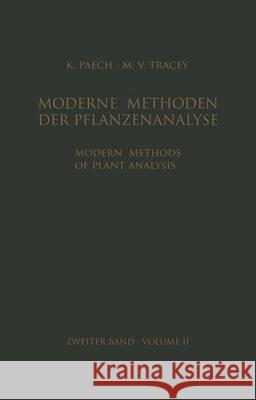
Modern Methods of Plant Analysis / Moderne Methoden Der Pflanzenanalyse: Volume 2

ISBN-13: 9783642649578 / Angielski / Miękka / 2011 / 626 str.
Paech, K.
Modern Methods of Plant Analysis / Moderne Methoden Der Pflanzenanalyse: Volume 2 Paech, K. 9783642649578 Springer - książkaWidoczna okładka, to zdjęcie poglądowe, a rzeczywista szata graficzna może różnić się od prezentowanej.

Modern Methods of Plant Analysis / Moderne Methoden Der Pflanzenanalyse: Volume 2

ISBN-13: 9783642649578 / Angielski / Miękka / 2011 / 626 str.

Paech, K.
cena 564,88 zł
(netto: 537,98 VAT:  5%)

Najniższa cena z 30 dni: 539,74 zł
Termin realizacji zamówienia:
ok. 22 dni roboczych
Bez gwarancji dostawy przed świętami

Darmowa dostawa!

Dar lronjigurative Zu8ammenkang mit Zuckern wurde fiir die Cyclite wie fiir die Polyoxy cyclohexancarbonsauren durch die Arbeiten der letzten Jahre erhellt. Hierher gehOren die mit Kaliumpermanganat durchgefiihrten Oxydationen von d-Quercit und I-Viburnit zur D-GaJakto-meta8accharonsaure, von (l)-Inosit zur D-Zuckersii. ure, von meso-Inosit zur D, x. -Talo-schleimsiure, von der scyllo-meso-In08Ol e zu D, L-Idozuckersii. ure und von der epi meso-In08Ol e zu D, L-Talo-schleimsii. ure und D, L-Zuckersaure. Ferner wurden Ringoffnungen an definierter Stelle des Molekiils vorgenommen durch . Anwendung von Bleitetracetat, Perjod &iure oder Nli. trium-meta-perjodat. Oxydation der entstehenden Dialdehyde, bzw. ihre Reduk tion fiihrte zu Zuckersii. uren, bzw. Zuckeralkoholen. Hier ist zu nennen die Bildung von 2-DesoXY-D-Gluconsaure aus Dioxy-sbikiroi&iure, von Schleimsiure aus Dihydro-condurit und Muoo-inosit, von allo-Schleimsiure aus allo-Inosit, von D, L-Idozuckersii. ure aus meso Inosit und von D-Mannit aus dem (d)-Inosit. Durch Ringoffnung und oxydative Abspa. ltung mehrerer Hydroxyle entstanden na. ch Oxydation der Dialdehyde aus Sbikiroi&iure die trans Aoonitsaure, aus ihrem Dihydro-Derivat die Tricarballylsiure, aus Chinasiure die Citronen &iure und aus einem von Pinit erhaltenen Dimethyl-in08it die Dimethyl-D-(-)weinsiure. Durch die erwahnte Bildung von D, L-Idozuckersaure aus meso-In08it und aus der scyno meso-In08Ol e wurde die Konfiguration von meso-Inosit und Scyllit geklirt (DANGSCRAT, 1942; POSTERNAK, 1942). Der RingBChlufJ ron Zuckern zu Cycliten war bedeutend schwieriger zu verwirklichen. Erstmals konnte MICHEEL (1932) von einem Dijod-dimethylen-D-mannit zu einem Tetra oxycyclohexan "Cyclomannit" gelangen. Zu meso-Inosit fiihrte ein RingschluB, den GROSS HEINTZ und FIsCHER (1948) sowohl von einem 6-Nitro-6-desoxy-Derivat der D-Gluoose wie von dem gleichen Derivat der L-Idose durchfiihrten."


Kategorie:
Nauka, Biologia i przyroda
Kategorie BISAC:
Science > Botanika
Medical > Medycyna
Wydawca:
Springer
Seria wydawnicza:
Modern Methods of Plant Analysis Moderne Methoden Der Pflanz
Język:
Angielski
ISBN-13:
9783642649578
Rok wydania:
2011
Wydanie:
Softcover Repri
Numer serii:
000403541
Ilość stron:
626
Waga:
1.02 kg
Wymiary:
24.4 x 15.6
Oprawa:
Miękka
Wolumenów:
01
Dodatkowe informacje:
Bibliografia

— Contents..- Mono- and Oligosaccharides and Acidic Monosaccharide Derivatives.- A. Extraction of Tissue.- 1. Aqueous Extraction of Freshly Gathered Material.- 2. 70% Ethanolic Extraction of Forage Plants.- 3. 80% Ethanolic Extraction of White Potato.- B. Elimination of Interfering Substances from Plant Tissue Extracts.- I. Examination of Lead and Charcoal Methods.- II. Purification by Ion-Exchange Resins.- C. Qualitative Analysis of Carbohydrates in 80% Ethanolic Plant Extracts by Paper Chromatography.- I. Introductory.- II. Qualitative Paper Chromatography.- III. Typical Chromatography Data for Saccharides.- IV. Paper Chromatography of Oligosaccharides.- V. Some Recent (1953) Findings on Plant Materials Made through Paper Chromatography.- D. Electrophoretic Separation of Non-ionic Sugars.- I. Introduction.- II. Separation of Monosaccharides.- III. Separation of Disaccharides.- E. Quantitative Paper Chromatography.- I. Introduction: General Points of Technique.- II. A Direct Colorimetric Method for Reducing Sugars.- III. The Nelson Colorimetric Method for Reducing Sugars.- IV. Colorimetric Determination of Reducing Sugars and Furanosidic Non-reducing Sugars by Benzidine and Acetic Acid.- V. Colorimetric Determination of Hexuloses, Free or Combined.- VI. Colorimetric Determination of Reducing and Non-reducing Saccharides.- VII. Titrimetric Determination of Aldoses.- F. Separation of Saccharides by Column Chromatography.- I. Introduction.- II. Charcoal Columns.- III. Cellulose Columns: Separation of Monosaccharides.- IV. Starch Columns: Separation of Monosaccharides.- V. Quantitative Analysis of Saccharides Using Strongly Basic Ion-exchange Resins and Borate Buffers of Various pH’s.- VI. Some Recent Discoveries of New Natural Compounds with the Aid of Column Chromatography.- G. Hydrolysis of Glycosidic Links by Acid.- I. Introductory.- II. Suitable Conditions for Hydrolysis.- III. Neutralisation of the Hydrolysate.- IV. Side Reactions which may Complicate Analyses.- H. Identifications of Monosaccharides.- I. Introduction.- II. Iso-propylidene Derivatives.- III. Preparation of Isopropylidene Derivatives.- IV. 2:5-Dichlorophenylhydrazones.- V. Toluene-p-sulphonylhydrazones.- VI. Miscellaneous Useful Derivatives of Monosaccharides.- J. Quantitative Determinations of Saccharides.- I. Introductory.- II. Colorimetric Determination of Saccharides, Reducing and Non-reducing.- III. Stoichiometric Titrimetric Methods.- IV. Non-Stoichiometric Methods.- K. Acidic Monosaccharide Derivatives.- I. Occurrence of “Sugar Acids”.- II. Aldohexonic Acids.- III. Oxoaldonic Acids.- IV. Uronic Acids.- References.- Acyclic Sugar Alcohols.- A. Occurrence and Distribution of Sugar Alcohols.- I. Tetritols and Pentitols.- II. Hexitols.- III. Heptitols.- B. Estimation and Separation of Sugar Alcohols.- I. Estimation.- II. Separation.- C. Isolation and Characterisation of Sugar Alcohols.- References.- Inosite und verwandte Naturstoffe.- A. Einleitung.- B. Isolierung und allgemeine Bestimmung.- C. Spezielle Methoden.- I. Myo-Inosit und seine Derivate.- Methyläther des myo-Inosits.- Die Phosphorsäure-ester des myo-Inosits.- II. Scyllit (Quercinit, Cocosit).- III. Optisch aktive Inosite.- IV. Die Monomethyläther der optisch aktiven Inosite.- V. Pentaoxy-cyclohexane (Quercit, Viburnit).- VI. Tetraoxy-cyclohexane.- VII. Chinasäure.- VIII. Shikimisäure.- Literatur.- Ascorbinsäure.- A. Einleitung.- B. Verschiedene Bestimmungsmethoden.- I. Qualitative Methoden.- II. Quantitative Methoden.- C. Die allgemeine Methode.- I. Praktische Durchführung der VC-Bestimmung.- II. Begründungen und Erweiterungen der Methoden.- III. Die Spezifität der Verfahren.- IV. Berechnung der Ergebnisse.- Literatur.- Phosphorylated Sugars.- A. Introduction.- I. The Sugar Phosphates in Phytosynthesis.- II. Applications of the Tracer Method in Development of New Analytical Methods.- III. Transients in Sugar Phosphate Concentrations.- B. Extraction of Phosphate Esters from Plant Material.- C. Separation of Sugar Phosphates.- I. Precipitation Methods for Fractionation of Sugar Phosphates.- II. Paper Chromatography of Sugar Phosphates.- III. Ion Exchange Separation of Sugar Phosphates.- D. Methods of Estimation of Sugar Phosphates.- I. General Methods.- II. Specific Methods.- References.- Starch, Glycogen, Fructosans and Similar Polysaccharides.- A. Isolation and Examination of Polysaccharides.- I. Isolation.- II. Characterisation.- III. Structural Determination.- B. Starch, Glycogen and Isolichenin.- I. Starch.- II. Floridean Starch.- III. Glycogen.- IV. Isolichenin.- C. Lichenin.- D. Laminarin and Yeast Glucan.- I. Laminarin.- II. Yeast Glucan.- E. Mannans.- F. Fructosans.- References.- Cellulose and Hemicelluloses.- A. Introduction.- B. Analytical Principles.- C. Generalised Method of Analysis.- I. General Preparation.- II. Removal of Water Soluble Polysaccharides (“Depectination”).- III. Removal of Lignin.- IV. Fractionation of Holocellulose.- V. Hydrolysis of Fractions.- VI. Analysis of Hydrolysates.- VII. Calculation of Results.- D. Auxiliary Analyses.- I. Acetyl Groups.- II. Methoxyl Groups.- III. Uronic Acid.- IV. Pentosans.- V. Carbonyl Groups.- E. Isolation of Pure Polysaccharides and Determination of their Properties.- I. Cellulose.- II. Xylan.- III. Mannan.- References.- Pektine.- A. Nomenklatur der Pektine und Pektinstoffe.- B. Konstitution und Eigenschaften der Pektine.- C. Das Protopektin in der Pflanze und qualitativer Nachweis des Pektins.- I. Das Protopektin in der Pflanze.- II. Der qualitative Nachweis der Pektine.- D. Methoden der quantitativen Bestimmung der Pektine.- I. Theoretische Grundlagen.- II. Analytische Bestimmungsmethoden.- III. Die experimentelle Durchführung der Methoden.- 1. Uronsäurebestimmung durch Decarboxylierung und CO2-Bestimmung.- 2. Titrimetrische Methoden zur Bestimmung der Carboxylgruppen.- a) Elektrometrische Titration.- b) Titration mit Indicatoren.- 3. Quantitative Bestimmung der Methoxylgruppe.- a) Methode von Zeisel.- b) Eine Methode zur gleichzeitigen Bestimmung von Galakturonsäure und Methoxyl.- 4. Bestimmungsmethode der Essigsäure in Pektin.- 5. Die osmotische Bestimmung des Molekulargewichts.- 6. Viskosimetrische Messung des Molekulargewichtes und Bestimmung der Km-Konstanten.- 7. Ermittlung des Geliervermögens.- E. Beurteilung der Untersuchungsmethoden.- F. Methoden für die Isolierung der Pektine aus dem Pflanzenmaterial.- G. Vorkommen der Pektine in den verschiedenen Pflanzen.- Literatur.- Chitin.- A. Occurrence.- I. Vascular Plants.- II. Algae.- III. Fungi.- IV. Bacteria.- B. Qualitative Methods for Detection.- I. van Wisselingh Colour Test.- II. Chitosan Sulphate Test.- III. Other Qualitative Methods.- C. Quantitative Methods.- I. Chemical Methods.- II. Enzymic Method for Chitin.- III. Discussion of the Chemical and Enzymic Methods.- D. Isolation and Identification.- References.- The Analysis of Plant Gums and Mucilages.- A. Identification of the Gums and Mucilages.- B. The Principles Underlying the Methods of Detection and Estimation of Gums and Mucilages.- C. Detailed Analysis of Damson Gum.- I. Purification and Fractionation.- II. Paper Chromatographic Analysis of Sugars.- III. Quantitative Separation and Determination of the Sugars.- IV. Identification of the Sugars Produced on Hydrolysis of a Gum.- References.- Glycosides as a General Group.- A. Introduction.- B. The Detection and Estimation of Glycosides.- I. The Biochemical Method of Bourquelot.- II. Adsorption on Charcoal.- III. Applications of Partition Chromatography.- C. General Principles of Glycoside Isolation.- I. Preparation.- II. Extraction of Glycosides from Dried Powders with Organic Solvents.- III. Extraction and Crystallisation of Sparingly Soluble Glycosides with Water.- IV. The Use of Reagents to Remove Substances.- V. The Separation of Glycosides by Adsorption Methods.- VI. Partition Chromatography as a Preparative Method for Glycosides.- References.- Fats and Other Lipids.- A. Oils and Fats (Including Higher Fatty Acids).- I. The Naturally Occurring Higher Fatty Acids.- 1. Higher Saturated Acids.- 2. The Higher Unsaturated Acids.- II. Extraction of Oils.- 1. Determination of Oil Content.- 2. Determination of Moisture and Volatile Matter.- 3. Colour Tests for Oils.- III. Physical Constants.- IV. Chemical Tests.- 1. Saponification Value, Saponification Equivalent, Acid Value, Free Acidity.- 2. Determination of Unsaturation.- 3. Determination of Water-soluble and Water-insoluble Volatile Fatty Acids.- 4. Other Determinations.- V. Isolation and Identification of Fatty Acids.- B. Phospholipids.- I. The Nature of Phospholipids.- 1. Lecithin.- 2. The Cephalin Phospholipids.- 3. Phosphatidic Acids.- 4. Sphingomyelins.- 5. Acetal Phospholipids.- 6. The Lysolecithins.- II. Extraction of Phospholipids.- III. Determination of Total Phospholipids.- 1. Estimation of Acetone Insoluble Matter.- 2. Oxidation Methods.- 3. Determination of Total Phospholipids by Estimation of Phosphorus Content.- 4. Estimation of Nitrogen.- 5. Estimation of Phospholipids from Fatty Acid Content.- IV. Purification and Resolution of Phospholipids.- C. The Waxes, Cutin and Suberin.- I. Waxes.- II. Cutin.- III. Suberin.- Bibliography and References.- Volatile Alcohols, Aldehydes, Ketones and Esters.- A. Separation.- I. Removal of Volatile Compounds from the Plant.- II. Fractionation of the Volatile Compounds.- B. Volatile Alcohols.- I. Detection of Alcohols.- II. Quantitative Determination of Alcohols.- III. Identification of Alcohols.- C. Volatile Aldehydes and Ketones.- I. Detection of Aldehydes and Ketones.- II. Quantitative Determination of Aldehydes and Ketones.- III. Quantitative Detennination of Individual Compounds.- 1. Formaldehyde.- 2. Acetaldehyde.- 3. Furfural.- 4. Acetone.- 5. Diacetyl and Acetoin.- IV. Identification of Aldehydes and Ketones.- D. Volatile Esters.- I. Detection of Esters.- II. Quantitative Determination of Esters.- III. Identification of Esters.- References.- Volatile Acids.- A. Introduction and Scope.- B. Occurence.- C. Principles Involved in V. F. A. Determination.- D. Extraction of V. F. A..- E. Analysis.- I. Gram Scale Analysis.- II. Milligram Scale Analysis.- III. Microgram Scale Analysis.- IV. Procedures for Individual Acids.- References.- Nichtfüchtige Mono-, Di- und Tricarbonsäuren. (Unter Ausschluß chromatographischer Methoden.).- A. Allgemeiner Teil.- I. Form der in Pflanzen vortiegenden Säuren.- II. Extraction der organischen Säuren.- III. Bestimmung der Gesamtsäure.- IV. Allgemein anwendbare Methoden zur Isolierung und Identifizierung organischer Säuren.- B. Spezielle Methoden.- I. Carbon- und Oxycarbonsäuren.- II. Ketosäuren.- Literatur.- Non Volatile Mono-, Di- and Tricarboxylic Acids. (Chromatographic and Ion Exchange Methods.).- A. Purification of Crude Extracts.- I. Chromatographic Methods.- II. Ion Exchange Methods.- B. The Analysis of Acid Mixtures by Paper Chromatography.- I. The Separation and Identification by One Dimensional Paper Chromatography.- II. Two Dimensional Paper Chromatography.- III. The Quantitative Analysis of Acid Mixtures by Paper Chromatography.- IV. Preparative Separations by Paper Chromatography.- C. The Analysis of Acid Mixtures by Column Chromatography.- I. The Separation and Estimation of Organic Acids Using Silica Gel Columns.- II. The Separation and Estimation of Acids on Columns of Celite.- III. The Separation and Estimation of Acids by Chromatography on Columns of Anion Exchange Resins.- D. Chromatography of Keto Acids.- I. Paper Chromatography of Keto Acids as 2,4-Dinitrophenyl Hydrazones.- II. Column Chromatography of 2,4-Dinitrophenyl Hydrazones of Keto Acids.- III. Paper Electrophoresis of Keto Acid Hydrazones.- IV. The Chromatography of Keto Acids as Nitroquinoxalinols.- References.- Lactones.- A. Nature and Distribution.- B. Detection and Estimation.- I. Titration.- II. Specific Tests.- III. Absorption Spectra of Lactones.- C. Isolation of Simple Lactones.- References.- Sachverzeichnis (deutsch-englisch).- Subject Index (English-German).


Udostępnij

Facebook - konto krainaksiazek.pl


Opinie o Krainaksiazek.pl na Opineo.pl

Partner Mybenefit

Krainaksiazek.pl w programie rzetelna firma Krainaksiaze.pl - płatności przez paypal

Czytaj nas na:

Facebook - krainaksiazek.pl
  • książki na zamówienie
  • granty
  • książka na prezent
  • kontakt
  • pomoc
  • opinie
  • regulamin
  • polityka prywatności

Zobacz:

  • Księgarnia czeska

  • Wydawnictwo Książkowe Klimaty

1997-2025 DolnySlask.com Agencja Internetowa

© 1997-2022 krainaksiazek.pl
     
KONTAKT | REGULAMIN | POLITYKA PRYWATNOŚCI | USTAWIENIA PRYWATNOŚCI
Zobacz: Księgarnia Czeska | Wydawnictwo Książkowe Klimaty | Mapa strony | Lista autorów
KrainaKsiazek.PL - Księgarnia Internetowa

Polityka prywatnosci - link
Krainaksiazek.pl - płatnośc Przelewy24
Przechowalnia Przechowalnia





