• Wyszukiwanie zaawansowane
  • Kategorie
  • Kategorie BISAC
  • Książki na zamówienie
  • Promocje
  • Granty
  • Książka na prezent
  • Opinie
  • Pomoc
  • Załóż konto
  • Zaloguj się

Modern Mathematics: An International Movement? » książka


zaloguj się | załóż konto
Logo Krainaksiazek.pl

koszyk

konto

szukaj
topmenu
Księgarnia internetowa
Szukaj
Książki na zamówienie
Promocje
Granty
Książka na prezent
Moje konto
Pomoc
 
 
Wyszukiwanie zaawansowane
Pusty koszyk
Bezpłatna dostawa dla zamówień powyżej 20 złBezpłatna dostawa dla zamówień powyżej 20 zł

Kategorie główne

• Nauka
 [2946600]
• Literatura piękna
 [1856966]

  więcej...
• Turystyka
 [72221]
• Informatyka
 [151456]
• Komiksy
 [35826]
• Encyklopedie
 [23190]
• Dziecięca
 [619653]
• Hobby
 [140543]
• AudioBooki
 [1577]
• Literatura faktu
 [228355]
• Muzyka CD
 [410]
• Słowniki
 [2874]
• Inne
 [445822]
• Kalendarze
 [1744]
• Podręczniki
 [167141]
• Poradniki
 [482898]
• Religia
 [510455]
• Czasopisma
 [526]
• Sport
 [61590]
• Sztuka
 [243598]
• CD, DVD, Video
 [3423]
• Technologie
 [219201]
• Zdrowie
 [101638]
• Książkowe Klimaty
 [124]
• Zabawki
 [2473]
• Puzzle, gry
 [3898]
• Literatura w języku ukraińskim
 [254]
• Art. papiernicze i szkolne
 [8170]
Kategorie szczegółowe BISAC

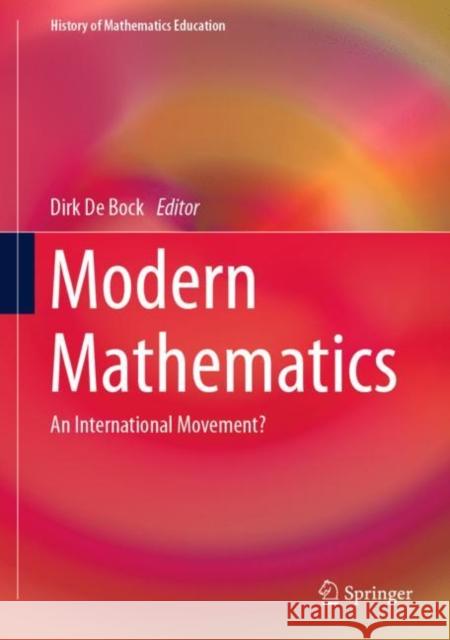
Modern Mathematics: An International Movement?

ISBN-13: 9783031111655 / Angielski / Twarda / 2023 / 599 str.
Dirk De Bock
Modern Mathematics: An International Movement? Dirk d 9783031111655 Springer - książkaWidoczna okładka, to zdjęcie poglądowe, a rzeczywista szata graficzna może różnić się od prezentowanej.

Modern Mathematics: An International Movement?

ISBN-13: 9783031111655 / Angielski / Twarda / 2023 / 599 str.

Dirk De Bock
cena 645,58 zł
(netto: 614,84 VAT:  5%)

Najniższa cena z 30 dni: 578,30 zł
Termin realizacji zamówienia:
ok. 22 dni roboczych
Bez gwarancji dostawy przed świętami

Darmowa dostawa!
inne wydania

The international New Math developments between about 1950 through 1980, are regarded by many mathematics educators and education historians as the most historically important development in curricula of the twentieth century. It attracted the attention of local and international politicians, of teachers, and of parents, and influenced the teaching and learning of mathematics at all levels—kindergarten to college graduate—in many nations. After garnering much initial support it began to attract criticism. But, as Bill Jacob and the late Jerry Becker show in Chapter 17, some of the effects became entrenched.This volume, edited by Professor Dirk De Bock, of Belgium, provides an outstanding overview of the New Math/modern mathematics movement. Chapter authors provide exceptionally high-quality analyses of the rise of the movement, and of subsequent developments, within a range of nations. The first few chapters show how the initial leadership came from mathematicians in European nations and in the United States of America.The background leaders in Europe were Caleb Gattegno and members of a mysterious group of mainly French pure mathematicians, who since the 1930s had published under the name of (a fictitious) “Nicolas Bourbaki.” In the United States, there emerged, during the 1950s various attempts to improve U.S. mathematics curricula and teaching, especially in secondary schools and colleges. This side of the story climaxed in 1957 when the Soviet Union succeeded in launching “Sputnik,” the first satellite.Undoubtedly, this is a landmark publication in education. The foreword was written by Professor Bob Moon, one of a few other scholars to have written on the New Math from an international perspective. The final “epilogue” chapter, by Professor Geert Vanpaemel, a historian, draws together the overall thrust of the volume, and makes links with the general history of curriculum development, especially in science education, including recent globalization trends.


The international New Math developments between about 1950 through 1980, are regarded by many mathematics educators and education historians as the most historically important development in curricula of the twentieth century. It attracted the attention of local and international politicians, of teachers, and of parents, and influenced the teaching and learning of mathematics at all levels—kindergarten to college graduate—in many nations. After garnering much initial support it began to attract criticism. But, as Bill Jacob and the late Jerry Becker show in Chapter 17, some of the effects became entrenched.This volume, edited by Professor Dirk De Bock, of Belgium, provides an outstanding overview of the New Math/modern mathematics movement. Chapter authors provide exceptionally high-quality analyses of the rise of the movement, and of subsequent developments, within a range of nations. The first few chapters show how the initial leadership came from mathematicians in European nations and in the United States of America. The background leaders in Europe were Caleb Gattegno and members of a mysterious group of mainly French pure mathematicians, who since the 1930s had published under the name of (a fictitious) “Nicolas Bourbaki.” In the United States, there emerged, during the 1950s various attempts to improve U.S. mathematics curricula and teaching, especially in secondary schools and colleges. This side of the story climaxed in 1957 when the Soviet Union succeeded in launching “Sputnik,” the first satellite. Undoubtedly, this is a landmark publication in education. The foreword was written by Professor Bob Moon, one of a few other scholars to have written on the New Math from an international perspective. The final “epilogue” chapter, by Professor Geert Vanpaemel, a historian, draws together the overall thrust of the volume, and makes links with the general history of curriculum development, especially in science education, including recent globalization trends.

Kategorie:
Podręczniki
Kategorie BISAC:
Education > Teaching - Subjects - Mathematics
Mathematics > Filozofia i historia matematyki
Education > Curricula
Wydawca:
Springer
Seria wydawnicza:
History of Mathematics Education
Język:
Angielski
ISBN-13:
9783031111655
Rok wydania:
2023
Dostępne języki:
Numer serii:
000801739
Ilość stron:
599
Oprawa:
Twarda
Dodatkowe informacje:
Wydanie ilustrowane

Chapter 1: Modern Mathematics: An International Movement Diversely Shaped in National Contexts (Dirk De Bock)

Part I: Preparing the Reform on Both Sides of the Atlantic

Chapter 2: The Rise of the American New Math Movement: How National Security Anxiety and Mathematical Modernism Disrupted the School Curriculum (David Lindsay Roberts)

Chapter 3: The Early Roots of the European Modern Mathematics Movement: How a Model for the Science of Mathematics Became a Model for Mathematics Education (Dirk De Bock)

Chapter 4: The Royaumont Seminar as a Booster of Communication and Internationalization in the World of Mathematics Education (Fulvia Furinghetti and Marta Menghini)

Part II: Implementation of the Reform Around the World

Chapter 5: The Modern Mathematics Movement in France: Reforming to What Ends? The Contribution of a Cross-over Approach to Modernity (Hélène Gispert)

Chapter 6: West German Neue Mathematik and Some of Its Protagonists (Ysette Weiss)

Chapter 7: New Mathematics in the United Kingdom: Projects and Textbooks as Driving Forces of Curriculum Reform (Leo Rogers)

Chapter 8: Modern Mathematics in Italy: A Difficult Challenge Between Rooted Tradition and Need for Innovation (Fulvia Furinghetti and Marta Menghini)

Chapter 9: The Distinct Facets of Modern Mathematics in Portugal (José Manuel Matos and Mária Cristina Almeida)

Chapter 10: Papy’s Reform of Mathematics Education in Belgium: Development, Implementation, and Controversy (Dirk De Bock and Geert Vanpaemel)

Chapter 11: A Tale of Two Systems: A History of New Math in The Netherlands, 1945–1980 (Danny Beckers)

Chapter 12: Nordic Cooperation on Modernizing Mathematics Teaching, 1960–1967 (Kristín Bjarnadóttir)

Chapter 13: Reforms Inspired by Mathématique Moderne in Poland, 1967–1980 (Zbigniew Semadeni)

Chapter 14: The New Math in Hungary: Tamás Varga’s Complex Mathematics Education Reform (Katalin Gosztonyi)

Chapter 15: New Math and the South Slavs (Snezana Lawrence)

Chapter 16: The Kolmogorov Reform of Mathematics Education in the USSR (Alexandre Borovik)

Chapter 17: The Influence of Royaumont on Mathematics Education in the USA (Jerry Becker and Bill Jacob)

Chapter 18: Aspects of Canadian Versions of So-Called “Modern” Mathematics and Its Teaching: Another Visit to the Old “New” Math(s) (David Pimm and Nathalie Sinclair)

Chapter 19: New Math in Latin America (and a Glimpse at Costa Rica) (Angel Ruiz)

Chapter 20: Modernizing Mathematics Teaching: International Dialogues from Brazil (Elisabete Zardo Búrigo and Wagner Rodrigues Valente)

Chapter 21: Australian School Mathematics and “Colonial Echo” Influences, 1901–1975 (Nerida F. Ellerton and M. A. (Ken) Clements)

Chapter 22: What Did the “New Math Movement” Bring to Hong Kong in the 1960s and the 1970s (and Beyond)? (Man-Keung Siu and Ngai-Ying Wong)

Chapter 23: An International Movement, the Experience of Morocco (Ezzaim Laabid)

Chapter 24: Modern Mathematics Curriculum Reforms in Ghana: UK and USA Influences (Damian Kofi Mereku)


Dirk De Bock is a Professor of Mathematics in the Faculty of Economics and Business at the University of Leuven (Belgium). His research concerns the history of mathematics education, psychological aspects of the teaching and learning of mathematics, and the role of mathematics in economics and finance.

The international New Math developments between about 1950 through 1980, are regarded by many mathematics educators and education historians as the most historically important development in curricula of the twentieth century. It attracted the attention of local and international politicians, of teachers, and of parents, and influenced the teaching and learning of mathematics at all levels—kindergarten to college graduate—in many nations. After garnering much initial support it began to attract criticism. But, as Bill Jacob and the late Jerry Becker show in Chapter 17, some of the effects became entrenched.

This volume, edited by Professor Dirk De Bock, of Belgium, provides an outstanding overview of the New Math/modern mathematics movement. Chapter authors provide exceptionally high-quality analyses of the rise of the movement, and of subsequent developments, within a range of nations. The first few chapters show how the initial leadership came from mathematicians in European nations and in the United States of America.

The background leaders in Europe were Caleb Gattegno and members of a mysterious group of mainly French pure mathematicians, who since the 1930s had published under the name of (a fictitious) “Nicolas Bourbaki.” In the United States, there emerged, during the 1950s various attempts to improve U.S. mathematics curricula and teaching, especially in secondary schools and colleges. This side of the story climaxed in 1957 when the Soviet Union succeeded in launching “Sputnik,” the first satellite.

Undoubtedly, this is a landmark publication in education. The foreword was written by Professor Bob Moon, one of a few other scholars to have written on the New Math from an international perspective. The final “epilogue” chapter, by Professor Geert Vanpaemel, a historian, draws together the overall thrust of the volume, and makes links with the general history of curriculum development, especially in science education, including recent globalization trends.




Udostępnij

Facebook - konto krainaksiazek.pl


Opinie o Krainaksiazek.pl na Opineo.pl

Partner Mybenefit

Krainaksiazek.pl w programie rzetelna firma Krainaksiaze.pl - płatności przez paypal

Czytaj nas na:

Facebook - krainaksiazek.pl
  • książki na zamówienie
  • granty
  • książka na prezent
  • kontakt
  • pomoc
  • opinie
  • regulamin
  • polityka prywatności

Zobacz:

  • Księgarnia czeska

  • Wydawnictwo Książkowe Klimaty

1997-2025 DolnySlask.com Agencja Internetowa

© 1997-2022 krainaksiazek.pl
     
KONTAKT | REGULAMIN | POLITYKA PRYWATNOŚCI | USTAWIENIA PRYWATNOŚCI
Zobacz: Księgarnia Czeska | Wydawnictwo Książkowe Klimaty | Mapa strony | Lista autorów
KrainaKsiazek.PL - Księgarnia Internetowa

Polityka prywatnosci - link
Krainaksiazek.pl - płatnośc Przelewy24
Przechowalnia Przechowalnia



