• Wyszukiwanie zaawansowane
  • Kategorie
  • Kategorie BISAC
  • Książki na zamówienie
  • Promocje
  • Granty
  • Książka na prezent
  • Opinie
  • Pomoc
  • Załóż konto
  • Zaloguj się

Modelling Diesel Combustion » książka


zaloguj się | załóż konto
Logo Krainaksiazek.pl

koszyk

konto

szukaj
topmenu
Księgarnia internetowa
Szukaj
Książki na zamówienie
Promocje
Granty
Książka na prezent
Moje konto
Pomoc
 
 
Wyszukiwanie zaawansowane
Pusty koszyk
Bezpłatna dostawa dla zamówień powyżej 20 złBezpłatna dostawa dla zamówień powyżej 20 zł

Kategorie główne

• Nauka
 [2949965]
• Literatura piękna
 [1857847]

  więcej...
• Turystyka
 [70818]
• Informatyka
 [151303]
• Komiksy
 [35733]
• Encyklopedie
 [23180]
• Dziecięca
 [617748]
• Hobby
 [139972]
• AudioBooki
 [1650]
• Literatura faktu
 [228361]
• Muzyka CD
 [398]
• Słowniki
 [2862]
• Inne
 [444732]
• Kalendarze
 [1620]
• Podręczniki
 [167233]
• Poradniki
 [482388]
• Religia
 [509867]
• Czasopisma
 [533]
• Sport
 [61361]
• Sztuka
 [243125]
• CD, DVD, Video
 [3451]
• Technologie
 [219309]
• Zdrowie
 [101347]
• Książkowe Klimaty
 [123]
• Zabawki
 [2362]
• Puzzle, gry
 [3791]
• Literatura w języku ukraińskim
 [253]
• Art. papiernicze i szkolne
 [7933]
Kategorie szczegółowe BISAC

Modelling Diesel Combustion

ISBN-13: 9789811667442 / Angielski / Miękka / 2023 / 406 str.
P. A. Lakshminarayanan; Yogesh V. Aghav; Rolf Reitz
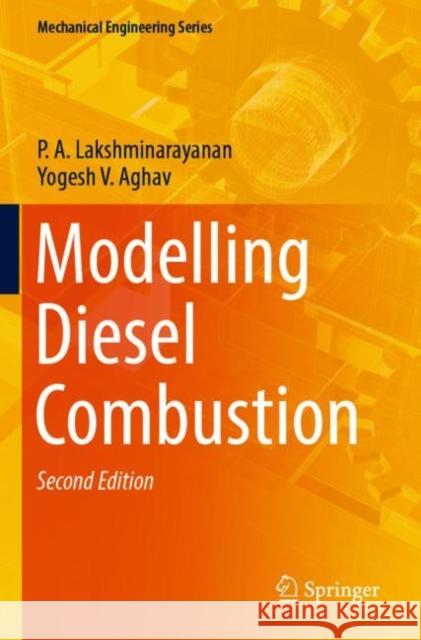
Modelling Diesel Combustion P. A. Lakshminarayanan Yogesh V. Aghav Rolf Reitz 9789811667442 Springer - książkaWidoczna okładka, to zdjęcie poglądowe, a rzeczywista szata graficzna może różnić się od prezentowanej.

Modelling Diesel Combustion

ISBN-13: 9789811667442 / Angielski / Miękka / 2023 / 406 str.

P. A. Lakshminarayanan; Yogesh V. Aghav; Rolf Reitz
cena 443,82
(netto: 422,69 VAT:  5%)

Najniższa cena z 30 dni: 424,07
Termin realizacji zamówienia:
ok. 22 dni roboczych
Bez gwarancji dostawy przed świętami

Darmowa dostawa!
inne wydania

This book comprehensively discusses diesel combustion phenomena like ignition delay, fuel-air mixing, rate of heat release, and emissions of smoke, particulate and nitric oxide. It enables quantitative evaluation of these important phenomena and parameters. Most importantly, it attempts to model them with constants that are independent of engine types and hence they could be applied by the engineers and researchers for a general engine. This book emphasizes the importance of the spray at the wall in precisely describing the heat release and emissions for most of the engines on and off-road. It gives models for heat release and emissions. Every model is thoroughly validated by detailed experiments using a broad range of engines. The book describes an elegant quasi-one-dimensional model for heat release in diesel engines with single as well as multiple injections. The book describes how the two aspects, namely, fuel injection rate and the diameter of the combustion bowl in the piston, have enabled meeting advanced emission, noise, and performance standards. The book also discusses the topics of computational fluid dynamics encompassing RANS and LES models of turbulence. Given the contents, this book will be useful for students, researchers and professionals working in the area of vehicle engineering and engine technology. This book will also be a good professional book for practising engineers in the field of combustion engines and automotive engineering.


This book comprehensively discusses diesel combustion phenomena like ignition delay, fuel-air mixing, rate of heat release, and emissions of smoke, particulate and nitric oxide. It enables quantitative evaluation of these important phenomena and parameters. Most importantly, it attempts to model them with constants that are independent of engine types and hence they could be applied by the engineers and researchers for a general engine. This book emphasizes the importance of the spray at the wall in precisely describing the heat release and emissions for most of the engines on and off-road. It gives models for heat release and emissions. Every model is thoroughly validated by detailed experiments using a broad range of engines. The book describes an elegant quasi-one-dimensional model for heat release in diesel engines with single as well as multiple injections. The book describes how the two aspects, namely, fuel injection rate and the diameter of the combustion bowl in the piston, have enabled meeting advanced emission, noise, and performance standards. The book also discusses the topics of computational fluid dynamics encompassing RANS and LES models of turbulence. Given the contents, this book will be useful for students, researchers and professionals working in the area of vehicle engineering and engine technology. This book will also be a good professional book for practising engineers in the field of combustion engines and automotive engineering.

Kategorie:
Technologie
Kategorie BISAC:
Technology & Engineering > Environmental - Pollution Control
Technology & Engineering > Automotive
Technology & Engineering > Mechanical
Wydawca:
Springer
Seria wydawnicza:
Mechanical Engineering
Język:
Angielski
ISBN-13:
9789811667442
Rok wydania:
2023
Wydanie:
2022
Numer serii:
000287593
Ilość stron:
406
Waga:
0.59 kg
Wymiary:
23.39 x 15.6 x 2.21
Oprawa:
Miękka
Wolumenów:
01
Dodatkowe informacje:
Wydanie ilustrowane

​1 Introduction

Role of Internal Combustion Engines
Developments in DI Diesel engines
Modelling of combustion in DI diesel engines
2 Phenomenology of diesel Combustion and modelling
Combustion Model
Emission models
Theme of the book
3 Experiments
Studies in a bomb
Real engine studies
4 Turbulent Structure of the Diesel Spray
Vaporising spray
Combusting sprays
Summary of the model for vapourising and combusting sprays
Modern view of the vaporising and burning spray
5 Ignition Delay in a Diesel Engine
Definition and Measurement of Ignition Delay
Classical model for Ignition Delay and its extension to other fuels
Phenomenological model of Ignition delay
6 Heat Transfer
7 Heat Release in Indirect Injection engines
Description of the Phenomenological model
Experimental technique
Results and discussions
8 Mixing correlations for smoke and fuel consumption of Direct Injection engines
Characteristic parameter for air fuel mixing in a cross flow
Validation of the mixing parameter
Conclusion
9 Heat Release in Direct Injection Engines
Heat Release Rate in Diesel Engines
Model for Mixing Controlled Combustion
Input rate and dissipation rate of turbulent kinetic energy of fuel spray
Modelling three Regimes of heat release rate
Steps to calculate Heat Release Rate using the new model
Experimental Validation
Heat Release Rate from the Experiments
Estimation of heat transfer across the walls
Results
10 Prediction of the Rate of Heat Release of Mixing-Controlled Combustion in a Common-Rail Engine with Pilot and Post Injections
Authors: Anirudh Jaipuria (Formerly with Ashok Leyland, Chennai), P A Lakshminarayanan (Adjunct Professor, IIT Kanpur)
Introduction
Description of the Model
MCC model
Modelling three regimes for a single injection
Refining the model in the second regime
Modelling the pilot and main injections
Modelling the post-injection
Experimental Validation
Characteristics of the common-rail injector
Experimental measurement of the ROHR and the effect of TDC determination
Results and Discussion
Discussion on the model constants
Summary
11 Hydrocarbons from D I Diesel Engines
HC model
Predicting HC in the exhaust
Discussions
12 Hydrocarbon Emissions from Spark Ignition Engines
Description of the Engine Model
Comparison of the model prediction with engine experiments
Conclusions
13 Smoke from DI Diesel engines
Phenomenon of soot formation
Application to engine conditions
14 Oxides of Nitrogen from Direct Injection Diesel Engines
Exhaust gas recirculation (EGR)
Phenomenology of Oxides of Nitrogen
15 Particulate Matter from Direct Injection Diesel engines
Introduction
Formation of Particulate Matter
Direct Measurement of PM
Components of Particulate Matter (PM)
Sulphur in Fuel
Oil
Hydrocarbon from Fuel and Lubricating Oil
Fuel
Carbon Soot
Measurement of Smoke
Filter Paper Method, Filter Smoke Number (FSN)
Opacity meter, Opacity %
Photo-acoustic sensing
Correlation of soot in PM, FSN, and Opacity
Calculation of Total Particulate Matter
PM Model
Validation of Correlation
Experimental Validation
Discussions
Resolution and Stability of New Generation Smoke meters
The sensitivity of Smoke meters
Cost-effective solution for development
Reliability
Measurement noise
Fit
Conclusions
References
Definitions/Abbreviations
16 Multi-dimensional modelling of diesel combustion: Review
Authors: Yu Shi, Rolf Reitz (University of Wisconsin)
Basic approach
Turbulence modelling
Spray and evaporation modelling
Combustion modelling
Pollutant emissions modelling
Heat transfer modelling
Efficient multi-dimensional simulation of diesel engine combustion with detailed chemistry
CFD codes for engine simulation
Future and challenge
17 Multi-dimensional modelling of diesel combustion: Applications
Authors: Yu Shi, Rolf Reitz (University of Wisconsin)
Case studies
18 Large Eddy Simulation and Prediction of Heat Release, NOx and Soot in diesel and gasoline DI engines (Author: Dr Haiwen Ge) 
Introduction
Why LES? 
How does LES compare with RANS and LES?
Formulations of the LES models: equations
Specific turbulent combustion model and spray models for LES
Examples
Examples from literature
Model validations
Industrial applications
Computational costs
Future and challenges
Appendices
I Estimation of products of combustion from the interferogram
II Estimation of concentration of fuel vapour in the vapourising and combusting spray from the interferogram
III Estimation of Mass and Heat transfer functions
IV Vapour pressure of diesel and fuels A & B and B*
V Calculation of tangential velocity of air in the piston cavity from the inlet swirl number
VI Momentum of useful air of the three different combustion cavities described in Kuo et al (1988)
VII Momentum of useful air for engines A8, B8, C8 and D8
VIII Estimation of spray properties and impingement parameters
IX Calculation of fuel injection rate
X Influence of nozzle features
XI Henry’s Constant Hc for Fuel (n-Octane) in Oil
XII Evaluation of gF* and gG*
XIII In-Cylinder Oxidation of HC
XIV Estimation of Wall Surface Temperature
XV Experimental Data on HC emissions from DI Diesel Engines
XVI Engines list for validating PM model, aspiration, Power, smoke, and PM

Dr. P. A. Lakshminarayanan (born 1950) studied at Indian Institute of Technology Madras for his B. Tech, M.S. and Ph.D. degrees. He worked at Loughborough University of Technology and Kirloskar Oil Engines Ltd. for about five and twenty years, respectively, before moving to Ashok Leyland in 2002 to head the Engine R&D. From 2011 till 2019, he was the CTO, and the Technical Adviser at Simpson and Co. Ltd. Now, he is an adjunct professor at IIT Kanpur.

With his teams, he has developed more than eight diesel and CNG engine platforms and 150 engine types commercially successful for efficiency and cost effectiveness. Two engine designs received prizes from the Institute of Directors (India). Twelve ideas were patented during the development of engines over 40 years. He has authored 54 research papers in journals and conferences of international repute. Four of them received the prizes for integrity and quality of contents from the SAE (Arch Colwell Award), Combustion Society (India), AVL (Graz) and AVL (India) in 1983, 1993, 2005 and 2011, respectively. He has coauthored two books titled “Modeling Diesel Combustion” (Springer 2010) and “Critical Component Wear of Parts in heavy Duty Engines” (John Wiley 2011). He has coedited a handbook “Design and Development of Heavy Duty Diesel Engines” (Springer, 2020). Now, he is editing his fourth book “Thermal Management of Engines for Performance and Emissions” which is due in 2021. He is elected to the fellowships of SAE (2009), INAE (2013) and ISEES (2018).

Dr. Yogesh V. Aghav received B. E. and M. Tech. degrees from VIT Pune and IIT Madras, respectively. His Doctoral degree is from IIT Delhi for his research work on heat release in diesel engines.  Currently, he is the associate vice president of the corporate Research and Engineering, Kirloskar Oil Engines Ltd., Pune, with responsibilities for the performance, emissions, NVH, and development of internal combustion engines running on diesel and alternative fuels like natural gas and biodiesel. For two years, he served FEV, Pune, and helped to found the organization.  For the last 25 years, he has lead teams to develop many engines of swept volumes ranging from 300 c.c. to 32-liter applied to agriculture, off-highway, power generation, construction equipment, marine, and defense.

He has published more than 50 research papers in ASME, SAE, and IMechE journals. He is associated with the boards of studies of VIT and MITADT, Pune. He advises the Universities and takes part in faculty development. He is a member of the SAE India.

Prof. Rolf Reitz’s research interests include internal combustion engines and sprays.  He is former director of the Engine Research Center and is Emeritus Wisconsin Distinguished Professor of Mechanical Engineering at the University of Wisconsin-Madison.  Before joining UW-Madison he spent six years at the GM Research Laboratories, three years as a research staff member at Princeton University, and two years as a research scientist at the Courant Institute of Mathematical Sciences, New York University.   He received his Ph.D. in Mechanical and Aerospace Engineering from Princeton University in 1978.  Professor Reitz is a Fellow member of SAE and ASME and he serves as a consultant to many industries through his consulting company, Wisconsin Engine Research Consultants.  He is Editor (Americas) and co-founder of the International Journal of Engine Research and is past-Chairman of the Institute of Liquid Atomization and Spraying Systems – North and South America.  He and his group have won major research awards, and he has co-authored over 550 technical papers on engine research. 

Yu Shi received his Ph.D. in Mechanical Engineering from the Engine Research Center at the University of Wisconsin-Madison, where he specialized in computational optimization of internal combustion engines. After finishing his Ph.D. in 2009, he worked as a postdoctoral associate in the Department of Chemical Engineering at the Massachusetts Institute of Technology, where he contributed to the field of accelerated reactive flow computations using heterogeneous computational architectures. He is currently Senior Data Scientist with the Phillips 66 Company based in Houston, Texas, where he applies advanced machine learning to business analytics.

Dr. Haiwen Ge received B.Eng. and M.Eng. in Engineering Thermophysics from University of Science and Technology of China in 1999 and 2002, respectively. In 2006, he received Doctor of Science in Physical Chemistry from University of Heidelberg, Germany. He joined the Engine Research Center, University of Wisconsin-Madison as a postdoctoral fellow in 2006. Since 2010, he worked for the Ford Motor Company as a resident engineer. In 2013, he joined the Fiat-Chrysler Automobiles (FCA), where he was the Senior Technical Specialist in Combustion Development and Technical Lead in 3D Combustion CFD. In 2016-2017, he was a Senior Combustion CFD Engineer of John Deere. In 2017, he joined the Department of Mechanical Engineering, Texas Tech University as an instructor. He has published one monograph, two book chapters, 68 peer-reviewed publications, and 67 conference papers.

Mr. Anirudh Jaipuria completed his B.Tech in Mechanical Engineering from National Institute of Technology-Surat, India after which he joined Ashok Leyland Ltd. as Deputy Manager where he lead the development of the BS-IV Heavy-duty Diesel engine family. Following that he completed his Master’s in Combustion Engines from RWTH Aachen, Germany. In 2012, he joined MAN Diesel & Turbo as Simulation Engineer responsible for Valvetrain development for 4-Stroke Large diesel engines. Since 2015, he has been with BMW M-GmbH, Munich as SE-Team leader and technical specialist responsible for all dynamic simulations and drivetrain development for high-performance sports cars. He has five publications and has been a speaker at two international conferences.

This book comprehensively discusses diesel combustion phenomena like ignition delay, fuel-air mixing, rate of heat release, and emissions of smoke, particulate and nitric oxide. It enables quantitative evaluation of these important phenomena and parameters. Most importantly, it attempts to model them with constants that are independent of engine types and hence they could be applied by the engineers and researchers for a general engine. This book emphasizes the importance of the spray at the wall in precisely describing the heat release and emissions for most of the engines on and off-road. It gives models for heat release and emissions. Every model is thoroughly validated by detailed experiments using a broad range of engines. The book describes an elegant quasi-one-dimensional model for heat release in diesel engines with single as well as multiple injections. The book describes how the two aspects, namely, fuel injection rate and the diameter of the combustion bowl in the piston, have enabled meeting advanced emission, noise, and performance standards. The book also discusses the topics of computational fluid dynamics encompassing RANS and LES models of turbulence. Given the contents, this book will be useful for students, researchers and professionals working in the area of vehicle engineering and engine technology. This book will also be a good professional book for practising engineers in the field of combustion engines and automotive engineering.




Udostępnij

Facebook - konto krainaksiazek.pl


Opinie o Krainaksiazek.pl na Opineo.pl

Partner Mybenefit

Krainaksiazek.pl w programie rzetelna firma Krainaksiaze.pl - płatności przez paypal

Czytaj nas na:

Facebook - krainaksiazek.pl
  • książki na zamówienie
  • granty
  • książka na prezent
  • kontakt
  • pomoc
  • opinie
  • regulamin
  • polityka prywatności

Zobacz:

  • Księgarnia czeska

  • Wydawnictwo Książkowe Klimaty

1997-2025 DolnySlask.com Agencja Internetowa

© 1997-2022 krainaksiazek.pl
     
KONTAKT | REGULAMIN | POLITYKA PRYWATNOŚCI | USTAWIENIA PRYWATNOŚCI
Zobacz: Księgarnia Czeska | Wydawnictwo Książkowe Klimaty | Mapa strony | Lista autorów
KrainaKsiazek.PL - Księgarnia Internetowa

Polityka prywatnosci - link
Krainaksiazek.pl - płatnośc Przelewy24
Przechowalnia Przechowalnia




