• Wyszukiwanie zaawansowane
  • Kategorie
  • Kategorie BISAC
  • Książki na zamówienie
  • Promocje
  • Granty
  • Książka na prezent
  • Opinie
  • Pomoc
  • Załóż konto
  • Zaloguj się

Modelling Diesel Combustion » książka


zaloguj się | załóż konto
Logo Krainaksiazek.pl

koszyk

konto

szukaj
topmenu
Księgarnia internetowa
Szukaj
Książki na zamówienie
Promocje
Granty
Książka na prezent
Moje konto
Pomoc
 
 
Wyszukiwanie zaawansowane
Pusty koszyk
Bezpłatna dostawa dla zamówień powyżej 20 złBezpłatna dostawa dla zamówień powyżej 20 zł

Kategorie główne

• Nauka
 [2946600]
• Literatura piękna
 [1856966]

  więcej...
• Turystyka
 [72221]
• Informatyka
 [151456]
• Komiksy
 [35826]
• Encyklopedie
 [23190]
• Dziecięca
 [619653]
• Hobby
 [140543]
• AudioBooki
 [1577]
• Literatura faktu
 [228355]
• Muzyka CD
 [410]
• Słowniki
 [2874]
• Inne
 [445822]
• Kalendarze
 [1744]
• Podręczniki
 [167141]
• Poradniki
 [482898]
• Religia
 [510455]
• Czasopisma
 [526]
• Sport
 [61590]
• Sztuka
 [243598]
• CD, DVD, Video
 [3423]
• Technologie
 [219201]
• Zdrowie
 [101638]
• Książkowe Klimaty
 [124]
• Zabawki
 [2473]
• Puzzle, gry
 [3898]
• Literatura w języku ukraińskim
 [254]
• Art. papiernicze i szkolne
 [8170]
Kategorie szczegółowe BISAC

Modelling Diesel Combustion

ISBN-13: 9789048138845 / Angielski / Twarda / 2010 / 305 str.
P. A. Lakshminarayanan; Yoghesh V. Aghav; Yu Shi
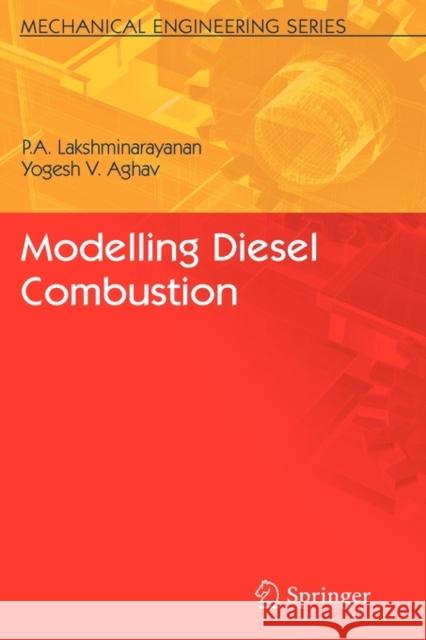
Modelling Diesel Combustion P. A. Lakshminarayanan Yoghesh V. Aghav Yu Shi 9789048138845 Springer - książkaWidoczna okładka, to zdjęcie poglądowe, a rzeczywista szata graficzna może różnić się od prezentowanej.

Modelling Diesel Combustion

ISBN-13: 9789048138845 / Angielski / Twarda / 2010 / 305 str.

P. A. Lakshminarayanan; Yoghesh V. Aghav; Yu Shi
cena 605,23 zł
(netto: 576,41 VAT:  5%)

Najniższa cena z 30 dni: 578,30 zł
Termin realizacji zamówienia:
ok. 22 dni roboczych
Bez gwarancji dostawy przed świętami

Darmowa dostawa!
inne wydania

Phenomenology of Diesel Combustion and Modeling Diesel is the most efficient combustion engine today and it plays an important role in transport of goods and passengers on land and on high seas. The emissions must be controlled as stipulated by the society without sacrificing the legendary fuel economy of the diesel engines. These important drivers caused innovations in diesel engineering like re-entrant combustion chambers in the piston, lower swirl support and high pressure injection, in turn reducing the ignition delay and hence the nitric oxides. The limits on emissions are being continually reduced. The- fore, the required accuracy of the models to predict the emissions and efficiency of the engines is high. The phenomenological combustion models based on physical and chemical description of the processes in the engine are practical to describe diesel engine combustion and to carry out parametric studies. This is because the injection process, which can be relatively well predicted, has the dominant effect on mixture formation and subsequent course of combustion. The need for improving these models by incorporating new developments in engine designs is explained in Chapter 2. With model based control programs used in the Electronic Control Units of the engines, phenomenological models are assuming more importance now because the detailed CFD based models are too slow to be handled by the Electronic Control Units. Experimental work is necessary to develop the basic understanding of the pr- esses."


Kategorie:
Technologie
Kategorie BISAC:
Technology & Engineering > Automotive
Science > Mechanika klasyczna płynów
Technology & Engineering > Mechanical
Wydawca:
Springer
Seria wydawnicza:
Mechanical Engineering
Język:
Angielski
ISBN-13:
9789048138845
Rok wydania:
2010
Wydanie:
2010
Numer serii:
000287593
Ilość stron:
305
Waga:
0.67 kg
Wymiary:
24.2 x 16.8 x 2.3
Oprawa:
Twarda
Wolumenów:
01
Dodatkowe informacje:
Bibliografia
Wydanie ilustrowane

Contents; Preface ; Phenomenology of Diesel Combustion and Modeling; 1 Introduction; Role of Internal Combustion Engines; Developments in DI Diesel engines ; Modelling of combustion in DI diesel engines; 2 Phenomenology of diesel Combustion and modelling ; Combustion Model; Emission models; Theme of the book; 3 Experiments; Studies in a bomb; Real engine studies; 4 Turbulent Structure of the Diesel Spray; Vaporising spray; Combusting sprays; Summary of the model for vapourising and combusting sprays; Modern view of the vaporising and burning spray ; 5 Ignition Delay in a Diesel Engine; Definition and Measurement of Ignition Delay ; Classical model for Ignition Delay and its extension to other fuels; Phenomenological model of Ignition delay; 6 Heat Transfer; 7 Heat Release in Indirect Injection engines; Description of the Phenomenological model; Experimental technique; Results and discussions; 8 Mixing correlations for smoke and fuel consumption of Direct Injection engines; Characteristic parameter for air fuel mixing in a cross flow; Validation of the mixing parameter; Conclusion; 9 Heat Release in Direct Injection Engines; Heat Release Rate in Diesel Engines; Model for Mixing Controlled Combustion; Input rate and dissipation rate of turbulent kinetic energy of fuel spray; Modelling three Regimes of heat release rate; Steps to calculate Heat Release Rate using the new model; Experimental Validation; Heat Release Rate from the Experiments; Estimation of heat transfer across the walls; Results; 10 Hydrocarbons from D I Diesel Engines; HC model; Predicting HC in the exhaust; Discussions; 11 Hydrocarbon Emissions from Spark Ignition Engines; Description of the Engine Mode; Comparison of the model prediction with engine experiments; Conclusions; 12 Smoke from DI Diesel engines; Phenomenon of soot formation; Application to engine conditions; 13 Oxides of Nitrogen from Direct Injection Diesel Engines; Exhaust gas recirculation (EGR); Phenomenology of Oxides of Nitrogen; 14 Particulate Matter from Direct Injection Diesel engines; Phenomenology of Particulate Matter (PM) ; Validation of Correlation; 15 Multi-dimensional modelling of diesel combustion: Review; Basic approach; Turbulence modelling ; Spray and evaporation modelling ; Combustion modelling; Pollutant emissions modelling; Heat transfer modelling; Efficient multi-dimensional simulation of diesel engine combustion with detailed chemistry; CFD codes for engine simulation; Future and challenge; 16 Multi-dimensional modelling of diesel combustion: Applications; Case studies; Appendices; I Estimation of products of combustion from the interferogram; II Estimation of concentration of fuel vapour in the vapourising and combusting spray from the interferogram; III Estimation of Mass and Heat transfer functions; IV Vapour pressure of diesel and fuels A & B and B*; V Calculation of tangential velocity of air in the piston cavity from the inlet swirl number; VI Momentum of useful air of the three different combustion cavities described in Kuo et al (1988); VII Momentum of useful air for engines A8, B8, C8 and D8; VIII Estimation of spray properties and impingement parameters ; IX Calculation of fuel injection rate; X Influence of nozzle features ; XI Henry’s Constant Hc for Fuel (n-Octane) in Oil; XII Evaluation of gF* and gG* ; XIII In-Cylinder Oxidation of HC ; XIV Estimation of Wall Surface Temperature; XV Experimental Data on HC emissions from DI Diesel Engines; Index

The diesel engine is the most efficient combustion engine today and it plays an important role in transport of goods and passengers by land and sea. However, the emissions must be controlled without sacrificing the legendary fuel economy of the diesel engines. These important drivers have caused innovations in diesel engineering like re-entrant combustion chambers in the piston, lower swirl support and high pressure injection, in turn reducing the ignition delay and hence the nitric oxides.

This book is a detailed discussion of diesel combustion phenomena like ignition delay, fuel air mixing, rate of heat release, and emissions of smoke, particulate and nitric oxide. It enables quantitative evaluation of these important phenomena and parameters. Most importantly, it attempts to model them with constants that are independent of engine types.

This work recognises the importance of the spray at the wall in precisely describing the heat release and emissions for most of the engines on and off road. It gives models for heat release and emissions. Every model is thoroughly validated by detailed experiments using a broad range of engines. Throughout the book, the models use constants that are independent of engine type or design and hence they could be applied by the designer and researcher for a general engine. All the models not only describe the trends of important parameters but also quantitatively close to the experimentally observed results.

The enhanced understanding of the phenomena like turbulent flows, high-pressure sprays naturally converges to quantitative prediction using multi-dimensional CFD tools to reveal finer details of in-cylinder processes of diesel combustion. The CFD tools are introduced with case studies in two chapters of the book to help study innovative combustion concepts and improve engine designs in terms of emissions reduction and fuel economy.


Udostępnij

Facebook - konto krainaksiazek.pl


Opinie o Krainaksiazek.pl na Opineo.pl

Partner Mybenefit

Krainaksiazek.pl w programie rzetelna firma Krainaksiaze.pl - płatności przez paypal

Czytaj nas na:

Facebook - krainaksiazek.pl
  • książki na zamówienie
  • granty
  • książka na prezent
  • kontakt
  • pomoc
  • opinie
  • regulamin
  • polityka prywatności

Zobacz:

  • Księgarnia czeska

  • Wydawnictwo Książkowe Klimaty

1997-2025 DolnySlask.com Agencja Internetowa

© 1997-2022 krainaksiazek.pl
     
KONTAKT | REGULAMIN | POLITYKA PRYWATNOŚCI | USTAWIENIA PRYWATNOŚCI
Zobacz: Księgarnia Czeska | Wydawnictwo Książkowe Klimaty | Mapa strony | Lista autorów
KrainaKsiazek.PL - Księgarnia Internetowa

Polityka prywatnosci - link
Krainaksiazek.pl - płatnośc Przelewy24
Przechowalnia Przechowalnia





