• Wyszukiwanie zaawansowane
  • Kategorie
  • Kategorie BISAC
  • Książki na zamówienie
  • Promocje
  • Granty
  • Książka na prezent
  • Opinie
  • Pomoc
  • Załóż konto
  • Zaloguj się

Modeling and Control of Fuel Cells: Distributed Generation Applications » książka


zaloguj się | załóż konto
Logo Krainaksiazek.pl

koszyk

konto

szukaj
topmenu
Księgarnia internetowa
Szukaj
Książki na zamówienie
Promocje
Granty
Książka na prezent
Moje konto
Pomoc
 
 
Wyszukiwanie zaawansowane
Pusty koszyk
Bezpłatna dostawa dla zamówień powyżej 20 złBezpłatna dostawa dla zamówień powyżej 20 zł

Kategorie główne

• Nauka
 [2946600]
• Literatura piękna
 [1856966]

  więcej...
• Turystyka
 [72221]
• Informatyka
 [151456]
• Komiksy
 [35826]
• Encyklopedie
 [23190]
• Dziecięca
 [619653]
• Hobby
 [140543]
• AudioBooki
 [1577]
• Literatura faktu
 [228355]
• Muzyka CD
 [410]
• Słowniki
 [2874]
• Inne
 [445822]
• Kalendarze
 [1744]
• Podręczniki
 [167141]
• Poradniki
 [482898]
• Religia
 [510455]
• Czasopisma
 [526]
• Sport
 [61590]
• Sztuka
 [243598]
• CD, DVD, Video
 [3423]
• Technologie
 [219201]
• Zdrowie
 [101638]
• Książkowe Klimaty
 [124]
• Zabawki
 [2473]
• Puzzle, gry
 [3898]
• Literatura w języku ukraińskim
 [254]
• Art. papiernicze i szkolne
 [8170]
Kategorie szczegółowe BISAC

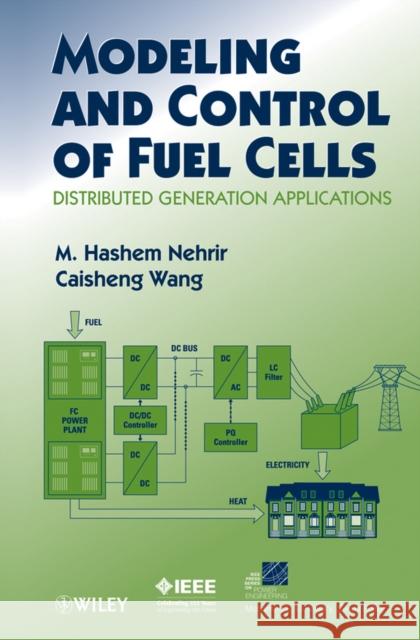
Modeling and Control of Fuel Cells: Distributed Generation Applications

ISBN-13: 9780470233283 / Angielski / Twarda / 2009 / 312 str.
M. Nehrir
Modeling and Control of Fuel Cells: Distributed Generation Applications Nehrir, M. H. 9780470233283 IEEE Computer Society Press - książkaWidoczna okładka, to zdjęcie poglądowe, a rzeczywista szata graficzna może różnić się od prezentowanej.

Modeling and Control of Fuel Cells: Distributed Generation Applications

ISBN-13: 9780470233283 / Angielski / Twarda / 2009 / 312 str.

M. Nehrir
cena 600,48 zł
(netto: 571,89 VAT:  5%)

Najniższa cena z 30 dni: 594,34 zł
Termin realizacji zamówienia:
ok. 30 dni roboczych
Bez gwarancji dostawy przed świętami

Darmowa dostawa!

The only book available on fuel cell modeling and control with distributed power generation applications The emerging fuel cell (FC) technology is growing rapidly in its applications from small-scale portable electronics to large-scale power generation. This book gives students, engineers, and scientists a solid understanding of the FC dynamic modeling and controller design to adapt FCs to particular applications in distributed power generation. The book begins with a fascinating introduction to the subject, including a brief history of the U.S. electric utility formation and restructuring. Next, it provides coverage of power deregulation and distributed generation (DG), DG types, fuel cell DGs, and the hydrogen economy. Building on that foundation, it covers:

  • Principle operations of fuel cells
  • Dynamic modeling and simulation of PEM and solid-oxide fuel cells
  • Principle operations and modeling of electrolyzers
  • Power electronic interfacing circuits for fuel cell applications
  • Control of grid-connected and stand-alone fuel cell power generation systems
  • Hybrid fuel cell-based energy system case studies
  • Present challenges and the future of fuel cells
MATLAB/SIMULINK-based models and their applications are available via a companion Web site. Modeling and Control of Fuel Cells is an excellent reference book for students and professionals in electrical, chemical, and mechanical engineering and scientists working in the FC area.

Kategorie:
Technologie
Kategorie BISAC:
Technology & Engineering > Power Resources - Alternative & Renewable
Wydawca:
IEEE Computer Society Press
Seria wydawnicza:
IEEE Press Series on Power Engineering
Język:
Angielski
ISBN-13:
9780470233283
Rok wydania:
2009
Numer serii:
000133992
Ilość stron:
312
Waga:
0.54 kg
Wymiary:
23.57 x 16.0 x 1.96
Oprawa:
Twarda
Wolumenów:
01
Dodatkowe informacje:
Bibliografia

?Nehrir and Wang have written this guide for students, engineers and professionals on fuel cell modeling and their emergence as large–scale power generators.? ( Book News, September 2009)

Preface.

Acknowledgments.

1 Introduction.

1.1 Background: A Brief History of U.S. Electric Utility Formation and Restructuring.

1.2 Power Deregulation and Distributed Generation.

1.3 DG Types.

1.4 Fuel Cell DG.

1.5 The Hydrogen Economy.

2 Principles of Operation of Fuel Cells.

2.1 Introduction.

2.2 Chemical and Thermal Energy of an Element.

2.3 Fundamentals of Thermodynamics.

2.4 Fundamentals of Electrochemical Processes.

2.5 Energy Balance in Chemical Reactions.

2.6 The Nernst Equation.

2.7 Fuel Cell Basics.

2.8 Types of Fuel Cells.

2.9 Fuel Cell Equivalent Circuit.

2.10 Capacitance of Double–Layer Charge Effect.

2.11 Summary.

3 Dynamic Modeling and Simulation of PEM Fuel Cells.

3.1 Introduction: Need for Fuel Cell Dynamic Models.

3.2 Nomenclature (PEMFC).

3.3 PEMFC Dynamic Model Development.

3.4 PEMFC Model Structure.

3.5 Equivalent Electrical Circuit Model of PEMFC.

3.6 PEMFC Model Validation.

4 Dynamic Modeling and Simulation of Solid Oxide Fuel Cells.

4.1 Introduction.

4.2 Nomenclature (SOFC).

4.3 SOFC Dynamic Model Development.

4.4 SOFC Dynamic Model Structure.

4.5 SOFC Model Response Constant Fuel Flow Operation.

4.6 SOFC Model Response Constant Fuel Utilization Operation.

5 Principles of Operation and Modeling of Electrolyzers.

5.1 Principle of Operation of Electrolyzers.

5.2 Dynamic Modeling of Electrolyzers.

5.3 Electrolyzer Model Implementation.

6 Power Electronic Interfacing Circuits for Fuel Cell Applications.

6.1 Introduction.

6.2 Overview of Basic Power Electronic Switches.

6.3 ac/dc Rectifiers.

6.4 dc to dc Converters.

6.5 Three–Phase dc/ac Inverters.

7 Control of Grid–Connected Fuel Cell Power Generation Systems.

7.1 Introduction.

7.2 Grid–Connected System Configuration.

7.3 Controller Designs for dc/dc Converters and the Inverter.

7.4 Simulation Results.

7.5 Summary.

8 Control of Stand–Alone Fuel Cell Power Generation Systems.

8.1 Introduction.

8.2 System Description and Control Strategy.

8.3 Load Transient Mitigation Control.

8.4 Simulation Results.

8.5 Summary.

9 Hybrid Fuel Cell Based Energy System Case Studies.

9.1 Introduction.

9.2 Hybrid Electronically Interfaced Systems.

9.3 Fuel Cells in Hybrid Combined Heat and Power Operation Mode.

9.4 Case Study I: A Hybrid Stand–Alone Wind PV FC System.

9.5 Case Study II: SOFC Efficiency Evaluation in Hybrid Operation Mode.

9.6 Summary.

10 Present Challenges and Future of Fuel Cells.

10.1 Introduction.

10.2 Fuel Cell System Operations.

10.3 Present Challenges and Opportunities.

10.4 U.S. Fuel Cell R&D Programs.

10.5 Future of Fuel Cells: A Summary and Authors Opinions.

References.

Appendix A Instruction for Running the PEMFC and SOFC Models and Their Distributed Generation Application Models.

Index.

M. HASHEM NEHRIR, PhD, is a Professor of Electrical and Computer Engineering at Montana State University–Bozeman. His primary areas of interest include modeling and control of power systems, alternative energy power generation systems, and applications of intelligent controls to power systems. In addition to this book, he is the author of two textbooks and the author or coauthor of numerous technical papers. He is a member of the IEEE PES Energy Development and Power Generation Committee and currently is Vice Chair of the IEEE PES Energy Development Subcommittee.

CAISHENG WANG, PhD, is Assistant Professor at Wayne State University in Detroit, Michigan. He has worked in the areas of both large power systems and distributed generation systems, including alternative energy sources. As a part of his doctoral research, during 2002 2006, Dr. Wang was involved in fuel cell modeling and control and design of hybrid alternative energy power generation sources, including fuel cells.

The only book available on fuel cell modeling and control with distributed power generation applications

The emerging fuel cell (FC) technology is growing rapidly in its applications from small–scale portable electronics to large–scale power generation. This book gives students, engineers, and scientists a solid understanding of the FC dynamic modeling and controller design to adapt FCs to particular applications in distributed power generation.

The book begins with a fascinating introduction to the subject, including a brief history of the U.S. electric utility formation and restructuring. Next, it provides coverage of power deregulation and distributed generation (DG), DG types, fuel cell DGs, and the hydrogen economy. Building on that foundation, it covers:

  • Principle operations of fuel cells
  • Dynamic modeling and simulation of PEM and solid–oxide fuel cells

  • Principle operations and modeling of electrolyzers

  • Power electronic interfacing circuits for fuel cell applications

  • Control of grid–connected and stand–alone fuel cell power generation systems

  • Hybrid fuel cell based energy system case studies

  • Present challenges and the future of fuel cells

MATLAB/SIMULINK–based models and their applications are available via a companion Web site. Modeling and Control of Fuel Cells is an excellent reference book for students and professionals in electrical, chemical, and mechanical engineering and scientists working in the FC area.


Udostępnij

Facebook - konto krainaksiazek.pl


Opinie o Krainaksiazek.pl na Opineo.pl

Partner Mybenefit

Krainaksiazek.pl w programie rzetelna firma Krainaksiaze.pl - płatności przez paypal

Czytaj nas na:

Facebook - krainaksiazek.pl
  • książki na zamówienie
  • granty
  • książka na prezent
  • kontakt
  • pomoc
  • opinie
  • regulamin
  • polityka prywatności

Zobacz:

  • Księgarnia czeska

  • Wydawnictwo Książkowe Klimaty

1997-2025 DolnySlask.com Agencja Internetowa

© 1997-2022 krainaksiazek.pl
     
KONTAKT | REGULAMIN | POLITYKA PRYWATNOŚCI | USTAWIENIA PRYWATNOŚCI
Zobacz: Księgarnia Czeska | Wydawnictwo Książkowe Klimaty | Mapa strony | Lista autorów
KrainaKsiazek.PL - Księgarnia Internetowa

Polityka prywatnosci - link
Krainaksiazek.pl - płatnośc Przelewy24
Przechowalnia Przechowalnia






