• Wyszukiwanie zaawansowane
  • Kategorie
  • Kategorie BISAC
  • Książki na zamówienie
  • Promocje
  • Granty
  • Książka na prezent
  • Opinie
  • Pomoc
  • Załóż konto
  • Zaloguj się

Modeling Tumor Vasculature: Molecular, Cellular, and Tissue Level Aspects and Implications » książka


zaloguj się | załóż konto
Logo Krainaksiazek.pl

koszyk

konto

szukaj
topmenu
Księgarnia internetowa
Szukaj
Książki na zamówienie
Promocje
Granty
Książka na prezent
Moje konto
Pomoc
 
 
Wyszukiwanie zaawansowane
Pusty koszyk
Bezpłatna dostawa dla zamówień powyżej 20 złBezpłatna dostawa dla zamówień powyżej 20 zł

Kategorie główne

• Nauka
 [2944077]
• Literatura piękna
 [1814251]

  więcej...
• Turystyka
 [70679]
• Informatyka
 [151074]
• Komiksy
 [35590]
• Encyklopedie
 [23169]
• Dziecięca
 [611005]
• Hobby
 [136031]
• AudioBooki
 [1718]
• Literatura faktu
 [225599]
• Muzyka CD
 [379]
• Słowniki
 [2916]
• Inne
 [443741]
• Kalendarze
 [1187]
• Podręczniki
 [166463]
• Poradniki
 [469211]
• Religia
 [506887]
• Czasopisma
 [481]
• Sport
 [61343]
• Sztuka
 [242115]
• CD, DVD, Video
 [3348]
• Technologie
 [219293]
• Zdrowie
 [98602]
• Książkowe Klimaty
 [124]
• Zabawki
 [2385]
• Puzzle, gry
 [3504]
• Literatura w języku ukraińskim
 [260]
• Art. papiernicze i szkolne
 [7151]
Kategorie szczegółowe BISAC

Modeling Tumor Vasculature: Molecular, Cellular, and Tissue Level Aspects and Implications

ISBN-13: 9781461400516 / Angielski / Twarda / 2011 / 412 str.
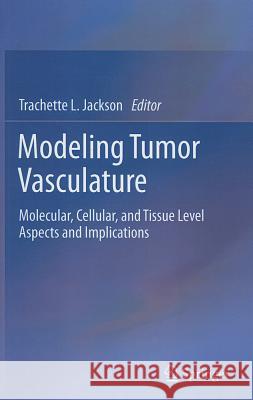
Trachette L. Jackson
Modeling Tumor Vasculature: Molecular, Cellular, and Tissue Level Aspects and Implications Jackson, Trachette L. 9781461400516 Not Avail - książkaWidoczna okładka, to zdjęcie poglądowe, a rzeczywista szata graficzna może różnić się od prezentowanej.

Modeling Tumor Vasculature: Molecular, Cellular, and Tissue Level Aspects and Implications

ISBN-13: 9781461400516 / Angielski / Twarda / 2011 / 412 str.

Trachette L. Jackson
cena 603,81
(netto: 575,06 VAT:  5%)

Najniższa cena z 30 dni: 578,30
Termin realizacji zamówienia:
ok. 22 dni roboczych.

Darmowa dostawa!

To profoundly understand biology and harness its intricacies for human benefit and the mitigation of human harm requires cross-disciplinary approaches that incorporate sophisticated computational and mathematical modeling techniques. These integrative strategies are essential to achieve rapid and significant progress in issues, in health and disease, which span molecular, cellular and tissue levels. The use of mathematical models to describe various aspects of tumor growth has a very long history, dating back over six decades. Recently, however, experimental and computational advances have improved our in the understanding of how processes act at multiple scales to mediate the development of tumor vasculature and drive the advancement of cancer. This book will showcase the development and utilization of new computational and mathematical approaches to address multiscale challenges associated with tumor vascular development. In Part I: Cell Signaling and Molecular Aspects of Tumor Blood Vessel Formation, it will be come clear that mathematical modeling can help to biochemically and biomechanically phenotype one of the most important cell types involved in cancer progression: vascular endothelial cells. When subverted by the tumor modulated environment, vascular endothelial cells form a new vascular supply capable of nourishing and translocating cancer cells to other tissues. The models in Part I illustrate the importance of quantitative approaches for gaining a deeper understanding of how normal and abnormal aspects of signal integration culminate in the cell proliferation, migration, and survival decisions that result in pathological tumor angiogenesis. The focus of Part II is the angiogenesis cascade and all of its complexities. Successful angiogenesis is mediated by the intricate interplay between biochemical and biomechanical mechanisms, including cell-cell and cell-matrix interactions, cell surface receptor binding, and intracellular signal transduction. A major challenge facing the cancer research community is to integrate known information in a way that improves our understanding of the principal underpinnings driving tumor angiogenesis and that will advance efforts aimed at the development of new therapies for treating cancer. The chapters in Part II will highlight several mathematical and computational approaches for that can potentially address this challenge. While the first two thirds of the book's chapters demonstrate how important insights can be gained by studying cell signaling and vascular morphology and function, the series of chapters in Part III: Whole Organ Modeling of Tumor Growth and Vasculature, will integrate vasculature development with tumor growth dynamics. These two processes strongly depend on one another in ways that can only be theoretically investigated by biophysical approaches that cut across several levels of biological organization and describe both the tumor and the developing vasculature as they co-evolve. The purpose of this edited volume is not to provide a comprehensive review of all modeling efforts that address tumor vascular modeling; instead, a variety of interesting and innovative mathematical modeling approaches for understanding the development and effects of tumor vasculature are highlighted in order to illustrate some of the emerging trends in the field.


Kategorie:
Nauka, Medycyna
Kategorie BISAC:
Medical > Oncology - General
Medical > Farmakologia
Wydawca:
Not Avail
Język:
Angielski
ISBN-13:
9781461400516
Rok wydania:
2011
Ilość stron:
412
Waga:
0.77 kg
Wymiary:
23.37 x 15.75 x 3.05
Oprawa:
Twarda
Wolumenów:
01
Dodatkowe informacje:
Bibliografia
Wydanie ilustrowane

Part I:  Cell Signaling and Molecular Aspects of Tumor Blood Vessel Formation


Chapter 1:  A stochastic model of the vascular endothelial growth factor (VEGF)

       receptor:  Implications for cancer therapy - Tomas Alarcon


Chapter 2:  Simulating therapeutics using multiscale models of the VEGF receptor

                   system in cancer - Feilim Mac Gabhann, Marianne O. Stefanini, Aleksander     

                   S. Popel


Chapter 3:  Linking EC Stimulation to Tumor Growth and Vascular Density:  The  

                               VEGF-BCL2-CXCL8 pathway – Harsh Jain and Trachette Jackson


Chapter 4: Investigating the Role of Cross-Talk Between Chemical and Stromal Factors

      in Endothelial Cell Phenotype Determination – Amy Bauer and Thimo Rolf


Part II:  Angiogenesis


Chapter 5:  A Hybrid Discrete-Continuum Model of Tumor Induced Angiogenesis–

       Alexander Anderson, Mark Chaplain and Steven McDougal


Chapter 6:  Cell-based Models of Angiogenesis - Yi Jiang, Amy L. Bauer, Trachette   

                               Jackson


Chapter 7:  A cell-based model of endothelial cell migration, proliferation, and

                   maturation in corneal angiogenesis – Trachette Jackson and Xiaoming Zheng


Chapter 8:  Blood flow and tumour-induced angiogenesis: Dynamically adapting vascular   

networks - Mark A J Chaplain, Steven R McDougall and Alexander R A     Anderson


            Chapter 9: Modeling structural and functional adaptation of tumor vessel networks       

                              during anti-angiogenic therapy - Lance L Munn, Walid Kamoun, Michael

                              Dupin and James Alex Tyrrell


Part III:  Whole Organ Modeling of Tumor Growth and Vasculature


Chapter 10:  Effect of vascularization on glioma tumor growth – H. Hatzikirou, A.  

         Chauviere, J. Lowengrub, J. De Groot, Vittorio Cristini


Chapter 11:  Particle Simulations of Growth:  Application to Tumorigenesis - Michael

                     Bergdorf, Florian Milde and Petros Koumoutsakos


Chapter 12:  Particle Simulations of Growth:  Application to Angiogenesis – Florian

        Milde, Michael Bergdorf and Petros Koumoutsakos


Chapter 13:  Blood vessel network remodeling during tumor growth – M. Welter and                                         H. Rieger


Chapter 14:  Blood perfusion in 3D solid tumour with “normalized”

   microvasculature – Jie Wu, Quan Long, and Shi-xiong Xu

To profoundly understand biology and harness its intricacies for human benefit and the mitigation of human harm requires cross-disciplinary approaches that incorporate sophisticated computational and mathematical modeling techniques. These integrative strategies are essential to achieve rapid and significant progress in issues, in health and disease, which span molecular, cellular and tissue levels. The use of mathematical models to describe various aspects of tumor growth has a very long history, dating back over six decades.  Recently, however, experimental and computational advances have improved our understanding of how processes act at multiple scales to mediate the development of tumor vasculature and drive the advancement of cancer. This book will showcase the development and utilization of new computational and mathematical approaches to address multiscale challenges associated with tumor vascular development.


Udostępnij

Facebook - konto krainaksiazek.pl


Opinie o Krainaksiazek.pl na Opineo.pl

Partner Mybenefit

Krainaksiazek.pl w programie rzetelna firma Krainaksiaze.pl - płatności przez paypal

Czytaj nas na:

Facebook - krainaksiazek.pl
  • książki na zamówienie
  • granty
  • książka na prezent
  • kontakt
  • pomoc
  • opinie
  • regulamin
  • polityka prywatności

Zobacz:

  • Księgarnia czeska

  • Wydawnictwo Książkowe Klimaty

1997-2026 DolnySlask.com Agencja Internetowa

© 1997-2022 krainaksiazek.pl
     
KONTAKT | REGULAMIN | POLITYKA PRYWATNOŚCI | USTAWIENIA PRYWATNOŚCI
Zobacz: Księgarnia Czeska | Wydawnictwo Książkowe Klimaty | Mapa strony | Lista autorów
KrainaKsiazek.PL - Księgarnia Internetowa

Polityka prywatnosci - link
Krainaksiazek.pl - płatnośc Przelewy24
Przechowalnia Przechowalnia





