• Wyszukiwanie zaawansowane
  • Kategorie
  • Kategorie BISAC
  • Książki na zamówienie
  • Promocje
  • Granty
  • Książka na prezent
  • Opinie
  • Pomoc
  • Załóż konto
  • Zaloguj się

Model Predictive Control » książka


zaloguj się | załóż konto
Logo Krainaksiazek.pl

koszyk

konto

szukaj
topmenu
Księgarnia internetowa
Szukaj
Książki na zamówienie
Promocje
Granty
Książka na prezent
Moje konto
Pomoc
 
 
Wyszukiwanie zaawansowane
Pusty koszyk
Bezpłatna dostawa dla zamówień powyżej 20 złBezpłatna dostawa dla zamówień powyżej 20 zł

Kategorie główne

• Nauka
 [2949965]
• Literatura piękna
 [1857847]

  więcej...
• Turystyka
 [70818]
• Informatyka
 [151303]
• Komiksy
 [35733]
• Encyklopedie
 [23180]
• Dziecięca
 [617748]
• Hobby
 [139972]
• AudioBooki
 [1650]
• Literatura faktu
 [228361]
• Muzyka CD
 [398]
• Słowniki
 [2862]
• Inne
 [444732]
• Kalendarze
 [1620]
• Podręczniki
 [167233]
• Poradniki
 [482388]
• Religia
 [509867]
• Czasopisma
 [533]
• Sport
 [61361]
• Sztuka
 [243125]
• CD, DVD, Video
 [3451]
• Technologie
 [219309]
• Zdrowie
 [101347]
• Książkowe Klimaty
 [123]
• Zabawki
 [2362]
• Puzzle, gry
 [3791]
• Literatura w języku ukraińskim
 [253]
• Art. papiernicze i szkolne
 [7933]
Kategorie szczegółowe BISAC

Model Predictive Control

ISBN-13: 9781852336943 / Angielski / Miękka / 2004 / 405 str.
Carlos Bordons Alba
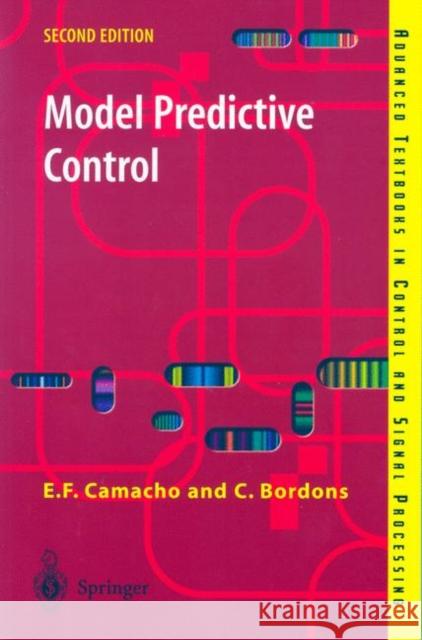
Model Predictive Control Carlos Bordons Alba 9781852336943 Springer London Ltd - książkaWidoczna okładka, to zdjęcie poglądowe, a rzeczywista szata graficzna może różnić się od prezentowanej.

Model Predictive Control

ISBN-13: 9781852336943 / Angielski / Miękka / 2004 / 405 str.

Carlos Bordons Alba
cena 322,77
(netto: 307,40 VAT:  5%)

Najniższa cena z 30 dni: 308,41
Termin realizacji zamówienia:
ok. 22 dni roboczych
Bez gwarancji dostawy przed świętami

Darmowa dostawa!

From power plants to sugar refining, model predictive control (MPC) schemes have established themselves as the preferred control strategies for a wide variety of processes. The second edition of Model Predictive Control provides a thorough introduction to theoretical and practical aspects of the most commonly used MPC strategies. It bridges the gap between the powerful but often abstract techniques of control researchers and the more empirical approach of practitioners. Model Predictive Control demonstrates that a powerful technique does not always require complex control algorithms. The text features material on the following subjects: general MPC elements and algorithms; commercial MPC schemes; generalized predictive control multivariable, robust, constrained nonlinear and hybrid MPC; fast methods for MPC implementation; applications. All of the material is thoroughly updated for the second edition with the chapters on nonlinear MPC, MPC and hybrid systems and MPC implementation being entirely new. Many new exercises and examples have also have also been added throughout and MATLAB(r) programs to aid in their solution can be downloaded from the authors' website. The text is an excellent aid for graduate and advanced undergraduate students and will also be of use to researchers and industrial practitioners wishing to keep abreast of a fast-moving field."


Kategorie:
Technologie
Kategorie BISAC:
Technology & Engineering > Automation
Science > System Theory
Science > Chemistry - Industrial & Technical
Wydawca:
Springer London Ltd
Seria wydawnicza:
Advanced Textbooks in Control and Signal Processing
Język:
Angielski
ISBN-13:
9781852336943
Rok wydania:
2004
Dostępne języki:
Angielski
Numer serii:
000123335
Ilość stron:
405
Waga:
0.72 kg
Wymiary:
23.523.5 x 15.5
Oprawa:
Miękka
Wolumenów:
01
Dodatkowe informacje:
Bibliografia
Wydanie ilustrowane

From the reviews of the second edition:

"This text is an introduction to model predictive control, a control methodology which has encountered some success in industry, but which still presents many theoretical challenges. ... The book is of interest as an introduction to model predictive control, and a merit is the special presentation, connecting the subject intimately with industrial situations." (A. Akutowicz, Zentralblatt MATH, Vol. 1080, 2006)

"It is a much more ambitious work, seeking to inform practitioners how to implement MPC while at the same time serving as an advanced student text as well as reference for control researchers. ... The authors clearly see the text as a teaching aid since several chapters include exercises. ... In summary, a significant contribution to this important field for control academics, and some highly experienced MPC practitioners ... ." (Michael Brisk, www.tcetoday.com, February, 2008)

1 Introduction to Model Predictive Control.- 1.1 MPC Strategy.- 1.2 Historical Perspective.- 1.3 Industrial Technology.- 1.4 Outline of the Chapters.- 2 Model Predictive Controllers.- 2.1 MPC Elements.- 2.1.1 Prediction Model.- 2.1.2 Objective Function.- 2.1.3 Obtaining the Control Law.- 2.2 Review of Some MPC Algorithms.- 2.3 State Space Formulation.- 3 Commercial Model Predictive Control Schemes.- 3.1 Dynamic Matrix Control.- 3.1.1 Prediction.- 3.1.2 Measurable Disturbances.- 3.1.3 Control Algorithm.- 3.2 Model Algorithmic Control.- 3.2.1 Process Model and Prediction.- 3.2.2 Control Law.- 3.3 Predictive Functional Control.- 3.3.1 Formulation.- 3.4 Case Study: A Water Heater.- 3.5 Exercises.- 4 Generalized Predictive Control.- 4.1 Introduction.- 4.2 Formulation of Generalized Predictive Control.- 4.3 The Coloured Noise Case.- 4.4 An Example.- 4.5 Closed-Loop Relationships.- 4.6 The Role of the T Polynomial.- 4.6.1 Selection of the T Polynomial.- 4.6.2 Relationships with Other Formulations.- 4.7 The P Polynomial.- 4.8 Consideration of Measurable Disturbances.- 4.9 Use of a Different Predictor in GPC.- 4.9.1 Equivalent Structure.- 4.9.2 A Comparative Example.- 4.10 Constrained Receding Horizon Predictive Control.- 4.10.1 Computation of the Control Law.- 4.10.2 Properties.- 4.11 Stable GPC.- 4.11.1 Formulation of the Control Law.- 4.12 Exercises.- 5 Simple Implementation of GPC for Industrial Processes.- 5.1 Plant Model.- 5.1.1 Plant Identification: The Reaction Curve Method.- 5.2 The Dead Time Multiple of the Sampling Time Case.- 5.2.1 Discrete Plant Model.- 5.2.2 Problem Formulation.- 5.2.3 Computation of the Controller Parameters.- 5.2.4 Role of the Control-weighting Factor.- 5.2.5 Implementation Algorithm.- 5.2.6 An Implementation Example.- 5.3 The Dead Time Nonmultiple of the Sampling Time Case.- 5.3.1 Discrete Model of the Plant.- 5.3.2 Controller Parameters.- 5.3.3 Example.- 5.4 Integrating Processes.- 5.4.1 Derivation of the Control Law.- 5.4.2 Controller Parameters.- 5.4.3 Example.- 5.5 Consideration of Ramp Setpoints.- 5.5.1 Example.- 5.6 Comparison with Standard GPC.- 5.7 Stability Robustness Analysis.- 5.7.1 Structured Uncertainties.- 5.7.2 Unstructured Uncertainties.- 5.7.3 General Comments.- 5.8 Composition Control in an Evaporator.- 5.8.1 Description of the Process.- 5.8.2 Obtaining the Linear Model.- 5.8.3 Controller Design.- 5.8.4 Results.- 5.9 Exercises.- 6 Multivariable Model Predictive Control.- 6.1 Derivation of Multivariable GPC.- 6.1.1 White Noise Case.- 6.1.2 Coloured Noise Case.- 6.1.3 Measurable Disturbances.- 6.2 Obtaining a Matrix Fraction Description.- 6.2.1 Transfer Matrix Representation.- 6.2.2 Parametric Identification.- 6.3 State Space Formulation.- 6.3.1 Matrix Fraction and State Space Equivalences.- 6.4 Case Study: Flight Control.- 6.5 Convolution Models Formulation.- 6.6 Case Study: Chemical Reactor.- 6.6.1 Plant Description.- 6.6.2 Obtaining the Plant Model.- 6.6.3 Control Law.- 6.6.4 Simulation Results.- 6.7 Dead Time Problems.- 6.8 Case Study: Distillation Column.- 6.9 Multivariable MPC and Transmission Zeros.- 6.9.1 Simulation Example.- 6.9.2 Tuning MPC for Processes with OUD Zeros.- 6.10 Exercises.- 7 Constrained Model Predictive Control.- 7.1 Constraints and MPC.- 7.1.1 Constraint General Form.- 7.1.2 Illustrative Examples.- 7.2 Constraints and Optimization.- 7.3 Revision of Main Quadratic Programming Algorithms.- 7.3.1 The Active Set Methods.- 7.3.2 Feasible Direction Methods.- 7.3.3 Initial Feasible Point.- 7.3.4 Pivoting Methods.- 7.4 Constraints Handling.- 7.4.1 Slew Rate Constraints.- 7.4.2 Amplitude Constraints.- 7.4.3 Output Constraints.- 7.4.4 Constraint Reduction.- 7.5 1-norm.- 7.6 Case Study: A Compressor.- 7.7 Constraint Management.- 7.7.1 Feasibility.- 7.7.2 Techniques for Improving Feasibility.- 7.8 Constrained MPC and Stability.- 7.9 Multiobjective MPC.- 7.9.1 Priorization of Objectives.- 7.10 Exercises.- 8 Robust Model Predictive Control.- 8.1 Process Models and Uncertainties.- 8.1.1 Truncated Impulse Response Uncertainties.- 8.1.2 Matrix Fraction Description Uncertainties.- 8.1.3 Global Uncertainties.- 8.2 Objective Functions.- 8.2.1 Quadratic Cost Function.- 8.2.2 ?-? norm.- 8.2.3 1-norm.- 8.3 Robustness by Imposing Constraints.- 8.4 Constraint Handling.- 8.5 Illustrative Examples.- 8.5.1 Bounds on the Output.- 8.5.2 Uncertainties in the Gain.- 8.6 Robust MPC and Linear Matrix Inequalities.- 8.7 Closed-Loop Predictions.- 8.7.1 An Illustrative Example.- 8.7.2 Increasing the Number of Decision Variables.- 8.7.3 Dynamic Programming Approach.- 8.7.4 Linear Feedback.- 8.7.5 An Illustrative Example.- 8.8 Exercises.- 9 Nonlinear Model Predictive Control.- 9.1 Nonlinear MPC Versus Linear MPC.- 9.2 Nonlinear Models.- 9.2.1 Empirical Models.- 9.2.2 Fundamental Models.- 9.2.3 Grey-box Models.- 9.2.4 Modelling Example.- 9.3 Solution of the NMPC Problem.- 9.3.1 Problem Formulation.- 9.3.2 Solution.- 9.4 Techniques for Nonlinear Predictive Control.- 9.4.1 Extended Linear MPC.- 9.4.2 Local Models.- 9.4.3 Suboptimal NPMC.- 9.4.4 Use of Short Horizons.- 9.4.5 Decomposition of the Control Sequence.- 9.4.6 Feedback Linearization.- 9.4.7 MPC Based on Volterra Models.- 9.4.8 Neural Networks.- 9.4.9 Commercial Products.- 9.5 Stability and Nonlinear MPC.- 9.6 Case Study: pH Neutralization Process.- 9.6.1 Process Model.- 9.6.2 Results.- 9.7 Exercises.- 10 Model Predictive Control and Hybrid Systems.- 10.1 Hybrid System Modelling.- 10.2 Example: A Jacket Cooled Batch Reactor.- 10.2.1 Mixed Logical Dynamical Systems.- 10.2.2 Example.- 10.3 Model Predictive Control of MLD Systems.- 10.3.1 Branch and Bound Mixed Integer Programming.- 10.3.2 An Illustrative Example.- 10.4 Piecewise Affine Systems.- 10.4.1 Example: Tankwith Different Area Sections.- 10.4.2 Reach Set, Controllable Set, and STG Algorithm.- 10.5 Exercises.- 11 Fast Methods for Implementing Model Predictive Control.- 11.1 Piecewise Affinity of MPC.- 11.2 MPC and Multiparametric Programming.- 11.3 Piecewise Implementation of MPC.- 11.3.1 Illustrative Example: The Double Integrator.- 11.3.2 Nonconstant References and Measurable Disturbances.- 11.3.3 Example.- 11.3.4 The 1-norm and ?-norm Cases.- 11.4 Fast Implementation of MPC forUncertain Systems.- 11.4.1 Example.- 11.4.2 The Closed-Loop Min-max MPC.- 11.5 Approximated Implementation for MPC.- 11.6 Fast Implementation of MPC and Dead Time Considerations.- 11.7 Exercises.- 12 Applications.- 12.1 Solar Power Plant.- 12.1.1 Selftuning GPC Control Strategy.- 12.1.2 Gain Scheduling Generalized Predictive Control.- 12.2 Pilot Plant.- 12.2.1 Plant Description.- 12.2.2 Plant Control.- 12.2.3 Flow Control.- 12.2.4 Temperature Control at the Exchanger Output.- 12.2.5 Temperature Control in the Tank.- 12.2.6 Level Control.- 12.2.7 Remarks.- 12.3 Model Predictive Control in a Sugar Refinery.- 12.4 Olive Oil Mill.- 12.4.1 Plant Description.- 12.4.2 Process Modelling and Validation.- 12.4.3 Controller Synthesis.- 12.4.4 Experimental Results.- 12.5 Mobile Robot.- 12.5.1 Problem Definition.- 12.5.2 Prediction Model.- 12.5.3 Parametrization of the Desired Path.- 12.5.4 Potential Function for Considering Fixed Obstacles.- 12.5.5 The Neural Network Approach.- 12.5.6 Training Phase.- 12.5.7 Results.- A Revision of the Simplex Method.- A.1 Equality Constraints.- A.2 Finding an Initial Solution.- A.3 Inequality Constraints.- B Dynamic Programming and Linear Quadratic Optimal Control.- B.1 LinearQuadratic Problem.- B.2 InfiniteHorizon.- References.

From power plants to sugar refining, model predictive control (MPC) schemes have established themselves as the preferred control strategies for a wide variety of processes.

The second edition of Model Predictive Control provides a thorough introduction to theoretical and practical aspects of the most commonly used MPC strategies. It bridges the gap between the powerful but often abstract techniques of control researchers and the more empirical approach of practitioners. Model Predictive Control demonstrates that a powerful technique does not always require complex control algorithms.

The text features material on the following subjects:

  • general MPC elements and algorithms;
  • commercial MPC schemes;
  • generalized predictive control
  • multivariable, robust, constrained nonlinear and hybrid MPC;
  • fast methods for MPC implementation;
  • applications.

All of the material is thoroughly updated for the second edition with the chapters on nonlinear MPC, MPC and hybrid systems and MPC implementation being entirely new. Many new exercises and examples have also have also been added throughout and MATLAB® programs to aid in their solution can be downloaded from extras.springer.com. The text is an excellent aid for graduate and advanced undergraduate students and will also be of use to researchers and industrial practitioners wishing to keep abreast of a fast-moving field.


Udostępnij

Facebook - konto krainaksiazek.pl


Opinie o Krainaksiazek.pl na Opineo.pl

Partner Mybenefit

Krainaksiazek.pl w programie rzetelna firma Krainaksiaze.pl - płatności przez paypal

Czytaj nas na:

Facebook - krainaksiazek.pl
  • książki na zamówienie
  • granty
  • książka na prezent
  • kontakt
  • pomoc
  • opinie
  • regulamin
  • polityka prywatności

Zobacz:

  • Księgarnia czeska

  • Wydawnictwo Książkowe Klimaty

1997-2025 DolnySlask.com Agencja Internetowa

© 1997-2022 krainaksiazek.pl
     
KONTAKT | REGULAMIN | POLITYKA PRYWATNOŚCI | USTAWIENIA PRYWATNOŚCI
Zobacz: Księgarnia Czeska | Wydawnictwo Książkowe Klimaty | Mapa strony | Lista autorów
KrainaKsiazek.PL - Księgarnia Internetowa

Polityka prywatnosci - link
Krainaksiazek.pl - płatnośc Przelewy24
Przechowalnia Przechowalnia





