• Wyszukiwanie zaawansowane
  • Kategorie
  • Kategorie BISAC
  • Książki na zamówienie
  • Promocje
  • Granty
  • Książka na prezent
  • Opinie
  • Pomoc
  • Załóż konto
  • Zaloguj się

Mobile 3D Graphics Soc: From Algorithm to Chip » książka


zaloguj się | załóż konto
Logo Krainaksiazek.pl

koszyk

konto

szukaj
topmenu
Księgarnia internetowa
Szukaj
Książki na zamówienie
Promocje
Granty
Książka na prezent
Moje konto
Pomoc
 
 
Wyszukiwanie zaawansowane
Pusty koszyk
Bezpłatna dostawa dla zamówień powyżej 20 złBezpłatna dostawa dla zamówień powyżej 20 zł

Kategorie główne

• Nauka
 [2946600]
• Literatura piękna
 [1856966]

  więcej...
• Turystyka
 [72221]
• Informatyka
 [151456]
• Komiksy
 [35826]
• Encyklopedie
 [23190]
• Dziecięca
 [619653]
• Hobby
 [140543]
• AudioBooki
 [1577]
• Literatura faktu
 [228355]
• Muzyka CD
 [410]
• Słowniki
 [2874]
• Inne
 [445822]
• Kalendarze
 [1744]
• Podręczniki
 [167141]
• Poradniki
 [482898]
• Religia
 [510455]
• Czasopisma
 [526]
• Sport
 [61590]
• Sztuka
 [243598]
• CD, DVD, Video
 [3423]
• Technologie
 [219201]
• Zdrowie
 [101638]
• Książkowe Klimaty
 [124]
• Zabawki
 [2473]
• Puzzle, gry
 [3898]
• Literatura w języku ukraińskim
 [254]
• Art. papiernicze i szkolne
 [8170]
Kategorie szczegółowe BISAC

Mobile 3D Graphics Soc: From Algorithm to Chip

ISBN-13: 9780470823774 / Angielski / Twarda / 2010 / 352 str.
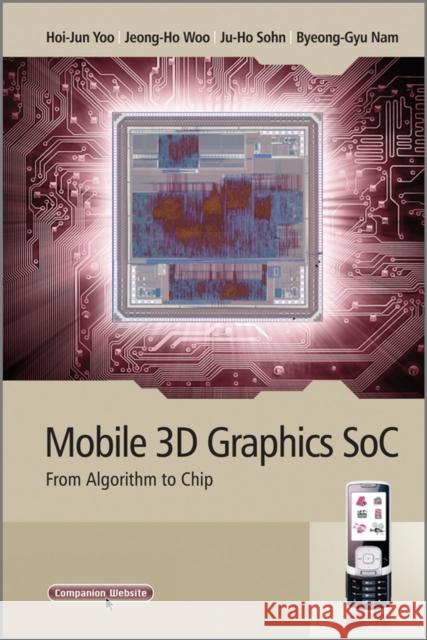
Hoi–Jun Yoo;Jeong–Ho Woo;Ju–Ho Sohn
Mobile 3D Graphics Soc: From Algorithm to Chip Yoo, Hoi-Jun 9780470823774  - książkaWidoczna okładka, to zdjęcie poglądowe, a rzeczywista szata graficzna może różnić się od prezentowanej.

Mobile 3D Graphics Soc: From Algorithm to Chip

ISBN-13: 9780470823774 / Angielski / Twarda / 2010 / 352 str.

Hoi–Jun Yoo;Jeong–Ho Woo;Ju–Ho Sohn
cena 821,88 zł
(netto: 782,74 VAT:  5%)

Najniższa cena z 30 dni: 583,01 zł
Termin realizacji zamówienia:
ok. 16-18 dni roboczych
Bez gwarancji dostawy przed świętami

Darmowa dostawa!

The first book to explain the principals behind mobile 3D hardware implementation, helping readers understand advanced algorithms, produce low-cost, low-power SoCs, or become familiar with embedded systems As mobile broadcasting and entertainment applications evolve, there is increasing interest in 3D graphics within the field of mobile electronics, particularly for handheld devices. In Mobile 3D Graphics SoC, Yoo provides a comprehensive understanding of the algorithms of mobile 3D graphics and their real chip implementation methods. 3D graphics SoC (System on a Chip) architecture and its interaction with embedded system software are explained with numerous examples. Yoo divides the book into three sections: general methodology of low power SoC, design of low power 3D graphics SoC, and silicon implementation of 3D graphics SoCs and their application to mobile electronics. Full examples are presented at various levels such as system level design and circuit level optimization along with design technology. Yoo incorporates many real chip examples, including many commercial 3D graphics chips, and provides cross-comparisons of various architectures and their performance. Furthermore, while advanced 3D graphics techniques are well understood and supported by industry standards, this is less true in the emerging mobile applications and games market. This book redresses this imbalance, providing an in-depth look at the new OpenGL ES (The Standard for Embedded Accelerated 3D Graphics), and shows what these new embedded systems graphics libraries can provide for 3D graphics and games developers.


Kategorie:
Technologie
Kategorie BISAC:
Technology & Engineering > Electronics - Circuits - VLSI & ULSI
Język:
Angielski
ISBN-13:
9780470823774
Rok wydania:
2010
Ilość stron:
352
Waga:
0.71 kg
Wymiary:
24.89 x 17.27 x 2.29
Oprawa:
Twarda
Wolumenów:
01
Dodatkowe informacje:
Bibliografia

Preface.

1 Introduction.

1.1 Mobile 3D Graphics.

1.2 Mobile Devices and Design Challenges.

1.2.1 Mobile Computing Power.

1.2.2 Mobile Display Devices.

1.2.3 Design Challenges.

1.3 Introduction to SoC Design.

1.4 About this Book.

2 Application Platform.

2.1 SoC Design Paradigms.

2.1.1 Platform and Set–based Design.

2.1.2 Modeling: Memory and Operations.

2.2 System Architecture.

2.2.1 Reference Machine and API.

2.2.2 Communication Architecture Design.

2.2.3 System Analysis.

2.3 Low–power SoC Design.

2.3.1 CMOS Circuit–level Low–power Design.

2.3.2 Architecture–level Low–power Design.

2.3.3 System–level Low–power Design.

2.4 Network–on–Chip based SoC.

2.4.1 Network–on–Chip Basics.

2.4.2 NoC Design Considerations.

2.4.3 Case Studies of Chip Implementation.

3 Introduction to 3D Graphics.

3.1 The 3D Graphics Pipeline.

3.1.1 The Application Stage.

3.1.2 The Geometry Stage.

3.1.3 The Rendering Stage.

3.2 Programmable 3D Graphics.

3.2.1 Programmable Graphics Pipeline.

3.2.2 Shader Models.

4 Mobile 3D Graphics.

4.1 Principles of Mobile 3D Graphics.

4.1.1 Application Challenges.

4.1.2 Design Principles.

4.2 Mobile 3D Graphics APIs.

4.2.1 KAIST MobileGL.

4.2.2 Khronos OpenGL–ES.

4.2.3 Microsoft’s Direct3D–Mobile.

4.3 Summary and Future Directions.

5 Mobile 3D Graphics SoC.

5.1 Low–power Rendering Processor.

5.1.1 Early Depth Test.

5.1.2 Logarithmic Datapaths.

5.1.3 Low–power Texture Unit.

5.1.4 Tile–based Rendering.

5.1.5 Texture Compression.

5.1.6 Texture Filtering and Anti–aliasing.

5.2 Low–power Shader.

5.2.1 Vertex Cache.

5.2.2 Low–power Register File.

5.2.3 Mobile Unified Shader.

6 Real Chip Implementations.

6.1 KAIST RAMP Architecture.

6.1.1 RAMP–IV.

6.1.2 RAMP–V.

6.1.3 RAMP–VI.

6.1.4 RAMP–VII.

6.2 Industry Architecture.

6.2.1 nVidia Mobile GPU – SC10 and Tegra.

6.2.2 Sony PSP.

6.2.3 Imagination Technology MBX/SGX.

7 Low–power Rasterizer Design.

7.1 Target System Architecture.

7.2 Summary of Performance and Features.

7.3 Block Diagram of the Rasterizer.

7.4 Instruction Set Architecture (ISA).

7.5 Detailed Design with Register Transfer Level Code.

7.5.1 Rasterization Top Block.

7.5.2 Pipeline Architecture.

7.5.3 Main Controller Design.

7.5.4 Rasterization Core Unit.

8 The Future of Mobile 3D Graphics.

8.1 Game and Mapping Applications Involving Networking.

8.2 Moves Towards More User–centered Applications.

8.3 Final Remarks.

Appendix Verilog HDL Design.

A.1 Introduction to Verilog Design.

A.2 Design Level.

A.2.1 Behavior Level.

A.2.2 Register Transfer Level.

A.2.3 Gate Level.

A.3 Design Flow.

A.3.1 Specification.

A.3.2 High–level Design.

A.3.3 Low–level Design.

A.3.4 RTL Coding.

A.3.5 Simulation.

A.3.6 Synthesis.

A.3.7 Placement and Routing.

A.4 Verilog Syntax.

A.4.1 Modules.

A.4.2 Logic Values and Numbers.

A.4.3 Data Types.

A.4.4 Operators.

A.4.5 Assignment.

A.4.6 Ports and Connections.

A.4.7 Expressions.

A.4.8 Instantiation.

A.4.9 Miscellaneous.

A.5 Example of Four–bit Adder with Zero Detection.

A.6 Synthesis Scripts.

Glossaries.

Index.


Udostępnij

Facebook - konto krainaksiazek.pl


Opinie o Krainaksiazek.pl na Opineo.pl

Partner Mybenefit

Krainaksiazek.pl w programie rzetelna firma Krainaksiaze.pl - płatności przez paypal

Czytaj nas na:

Facebook - krainaksiazek.pl
  • książki na zamówienie
  • granty
  • książka na prezent
  • kontakt
  • pomoc
  • opinie
  • regulamin
  • polityka prywatności

Zobacz:

  • Księgarnia czeska

  • Wydawnictwo Książkowe Klimaty

1997-2025 DolnySlask.com Agencja Internetowa

© 1997-2022 krainaksiazek.pl
     
KONTAKT | REGULAMIN | POLITYKA PRYWATNOŚCI | USTAWIENIA PRYWATNOŚCI
Zobacz: Księgarnia Czeska | Wydawnictwo Książkowe Klimaty | Mapa strony | Lista autorów
KrainaKsiazek.PL - Księgarnia Internetowa

Polityka prywatnosci - link
Krainaksiazek.pl - płatnośc Przelewy24
Przechowalnia Przechowalnia





