• Wyszukiwanie zaawansowane
  • Kategorie
  • Kategorie BISAC
  • Książki na zamówienie
  • Promocje
  • Granty
  • Książka na prezent
  • Opinie
  • Pomoc
  • Załóż konto
  • Zaloguj się

Mission AI: The New System Technology » książka


zaloguj się | załóż konto
Logo Krainaksiazek.pl

koszyk

konto

szukaj
topmenu
Księgarnia internetowa
Szukaj
Książki na zamówienie
Promocje
Granty
Książka na prezent
Moje konto
Pomoc
 
 
Wyszukiwanie zaawansowane
Pusty koszyk
Bezpłatna dostawa dla zamówień powyżej 20 złBezpłatna dostawa dla zamówień powyżej 20 zł

Kategorie główne

• Nauka
 [2949965]
• Literatura piękna
 [1857847]

  więcej...
• Turystyka
 [70818]
• Informatyka
 [151303]
• Komiksy
 [35733]
• Encyklopedie
 [23180]
• Dziecięca
 [617748]
• Hobby
 [139972]
• AudioBooki
 [1650]
• Literatura faktu
 [228361]
• Muzyka CD
 [398]
• Słowniki
 [2862]
• Inne
 [444732]
• Kalendarze
 [1620]
• Podręczniki
 [167233]
• Poradniki
 [482388]
• Religia
 [509867]
• Czasopisma
 [533]
• Sport
 [61361]
• Sztuka
 [243125]
• CD, DVD, Video
 [3451]
• Technologie
 [219309]
• Zdrowie
 [101347]
• Książkowe Klimaty
 [123]
• Zabawki
 [2362]
• Puzzle, gry
 [3791]
• Literatura w języku ukraińskim
 [253]
• Art. papiernicze i szkolne
 [7933]
Kategorie szczegółowe BISAC

Mission AI: The New System Technology

ISBN-13: 9783031214479 / Angielski / Twarda / 2023 / 410 str.
Haroon Sheikh; Corien Prins; Erik Schrijvers
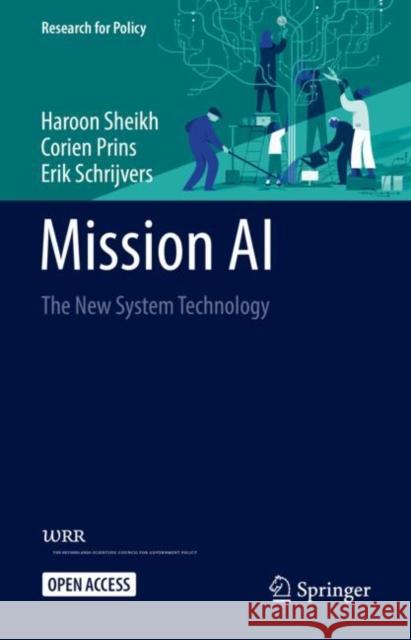
Mission AI: The New System Technology Haroon Sheikh Corien Prins Erik Schrijvers 9783031214479 Springer - książkaWidoczna okładka, to zdjęcie poglądowe, a rzeczywista szata graficzna może różnić się od prezentowanej.

Mission AI: The New System Technology

ISBN-13: 9783031214479 / Angielski / Twarda / 2023 / 410 str.

Haroon Sheikh; Corien Prins; Erik Schrijvers
cena 201,72
(netto: 192,11 VAT:  5%)

Najniższa cena z 30 dni: 192,74
Termin realizacji zamówienia:
ok. 22 dni roboczych
Bez gwarancji dostawy przed świętami

Darmowa dostawa!
inne wydania

This open access book offers a strategic perspective on AI and the process of embedding it in society. ​After decades of research, Artificial Intelligence (AI) is now entering society at large. Due to its general purpose character, AI will change society in multiple, fundamental and unpredictable ways. Therefore, the Netherlands Scientific Council for Government Policy (WRR) characterizes AI as asystem technology: a rare type of technologies that have a systemic impact on society. Earlier system technologies include electricity, the combustion engine and the computer. The history of these technologies provides us with useful insights about what it takes to direct the introduction of AI in society. The WRR identifies five key tasks to structurally work on this process: demystification, contextualisation, engagement, regulation and positioning. By clarifying what AI is (demystification), creating a functional ecosystem (contextualisation), involving diverse stakeholders (engagement), developing directive frameworks (regulation) and engaging internationally (positioning), societies can meaningfully influence how AI settles. Collectively, these activities steer the process of co-development between technology and society, and each representing a different path to safeguard public values.Mission AI - The New System Technologywas originally published as an advisory report for the government of the Netherlands. The strategic analysis and the outlined recommendations are, however, relevant to every government and organization that aims to take up 'misson AI' and embed this newest system technology in our world.


This open access book offers a strategic perspective on AI and the process of embedding it in society. ​After decades of research, Artificial Intelligence (AI) is now entering society at large. Due to its general purpose character, AI will change society in multiple, fundamental and unpredictable ways. Therefore, the Netherlands Scientific Council for Government Policy (WRR) characterizes AI as a system technology: a rare type of technologies that have a systemic impact on society. Earlier system technologies include electricity, the combustion engine and the computer. The history of these technologies provides us with useful insights about what it takes to direct the introduction of AI in society. The WRR identifies five key tasks to structurally work on this process: demystification, contextualisation, engagement, regulation and positioning. By clarifying what AI is (demystification), creating a functional ecosystem (contextualisation), involving diverse stakeholders (engagement), developing directive frameworks (regulation) and engaging internationally (positioning), societies can meaningfully influence how AI settles. Collectively, these activities steer the process of co-development between technology and society, and each representing a different path to safeguard public values. Mission AI - The New System Technology was originally published as an advisory report for the government of the Netherlands. The strategic analysis and the outlined recommendations are, however, relevant to every government and organization that aims to take up 'misson AI' and embed this newest system technology in our world.

Kategorie:
Nauka, Socjologia i społeczeństwo
Kategorie BISAC:
Social Science > Socjologia
Computers > Artificial Intelligence - General
Wydawca:
Springer
Seria wydawnicza:
Research for Policy
Język:
Angielski
ISBN-13:
9783031214479
Rok wydania:
2023
Dostępne języki:
Numer serii:
000917960
Ilość stron:
410
Oprawa:
Twarda
Dodatkowe informacje:
Wydanie ilustrowane

Executive summary

Preface


Part I

Introduction

1. Artificial intelligence: definition and background

1.1 Defining AI

1.2 AI prior to the lab

1.3 AI in the lab

2. AI leaves the lab and enters society

2.1 AI has momentum in society

2.2 AI in practice

2.3 AI in public debate

2.4 The future of the lab

3. AI as a system technology

3.1 Typifying technologies

3.2 Embedding system technologies

3.3 Task 1: Demystification

3.4 Task 2: Contextualisation

3.5 Task 3: Engagement

3.6 Task 4: Regulation

3.7 Task 5: Positioning


Part 2

4. Demystification

4.1 Mystification of AI

4.2 Contemporary myths about AI

4.3 In conclusion

5. Contextualisation

5.1 The technical ecosystem

5.2 The social eecosystem

5.3 In conclusion

6. Engagement

6.1 Protest

6.2 Monitorin

6.3 Collaboration

6.4 In conclusion

7. Regulation

7.1 Standard setting by governments

7.2 AI regulation and the digital environment

7.3 In conclusion

8. Positioning

8.1 AI and national competitiveness

8.2 AI and national security

8.3 In conclusion


Part 3

9. Take AI as a system technology

9.1 Five tasks as historical lessons

9.2 Transition 1: From image to understanding

9.3 Transition 2: From technology to use

9.4 Transition 3: From monologue to dialgoue

9.5 Transition 4: From reaction to direction

9.6 Transition 5: From nation to network

9.7 From policy instruments to policy infrastructure

9.8 In conclusion: The combustion

Corien Prins. Regulatory challenges and questions around the introduction of digital technologies have been on Corien Prins’ agenda for three decades. In 1995, she founded what is now the Tilburg Institute for Law, Technology, and Society—a world-renowned research center on law, society, and technology. In her research on the impact of emerging technologies on individuals and society, she has focused on the role of regulation, law, fundamental values, and human rights. In 2017, Prins was appointed chair of the Netherlands Scientific Council for Government Policy (WRR), which advises the Dutch government and parliament on strategic issues likely to have significant political and societal consequences. Prins has an abiding interest in the interdependency of the digital and physical worlds. One of her current research foci within the broader theme of artificial intelligence is its use by the judiciary. Here she seeks to understand the implications of using AI for the core values of the judiciary—impartiality, independence, and due process. Other research topics of Prins relate to the development of legal measures to gain a clearer picture of which parties, digital processes and services are key to the functioning of critical (vital) processes in society. She thereby looks at the chains and networks that support key processes and investigates whether digitalization necessitates changes to the prioritization of assets that are essential for the functioning of a society and economy. Her other research interests include the implications of digital technologies for democracy in a globalized world; the use of digital technologies and personal autonomy; and privacy and personal data protection.

Haroon Sheikh is a senior scientist and project coordinator at the Dutch Scientific Council for Government Policy, and a Professor in The Strategic Governance of Global Technologies at VU University. His research focuses on the intersection of new technology and international relations. Haroon studied philosophy, political science and public administration at Leiden and Oxford University and did his PhD in philosophy on the relationship between tradition and modernity at VU University. He worked over a decade in the financial sector and headed Freedomlab Thinktank in Amsterdam. Haroon has written several books in the field of geopolitics.

Erik Schrijvers is senior scientist and project coordinator at the Dutch Scientific Council for Government Policy. He is also a member of the Supervisory Board of DEN, knowledge institute for culture and digital transformation. His research focuses on the intersection of digital technology, culture and policy. He studied history of international relations and philosophy at Utrecht University. He obtained his PhD with a thesis on the history of forms of extra-parliamentary representation in the Netherlands. In 2016 and 2017 he worked for the Ministry of the Interior and Kingdom Relations, where he was responsible for the research and reporting of the study group Information Society and Government.

This open access book offers a strategic perspective on AI and the process of embedding it in society. ​After decades of research, Artificial Intelligence (AI) is now entering society at large. Due to its general purpose character, AI will change society in multiple, fundamental and unpredictable ways. Therefore, the Netherlands Scientific Council for Government Policy (WRR) characterizes AI as a system technology: a rare type of technologies that have a systemic impact on society. Earlier system technologies include electricity, the combustion engine and the computer. The history of these technologies provides us with useful insights about what it takes to direct the introduction of AI in society. The WRR identifies five key tasks to structurally work on this process: demystification, contextualisation, engagement, regulation and positioning. By clarifying what AI is (demystification), creating a functional ecosystem (contextualisation), involving diverse stakeholders (engagement), developing directive frameworks (regulation) and engaging internationally (positioning), societies can meaningfully influence how AI settles. Collectively, these activities steer the process of co-development between technology and society, and each representing a different path to safeguard public values. Mission AI - The New System Technology was originally published as an advisory report for the government of the Netherlands. The strategic analysis and the outlined recommendations are, however, relevant to every government and organization that aims to take up 'misson AI' and embed this newest system technology in our world.




Udostępnij

Facebook - konto krainaksiazek.pl


Opinie o Krainaksiazek.pl na Opineo.pl

Partner Mybenefit

Krainaksiazek.pl w programie rzetelna firma Krainaksiaze.pl - płatności przez paypal

Czytaj nas na:

Facebook - krainaksiazek.pl
  • książki na zamówienie
  • granty
  • książka na prezent
  • kontakt
  • pomoc
  • opinie
  • regulamin
  • polityka prywatności

Zobacz:

  • Księgarnia czeska

  • Wydawnictwo Książkowe Klimaty

1997-2025 DolnySlask.com Agencja Internetowa

© 1997-2022 krainaksiazek.pl
     
KONTAKT | REGULAMIN | POLITYKA PRYWATNOŚCI | USTAWIENIA PRYWATNOŚCI
Zobacz: Księgarnia Czeska | Wydawnictwo Książkowe Klimaty | Mapa strony | Lista autorów
KrainaKsiazek.PL - Księgarnia Internetowa

Polityka prywatnosci - link
Krainaksiazek.pl - płatnośc Przelewy24
Przechowalnia Przechowalnia



