• Wyszukiwanie zaawansowane
  • Kategorie
  • Kategorie BISAC
  • Książki na zamówienie
  • Promocje
  • Granty
  • Książka na prezent
  • Opinie
  • Pomoc
  • Załóż konto
  • Zaloguj się

Microhistories of Technology: Making the World » książka


zaloguj się | załóż konto
Logo Krainaksiazek.pl

koszyk

konto

szukaj
topmenu
Księgarnia internetowa
Szukaj
Książki na zamówienie
Promocje
Granty
Książka na prezent
Moje konto
Pomoc
 
 
Wyszukiwanie zaawansowane
Pusty koszyk
Bezpłatna dostawa dla zamówień powyżej 20 złBezpłatna dostawa dla zamówień powyżej 20 zł

Kategorie główne

• Nauka
 [2950560]
• Literatura piękna
 [1849509]

  więcej...
• Turystyka
 [71097]
• Informatyka
 [151150]
• Komiksy
 [35848]
• Encyklopedie
 [23178]
• Dziecięca
 [617388]
• Hobby
 [139064]
• AudioBooki
 [1657]
• Literatura faktu
 [228597]
• Muzyka CD
 [383]
• Słowniki
 [2855]
• Inne
 [445295]
• Kalendarze
 [1464]
• Podręczniki
 [167547]
• Poradniki
 [480102]
• Religia
 [510749]
• Czasopisma
 [516]
• Sport
 [61293]
• Sztuka
 [243352]
• CD, DVD, Video
 [3414]
• Technologie
 [219456]
• Zdrowie
 [101002]
• Książkowe Klimaty
 [124]
• Zabawki
 [2311]
• Puzzle, gry
 [3459]
• Literatura w języku ukraińskim
 [254]
• Art. papiernicze i szkolne
 [8079]
Kategorie szczegółowe BISAC

Microhistories of Technology: Making the World

ISBN-13: 9783031228124 / Angielski / Twarda / 2023 / 300 str.
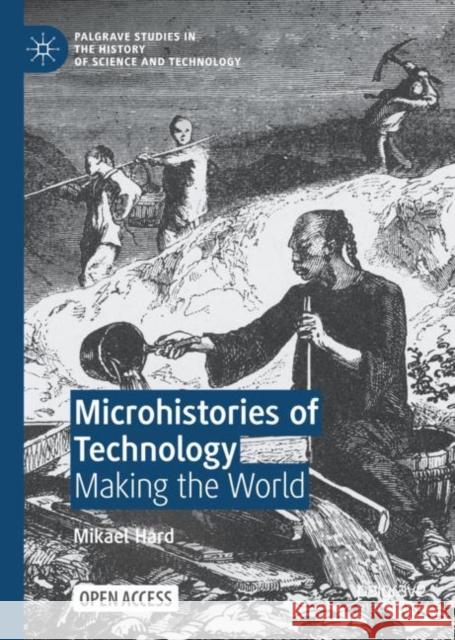
Mikael Hård
Microhistories of Technology: Making the World Mikael H?rd 9783031228124 Palgrave MacMillan - książkaWidoczna okładka, to zdjęcie poglądowe, a rzeczywista szata graficzna może różnić się od prezentowanej.

Microhistories of Technology: Making the World

ISBN-13: 9783031228124 / Angielski / Twarda / 2023 / 300 str.

Mikael Hård
cena 200,77
(netto: 191,21 VAT:  5%)

Najniższa cena z 30 dni: 192,74
Termin realizacji zamówienia:
ok. 22 dni roboczych
Dostawa w 2026 r.

Darmowa dostawa!
inne wydania

In this open access book, Mikael Hård tells a story of how people around the world challenged the production techniques and products brought by globalization. Retaining their autonomy and freedom, creative individuals selectively adopted or rejected modern gadgets, tools, and machines. In standard historical narratives, globalization is portrayed as an unstoppable force that flattens all obstacles in its path. Modern technology is also seen as inexorable: in the nineteenth century, steamships, telegraph lines, and Gatling guns are said to have paved the way for colonialism and other forms of dominating people and societies. Later, shipping containers and computer networks purportedly pulled the planet deeper into a maelstrom of capitalism. Hård discusses instances that push back against these narratives. For example, in Soviet times, inhabitants of Samarkand, Uzbekistan, preferred to remain in—and expand—their own mud-brick houses rather than move into prefabricated, concrete residential buildings. Similarly, nineteenth-century Sumatran carpenters ignored the saws brought to them by missionaries—and chose to chop down trees with their arch-bladed adzes. And people in colonial India successfully competed with capitalist-run Caribbean sugar plantations, continuing to produce their own muscovado and sell it to local consumers. This book invites readers to view the history of technology and material culture through the lens of diversity. Based on research funded by the European Research Council and conducted in the Global South,Microhistories of Technology: Making the Worldshows that the spread of modern technologies did not erase artisanal production methods and traditional tools.


In this open access book, Mikael Hård tells a story of how people around the world challenged the production techniques and products brought by globalization. Retaining their autonomy and freedom, creative individuals selectively adopted or rejected modern gadgets, tools, and machines. In standard historical narratives, globalization is portrayed as an unstoppable force that flattens all obstacles in its path. Modern technology is also seen as inexorable: in the nineteenth century, steamships, telegraph lines, and Gatling guns are said to have paved the way for colonialism and other forms of dominating people and societies. Later, shipping containers and computer networks purportedly pulled the planet deeper into a maelstrom of capitalism. Hård discusses instances that push back against these narratives. For example, in Soviet times, inhabitants of Samarkand, Uzbekistan, preferred to remain in—and expand—their own mud-brick houses rather than move into prefabricated, concrete residential buildings. Similarly, nineteenth-century Sumatran carpenters ignored the saws brought to them by missionaries—and chose to chop down trees with their arch-bladed adzes. And people in colonial India successfully competed with capitalist-run Caribbean sugar plantations, continuing to produce their own muscovado and sell it to local consumers. This book invites readers to view the history of technology and material culture through the lens of diversity. Based on research funded by the European Research Council and conducted in the Global South, Microhistories of Technology: Making the World shows that the spread of modern technologies did not erase artisanal production methods and traditional tools.

Kategorie:
Nauka, Historia
Kategorie BISAC:
History > Modern - General
Technology & Engineering > History
Political Science > Globalization
Wydawca:
Palgrave MacMillan
Seria wydawnicza:
Palgrave Studies in the History of Science and Technology
Język:
Angielski
ISBN-13:
9783031228124
Rok wydania:
2023
Dostępne języki:
Numer serii:
000423748
Ilość stron:
300
Oprawa:
Twarda
Dodatkowe informacje:
Wydanie ilustrowane

1. Introduction: Honing Local Techniques in a Globalized World
Part I Nineteenth-Century Ways of Life
2. Building Missionary Stations in Southeast Asia: Nias Islanders Deploy Adzes
3. Communicating and Trading in West Africa: Talking Drums and Pack Animals
4. Withstanding Globalization in Northern India: Farmers Make Sugar for Local Consumption
Part II Twentieth-Century Improvisations
5. Accessing Electricity in East Africa: Dar es Salaam Dwellers Pursue Power
6. Creating "Creole" Cuisine in Latin America: Home Cooks Reinvent Batánes
Part III Postwar Innovations
7. Earning a Living in Urban Africa: Maintaining the “Native Beer” Economy
8. Confronting Menstruation in East Asia: Koreans Create Self-made Solutions
9. Doing It Yourself in Central Asia: Uzbeks Build Adobe Houses
10. Conclusion: Challenging Globalizing Technologies

Mikael Hård is ​Professor of History of Technology at the Technical University of Darmstadt, Germany.

In this open access book, Mikael Hård tells a story of how people around the world challenged the production techniques and products brought by globalization. Retaining their autonomy and freedom, creative individuals selectively adopted or rejected modern gadgets, tools, and machines. In standard historical narratives, globalization is portrayed as an unstoppable force that flattens all obstacles in its path. Modern technology is also seen as inexorable: in the nineteenth century, steamships, telegraph lines, and Gatling guns are said to have paved the way for colonialism and other forms of dominating people and societies. Later, shipping containers and computer networks purportedly pulled the planet deeper into a maelstrom of capitalism. Hård discusses instances that push back against these narratives. For example, in Soviet times, inhabitants of Samarkand, Uzbekistan, preferred to remain in—and expand—their own mud-brick houses rather than move into prefabricated, concrete residential buildings. Similarly, nineteenth-century Sumatran carpenters ignored the saws brought to them by missionaries—and chose to chop down trees with their arch-bladed adzes. And people in colonial India successfully competed with capitalist-run Caribbean sugar plantations, continuing to produce their own muscovado and sell it to local consumers. This book invites readers to view the history of technology and material culture through the lens of diversity. Based on research funded by the European Research Council and conducted in the Global South, Microhistories of Technology: Making the World shows that the spread of modern technologies did not erase artisanal production methods and traditional tools.




Udostępnij

Facebook - konto krainaksiazek.pl


Opinie o Krainaksiazek.pl na Opineo.pl

Partner Mybenefit

Krainaksiazek.pl w programie rzetelna firma Krainaksiaze.pl - płatności przez paypal

Czytaj nas na:

Facebook - krainaksiazek.pl
  • książki na zamówienie
  • granty
  • książka na prezent
  • kontakt
  • pomoc
  • opinie
  • regulamin
  • polityka prywatności

Zobacz:

  • Księgarnia czeska

  • Wydawnictwo Książkowe Klimaty

1997-2025 DolnySlask.com Agencja Internetowa

© 1997-2022 krainaksiazek.pl
     
KONTAKT | REGULAMIN | POLITYKA PRYWATNOŚCI | USTAWIENIA PRYWATNOŚCI
Zobacz: Księgarnia Czeska | Wydawnictwo Książkowe Klimaty | Mapa strony | Lista autorów
KrainaKsiazek.PL - Księgarnia Internetowa

Polityka prywatnosci - link
Krainaksiazek.pl - płatnośc Przelewy24
Przechowalnia Przechowalnia




