• Wyszukiwanie zaawansowane
  • Kategorie
  • Kategorie BISAC
  • Książki na zamówienie
  • Promocje
  • Granty
  • Książka na prezent
  • Opinie
  • Pomoc
  • Załóż konto
  • Zaloguj się

Microfiber Pollution » książka


zaloguj się | załóż konto
Logo Krainaksiazek.pl

koszyk

konto

szukaj
topmenu
Księgarnia internetowa
Szukaj
Książki na zamówienie
Promocje
Granty
Książka na prezent
Moje konto
Pomoc
 
 
Wyszukiwanie zaawansowane
Pusty koszyk
Bezpłatna dostawa dla zamówień powyżej 20 złBezpłatna dostawa dla zamówień powyżej 20 zł

Kategorie główne

• Nauka
 [2949965]
• Literatura piękna
 [1857847]

  więcej...
• Turystyka
 [70818]
• Informatyka
 [151303]
• Komiksy
 [35733]
• Encyklopedie
 [23180]
• Dziecięca
 [617748]
• Hobby
 [139972]
• AudioBooki
 [1650]
• Literatura faktu
 [228361]
• Muzyka CD
 [398]
• Słowniki
 [2862]
• Inne
 [444732]
• Kalendarze
 [1620]
• Podręczniki
 [167233]
• Poradniki
 [482388]
• Religia
 [509867]
• Czasopisma
 [533]
• Sport
 [61361]
• Sztuka
 [243125]
• CD, DVD, Video
 [3451]
• Technologie
 [219309]
• Zdrowie
 [101347]
• Książkowe Klimaty
 [123]
• Zabawki
 [2362]
• Puzzle, gry
 [3791]
• Literatura w języku ukraińskim
 [253]
• Art. papiernicze i szkolne
 [7933]
Kategorie szczegółowe BISAC

Microfiber Pollution

ISBN-13: 9789811941870 / Angielski / Miękka / 2023
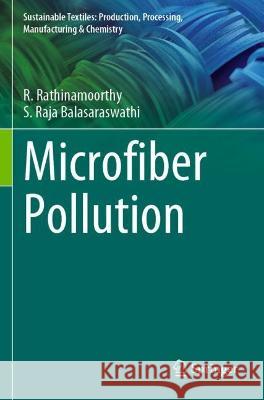
R. Rathinamoorthy;S. Raja Balasaraswathi
Microfiber Pollution R. Rathinamoorthy, S. Raja Balasaraswathi 9789811941870 Springer Nature Singapore - książkaWidoczna okładka, to zdjęcie poglądowe, a rzeczywista szata graficzna może różnić się od prezentowanej.

Microfiber Pollution

ISBN-13: 9789811941870 / Angielski / Miękka / 2023

R. Rathinamoorthy;S. Raja Balasaraswathi
cena 443,82 zł
(netto: 422,69 VAT:  5%)

Najniższa cena z 30 dni: 424,07 zł
Termin realizacji zamówienia:
ok. 22 dni roboczych
Bez gwarancji dostawy przed świętami

Darmowa dostawa!
inne wydania

This book provides insights into microfiber pollution in textile industries that would help researchers and professionals to work from the textile point of view to mitigate the problem, and create a green sustainable future. Microplastic pollution has received great importance due to its adverse environmental and health impact. Microplastic particles are found to contaminate the ecosystem. Research has reported microplastics on seashores, in deep seas, freshwater systems including rivers and lakes, and most importantly in the air. Various land-based and water-based organisms are also contaminated with microplastics. The most serious issue is when these particles are found in the food chain and air which can reach the human system. It has been estimated that human beings can intake up to 1,21,000 microplastic particles in a year through food and inhalation. Being one of the most polluting industries, the contribution of Textile industries in microplastic pollution is extremely higher (around 35%). This book addresses the issue of microfiber/microplastic pollution cause by various techniques including home laundry and the ways to alleviate it.​

Kategorie:
Nauka, Biologia i przyroda
Kategorie BISAC:
Technology & Engineering > Materials Science - General
Science > Environmental Science (see also Chemistry - Environmental)
Technology & Engineering > Environmental - Pollution Control
Wydawca:
Springer Nature Singapore
Seria wydawnicza:
Sustainable Textiles: Production, Processing, Manufacturing
Język:
Angielski
ISBN-13:
9789811941870
Rok wydania:
2023
Waga:
0.40 kg
Wymiary:
23.5 x 15.5
Oprawa:
Miękka
Dodatkowe informacje:
Wydanie ilustrowane

Chapter 1: Microfiber Pollution and Sustainability

1.1  Sustainability issues and microplastic pollution

1.2  Synthetic Textile Production and Consumption

1.3  Contribution of Textile and Apparel Industries in Microfiber Pollution

Chapter 2: Microfiber Shedding from Textile Materials

2.1    Shedding Mechanism in the dry state and wet state

2.2    Causes of Microfiber Shedding from Textiles

2.3    Microfiber shedding from textile materials other than Apparels

2.4    Microfiber shedding Analysis Techniques and Testing Methods

2.5    Characterisation of Microfibers from textile materials


Chapter 3: Influence of Textile parameters and properties on Microfiber shedding

3.1    Structural Properties of fiber, yarn and fabric

3.2    Chemical Properties of fibers

3.3    Mechanical Properties of fibers, yarn and fabric

3.4    Production Method of Yarn and fabric

3.5    Textile Wet Processing Methods

3.6    Apparel Production Processes


Chapter 4: Domestic Laundry – A major cause of microfiber shedding

4.1    Influence of Washing Methods

4.2    Influence of Washing Parameters

4.3    Influence of Washing additives and drying methods

4.4     Estimation of microfiber release from domestic laundry worldwide

Chapter 5: Impact of Microfiber Pollution

5.1    Microfiber Interaction with other pollutants

5.2    Microfibers in Food chain

5.3    Health impact on human beings

5.4    Impact of natural and regenerated cellulose


Chapter 6: Mitigation Strategies and Challenges

6.1    Sewage Treatment Plants and Washing Aids

6.2    Microfiber removal techniques

6.3    Use of Washing additives – Softener

6.4    Surface modification of textile materials

6.5    Improving Degradability of synthetic fibers

6.6    Consumer Awareness on Microfiber pollution

              6.7 Regulations and Laws for microfiber pollution control

Dr. R. Rathinamoorthy, working as an Associate Professor in the Department of Fashion Technology, PSG College of Technology, Coimbatore, India since 2009. He is having a google H index of 16 and a Scopus H index of 11 with more than 800+ citations. He had completed his Ph.D. in “Studies on odour formation characteristics of Textiles” in 2016. Recently he received the “Young Achiever Award” for the year 2019 by the Institute of Engineers India (IEI), coimbatore chapter. In 2017, he received a national-level award, “Young Engineer award for the year 2016-17” by the Institute of Engineers India (IEI), Kolkata, West Bengal, India.  He had published 20 national and 66 international research articles in various refereed and non-refereed journals. Presented several international conference papers and national seminars. He had also published 7 books and 24 book chapters with various international publishers like Springer Verlag, Springer Nature, Springer Singapore, and Elsevier publishers. 

Dr. S. Raja Balasaraswathi, doing Master’s in Fashion Technology at the National Institute of Fashion Technology (NIFT), Bengaluru, India. She completed her Bachelor's degree in Fashion Technology in 2021 at PSG College of Technology, Coimbatore, India. She had received the ‘Best Outgoing Student – 2021’ from PSG College of Technology. She had been doing research in the area of Microplastics/Microfibers Pollution since 2019. She had received ‘Dr. APJ Abdul Kalam Young Research Fellowship – 2020’ from Terre Policy Center, Pune, India for the project ‘Surface Modification of Synthetic textiles to reduce Microfiber Shedding’. She also received ‘The Student Project of the year award 2021’, for the project titled ‘Mitigation of Microfiber Shedding from Synthetic Textiles’ from the Institute of Scholars, Bangalore, India. She has been presented with ‘Best Project Award - 2021’ for the project ‘Microfiber Pollution: Analysis of Textile Parameters and Mitigation Strategy’ from PSG Tech Alumni Association, Coimbatore. She had published 7 research articles in the field of Microfiber pollution in International Journals and contributed 3 Book chapters on Microfiber pollution. She also presented papers and posters at 9 International conferences and 1 national conference.

This book provides insights into microfiber pollution in textile industries that would help researchers and professionals to work from the textile point of view to mitigate the problem, and create a green sustainable future. Microplastic pollution has received great importance due to its adverse environmental and health impact. Microplastic particles are found to contaminate the ecosystem. Research has reported microplastics on seashores, in deep seas, freshwater systems including rivers and lakes, and most importantly in the air. Various land-based and water-based organisms are also contaminated with microplastics. The most serious issue is when these particles are found in the food chain and air which can reach the human system. It has been estimated that human beings can intake up to 1,21,000 microplastic particles in a year through food and inhalation. Being one of the most polluting industries, the contribution of Textile industries in microplastic pollution is extremely higher (around 35%). This book addresses the issue of microfiber/microplastic pollution cause by various techniques including home laundry and the ways to alleviate it.​


Udostępnij

Facebook - konto krainaksiazek.pl


Opinie o Krainaksiazek.pl na Opineo.pl

Partner Mybenefit

Krainaksiazek.pl w programie rzetelna firma Krainaksiaze.pl - płatności przez paypal

Czytaj nas na:

Facebook - krainaksiazek.pl
  • książki na zamówienie
  • granty
  • książka na prezent
  • kontakt
  • pomoc
  • opinie
  • regulamin
  • polityka prywatności

Zobacz:

  • Księgarnia czeska

  • Wydawnictwo Książkowe Klimaty

1997-2025 DolnySlask.com Agencja Internetowa

© 1997-2022 krainaksiazek.pl
     
KONTAKT | REGULAMIN | POLITYKA PRYWATNOŚCI | USTAWIENIA PRYWATNOŚCI
Zobacz: Księgarnia Czeska | Wydawnictwo Książkowe Klimaty | Mapa strony | Lista autorów
KrainaKsiazek.PL - Księgarnia Internetowa

Polityka prywatnosci - link
Krainaksiazek.pl - płatnośc Przelewy24
Przechowalnia Przechowalnia






