• Wyszukiwanie zaawansowane
  • Kategorie
  • Kategorie BISAC
  • Książki na zamówienie
  • Promocje
  • Granty
  • Książka na prezent
  • Opinie
  • Pomoc
  • Załóż konto
  • Zaloguj się

Microbiological Corrosion of Buildings: A Guide to Detection, Health Hazards, and Mitigation » książka


zaloguj się | załóż konto
Logo Krainaksiazek.pl

koszyk

konto

szukaj
topmenu
Księgarnia internetowa
Szukaj
Książki na zamówienie
Promocje
Granty
Książka na prezent
Moje konto
Pomoc
 
 
Wyszukiwanie zaawansowane
Pusty koszyk
Bezpłatna dostawa dla zamówień powyżej 20 złBezpłatna dostawa dla zamówień powyżej 20 zł

Kategorie główne

• Nauka
 [2949965]
• Literatura piękna
 [1857847]

  więcej...
• Turystyka
 [70818]
• Informatyka
 [151303]
• Komiksy
 [35733]
• Encyklopedie
 [23180]
• Dziecięca
 [617748]
• Hobby
 [139972]
• AudioBooki
 [1650]
• Literatura faktu
 [228361]
• Muzyka CD
 [398]
• Słowniki
 [2862]
• Inne
 [444732]
• Kalendarze
 [1620]
• Podręczniki
 [167233]
• Poradniki
 [482388]
• Religia
 [509867]
• Czasopisma
 [533]
• Sport
 [61361]
• Sztuka
 [243125]
• CD, DVD, Video
 [3451]
• Technologie
 [219309]
• Zdrowie
 [101347]
• Książkowe Klimaty
 [123]
• Zabawki
 [2362]
• Puzzle, gry
 [3791]
• Literatura w języku ukraińskim
 [253]
• Art. papiernicze i szkolne
 [7933]
Kategorie szczegółowe BISAC

Microbiological Corrosion of Buildings: A Guide to Detection, Health Hazards, and Mitigation

ISBN-13: 9780367499891 / Angielski
Rafal Górny
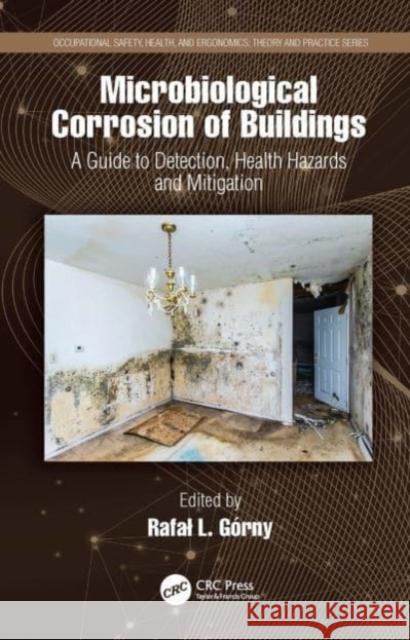
Microbiological Corrosion of Buildings: A Guide to Detection, Health Hazards, and Mitigation Rafal G?rny 9780367499891 CRC Press - książkaWidoczna okładka, to zdjęcie poglądowe, a rzeczywista szata graficzna może różnić się od prezentowanej.

Microbiological Corrosion of Buildings: A Guide to Detection, Health Hazards, and Mitigation

ISBN-13: 9780367499891 / Angielski

Rafal Górny
cena 224,33 zł
(netto: 213,65 VAT:  5%)

Najniższa cena z 30 dni: 222,03 zł
Termin realizacji zamówienia:
ok. 22 dni roboczych
Bez gwarancji dostawy przed świętami

Darmowa dostawa!

Environmental stress caused by water continuously exposes buildings to microbial colonization. This is highly evident when both minor dampness and mass flooding occur. The text describes how microbiological corrosion of buildings and the structures and substances derived from these hazards are responsible for adverse health effects on people exposed to these contaminated environments. Microbiological Corrosion of Buildings: A Guide to Detection, Health Hazards, and Mitigation describes the key elements and methods for neutralising and removing microbiological contamination, and the operating algorithm for checking the effectiveness of preventative solutions. Ideal for construction engineers, microbiologists and professionals in the field.Features:Latest methods for detection of indoor microbial hazardsIdentifies the tools needed for natural, non-destructive and non-invasive methods of bio-corrosion removalDescribes the social and health problems associated with exposure to microbiological hazardsProvides case studies and examples of microorganisms responsible for microbial corrosion.‘Climate change and the associated adverse effects, such as floods and whirlwinds, make the problem of microbiological corrosion of buildings that generates health risks and economic losses on a global scale, the focus of science and technology. The monograph presents a complex problem of building bio-corrosion, that requires knowledge of the distant fields of microbiology and building technology, for the use of both scientists and practitioners. This pioneering work of an interdisciplinary nature harmoniously combines knowledge on specific microbiological issues relating to the process of bio-corrosion and the associated health risks with detailed issues of construction technology concerning the prevention of bio-corrosion and its removal. The authors succeeded in combining a very high scientific level in the monograph with an accessible and understandable presentation of complex problems. The extensive references, ranging from "classical" items from many years ago to the most recent articles presenting the state of the art in this field, are worth emphasising.’—Prof. Jacek Dutkiewicz, Ph.D., D.Sc., Institute of Rural Health in Lublin

Environmental stress caused by water continuously exposes buildings to microbial colonization. This is highly evident when both minor dampness and mass flooding occur. The text describes how microbiological corrosion of buildings and the structures and substances derived from these hazards are responsible for adverse health effects on people exposed to these contaminated environments. Microbiological Corrosion of Buildings: A Guide to Detection, Health Hazards, and Mitigation describes the key elements and methods for neutralising and removing microbiological contamination, and the operating algorithm for checking the effectiveness of preventative solutions. Ideal for construction engineers, microbiologists and professionals in the field.

Features:

  • Latest methods for detection of indoor microbial hazards
  • Identifies the tools needed for natural, non-destructive and non-invasive methods of bio-corrosion removal
  • Describes the social and health problems associated with exposure to microbiological hazards
  • Provides case studies and examples of microorganisms responsible for microbial corrosion.

‘Climate change and the associated adverse effects, such as floods and whirlwinds, make the problem of microbiological corrosion of buildings that generates health risks and economic losses on a global scale, the focus of science and technology. The monograph presents a complex problem of building bio-corrosion, that requires knowledge of the distant fields of microbiology and building technology, for the use of both scientists and practitioners. This pioneering work of an interdisciplinary nature harmoniously combines knowledge on specific microbiological issues relating to the process of bio-corrosion and the associated health risks with detailed issues of construction technology concerning the prevention of bio-corrosion and its removal. The authors succeeded in combining a very high scientific level in the monograph with an accessible and understandable presentation of complex problems. The extensive references, ranging from "classical" items from many years ago to the most recent articles presenting the state of the art in this field, are worth emphasising.’

—Prof. Jacek Dutkiewicz, Ph.D., D.Sc., Institute of Rural Health in Lublin

Kategorie:
Technologie
Kategorie BISAC:
Technology & Engineering > Industrial Health & Safety
Technology & Engineering > Biomedical
Technology & Engineering > Environmental - Pollution Control
Wydawca:
CRC Press
Seria wydawnicza:
Occupational Safety, Health, and Ergonomics
Język:
Angielski
ISBN-13:
9780367499891

"Climate change and the associated adverse effects, such as floods and whirlwinds, make the problem of microbiological corrosion of buildings that generates health risks and economic losses on a global scale, the focus of science and technology. The monograph presents a complex problem of building bio-corrosion, that requires the knowledge of distant fields of microbiology and building technology, for the use of both, scientists and practitioners. This pioneering work of interdisciplinary nature harmoniously combines the knowledge on specific microbiological issues relating to the process of bio-corrosion and the associated health risks with detailed issues of construction technology concerning the prevention of bio-corrosion and its removal. The authors succeeded in combining a very high scientific level of the monograph with an accessible and understandable presentation of complex problems. The extensive references, ranging from ‘classical’ items from many years ago to the most recent articles presenting the state-of-the-art in this field, are worth emphasizing."
—Prof. Jacek Dutkiewicz, PhD, DSc, Institute of Rural Health in Lublin

1. Introduction. 2. Water damage in buildings and associated microbiological contamination. 3. Main factors of microbiological contamination of indoor environments. 4. Epidemiology of microbiological contamination of indoor environments. 5. Environmental conditions for microbiological contamination of buildings. 6. Biodeterioration of building materials. 7. Methods of identifying indoor microbial hazards. 8. Assessment of the level of microbiological contamination of air and surfaces. 9. Methods of drying buildings. 10. Combating microbial corrosion in buildings. 11. Indoor microbiological contamination from a legal perspective. 12. Microbial corrosion of buildings in everyday practice.

Rafał L. Górny, PhD, a full professor of medical sciences, is currently head of the Laboratory of Biohazards at the Central Institute for Labour Protection – National Research Institute, Warsaw, Poland. In the last 25 years of professional work, he has been engaged in numerous studies on the health-related aspects of exposure to particulate, biological, and fibrous aerosols in occupational and non-occupational environments. His research efforts have been presented in more than 70 peer-reviewed publications, more than 100 conference presentations, several monographs and book chapters. Since 2002, he has been working as a World Health Organization and European Commission adviser within the field of biological agents.


Udostępnij

Facebook - konto krainaksiazek.pl


Opinie o Krainaksiazek.pl na Opineo.pl

Partner Mybenefit

Krainaksiazek.pl w programie rzetelna firma Krainaksiaze.pl - płatności przez paypal

Czytaj nas na:

Facebook - krainaksiazek.pl
  • książki na zamówienie
  • granty
  • książka na prezent
  • kontakt
  • pomoc
  • opinie
  • regulamin
  • polityka prywatności

Zobacz:

  • Księgarnia czeska

  • Wydawnictwo Książkowe Klimaty

1997-2025 DolnySlask.com Agencja Internetowa

© 1997-2022 krainaksiazek.pl
     
KONTAKT | REGULAMIN | POLITYKA PRYWATNOŚCI | USTAWIENIA PRYWATNOŚCI
Zobacz: Księgarnia Czeska | Wydawnictwo Książkowe Klimaty | Mapa strony | Lista autorów
KrainaKsiazek.PL - Księgarnia Internetowa

Polityka prywatnosci - link
Krainaksiazek.pl - płatnośc Przelewy24
Przechowalnia Przechowalnia






