• Wyszukiwanie zaawansowane
  • Kategorie
  • Kategorie BISAC
  • Książki na zamówienie
  • Promocje
  • Granty
  • Książka na prezent
  • Opinie
  • Pomoc
  • Załóż konto
  • Zaloguj się

Microbial and Biotechnological Interventions in Bioremediation and Phytoremediation » książka


zaloguj się | załóż konto
Logo Krainaksiazek.pl

koszyk

konto

szukaj
topmenu
Księgarnia internetowa
Szukaj
Książki na zamówienie
Promocje
Granty
Książka na prezent
Moje konto
Pomoc
 
 
Wyszukiwanie zaawansowane
Pusty koszyk
Bezpłatna dostawa dla zamówień powyżej 20 złBezpłatna dostawa dla zamówień powyżej 20 zł

Kategorie główne

• Nauka
 [2946912]
• Literatura piękna
 [1852311]

  więcej...
• Turystyka
 [71421]
• Informatyka
 [150889]
• Komiksy
 [35717]
• Encyklopedie
 [23177]
• Dziecięca
 [617324]
• Hobby
 [138808]
• AudioBooki
 [1671]
• Literatura faktu
 [228371]
• Muzyka CD
 [400]
• Słowniki
 [2841]
• Inne
 [445428]
• Kalendarze
 [1545]
• Podręczniki
 [166819]
• Poradniki
 [480180]
• Religia
 [510412]
• Czasopisma
 [525]
• Sport
 [61271]
• Sztuka
 [242929]
• CD, DVD, Video
 [3371]
• Technologie
 [219258]
• Zdrowie
 [100961]
• Książkowe Klimaty
 [124]
• Zabawki
 [2341]
• Puzzle, gry
 [3766]
• Literatura w języku ukraińskim
 [255]
• Art. papiernicze i szkolne
 [7810]
Kategorie szczegółowe BISAC

Microbial and Biotechnological Interventions in Bioremediation and Phytoremediation

ISBN-13: 9783031088292 / Angielski / Twarda / 2022 / 567 str.
Junaid Ahmad Malik
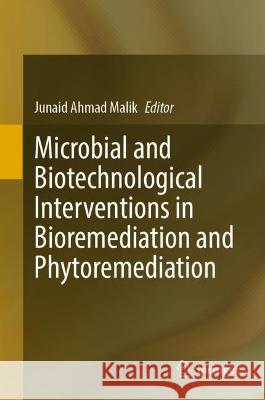
Microbial and Biotechnological Interventions in Bioremediation and Phytoremediation Junaid Ahmad Malik   9783031088292 Springer International Publishing AG - książkaWidoczna okładka, to zdjęcie poglądowe, a rzeczywista szata graficzna może różnić się od prezentowanej.

Microbial and Biotechnological Interventions in Bioremediation and Phytoremediation

ISBN-13: 9783031088292 / Angielski / Twarda / 2022 / 567 str.

Junaid Ahmad Malik
cena 605,23
(netto: 576,41 VAT:  5%)

Najniższa cena z 30 dni: 578,30
Termin realizacji zamówienia:
ok. 22 dni roboczych
Bez gwarancji dostawy przed świętami

Darmowa dostawa!
inne wydania

The introduction of contaminants, due to rapid urbanisation and anthropogenic activities, into the environment causes unsteadiness, distress to the physico-chemical systems including living organisms, which possibly is threatening the dynamics of nature as well as the soil biology by producing certain xenobiotics. Hence, there is an immediate global demand for the diminution of such contaminants and xenobiotics which can otherwise adversely affect the living organisms. Some toxic xenobiotics include synthetic organochlorides such as polycyclic aromatic hydrocarbons (PAHs), and some fractions of crude oil and coal. The advancements in microbiology and biotechnology has lead to the launch of microbial biotechnology as a separate area of research and contributed dramatically to the development of the areas like agriculture, environment, biopharmaceutics, fermented foods, etc. The evolution of new metabolic pathways from natural metabolic cycles has enabled the microorganisms to degrade almost all different complex and resistant xenobiotics found on Earth. Hence, microbes stand an imperative, efficient, green and economical alternative to conventional treatment technologies. This book comprises chapters dealing with various bioremediation strategies with the help of different groups of microorganisms along with detailed graphical/ diagrammatical representations. It also focuses on the use of microbial biotechnology and highlights the recent developments in microbial biotechnology in the area of agriculture and environment. Furthermore, it contains a detailed comprehensive account for the microbial treatment technologies from unsustainable to sustainable which includes chapters prepared by professionals, several researchers, scientists, graduate students and postdoctoral fellows across the world with expertise in environmental microbiology, biotechnology, bioremediation, and environmental engineering. The research presented also highlights some of the significantly important microbial species involved in remediation, the physiology, biochemistry and the mechanisms of remediation by various microbes, and suggestions for future improvement of bioremediation technology. This book would serve as a quick reference book for graduate and postgraduate students pursuing their study in any branch of life sciences, microbiology, health sciences and environmental biotechnology as well as researchers and scientists working in laboratories and industries involved in research related to microbiology, environmental biotechnology and allied researches.


Kategorie:
Nauka, Biologia i przyroda
Kategorie BISAC:
Technology & Engineering > Agriculture - General
Science > Environmental Science (see also Chemistry - Environmental)
Science > Chemia - Analityczna
Wydawca:
Springer International Publishing AG
Język:
Angielski
ISBN-13:
9783031088292
Rok wydania:
2022
Dostępne języki:
Ilość stron:
567
Waga:
0.98 kg
Wymiary:
23.39 x 15.6 x 3.17
Oprawa:
Twarda
Dodatkowe informacje:
Wydanie ilustrowane

Part I: Fundamental Aspects and Microbiome

1.         Bioremediation on the Crossroads of Technology for Environmental Clean-up: An Overview

Rawhat Un Nisa, Shayiestah Maqbool, and Anees Un Nisa

2.         Dynamics of Soil Microbiome and its Role in Sustainable Agriculture

Debapriya Maitra, Bedaprana Roy, Sudeshna Shyam Choudhury, and Arup Kumar Mitra

3.         Soil Bacteria and Nematodes for Bioremediation and Amelioration of Polluted Soil

Gunjan Khandelwal, Viral Chaudhary, Rajeshwari Iyer, and Ankita Dwivedi

4.         Phytochelatins and their Application in Bioremediation

Isha Sharma, Himanshu Pandey, Kanika Thakur, and Devendra Pandey

5.         Efficacy of Biosurfactants in Bioremediation Process

Muthusamy Sanjivkumar, Tanmay Ghosh, Tamilselvan Silambarasan, and Sylvester Sayen Merlin Sophia


Part II: Microalgae and Fungi

6.         Arbuscular Mycorrhizal Fungi (AMF) for Sustainable Soil and Plant Health

Jean Yves Uwamungu, Guoxi Shi, Yibo Wang, Ashutosh Paliwal, Joseph Oduor Odongo, Ab Waheed Wani

7.         Arbuscular Mycorrhizal Fungi in Phytoremediation

Najla Bentrad and Louiza Bouhired

8.         Bioremediation of Contaminated Soil by Microalgae and its Importance in Biofuel Production

Harish Kumar Seenivasan, Anil Kumar Moola, and Nooruddin Thajuddin

9.         Cyanobacteria for Bioremediation of Contaminated Soil

Uzma Sultana, Podduturi Vanamala, and Mir Zahoor Gul

10.     Role of Microalgae as Biofertilizer for Sustainable Plant and Soil Health

Joseph Oduor Odongo, Waheed Ali Panhwar, Junaid Ahmad Malik

11.     Soil Bioremediation Approaches Based on the Use of Fungal Enzymes

Anoop Kumar Devedee, Monalisa Sahoo, Mehjabeen, Kartikeya Choudhary, and R.K. Singh


Part III: Contaminated Sites and Xenobiotics

12.     Microbial Inoculants: An Invasive Approach for the Bioremediation of Soil Contaminated with Heavy Metals

Priyanka Bumbra, Naresh Tanwar, Vaishali Arora, Babita Khosla, and Jitender Singh Laura

13.     Microalgae - A Promising Tool for Heavy Metal Remediation

Shahid Mahboob, Lakshmi M, Anand M, Vijayalakshmi S, Ranjitha J, and Junaid Ahmad Malik

14.     Role of Rhizobacteria in Phytoremediation of Metal-impacted Sites

Dwaipayan Sinha, Satarupa Dey, and Anjana Singh

15.     Chromium Pollution and Its Bioremediation: An Overview

Kirandeep Kaur, Seema Sharma, and Junaid Ahmad Malik

16.     Bioremediation of Antibiotics as a Pollutant in Soil

Ashmita Gupta, Yogita Bhatt, Nadeem Rais, Praveen Nagella, and Vasantha VL

17.     Microbial Bioremediation of Polythene and Plastics

Jean Yves Uwamungu, Rakesh R. Jadhav, Bushra Ghaffar, and Khursheed Ahmad Wani


Part IV: Recent Trends and Approaches

18.     Carbon Sequestration: An Approach to Sustainable Environment

Jasra Anjum, Muzamil Ahmad Sheikh, Avinash Tiwari, Sangeeta Sharma, and Bandna Kumari

19.     Biochar as an Emerging Amendment for Remediation of Heavy Metals Contaminated Soil

Sakshi Verma, Manoj Kumar, and Nitika Kapoor

20.     Nano-bioremediation for the Reclamation and Treatment of Contaminated Sites

Madhavi Konni, Bhavya Kavitha Dwarapureddi, and Manoj Kumar Karnena

21.     Biotechnological Interventions for Pesticide Remediation and Soil Health Reclamation

Vishal Sharma, Tanmay Ghosh, Kartikey Sahil, Amit Guleria, Aayushee Thakur, Gaurav Rana, and Manisha Thakur

22.     Transgenic Approaches for Improving Phytoremediation Potential

Gargee Mohanty, Rajashree Das, Ayusman Behera, and Junaid Ahmad Malik

Dr. Malik received B.Sc. (2008) Science from the University of Kashmir, Srinagar, J&K; M.Sc. (2010) in Zoology from Barkatullah University, Bhopal, Madhya Pradesh; and PhD (2015) in Zoology from the same university. He completed his B.Ed program in 2017 from the University of Kashmir, Srinagar, J&K. He started his career as Lecturer in the School Education Department, Govt. of J&K for 2 years. Dr. Malik is now working as a Lecturer in the Department of Zoology, Govt. Degree College, Bijbehara, Kashmir (J&K) and actively involved in teaching and research activities. He has more than 8 years of research experience. His areas of interest are ecology, soil macrofauna, wildlife biology, conservation biology etc.
Dr. Malik has published more than 20 research papers in various national and international peer-reviewed journals. He has published 19 books, 31 book chapters and more than 10 popular editorial articles with various publishers like Springer Nature, Elsevier Inc., Taylor and Francis Group and IGI Global. Dr. Malik is acting as the Editor-in-Chief of Inventum Biologicum (An International Journal of Biological Research) published by World Biologica, India. He is also serving as editor and reviewer of several journals with a reasonable repute. He has participated in several State, National, and International conferences, seminars, workshops, and symposia and more than 20 conference papers are to his credit. He is the life member of SBBS (Society for Bioinformatics and Biological Sciences) with membership id LMJ-243.
Readers may contact him at editor@worldbiologica.com, or malik.junaidahmad@gmail.com

The introduction of contaminants, due to rapid urbanisation and anthropogenic activities, into the environment causes unsteadiness, distress to the physico-chemical systems including living organisms, which possibly is threatening the dynamics of nature as well as the soil biology by producing certain xenobiotics. Hence, there is an immediate global demand for the diminution of such contaminants and xenobiotics which can otherwise adversely affect the living organisms. Some toxic xenobiotics include synthetic organochlorides such as polycyclic aromatic hydrocarbons (PAHs), and some fractions of crude oil and coal.

The advancements in microbiology and biotechnology has lead to the launch of microbial biotechnology as a separate area of research and contributed dramatically to the development of the areas like agriculture, environment, biopharmaceutics, fermented foods, etc. The evolution of new metabolic pathways from natural metabolic cycles has enabled the microorganisms to degrade almost all different complex and resistant xenobiotics found on Earth. Hence, microbes stand an imperative, efficient, green and economical alternative to conventional treatment technologies.

This book comprises chapters dealing with various bioremediation strategies with the help of different groups of microorganisms along with detailed graphical/ diagrammatical representations. It also focuses on the use of microbial biotechnology and highlights the recent developments in microbial biotechnology in the area of agriculture and environment.  Furthermore, it contains a detailed comprehensive account for the microbial treatment technologies from unsustainable to sustainable which includes chapters prepared by professionals, several researchers, scientists, graduate students and postdoctoral fellows across the world with expertise in environmental microbiology, biotechnology, bioremediation, and environmental engineering. The research presented also highlights some of the significantly important microbial species involved in remediation, the physiology, biochemistry and the mechanisms of remediation by various microbes, and suggestions for future improvement of bioremediation technology.

This book would serve as a quick reference book for graduate and postgraduate students pursuing their study in any branch of life sciences, microbiology, health sciences and environmental biotechnology as well as researchers and scientists working in laboratories and industries involved in research related to microbiology, environmental biotechnology and allied researches.



Udostępnij

Facebook - konto krainaksiazek.pl


Opinie o Krainaksiazek.pl na Opineo.pl

Partner Mybenefit

Krainaksiazek.pl w programie rzetelna firma Krainaksiaze.pl - płatności przez paypal

Czytaj nas na:

Facebook - krainaksiazek.pl
  • książki na zamówienie
  • granty
  • książka na prezent
  • kontakt
  • pomoc
  • opinie
  • regulamin
  • polityka prywatności

Zobacz:

  • Księgarnia czeska

  • Wydawnictwo Książkowe Klimaty

1997-2025 DolnySlask.com Agencja Internetowa

© 1997-2022 krainaksiazek.pl
     
KONTAKT | REGULAMIN | POLITYKA PRYWATNOŚCI | USTAWIENIA PRYWATNOŚCI
Zobacz: Księgarnia Czeska | Wydawnictwo Książkowe Klimaty | Mapa strony | Lista autorów
KrainaKsiazek.PL - Księgarnia Internetowa

Polityka prywatnosci - link
Krainaksiazek.pl - płatnośc Przelewy24
Przechowalnia Przechowalnia




