• Wyszukiwanie zaawansowane
  • Kategorie
  • Kategorie BISAC
  • Książki na zamówienie
  • Promocje
  • Granty
  • Książka na prezent
  • Opinie
  • Pomoc
  • Załóż konto
  • Zaloguj się

Microbial Technology for Sustainable E-waste Management » książka


zaloguj się | załóż konto
Logo Krainaksiazek.pl

koszyk

konto

szukaj
topmenu
Księgarnia internetowa
Szukaj
Książki na zamówienie
Promocje
Granty
Książka na prezent
Moje konto
Pomoc
 
 
Wyszukiwanie zaawansowane
Pusty koszyk
Bezpłatna dostawa dla zamówień powyżej 20 złBezpłatna dostawa dla zamówień powyżej 20 zł

Kategorie główne

• Nauka
 [2946600]
• Literatura piękna
 [1856966]

  więcej...
• Turystyka
 [72221]
• Informatyka
 [151456]
• Komiksy
 [35826]
• Encyklopedie
 [23190]
• Dziecięca
 [619653]
• Hobby
 [140543]
• AudioBooki
 [1577]
• Literatura faktu
 [228355]
• Muzyka CD
 [410]
• Słowniki
 [2874]
• Inne
 [445822]
• Kalendarze
 [1744]
• Podręczniki
 [167141]
• Poradniki
 [482898]
• Religia
 [510455]
• Czasopisma
 [526]
• Sport
 [61590]
• Sztuka
 [243598]
• CD, DVD, Video
 [3423]
• Technologie
 [219201]
• Zdrowie
 [101638]
• Książkowe Klimaty
 [124]
• Zabawki
 [2473]
• Puzzle, gry
 [3898]
• Literatura w języku ukraińskim
 [254]
• Art. papiernicze i szkolne
 [8170]
Kategorie szczegółowe BISAC

Microbial Technology for Sustainable E-waste Management

ISBN-13: 9783031256776 / Angielski / Twarda / 2023 / 352 str.
Prasenjit Debbarma; Saurabh Kumar; Deep Chandra Suyal
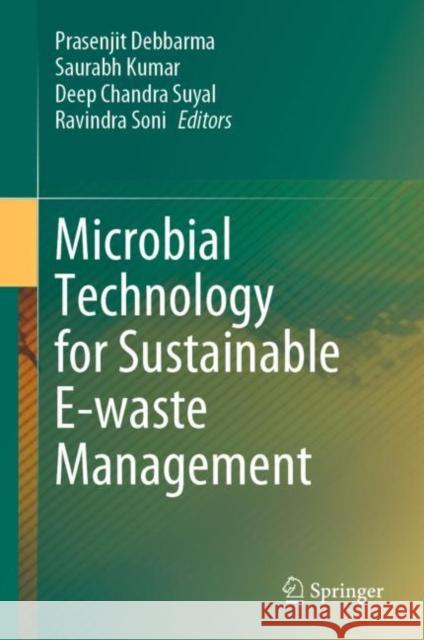
Microbial Technology for Sustainable E-waste Management Prasenjit Debbarma Saurabh Kumar Deep Chandra Suyal 9783031256776 Springer - książkaWidoczna okładka, to zdjęcie poglądowe, a rzeczywista szata graficzna może różnić się od prezentowanej.

Microbial Technology for Sustainable E-waste Management

ISBN-13: 9783031256776 / Angielski / Twarda / 2023 / 352 str.

Prasenjit Debbarma; Saurabh Kumar; Deep Chandra Suyal
cena 645,58 zł
(netto: 614,84 VAT:  5%)

Najniższa cena z 30 dni: 616,85 zł
Termin realizacji zamówienia:
ok. 22 dni roboczych
Bez gwarancji dostawy przed świętami

Darmowa dostawa!
inne wydania

This book, besides discussing challenges and opportunities, will reveal the microbe-metal interactions and strategies for e-waste remediation in different ecosystems.  It will unveil the recent biotechnological advancement and microbiological approach to sustainable biorecycling of e-waste such as bioleaching for heavy metal extraction, valorization of precious metal, biodegradation of e-plastic, the role of the diverse microbial community in e-waste remediation, genetically engineered microbes for e-waste management, the importance of microbial exopolysaccharides in metal biosorption, next-generation technologies, omics-based technologies etc. It also holds the promise to discuss the conservation, utilization and cataloging indigenous microbes in e-waste-polluted niches and promising hybrid technology for sustainable e-waste management.Revolution in the area of information technology and communication is constantly evolving due to scientific research and development. Concurrently, the production of new electrical and electronic equipment also thus uplifting in this era of revolution. These technological advancements certainly have problematic consequences which is the rise of huge amounts of electronic obsoletes or electronic waste (e-waste). Improper management of both hazardous and nonhazardous substances of e-waste led to a major concern in our digital society and environment. Therefore, a sustainable approach including microbial candidates to tackle e-waste is the need of the hour.Nevertheless, the continuous demand for new-generation gadgets and electronics set this high-tech evolution to a new frontier in the last few years. With this continuing trend of technological development, e-waste is expanding exponentially worldwide. In the year of 2019, the worldwide generation of e-waste was approximately 53.6 Mt, of which only about 17.4% of e-waste was collected and recycled, and the other 82.6% was not even documented. E-waste contains various heterogeneous waste complexes such as metals (60%), blends of many polymers (30%) and halogenated compounds, radioactive elements and other pollutants (10%), respectively. The sustainable, efficient, and economic management of e-waste is thus, a challenging task today and in the coming decades. Conventional techniques such as the use of chemicals, incineration and informal ways of e-waste dismantling trigger serious health risks and contamination to the human population and environment, respectively due to the liberation of toxic and hazardous substances from the waste. In this context, bio-candidates especially microorganisms could be sharp-edged biological recycling tools to manage e-waste sustainably. As microbes are omnipresent and diverse in their physiology and functional aspects, they offer a wide range of bioremediation.


This book, besides discussing challenges and opportunities, will reveal the microbe-metal interactions and strategies for e-waste remediation in different ecosystems.  It will unveil the recent biotechnological advancement and microbiological approach to sustainable biorecycling of e-waste such as bioleaching for heavy metal extraction, valorization of precious metal, biodegradation of e-plastic, the role of the diverse microbial community in e-waste remediation, genetically engineered microbes for e-waste management, the importance of microbial exopolysaccharides in metal biosorption, next-generation technologies, omics-based technologies etc. It also holds the promise to discuss the conservation, utilization and cataloging indigenous microbes in e-waste-polluted niches and promising hybrid technology for sustainable e-waste management.Revolution in the area of information technology and communication is constantly evolving due to scientific research and development. Concurrently, the production of new electrical and electronic equipment also thus uplifting in this era of revolution. These technological advancements certainly have problematic consequences which is the rise of huge amounts of electronic obsoletes or electronic waste (e-waste). Improper management of both hazardous and nonhazardous substances of e-waste led to a major concern in our digital society and environment. Therefore, a sustainable approach including microbial candidates to tackle e-waste is the need of the hour.Nevertheless, the continuous demand for new-generation gadgets and electronics set this high-tech evolution to a new frontier in the last few years. With this continuing trend of technological development, e-waste is expanding exponentially worldwide. In the year of 2019, the worldwide generation of e-waste was approximately 53.6 Mt, of which only about 17.4% of e-waste was collected and recycled, and the other 82.6% was not even documented. E-waste contains various heterogeneous waste complexes such as metals (60%), blends of many polymers (30%) and halogenated compounds, radioactive elements and other pollutants (10%), respectively. The sustainable, efficient, and economic management of e-waste is thus, a challenging task today and in the coming decades. Conventional techniques such as the use of chemicals, incineration and informal ways of e-waste dismantling trigger serious health risks and contamination to the human population and environment, respectively due to the liberation of toxic and hazardous substances from the waste. In this context, bio-candidates especially microorganisms could be sharp-edged biological recycling tools to manage e-waste sustainably. As microbes are omnipresent and diverse in their physiology and functional aspects, they offer a wide range of bioremediation.

Kategorie:
Nauka, Polityka
Kategorie BISAC:
Science > Environmental Science (see also Chemistry - Environmental)
Science > Biotechnology
Science > Life Sciences - Ecology
Wydawca:
Springer
Język:
Angielski
ISBN-13:
9783031256776
Rok wydania:
2023
Dostępne języki:
Ilość stron:
352
Waga:
0.78 kg
Wymiary:
23.5 x 15.5
Oprawa:
Twarda

Chapter 1:Current scenario on conventional and modern approaches towards eco-friendly E-waste management

Chapter 2:Electronic waste and their management strategies

Chapter 3:E-waste management practices in India: challenges and approaches

Chapter 4:Bioleaching for heavy metal extraction from E-waste: a sustainable approach

Chapter 5:Bioremediation strategies for sustainable E-waste management

Chapter 6:Challenges and approaches in E-waste management

Chapter 7:Bioremediation: A sustainable way for E-waste management

Chapter 8:Role of bacteria for the recovery of precious metals from e-waste

Chapter 9:Importance of microorganisms in metal recovery from E-waste

Chapter 10:Bioleaching: A sustainable resource recovery strategy for urban mining of E-waste

Chapter 11:Microbial biodegradation of e-plastic in diverse ecosystem

Chapter 12:Metal bioleaching from E-waste using fungal communities

Chapter 13:Association of algae to water pollution and waste water treatment

Chapter 14:E-waste and its management by using algae

Chapter 15:Bioremediation of e-waste through microbial exopolysaccharides: A perspective

Chapter 16:Genetically modified microbes in e-waste management: a perspective

Chapter 17:Recent trends in bio-mining microorganisms for solid waste management

Chapter 18:Plant-bacteria interaction in the recovery of metals from electronic waste

Chapter 19:E-waste management: prospects and strategies

Chapter 20:Role of biotechnological approaches for the valorization of precious metals from E-waste

Chapter 21:A summary of the role of microorganisms in waste management

Dr. Prasenjit Debbarma is Assistant Professor at the Department of Botany, Ishwar Chandra Vidyasagar College, Tripura, India. He has 6 years of research and more than 2 years of teaching experience in the field of agricultural microbiology, microbial ecology, environmental microbiology, biotechnology and metagenomics. Dr. Debbarma and his research group developed two (02) novel bacterial consortia viz. C-1 and C-2 for biodegradation of E-waste and significantly, discovered novel bacterial species (Pseudomonas lalkuanensis sp. nov.) and published (NCBI GenBank whole-genome accession no. CP043311). He has published several research papers, reviews, book chapters, popular articles and abstracts in journals of National and International repute. His patent has been recently published in an Indian patent (201811049946).

Dr. Saurabh Kumar is a scientist at ICAR-Research Complex for Eastern Region, Patna, Bihar, India. He has more than 6 years of research experience in his field. His research interests include metagenomics, cold-adapted microorganisms, bacterial membrane vesicles and plant-microbe interactions under arsenic stress. He has published several research articles in reputed international journals.

Dr. Deep Chandra Suyal is Assistant Professor at the Department of Microbiology, Akal College of Basic Sciences, Eternal University, Baru Sahib, Himachal Pradesh, India. He has been actively engaged in teaching and research for more than 10 years and has experience in the fields of agricultural microbiology, molecular biology & biotechnology and metagenomics. He is currently investigating the genomics & proteomics of cold-adapted microorganisms. He has more than 50 publications including books, book chapters and research articles, in respected international journals and publishers.

Dr. Ravindra Soni is Assistant Professor at the Department of Agricultural Microbiology, I.G.K.V., Raipur, India. He has more than 12 years of teaching & research experience in the field of agricultural microbiology, microbial ecology, molecular biology & biotechnology, especially with reference to higher altitudes. He was the recipient of the DST- Young Scientist award from SERB, Department of Science & Technology, India, Dr DS Kothari postdoctoral fellowship from UGC and the Young Scientist Award from the Society for Plant Research. He has more than 100 publications including books, research articles, and book chapters in respected international journals and publishers.

This book, besides discussing challenges and opportunities, will reveal the microbe-metal interactions and strategies for e-waste remediation in different ecosystems.  It will unveil the recent biotechnological advancement and microbiological approach to sustainable biorecycling of e-waste such as bioleaching for heavy metal extraction, valorization of precious metal, biodegradation of e-plastic, the role of the diverse microbial community in e-waste remediation, genetically engineered microbes for e-waste management, the importance of microbial exopolysaccharides in metal biosorption, next-generation technologies, omics-based technologies etc. It also holds the promise to discuss the conservation, utilization and cataloging indigenous microbes in e-waste-polluted niches and promising hybrid technology for sustainable e-waste management.

Revolution in the area of information technology and communication is constantly evolving due to scientific research and development. Concurrently, the production of new electrical and electronic equipment also thus uplifting in this era of revolution. These technological advancements certainly have problematic consequences which is the rise of huge amounts of electronic obsoletes or electronic waste (e-waste). Improper management of both hazardous and nonhazardous substances of e-waste led to a major concern in our digital society and environment. Therefore, a sustainable approach including microbial candidates to tackle e-waste is the need of the hour.

Nevertheless, the continuous demand for new-generation gadgets and electronics set this high-tech evolution to a new frontier in the last few years. With this continuing trend of technological development, e-waste is expanding exponentially worldwide. In the year of 2019, the worldwide generation of e-waste was approximately 53.6 Mt, of which only about 17.4% of e-waste was collected and recycled, and the other 82.6% was not even documented. E-waste contains various heterogeneous waste complexes such as metals (60%), blends of many polymers (30%) and halogenated compounds, radioactive elements and other pollutants (10%), respectively. The sustainable, efficient, and economic management of e-waste is thus, a challenging task today and in the coming decades. Conventional techniques such as the use of chemicals, incineration and informal ways of e-waste dismantling trigger serious health risks and contamination to the human population and environment, respectively due to the liberation of toxic and hazardous substances from the waste. In this context, bio-candidates especially microorganisms could be sharp-edged biological recycling tools to manage e-waste sustainably. As microbes are omnipresent and diverse in their physiology and functional aspects, they offer a wide range of bioremediation.




Udostępnij

Facebook - konto krainaksiazek.pl


Opinie o Krainaksiazek.pl na Opineo.pl

Partner Mybenefit

Krainaksiazek.pl w programie rzetelna firma Krainaksiaze.pl - płatności przez paypal

Czytaj nas na:

Facebook - krainaksiazek.pl
  • książki na zamówienie
  • granty
  • książka na prezent
  • kontakt
  • pomoc
  • opinie
  • regulamin
  • polityka prywatności

Zobacz:

  • Księgarnia czeska

  • Wydawnictwo Książkowe Klimaty

1997-2025 DolnySlask.com Agencja Internetowa

© 1997-2022 krainaksiazek.pl
     
KONTAKT | REGULAMIN | POLITYKA PRYWATNOŚCI | USTAWIENIA PRYWATNOŚCI
Zobacz: Księgarnia Czeska | Wydawnictwo Książkowe Klimaty | Mapa strony | Lista autorów
KrainaKsiazek.PL - Księgarnia Internetowa

Polityka prywatnosci - link
Krainaksiazek.pl - płatnośc Przelewy24
Przechowalnia Przechowalnia



