• Wyszukiwanie zaawansowane
  • Kategorie
  • Kategorie BISAC
  • Książki na zamówienie
  • Promocje
  • Granty
  • Książka na prezent
  • Opinie
  • Pomoc
  • Załóż konto
  • Zaloguj się

Methods for Disaster Mental Health Research » książka


zaloguj się | załóż konto
Logo Krainaksiazek.pl

koszyk

konto

szukaj
topmenu
Księgarnia internetowa
Szukaj
Książki na zamówienie
Promocje
Granty
Książka na prezent
Moje konto
Pomoc
 
 
Wyszukiwanie zaawansowane
Pusty koszyk
Bezpłatna dostawa dla zamówień powyżej 20 złBezpłatna dostawa dla zamówień powyżej 20 zł

Kategorie główne

• Nauka
 [2949965]
• Literatura piękna
 [1857847]

  więcej...
• Turystyka
 [70818]
• Informatyka
 [151303]
• Komiksy
 [35733]
• Encyklopedie
 [23180]
• Dziecięca
 [617748]
• Hobby
 [139972]
• AudioBooki
 [1650]
• Literatura faktu
 [228361]
• Muzyka CD
 [398]
• Słowniki
 [2862]
• Inne
 [444732]
• Kalendarze
 [1620]
• Podręczniki
 [167233]
• Poradniki
 [482388]
• Religia
 [509867]
• Czasopisma
 [533]
• Sport
 [61361]
• Sztuka
 [243125]
• CD, DVD, Video
 [3451]
• Technologie
 [219309]
• Zdrowie
 [101347]
• Książkowe Klimaty
 [123]
• Zabawki
 [2362]
• Puzzle, gry
 [3791]
• Literatura w języku ukraińskim
 [253]
• Art. papiernicze i szkolne
 [7933]
Kategorie szczegółowe BISAC

Methods for Disaster Mental Health Research

ISBN-13: 9781593853105 / Angielski / Twarda / 2006 / 326 str.
Fran H. Norris; Matthew J. Friedman; Patricia J. Watson
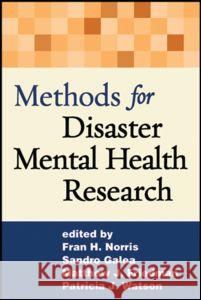
Methods for Disaster Mental Health Research Fran H. Norris Matthew J. Friedman Patricia J. Watson 9781593853105 Guilford Publications - książkaWidoczna okładka, to zdjęcie poglądowe, a rzeczywista szata graficzna może różnić się od prezentowanej.

Methods for Disaster Mental Health Research

ISBN-13: 9781593853105 / Angielski / Twarda / 2006 / 326 str.

Fran H. Norris; Matthew J. Friedman; Patricia J. Watson
cena 248,71 zł
(netto: 236,87 VAT:  5%)

Najniższa cena z 30 dni: 246,17 zł
Termin realizacji zamówienia:
ok. 22 dni roboczych
Bez gwarancji dostawy przed świętami

Darmowa dostawa!

This authoritative book will be of interest to anyone involved in studying the mental health consequences of large-scale traumatic events or in measuring the effectiveness of postdisaster interventions. The book considers disasters from different perspectives and translates their chaotic aftermath into feasible research ideas and approaches. Contributing authors, all experienced researchers and practitioners, present a wide range of methods and strategies used in epidemiology, program evaluation, and public mental health planning in the aftermath of natural or technological disasters and terrorism. Descriptions of exemplary studies bring to life the associated logistical and scientific challenges and show how these challenges can be addressed using high-quality research designs.


Kategorie:
Nauka, Psychologia
Kategorie BISAC:
Psychology > Research & Methodology
Psychology > Psychopathology - Post-Traumatic Stress Disorder (PTSD)
Psychology > Clinical Psychology
Wydawca:
Guilford Publications
Język:
Angielski
ISBN-13:
9781593853105
Rok wydania:
2006
Ilość stron:
326
Waga:
0.63 kg
Wymiary:
22.91 x 16.05 x 2.79
Oprawa:
Twarda
Wolumenów:
01
Dodatkowe informacje:
Bibliografia
Obwoluta
Wydanie ilustrowane

The editors have done a marvelous job of creating an instructive and well-written book that is a 'must read' for all who conduct disaster-related mental health research or who are involved in recovery planning and public health practice. For students, professionals, researchers, and policymakers, the book provides a solid foundation in research methods and includes wonderful explanations. I wholeheartedly recommend this book as a standard text for disaster research. It supplies the framework for good data collection, and good data are what support sound policy decisions.--CDR Dori B. Reissman, MD, MPH, U.S. Public Health Service and Centers for Disease Control and Prevention

This is an exceptional volume that is sure to become a classic, oft-referenced text in the field. Its great strength is the integration of ideas and methods, which too often are addressed in an either/or fashion. The book interweaves trauma and disaster theory, ethics, treatment, and policy, within the context of methodological approaches. It is masterfully done.--Stevan E. Hobfoll, PhD, Kent State University and Summa Health System

This unique and much-needed volume brings together concise, focused chapters by the world’s leading experts, covering all the major aspects of researching mental health after disasters. The editors have succeeded in summarizing years of accumulated wisdom and experience in a readable and easily accessible form. Disaster mental health research is complex and challenging. My recommendation is that nobody should attempt it without first reading this book.--Chris R. Brewin, PhD, University College London, UK
-
A unique contribution to the disaster mental health literature....This book should be read by mental health professionals who seek clearly written, timely, and authoritative presentations on disaster research methodology.
--Psychiatric Services, 08/05/2006ƒƒ
The publication of this book, Methods for Disaster Mental Health Research, is a seminal event in the history of disaster mental health research. It answers the growing awareness of a need for agreed-upon scientific values and articulation of methodologies within the disaster mental health research community, oriented toward the creation of information that can guide the development of programs and policy. It is an immensely practical and readable volume, well organized and thought through. It is carefully designed to be user-friendly for those entering into disaster research for the first time, from the exhaustive review of different definitions of disaster in the first chapter to the appendices at the end of the book, providing a brief description of each disaster mentioned in the book....This is a wonderful, ambitious book...covers a multitude of intimidating material in a simple, organized fashion. It will serve not only those wishing to conduct disaster mental health research but also those who need to be able to use the results of the research to formulate policy.
--PsycCRITIQUES, 08/05/2006ƒƒ
This encyclopedic but easy to read volume offers a valuable and much needed resource to investigators attempting to meet the challenge of disaster research. It reviews key concepts in the field, and presents a framework for formulating research questions, and the most effective designs and methods for answering them, including approaches to sampling and data collection. As such it is an important move toward bringing order to a crucial area of contemporary research.
--Journal of Nervous and Mental Disease, 08/05/2006

I. Introduction to the Field
1. Definitions and Concepts in Disaster Research, Alexander C. McFarlane and Fran H. Norris
2. Psychosocial Consequences of Disasters: A Review of Past Research, Fran H. Norris and Carrie L. Elrod
II. Research Fundamentals
3. Choosing Research Methods to Match Research Goals in Studies of Disaster or Terrorism, Carol S. North and Fran H. Norris
4. Formulating Questions about Postdisaster Mental Health, Charles C. Benight, Alexander C. McFarlane, and Fran H. Norris
5. Ethical Issues in Disaster Research, Alan R. Fleischman, Lauren Collogan, and Farris Tuma
III. Methods for Sampling and Data Collection
6. Basic Epidemiological Approaches to Disaster Research: Value of Face-to-Face Procedures, Evelyn J. Bromet and Johan M. Havenaar
7. Telephone-Based Research Methods in Disaster Research, Sandro Galea, Michael Bucuvalas, Heidi Resnick, John Boyle, David Vlahov, and Dean Kilpatrick
8. Web-Based Methods in Disaster Research, William E. Schlenger and Roxane Cohen Silver
9. School-Based Studies of Children Following Disasters, Annette M. La Greca
10. Qualitative Approaches to Studying the Effects of Disasters, Lawrence A. Palinkas
IV. Research for Planning, Policy, and Service Delivery
11. Public Mental Health Surveillance and Monitoring, Sandro Galea and Fran H. Norris
12. Mental Health Services and Evaluation Research: Precepts, Pragmatics, and Politics, Craig S. Rosen and Helena E. Young
13. Evidence-Based Treatments for Traumatic Stress: An Overview of the Research with an Emphasis on Disaster Settings, Laura E. Gibson, Jessica L. Hamblen, Michael J. Zvolensky, and Anka A. Vujanovic
14. Strategies for Dissemination of Evidence-Based Treatments: Training Clinicians after Large-Scale Disasters, Randall D. Marshall, Lawrence Amsel, Yuval Neria, and Eun-Jung Suh
V. Special Challenges in Disaster Research
15. Conducting Research with Children and Adolescents after Disaster, Alan M. Steinberg, Melissa J. Brymer, Jesse R. Steinberg, and Betty Pfefferbaum
16. Conducting Research with Military and Uniformed Services Workers, Carol S. Fullerton, James E. McCarroll, and Robert J. Ursano
17. Conducting Research in Minority and Marginalized Communities, Russell T. Jones, James M. Hadder, Franklin Carvajal, Sara Chapman, and Apryl Alexander
18. Conducting Research in Other Countries, Arthur D. Murphy, Julia L. Perilla, and Eric Jones
19. Disaster Mental Health Research: Challenges for the Future, Matthew J. Friedman
Appendix 1. Disasters Mentioned in the Text, Sandro Galea
Appendix 2. Searching the Traumatic Stress Literature, Fred Lerner

Fran H. Norris, PhD, a community/social psychologist, is a Research Professor in the Department of Psychiatry at Dartmouth Medical School, where she is affiliated with the National Center for PTSD and with the National Consortium for the Study of Terrorism and Response to Terrorism, headed by the University of Maryland. She has published extensively on the psychosocial consequences of disasters.

Sandro Galea, MD, DrPH, is an Associate Professor of Epidemiology at the University of Michigan School of Public Health and a Research Affiliate of the Population Studies Center at the Institute for Social Research. His research focuses on the social and economic production of health, particularly mental health and behavior in urban settings, and he has an abiding interest in the social and health consequences of collectively experienced traumatic events.

Matthew J. Friedman, MD, PhD, before retiring in 2022, was founder and Director of the National PTSD Brain Bank; Senior Advisor to the National Center for PTSD, where he served for 24 years as Executive Director; and Professor of Psychiatry and Pharmacology at Dartmouth Medical School. He \ worked with patients with PTSD for over 50 years and has approximately 360 publications, including 29 books.

Patricia J. Watson, PhD, is an educational specialist for the National Center for PTSD and Assistant Professor in the Department of Psychiatry at Dartmouth Medical School. She collaborates with the Substance Abuse and Mental Health Services Administration, the Centers for Disease Control and Prevention, and subject-matter experts to create publications for public and mental health interventions following large-scale terrorism, disaster, and pandemic flu.

Norris, Fran H. Fran H. Norris, PhD, is Research Professor in the ... więcej >
Friedman, Matthew J. Matthew J. Friedman is Executive Director, Nationa... więcej >


Udostępnij

Facebook - konto krainaksiazek.pl


Opinie o Krainaksiazek.pl na Opineo.pl

Partner Mybenefit

Krainaksiazek.pl w programie rzetelna firma Krainaksiaze.pl - płatności przez paypal

Czytaj nas na:

Facebook - krainaksiazek.pl
  • książki na zamówienie
  • granty
  • książka na prezent
  • kontakt
  • pomoc
  • opinie
  • regulamin
  • polityka prywatności

Zobacz:

  • Księgarnia czeska

  • Wydawnictwo Książkowe Klimaty

1997-2025 DolnySlask.com Agencja Internetowa

© 1997-2022 krainaksiazek.pl
     
KONTAKT | REGULAMIN | POLITYKA PRYWATNOŚCI | USTAWIENIA PRYWATNOŚCI
Zobacz: Księgarnia Czeska | Wydawnictwo Książkowe Klimaty | Mapa strony | Lista autorów
KrainaKsiazek.PL - Księgarnia Internetowa

Polityka prywatnosci - link
Krainaksiazek.pl - płatnośc Przelewy24
Przechowalnia Przechowalnia





