• Wyszukiwanie zaawansowane
  • Kategorie
  • Kategorie BISAC
  • Książki na zamówienie
  • Promocje
  • Granty
  • Książka na prezent
  • Opinie
  • Pomoc
  • Załóż konto
  • Zaloguj się

Mechanics of Optimal Structural Design: Minimum Weight Structures » książka


zaloguj się | załóż konto
Logo Krainaksiazek.pl

koszyk

konto

szukaj
topmenu
Księgarnia internetowa
Szukaj
Książki na zamówienie
Promocje
Granty
Książka na prezent
Moje konto
Pomoc
 
 
Wyszukiwanie zaawansowane
Pusty koszyk
Bezpłatna dostawa dla zamówień powyżej 20 złBezpłatna dostawa dla zamówień powyżej 20 zł

Kategorie główne

• Nauka
 [2949524]
• Literatura piękna
 [1817948]

  więcej...
• Turystyka
 [70715]
• Informatyka
 [151291]
• Komiksy
 [35671]
• Encyklopedie
 [23176]
• Dziecięca
 [612440]
• Hobby
 [136066]
• AudioBooki
 [1740]
• Literatura faktu
 [226030]
• Muzyka CD
 [378]
• Słowniki
 [2918]
• Inne
 [445441]
• Kalendarze
 [1181]
• Podręczniki
 [166545]
• Poradniki
 [469898]
• Religia
 [508035]
• Czasopisma
 [502]
• Sport
 [61392]
• Sztuka
 [242759]
• CD, DVD, Video
 [3348]
• Technologie
 [219537]
• Zdrowie
 [98738]
• Książkowe Klimaty
 [124]
• Zabawki
 [2382]
• Puzzle, gry
 [3543]
• Literatura w języku ukraińskim
 [259]
• Art. papiernicze i szkolne
 [7107]
Kategorie szczegółowe BISAC

Mechanics of Optimal Structural Design: Minimum Weight Structures

ISBN-13: 9780470746233 / Angielski / Twarda / 2009 / 582 str.
David Rees
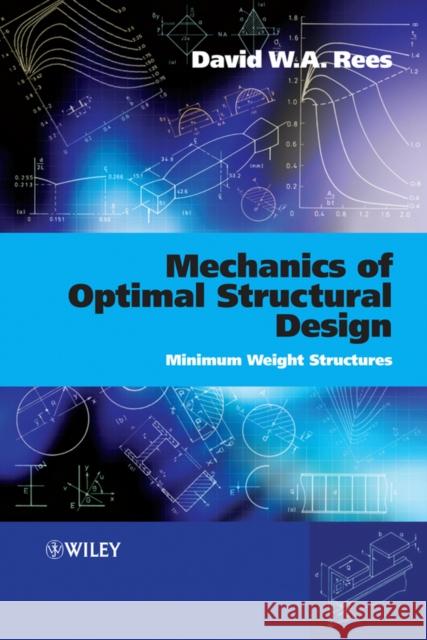
Mechanics of Optimal Structural Design: Minimum Weight Structures Rees, David W. a. 9780470746233 John Wiley & Sons - książkaWidoczna okładka, to zdjęcie poglądowe, a rzeczywista szata graficzna może różnić się od prezentowanej.

Mechanics of Optimal Structural Design: Minimum Weight Structures

ISBN-13: 9780470746233 / Angielski / Twarda / 2009 / 582 str.

David Rees
cena 575,49
(netto: 548,09 VAT:  5%)

Najniższa cena z 30 dni: 575,49
Termin realizacji zamówienia:
ok. 30 dni roboczych.

Darmowa dostawa!

In a global climate where engineers are increasingly under pressure to make the most of limited resources, there are huge potential financial and environmental benefits to be gained by designing for minimum weight. With Mechanics of Optimal Structural Design, David Rees brings the original approach of weight optimization to the existing structural design literature, providing a methodology for attaining minimum weight of a range of structures under their working loads. He addresses the current gap in education between formal structural design teaching at undergraduate level and the practical application of this knowledge in industry, describing the analytical techniques that students need to understand before applying computational techniques that can be easy to misuse without this grounding.

  • Shows engineers how to approach structural design for minimum weight in clear, concise terms
  • Contains many new least-weight design techniques, taking into consideration different manners of loading and including new topics that have not previously been considered within the least-weight theme
  • Considers the demands for least-weight road, air and space vehicles for the future
  • Enhanced by illustrative worked examples to enlighten the theory, exercises at the end of each chapter that enable application of the theory covered, and an accompanying website with worked examples and solutions housed at www.wiley.com/go/rees
The least-weight analyses of basic structural elements ensure a spread of interest with many applications in mechanical, civil, aircraft and automobile engineering. Consequently, this book fills the gap between the basic material taught at undergraduate level and other approaches to optimum design, for example computer simulations and the finite element method.

Kategorie:
Technologie
Kategorie BISAC:
Technology & Engineering > Drafting & Mechanical Drawing
Technology & Engineering > Civil - General
Wydawca:
John Wiley & Sons
Język:
Angielski
ISBN-13:
9780470746233
Rok wydania:
2009
Ilość stron:
582
Waga:
1.17 kg
Wymiary:
24.64 x 17.53 x 3.56
Oprawa:
Twarda
Wolumenów:
01
Dodatkowe informacje:
Bibliografia
Glosariusz/słownik
Wydanie ilustrowane

"The usual formulation is strength–to–weight ratio, but Rees (engineering and design, Brunel U.) points out that the goal is to reduce weight without reducing strength, not vice versa, so a better expression would be the weight–to–strength ratio, and that is what he explores." ( Book News, December 2009)

Preface.

Glossary of Terms.

Key Symbols.

Chapter 1 Compression of Slender Struts.

1.1 Introduction.

1.2 Failure Criteria.

1.3 Solid Cross–Sections.

1.4 Thin–Walled, Tubular Sections.

1.5 Thin–Walled, Open Sections.

1.6 Summary of Results.

References.

Exercises.

Chapter 2 Compression of Wide Struts.

2.1 Introduction.

2.2 Failure Criteria.

2.3 Cellular Sections.

2.4 Open Sections.

2.5 Corrugated Sandwich Panel.

2.6 Summary of Results.

References.

Exercise.

Chapter 3 Bending of Slender Beams.

3.1 Introduction.

3.2 Solid Cross–Sections.

3.3 Thin–Walled, Tubular Sections.

3.4 Open Sections.

3.5 Summary of Results.

References.

Exercises.

Chapter 4 Torsion of Bars and Tubes.

4.1 Introduction.

4.2 Solid Cross–Sections.

4.3 Thin–Walled, Open Sections.

4.4 Thin–Walled, Closed Tubes.

4.5 Multi–Cell Tubes.

References.

Exercises.

Chapter 5 Shear of Solid Bars, Tubes and Thin Sections.

5.1 Introduction.

5.2 Bars of Solid Section.

5.3 Thin–Walled Open Sections.

5.4 Thin–Walled, Closed Tubes.

5.5 Concluding Remarks.

References.

Exercise.

Chapter 6 Combined Shear and Torsion in Thin–Walled Sections.

6.1 Introduction.

6.2 Thin–Walled, Open Sections.

6.3 Thin–Walled, Closed Tubes.

6.4 Concluding Remarks.

References.

Exercises.

Chapter 7 Combined Shear and Bending in Idealised Sections.

7.1 Introduction.

7.2 Idealised Beam Sections.

7.3 Idealised Open Sections.

7.4 Idealised Closed Tubes.

References.

Exercises.

Chapter 8 Shear in Stiffened Webs.

8.1 Introduction.

8.2 Castellations in Shear.

8.3 Corrugated Web.

8.4 Flat Web with Stiffeners.

References.

Exercises.

Chapter 9 Frame Assemblies.

9.1 Introduction.

9.2 Double–Strut Assembly.

9.3 Multiple–Strut Assembly.

9.4 Cantilevered Framework.

9.5 Tetrahedron Framework.

9.6 Cantilever Frame with Two Struts.

9.7 Cantilever Frame with One Strut.

References.

Exercises.

Chapter 10 Simply Supported Beams and Cantilevers.

10.1 Introduction.

10.2 Variable Bending Moments.

10.3 Cantilever with End–Load.

10.4 Cantilever with Distributed Loading.

10.5 Simply Supported Beam with Central Load.

10.6 Simply Supported Beam with Uniformly Distributed Load.

10.7 Additional Failure Criteria.

References.

Exercises.

Chapter 11 Optimum Cross–Sections for Beams.

11.1 Introduction.

11.2 Approaching Optimum Sections.

11.3 Generalised Optimum Sections.

11.4 Optimum Section, Combined Bending and Shear.

11.5 Solid, Axisymmetric Sections.

11.6 Fully Optimised Section.

11.7 Fully Optimised Weight.

11.8 Summary.

References.

Exercises.

Chapter 12 Structures under Combined Loading.

12.1 Introduction.

12.2 Combined Bending and Torsion.

12.3 Cranked Cantilever.

12.4 Cranked Strut with End–Load.

12.5 Cranked Bracket with End–Load.

12.6 Portal Frame with Central Load.

12.7 Cantilever with End and Distributed Loading.

12.8 Centrally Propped Cantilever with End–Load.

12.9 End–Propped Cantilever with Distributed Load.

12.10 Simply Supported Beam with Central–Concentrated and Distributed Loadings.

12.11 Centrally Propped, Simply Supported Beam with Distributed Load.

References.

Exercises.

Chapter 13 Encastré Beams.

13.1 Introduction.

13.2 Central–Concentrated Load.

13.3 Uniformly Distributed Load.

13.4 Combined Loads.

References.

Exercises.

Chapter 14 Plastic Collapse of Beams and Frames.

14.1 Introduction

14.2 Plane Frames.

14.3 Beam Plasticity.

14.4 Collapse of Simple Beams.

14.5 Encastré Beams.

14.6 Continuous Beams.

14.7 Portal Frames.

14.8 Effect of Axial Loading upon Collapse.

14.9 Effect of Shear Force upon Collapse.

14.10 Effect of Hardening upon Collapse.

References.

Exercises.

Chapter 15 Dynamic Programming.

15.1 Introduction.

15.2 Single–Span Beam.

15.3 Two–Span Beam.

15.4 Three–Span Beam.

15.5 Design Space.

Reference.

Exercises.

Appendix A Mechanical Properties.

A.1 Non–Metals.

A.2 Metals and Alloys.

References.

Appendix B Plate Buckling Under Uniaxial Compression.

B.1 Wide and Slender Struts.

B.2 Plates with Supported Sides.

B.3 Inelastic Buckling.

B.4 Post–Buckling.

References.

Appendix C Plate Buckling Under Biaxial Compression and Shear.

C.1 Biaxial Compression.

C.2 Pure Shear.

C.3 Inelastic Shear Buckling.

References.

Appendix D Secondary Buckling.

D.1 Buckling Modes.

D.2 Local Compressive Buckling.

D.3 Global Buckling.

D.4 Local Shear Buckling.

References.

Bibliography.

Index.

In a global climate where engineers are increasingly under pressure to make the most of limited resources, there are huge potential financial and environmental benefits to be gained by designing for minimum weight. With Mechanics of Optimal Structural Design, David Rees brings the original approach of weight optimization to the existing structural design literature, providing a methodology for attaining minimum weight of a range of structures under their working loads. He addresses the current gap in education between formal structural design teaching at undergraduate level and the practical application of this knowledge in industry, describing the analytical techniques that students need to understand before applying computational techniques that can be easy to misuse without this grounding.

  • Shows engineers how to approach structural design for minimum weight in clear, concise terms
  • Contains many new least–weight design techniques, taking into consideration different manners of loading and including new topics that have not previously been considered within the least–weight theme
  • Considers the demands for least–weight road, air and space vehicles for the future
  • Enhanced by illustrative worked examples to enlighten the theory, exercises at the end of each chapter that enable application of the theory covered, and an accompanying website with worked examples and solutions housed at www.wiley.com/go/rees (TBC)

The least–weight analyses of basic structural elements ensure a spread of interest with many applications in mechanical, civil, aircraft and automobile engineering.  Consequently, this book fills the gap between the basic material taught at undergraduate level and other approaches to optimum design, for example computer simulations and the finite element method.


Udostępnij

Facebook - konto krainaksiazek.pl


Opinie o Krainaksiazek.pl na Opineo.pl

Partner Mybenefit

Krainaksiazek.pl w programie rzetelna firma Krainaksiaze.pl - płatności przez paypal

Czytaj nas na:

Facebook - krainaksiazek.pl
  • książki na zamówienie
  • granty
  • książka na prezent
  • kontakt
  • pomoc
  • opinie
  • regulamin
  • polityka prywatności

Zobacz:

  • Księgarnia czeska

  • Wydawnictwo Książkowe Klimaty

1997-2026 DolnySlask.com Agencja Internetowa

© 1997-2022 krainaksiazek.pl
     
KONTAKT | REGULAMIN | POLITYKA PRYWATNOŚCI | USTAWIENIA PRYWATNOŚCI
Zobacz: Księgarnia Czeska | Wydawnictwo Książkowe Klimaty | Mapa strony | Lista autorów
KrainaKsiazek.PL - Księgarnia Internetowa

Polityka prywatnosci - link
Krainaksiazek.pl - płatnośc Przelewy24
Przechowalnia Przechowalnia





