Maya Exodus: Indigenous Struggle for Citizenship in Chiapas » książka





Maya Exodus: Indigenous Struggle for Citizenship in Chiapas
ISBN-13: 9780806142920 / Angielski / Miękka / 2012 / 339 str.
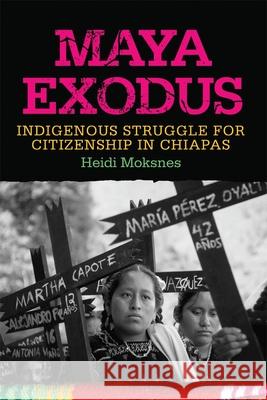
"Maya Exodus" offers a richly detailed account of how a group of indigenous people has adopted a global language of human rights to press claims for social change and social justice. Anthropologist Heidi Moksnes describes how Catholic Maya in the municipality of Chenalho in Chiapas, Mexico, have changed their position vis-a-vis the Mexican state from being loyal clients dependent on a patron, to being citizens who have rights as a means of exodus from poverty.
Moksnes lived in Chenalho in the mid-1990s and has since followed how Catholic Maya have adopted liberation theology and organized a religious and political movement to both advance their sociopolitical position in Mexico and restructure local Maya life. She came to know members of the Catholic organization Las Abejas shortly before they made headlines when forty-five members, including women and children, were killed by Mexican paramilitary troops because of their sympathy with the Zapatistas. In the years since the massacre at Acteal, Las Abejas has become a global symbol of indigenous pacifist resistance against state oppression.
The Catholic Maya in Chenalho see their poverty as a legacy of colonial rule perpetuated by the present Mexican government, and believe that their suffering is contrary to the will of God. Moksnes shows how this antagonism toward the state is exacerbated by the government s recent neoliberal policies, which have ended pro-peasant programs while employing a discourse on human rights. In this context, Catholic Maya debate the value of pressing the state with their claims. Instead, they seek independent routes to influence and resources, through the Catholic Diocese and nongovernmental organizations relations, however, that also help to create new dependencies.
This book incorporates voices of Maya men and women as they form new identities, rethink central conceptions of being human, and assert citizenship rights. "Maya Exodus" deepens our understanding of the complexities involved in striving for social change. Ultimately, it highlights the contradictory messages marginalized peoples encounter when engaging with the globally celebrated human rights discourse.
"
An intimate view of Catholic Mayas fight for their rights as citizens of Mexico Maya Exodus offers a richly detailed account of how a group of indigenous people has adopted a global language of human rights to press claims for social change and social justice. Anthropologist Heidi Moksnes describes how Catholic Maya in the municipality of Chenalhó in Chiapas, Mexico, have changed their position vis-a-vis the Mexican state-from being loyal clients dependent on a patron, to being citizens who have rights-as a means of exodus from poverty. Moksnes lived in Chenalhó in the mid-1990s and has since followed how Catholic Maya have adopted liberation theology and organized a religious and political movement to both advance their sociopolitical position in Mexico and restructure local Maya life. She came to know members of the Catholic organization Las Abejas shortly before they made headlines when forty-five members, including women and children, were killed by Mexican paramilitary troops because of their sympathy with the Zapatistas. In the years since the massacre at Acteal, Las Abejas has become a global symbol of indigenous pacifist resistance against state oppression. The Catholic Maya in Chenalhó see their poverty as a legacy of colonial rule perpetuated by the present Mexican government, and believe that their suffering is contrary to the will of God. Moksnes shows how this antagonism toward the state is exacerbated by the governments recent neoliberal policies, which have ended pro-peasant programs while employing a discourse on human rights. In this context, Catholic Maya debate the value of pressing the state with their claims. Instead, they seek independent routes to influence and resources, through the Catholic Diocese and nongovernmental organizations-relations, however, that also help to create new dependencies. This book incorporates voices of Maya men and women as they form new identities, rethink central conceptions of being human, and assert citizenship rights. Maya Exodus deepens our understanding of the complexities involved in striving for social change. Ultimately, it highlights the contradictory messages marginalized peoples encounter when engaging with the globally celebrated human rights discourse.Social anthropologist Heidi Moksnes is Researcher at the Uppsala Center for Sustainable Development, Uppsala University, Sweden.




Czytaj nas na:
KrainaKsiazek.PL - Księgarnia Internetowa


