• Wyszukiwanie zaawansowane
  • Kategorie
  • Kategorie BISAC
  • Książki na zamówienie
  • Promocje
  • Granty
  • Książka na prezent
  • Opinie
  • Pomoc
  • Załóż konto
  • Zaloguj się

Mathematics Education in Africa: The Fourth Industrial Revolution » książka


zaloguj się | załóż konto
Logo Krainaksiazek.pl

koszyk

konto

szukaj
topmenu
Księgarnia internetowa
Szukaj
Książki na zamówienie
Promocje
Granty
Książka na prezent
Moje konto
Pomoc
 
 
Wyszukiwanie zaawansowane
Pusty koszyk
Bezpłatna dostawa dla zamówień powyżej 20 złBezpłatna dostawa dla zamówień powyżej 20 zł

Kategorie główne

• Nauka
 [2946350]
• Literatura piękna
 [1816154]

  więcej...
• Turystyka
 [70666]
• Informatyka
 [151172]
• Komiksy
 [35576]
• Encyklopedie
 [23172]
• Dziecięca
 [611458]
• Hobby
 [135995]
• AudioBooki
 [1726]
• Literatura faktu
 [225763]
• Muzyka CD
 [378]
• Słowniki
 [2917]
• Inne
 [444280]
• Kalendarze
 [1179]
• Podręczniki
 [166508]
• Poradniki
 [469467]
• Religia
 [507199]
• Czasopisma
 [496]
• Sport
 [61352]
• Sztuka
 [242330]
• CD, DVD, Video
 [3348]
• Technologie
 [219391]
• Zdrowie
 [98638]
• Książkowe Klimaty
 [124]
• Zabawki
 [2382]
• Puzzle, gry
 [3525]
• Literatura w języku ukraińskim
 [259]
• Art. papiernicze i szkolne
 [7107]
Kategorie szczegółowe BISAC

Mathematics Education in Africa: The Fourth Industrial Revolution

ISBN-13: 9783031139260 / Angielski / Twarda / 2022 / 331 str.
Brantina Chirinda; Kakoma Luneta; Alphonse Uworwabayeho
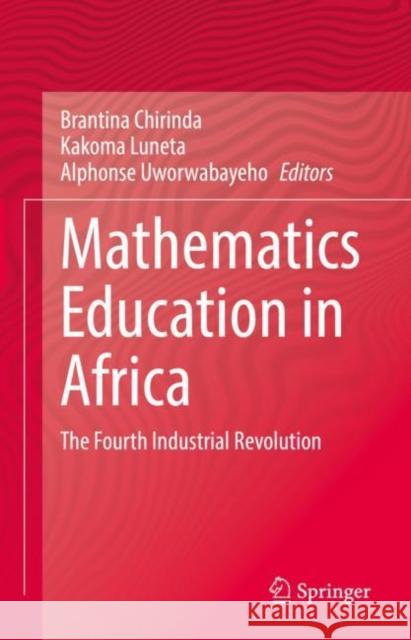
Mathematics Education in Africa: The Fourth Industrial Revolution Brantina Chirinda Kakoma Luneta Alphonse Uworwabayeho 9783031139260 Springer - książkaWidoczna okładka, to zdjęcie poglądowe, a rzeczywista szata graficzna może różnić się od prezentowanej.

Mathematics Education in Africa: The Fourth Industrial Revolution

ISBN-13: 9783031139260 / Angielski / Twarda / 2022 / 331 str.

Brantina Chirinda; Kakoma Luneta; Alphonse Uworwabayeho
cena 603,81
(netto: 575,06 VAT:  5%)

Najniższa cena z 30 dni: 539,74
Termin realizacji zamówienia:
ok. 16-18 dni roboczych.

Darmowa dostawa!
inne wydania

This book is about mathematics teaching and learning in Africa during the Fourth Industrial Revolution. The Fourth Industrial Revolution (4IR) has evolved to utilize new technologies in the teaching and learning of Mathematics. It is characterized by the fusion of the biological, physical and digital worlds and embodies a new era of innovation in mathematics education, leading to the rapid emergence of new technologies for mathematics teaching and learning. Because 4IR in mathematics education is happening differently in various parts of Africa, the authors of the various chapters in this volume have positioned their work in their respective local contexts. The chapters address a wide variety of interests, concerns, and implications regarding 4IR and Mathematics Education in Africa. Additionally, a number of chapters address teaching mathematics in the context of the COVID-19 pandemic that has gripped the world. Other chapters discuss the implications of inequalities in Africa that effect mathematics education during 4IR. Chapters also incorporate arguments, observations, and suggestions to, improve and transform the teaching and learning of mathematics in Africa during the 4IR.This book highlights a new era of innovation in mathematics education in the context of the Fourth Industrial Revolution, leading to the rapid emergence of new technologies in mathematics teaching and learning. It is a valuable resource for graduate students, people with research interests in the fourth industrial revolution and mathematics educators at any level, including all mathematics teachers; mathematics education curriculum designers and policymakers.


This book is about mathematics teaching and learning in Africa during the Fourth Industrial Revolution. The Fourth Industrial Revolution (4IR) has evolved to utilize new technologies in the teaching and learning of Mathematics. It is characterized by the fusion of the biological, physical and digital worlds and embodies a new era of innovation in mathematics education, leading to the rapid emergence of new technologies for mathematics teaching and learning. Because 4IR in mathematics education is happening differently in various parts of Africa, the authors of the various chapters in this volume have positioned their work in their respective local contexts. The chapters address a wide variety of interests, concerns, and implications regarding 4IR and Mathematics Education in Africa. Additionally, a number of chapters address teaching mathematics in the context of the COVID-19 pandemic that has gripped the world. Other chapters discuss the implications of inequalities in Africa that effect mathematics education during 4IR. Chapters also incorporate arguments, observations, and suggestions to, improve and transform the teaching and learning of mathematics in Africa during the 4IR.This book highlights a new era of innovation in mathematics education in the context of the Fourth Industrial Revolution, leading to the rapid emergence of new technologies in mathematics teaching and learning. It is a valuable resource for graduate students, people with research interests in the fourth industrial revolution and mathematics educators at any level, including all mathematics teachers; mathematics education curriculum designers and policymakers.

Kategorie:
Podręczniki
Kategorie BISAC:
Education > Teaching - Subjects - Mathematics
Education > Professional Development
Social Science > Socjologia
Wydawca:
Springer
Język:
Angielski
ISBN-13:
9783031139260
Rok wydania:
2022
Dostępne języki:
Ilość stron:
331
Waga:
0.67 kg
Wymiary:
23.39 x 15.6 x 2.06
Oprawa:
Twarda
Dodatkowe informacje:
Wydanie ilustrowane

Chapter 1: Is Africa ready for the 4IR? Fidele Ukobizaba, Ezekiel Nsabayezu and Alphonse Uworwabayeho

Chapter 2: Can the Fourth Industrial Revolution (4IR) resolve why the teaching of mathematics in the current paradigm continues to be decontextualised and ineffective; Kakoma Luneta.

Chapter 3: Alignment and Gaps of the Competency-Based Mathematics Curriculum and the Fourth Industrial Revolution; Penina Kamina and Mary A. Ochieng

Chapter 4: Mathematics educators’ readiness for online education in the Fourth Industrial Revolution - A case of two selected Universities in Ethiopia; Tola Bekene Bedada; France Machaba; and Mekdes Minjar Manea

Chapter 5: Mathematics Education and the Fourth Industrial Revolution (4IR): Are the High School Mathematics Teachers Ready in Nigeria?; Musa Adekunle Ayanwale, Mdutshekelwa Ndlovu & Jumoke Iyabode Oladele

Chapter 6: Revamping the Zimbabwean mathematics curriculum to align it with the demands of fourth industrial revolution; Gladys Suzuma, Conilius Changwiza, and Brantina Chirinda

Chapter 7: Redefining Distance Learning for the African Context: Lessons Learnt from Egyptian Educators; Mariam Makramalla

Chapter 8: Implementing Assessment as Learning with Computer Adaptive Learning for Enhancing STEM Education in Africa: A Fourth Industrial Revolution Possibility; Jumoke I. Oladele, Mdutshekelwa Ndlovu and Musa A. Ayanwale

Chapter 9: Teaching and Learning Mathematics Using Technology in Basic Education Schools in Rwanda; Emmanuel Iyamuremye, Joseph Njiku, Jean Francois Maniraho, Irenee Ndayambaje, and Charles Magoba Muwonge

Chapter 10: Exploring the challenges concerning the teaching and learning mathematics during the fourth industrial revolution in the selected Rwandan secondary schools; Aloys Iyamuremye, Jean de Dieu Kwitonda, Ezechiel Nsabayezu and Jean Claude Habimana

Chapter 11: An experimental approach for learning mathematical functions in secondary school using GeoGebra software in Niger republic; Abdoul Massalabi NOUHOU and Abdou Moumouni

Chapter 12: Instances of instrumental orchestration when a teacher integrates GeoGebra in solving linear inequalities in the context of linear and quadratic functions; Charles Smith

Chapter 13: Fault lines in designing learning activities for practising mathematics teachers: An autoethnographic account; Cyril Julie

Chapter 14: Factors Influencing Preservice Teachers’ Adoption of Interactive Social Media Platforms in Mathematics Teacher Education in Malawi; Fraser Gobede, Mercy Kazima and Justina Longwe

Chapter 15: The Use of Animal Metaphors to Reveal Self-perceptions of Grade Three Namibian Learners Who Experienced Mathematics Learning Difficulties During the COVID-19 Pandemic

Cloneria Nyambali Jatilen and Shemunyenge Taleiko Hamukwaya

Chapter 16: Using 4IR to enhance learners’ self-regulated skills to solve circle geometry problems; Puleng Motseki

Chapter 17: Emerging realities from COVID-19 and the 4IR: mathematics education lecturers’ autoethnographic experiences; Hlamulo Mbhiza, Zingiswa Jojo, Masilo Motshidisi and

France Machaba

Chapter 18: WhatsApp as a social media to enhance dialogic interactions in mathematics: Grade 9 teachers and learners’ voices; Tšhegofatšo Makgakga

Brantina Chirinda is a lecturer of Mathematics and Mathematics Education in the Faculty of Education at Cape Peninsula University of Technology (CPUT), a research associate at the University of Johannesburg (UJ) and a visiting research fellow at the University of California at Berkeley. Dr Chirinda holds a PhD in Mathematics Education from the University of Witwatersrand. She is interested in the teaching and learning of mathematics in contexts of disadvantage, specifically focusing on mathematical problem solving and equitable access to content in the mathematics classroom. She has taught Mathematics and Mathematics Education courses at various Southern African institutions for over 20 years. She has published several conference proceedings, book chapters and articles in accredited local and international journals. She has presented her work at several national, regional, and international conferences. Dr Chirinda leads a community project, Southern African Mathematics Empowerment Network (SAMENET), envisaged to empower female mathematics teachers and learners in contexts of disadvantage.

Kakoma Luneta is an Associate Professor of Mathematics Education in the Faculty of Education at the University of Johannesburg, South Africa, where he has been a faculty member since January 2005. Dr Luneta holds a PhD in Mathematics Teacher Education from the University of Witwatersrand and a Master's in Mathematics Teacher Education from the University of Sussex in England. His research interest is in Mathematics Teacher Education at Secondary and Elementary school; Mathematics/numeric cognition, and Professional Development and Mentorship of Mathematics Teachers. He has taught mathematics and physics in various Northern and Southern African countries, the UK and the US. He has supervised to completion several masters and doctoral students from Sub Sahara Africa, Greece and South Korea. He has published four books, over 30 book chapters and articles in accredited journals. Dr Luneta was recently appointed a Visiting Scholar at the University of Cambridge Centre for Neuroscience in Education (CNE) and was once a Visiting Associate Professor of Mathematics Education at the University of British Columbia in Canada and a Visiting Scholar at Stanford University in the US. He has also been an invited Keynote Speaker at various academic meetings.

Alphonse Uworwabayeho is a senior mathematics lecturer at the Early Childhood and Primary Education department in the School of Education, the University of Rwanda-College of Education. He is a member of the African Centre of Excellence for Innovative Teaching and Learning Mathematics and Science (ACEITLMS) research committee based in the UR-CE and commissioner on mathematics education for the African Mathematics Union (AMU). His research interest includes integrating ICT in the teaching and learning of mathematics and teacher professional development on active learning.

This book is about mathematics teaching and learning in Africa during the Fourth Industrial Revolution. The Fourth Industrial Revolution (4IR) has evolved to utilize new technologies in the teaching and learning of Mathematics. It is characterized by the fusion of the biological, physical and digital worlds and embodies a new era of innovation in mathematics education, leading to the rapid emergence of new technologies for mathematics teaching and learning. Because 4IR in mathematics education is happening differently in various parts of Africa, the authors of the various chapters in this volume have positioned their work in their respective local contexts. The chapters address a wide variety of interests, concerns, and implications regarding 4IR and Mathematics Education in Africa. Additionally, a number of chapters address teaching mathematics in the context of the COVID-19 pandemic that has gripped the world. Other chapters discuss the implications of inequalities in Africa that effect mathematics education during 4IR. Chapters also incorporate arguments, observations, and suggestions to, improve and transform the teaching and learning of mathematics in Africa during the 4IR.

This book highlights a new era of innovation in mathematics education in the context of the Fourth Industrial Revolution, leading to the rapid emergence of new technologies in mathematics teaching and learning. It is a valuable resource for graduate students, people with research interests in the fourth industrial revolution and mathematics educators at any level, including all mathematics teachers; mathematics education curriculum designers and policymakers.




Udostępnij

Facebook - konto krainaksiazek.pl


Opinie o Krainaksiazek.pl na Opineo.pl

Partner Mybenefit

Krainaksiazek.pl w programie rzetelna firma Krainaksiaze.pl - płatności przez paypal

Czytaj nas na:

Facebook - krainaksiazek.pl
  • książki na zamówienie
  • granty
  • książka na prezent
  • kontakt
  • pomoc
  • opinie
  • regulamin
  • polityka prywatności

Zobacz:

  • Księgarnia czeska

  • Wydawnictwo Książkowe Klimaty

1997-2026 DolnySlask.com Agencja Internetowa

© 1997-2022 krainaksiazek.pl
     
KONTAKT | REGULAMIN | POLITYKA PRYWATNOŚCI | USTAWIENIA PRYWATNOŚCI
Zobacz: Księgarnia Czeska | Wydawnictwo Książkowe Klimaty | Mapa strony | Lista autorów
KrainaKsiazek.PL - Księgarnia Internetowa

Polityka prywatnosci - link
Krainaksiazek.pl - płatnośc Przelewy24
Przechowalnia Przechowalnia




