• Wyszukiwanie zaawansowane
  • Kategorie
  • Kategorie BISAC
  • Książki na zamówienie
  • Promocje
  • Granty
  • Książka na prezent
  • Opinie
  • Pomoc
  • Załóż konto
  • Zaloguj się

Mastering 3D Printing in the Classroom, Library, and Lab » książka

zaloguj się | załóż konto
Logo Krainaksiazek.pl

koszyk

konto

szukaj
topmenu
Księgarnia internetowa
Szukaj
Książki na zamówienie
Promocje
Granty
Książka na prezent
Moje konto
Pomoc
 
 
Wyszukiwanie zaawansowane
Pusty koszyk
Bezpłatna dostawa dla zamówień powyżej 20 złBezpłatna dostawa dla zamówień powyżej 20 zł

Kategorie główne

• Nauka
 [2946350]
• Literatura piękna
 [1816154]

  więcej...
• Turystyka
 [70666]
• Informatyka
 [151172]
• Komiksy
 [35576]
• Encyklopedie
 [23172]
• Dziecięca
 [611458]
• Hobby
 [135995]
• AudioBooki
 [1726]
• Literatura faktu
 [225763]
• Muzyka CD
 [378]
• Słowniki
 [2917]
• Inne
 [444280]
• Kalendarze
 [1179]
• Podręczniki
 [166508]
• Poradniki
 [469467]
• Religia
 [507199]
• Czasopisma
 [496]
• Sport
 [61352]
• Sztuka
 [242330]
• CD, DVD, Video
 [3348]
• Technologie
 [219391]
• Zdrowie
 [98638]
• Książkowe Klimaty
 [124]
• Zabawki
 [2382]
• Puzzle, gry
 [3525]
• Literatura w języku ukraińskim
 [259]
• Art. papiernicze i szkolne
 [7107]
Kategorie szczegółowe BISAC

Mastering 3D Printing in the Classroom, Library, and Lab

ISBN-13: 9781484235003 / Angielski / Miękka / 2018 / 310 str.
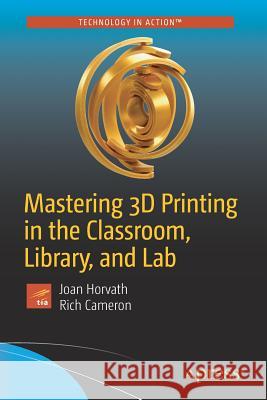
Joan Horvath; Rich Cameron
Mastering 3D Printing in the Classroom, Library, and Lab Joan Horvath Rich Cameron 9781484235003 Apress - książkaWidoczna okładka, to zdjęcie poglądowe, a rzeczywista szata graficzna może różnić się od prezentowanej.

Mastering 3D Printing in the Classroom, Library, and Lab

ISBN-13: 9781484235003 / Angielski / Miękka / 2018 / 310 str.

Joan Horvath; Rich Cameron
cena 173,37
(netto: 165,11 VAT:  5%)

Najniższa cena z 30 dni: 171,00
Termin realizacji zamówienia:
ok. 16-18 dni roboczych.

Darmowa dostawa!
Kategorie:
Informatyka, Sprzęt komputerowy
Kategorie BISAC:
Computers > Hardware - General
Computers > Software Development & Engineering - Computer Graphics
Computers > Design, Graphics & Media - CAD-CAM
Wydawca:
Apress
Język:
Angielski
ISBN-13:
9781484235003
Rok wydania:
2018
Ilość stron:
310
Waga:
0.46 kg
Wymiary:
23.39 x 15.6 x 1.78
Oprawa:
Miękka
Wolumenów:
01
Dodatkowe informacje:
Wydanie ilustrowane


Introduction


Section 1. 3D Printing: State of the Art

Chapter 1. When to Use a 3D Printer
• General considerations
o Subtractive vs. additive manufacturing
• When 3D Printing is Not Appropriate
o When a laser cutter is better
o When a CNC router is better
o Traditional craft tools and materials vs. 3D printing
 Speed
 Expense
 Digital Fabrication
o Prototyping parts
 Big
 Small

Chapter 2. 3D printer types and Materials
• FDM
o With PLA
o ABS
o More exotic materials, fills, composites
• Resin SLA
• Powder and other technologies
• Bioprinting/paste printing
• Printing living tissue (bioprinting, Organovo)
• Overview of metal technologies, speculation on near-term evolution

Chapter 3. 3D printer workflow and software
• Workflow overview
• Different types of slicers/modelers
o MatterControl 2.0
o Ultimaker Cura 3.0
o Cura 15.x
o Slic3r 2.0
o Simplify3D
o Proprietary workflows
• Brief intro to CAD (more in later chapter)

Section 2. Buying and Setting up Printers

Chapter 4. 3D Printing Technical Issues: Comparing Technologies
• Anticipating who will use it
o Artists, functional parts (robotics), student designs
• What to buy? Comparison charts of different technologies
• Why you want an open-source filament printer
• Size of print, print time
o I have 30 students. What do I do? (refer to curriculum)
• What does 3D printer “resolution” mean?
• Postprocessing
• Using 3Dhubs or other services instead

Chapter 5. Living with your 3D printer
• Getting the most out of a cheap consumer printer
• Where should we put it?
o Carts vs. makerspaces
o Storing filament
o Ventilation
o Dust
o Ancillary tools
o Postprocessing tools and space
• Preventative maintenance
• Staff and user training
• Requesting sample parts
• Freely-available test results
• Public spaces
o Libraries
o Museums
o Do you want to be a service bureau?
• Other considerations

Chapter 6. Modeling
• CAD and CAM support for 3D Printing
o Tinkercad 2.0
o Onshape vs. Solidworks vs. Fusion360 (vs. Inventor?)
o Converting files from Maya et al
• Scanners

Section 3. 3D Printing Curriculum Development

Chapter 7. Classroom general issues
• Prints take time
• Group projects?
• How to define a “low floor, high ceiling” project
• Contests
• Student lab captains/managers/docents
• Do the students do printing or is that a staff job?
• Why are there so few lesson plans out there?
o What exists
o Create your own
o Links to standards
• Managing classroom without a central focus
• Assessment: how do you grade a 3D print?

Chapter 8. Art and Theater
• Art teachers: how to think about this medium
o Pluses and minuses
o Layer lines
o Needs 3D computer surface model
o Complexity is free
o Multiple identical lost-PLA castings, with sprues prefabbed
• Jewelry and casting
• Ceramics
• Painting, sanding and other post-processing
• Technical theater & costuming

Chapter 9. Engineering, math and science
• Visualization
o Molecules
o Other abstractions
• Teaching math differently
• Experiments
o Wings- reference our Science project books
• Functional parts
o Robotics
• Science projects/lab equipment kluges
• Motivating teaching of coding: OpenSCAD and others
• 3D printing and open source electronics (Arduino)

Chapter 10. Language arts and social studies
• Adjunct to storytelling
o Historical reconstruction
o Replacing the diorama

Chapter 11. Elementary students
• Visualization
o Design (heavy on Tinkercad – print the best one?)
o Example design prompts and ideas
 The Mouse and the Motorcycle

Chapter 12. The Special-Needs Student
• Visual impaired
• Learning differently/neurodiversity

Section 4. Building Lifelong Skills

Chapter 13. 3D Printers in the High School or University Lab
• Emerging Applications
• Mass customization
• Industrial Molds
• Visualization
• Functional parts

Chapter 14. Where Students Might Go with This
• Will students start businesses with your printer? The “digital lemonade stand”
o Managing student entrepreneurship
• The digital fabrication outlook: jobs to come
• Whither manufacturing jobs?

Appendices:
• Links from the book
• Resources and references

As an engineer and management consultant, Joan Horvath has coordinated first-of-a-kind interdisciplinary technical and business projects, helping people with no common vocabulary (startups, universities, small towns, etc). work together. Her experience as a systems engineer has spanned software development, spacecraft flight operations, risk management, and spacecraft/ground system test and contingency planning.As an educator, Joan’s passion is bringing science and technology to the non-specialist in a comprehensible and entertaining way that will stay with the learner for a lifetime. As an educator, Joan’s passion is bringing science and technology to the non-specialist in a comprehensible and entertaining way that will stay with the learner for a lifetime.


Rich Cameron is a cofounder of Pasadena-based Nonscriptum LLC. Nonscriptum consults for educational and scientific users in the areas of 3D printing and maker technologies. Rich (known online as "Whosawhatsis") is an experienced open source developer who has been a key member of the RepRap 3D-printer development community for many years. His designs include the original spring/lever extruder mechanism used on many 3D printers, the RepRap Wallace, and the Deezmaker Bukito portable 3D printer. By building and modifying several of the early open source 3D printers to wrestle unprecedented performance out of them, he has become an expert at maximizing the print quality of filament-based printers. When he's not busy making every aspect of his own 3D printers better, from slicing software to firmware and hardware, he likes to share that knowledge and experience online so that he can help make everyone else’s printers better too.

Learn how to manage and integrate the technology of 3D printers in the classroom, library, and lab. With this book, the authors give practical, lessons-learned advice about the nuts and bolts of what happens when you mix 3D printers, teachers, students, and the general public in environments ranging from K-12 and university classrooms to libraries, museums, and after-school community programs.


Take your existing programs to the next level with Mastering 3D Printing in the Classroom, Library, and Lab. Organized in a way that is readable and easy to understand, this book is your guide to the many technology options available now in both software and hardware, as well as a compendium of practical use cases and a discussion of how to create experiences that will align with curriculum standards. 

You'll examine the whole range of working with a 3D printer, from purchase decision to curriculum design. Finally this book points you forward to the digital-fabrication future current students will face, discussing how key skills can be taught as cost-effectively as possible.

Horvath, Joan As an engineer and management consultant, Joan Hor... więcej >


Udostępnij

Facebook - konto krainaksiazek.pl


Opinie o Krainaksiazek.pl na Opineo.pl

Partner Mybenefit

Krainaksiazek.pl w programie rzetelna firma Krainaksiaze.pl - płatności przez paypal

Czytaj nas na:

Facebook - krainaksiazek.pl
  • książki na zamówienie
  • granty
  • książka na prezent
  • kontakt
  • pomoc
  • opinie
  • regulamin
  • polityka prywatności

Zobacz:

  • Księgarnia czeska

  • Wydawnictwo Książkowe Klimaty

1997-2026 DolnySlask.com Agencja Internetowa

© 1997-2022 krainaksiazek.pl
     
KONTAKT | REGULAMIN | POLITYKA PRYWATNOŚCI | USTAWIENIA PRYWATNOŚCI
Zobacz: Księgarnia Czeska | Wydawnictwo Książkowe Klimaty | Mapa strony | Lista autorów
KrainaKsiazek.PL - Księgarnia Internetowa

Polityka prywatnosci - link
Krainaksiazek.pl - płatnośc Przelewy24
Przechowalnia Przechowalnia






