• Wyszukiwanie zaawansowane
  • Kategorie
  • Kategorie BISAC
  • Książki na zamówienie
  • Promocje
  • Granty
  • Książka na prezent
  • Opinie
  • Pomoc
  • Załóż konto
  • Zaloguj się

Mapping Forest Landscape Patterns » książka


zaloguj się | załóż konto
Logo Krainaksiazek.pl

koszyk

konto

szukaj
topmenu
Księgarnia internetowa
Szukaj
Książki na zamówienie
Promocje
Granty
Książka na prezent
Moje konto
Pomoc
 
 
Wyszukiwanie zaawansowane
Pusty koszyk
Bezpłatna dostawa dla zamówień powyżej 20 złBezpłatna dostawa dla zamówień powyżej 20 zł

Kategorie główne

• Nauka
 [2946912]
• Literatura piękna
 [1852311]

  więcej...
• Turystyka
 [71421]
• Informatyka
 [150889]
• Komiksy
 [35717]
• Encyklopedie
 [23177]
• Dziecięca
 [617324]
• Hobby
 [138808]
• AudioBooki
 [1671]
• Literatura faktu
 [228371]
• Muzyka CD
 [400]
• Słowniki
 [2841]
• Inne
 [445428]
• Kalendarze
 [1545]
• Podręczniki
 [166819]
• Poradniki
 [480180]
• Religia
 [510412]
• Czasopisma
 [525]
• Sport
 [61271]
• Sztuka
 [242929]
• CD, DVD, Video
 [3371]
• Technologie
 [219258]
• Zdrowie
 [100961]
• Książkowe Klimaty
 [124]
• Zabawki
 [2341]
• Puzzle, gry
 [3766]
• Literatura w języku ukraińskim
 [255]
• Art. papiernicze i szkolne
 [7810]
Kategorie szczegółowe BISAC

Mapping Forest Landscape Patterns

ISBN-13: 9781493973293 / Angielski / Twarda / 2017 / 326 str.
Tarmo Remmel; Ajith Perera
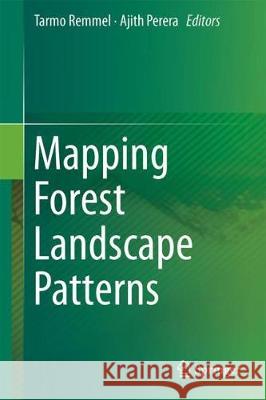
Mapping Forest Landscape Patterns Tarmo Remmel Ajith Perera 9781493973293 Springer - książkaWidoczna okładka, to zdjęcie poglądowe, a rzeczywista szata graficzna może różnić się od prezentowanej.

Mapping Forest Landscape Patterns

ISBN-13: 9781493973293 / Angielski / Twarda / 2017 / 326 str.

Tarmo Remmel; Ajith Perera
cena 685,93
(netto: 653,27 VAT:  5%)

Najniższa cena z 30 dni: 655,41
Termin realizacji zamówienia:
ok. 22 dni roboczych
Bez gwarancji dostawy przed świętami

Darmowa dostawa!

This book explores the concepts, premises, advancements, and challenges in quantifying natural forest landscape patterns through mapping techniques.

Kategorie:
Nauka, Biologia i przyroda
Kategorie BISAC:
Science > Life Sciences - Ecology
Technology & Engineering > Agriculture - Forestry
Technology & Engineering > Environmental - General
Wydawca:
Springer
Język:
Angielski
ISBN-13:
9781493973293
Rok wydania:
2017
Wydanie:
2017
Ilość stron:
326
Waga:
0.65 kg
Wymiary:
23.39 x 15.6 x 2.06
Oprawa:
Twarda
Wolumenów:
01
Dodatkowe informacje:
Wydanie ilustrowane

Preface


Chapter 1: Mapping forest landscapes: overview and a primer
1. Mapping forest landscapes: an introduction
1.1 What is mapping? 
1.2 What is a forest landscape? 
2. Considerations in forest landscape mapping
2.1 Describing spatial patterns
2.2 Focus on boundaries
2.3 Beyond 2D data
3. Utility of forest landscape maps
3.1 Map representations
3.2 Morphological interpretations
3.3 Map scale
3.4 Error assessment and validation
4. Summary

Chapter 2: Fuzzy classification of vegetation for ecosystem mapping
1. Introduction
2. Overview of fuzzy systems
2.1 Fuzzy systems – key concepts for mapping
2.2 Mapping with fuzzy classifiers
3. Fuzzy approaches for identifying and utilizing uncertainty
3.1 Thematic uncertainty
3.2 Spatial uncertainty
3.3 Simultaneous considerations of thematic and spatial uncertainty
3.4 Multiple outputs – fuzzy geodatabase
4. Vertical structure mapping
5. A look to the future
6. Summary

Chapter 3: Portraying wildfires in forest landscapes as discrete complex objects
1. Introduction
2. Wildfire initiation and anatomy
2.1 Initiation
2.2 Descriptors of footprints
3. Wildfires as discrete and complex objects
3.1 The outer edge of a wildfire is scale-dependent 
3.2 Width of the ecotone
3.3 Internal heterogeneity
4. Standardized depiction of wildfires as discrete complex objects 
5. The future of mapping wildfires
5.1 Accuracy assessment in remote regions
5.2 Landscape persistence
5.3 Hierarchical data formats for capturing scale effects


Chapter 4: Airborne LiDAR applications in forest landscapes
1. Introduction
1.1 Defining ALS LiDAR  
1.2 Introduction to the three common LiDAR platforms
1.3 Intensity, point density, and multi-spectral LiDAR
2. Primary measurements
2.1 Surface models (DEM, DSM, DTM, CHM)
2.2 Canopy height models and detection and delineation of individual trees
3. Secondary measurements
3.1 Regression models and allometric equations
3.2 Vertical profile for a single tree
3.3 Classification of vegetation types
3.4 Tree genus and species classification
3.5 Case study: identifying potentially hazardous trees
4. The future of LiDAR

Chapter 5: Regression Tree modeling of spatial pattern and process interactions
1. Spatial Pattern and Processes
1.1 Describing spatial patterns
1.2 Process complexity
1.3 Data mining
2. Methods
2.1 CART models
2.2 BRT
2.3 RF models
3. Case Study Context – Influence of beetle infestation spatial patterns on fire spatial processes
3.1 Study area
3.2 Spatial data
4. Model evaluation
4.1 CART
4.2 BRTs
4.3 RF models
4.4 Comparing modeling approaches
5. Interpreting regression tree results within the context of spatial pattern and process 

Chapter 6: Mapping the abstractions of forest landscape patterns
1. Introduction
2. Tools for evaluating landscape patterns
3. Data preparation and uncertainties within metrics
3.1 Scale and classification issues
4. Mapping different aspects of a landscape pattern
4.1 Composition
4.2 Configuration
4.3 Criteria for selecting metrics
5. Applications of forest pattern mapping
5.1 Improving forest management
5.2 Assessment of forest habitats
5.3 Mapping landscape metrics by using GIS
5.4 Using landscape metrics in modeling
6. Future perspectives on mapping patterns
6.1 3D landscape metrics
6.2 4D landscape metrics
7. Conclusions
Chapter 7: Towards automated forest mapping
1. Introduction
1.1 Definitions
1.1.1 Forest 
1.1.2 Remote sensing for automated mapping of woodland and forest
2. Data and Pre-processing
2.1 Reference data 
2.2 Remote sensing systems
2.3 Processing of input data sets
3. Mapping woodland 
3.1 A hierarchical segmentation approach for mapping woodland 
3.2 Individual tree and tree crown detection 
3.3 Fractional tree cover approach
4. Forest mapping
4.1 Moving window approach
4.2 Distance criterion approach
5. Lessons learned
6. Future perspectives

Epilogue: Toward more efficient and effective applications of forest landscape maps
1. Background
2. Goals of this chapter
3. Considerations in forest landscape mapping
3.1. The community of map developers and users is broad
3.2. Maps are model outputs 
3.3. Maps are probabilistic
3.4. Maps contain errors
3.5. Map contents are scale-related
3.6. Map applications are scale-related
3.7. Mapping methods are advancing rapidly
4. A brief list of best practices for using forest landscape maps
5. Conclusions

Tarmo K. Remmel, Ph.D. (University of Toronto), Associate Professor of Geography at York University: A GIScientist with over 10 years of experience teaching and conducting research involving remote sensing, GIS, and spatial statistics, Dr. Remmel focuses primarily on boreal forests, with a particular emphasis on wildfire disturbances and on the development of algorithms for measuring and assessing spatial patterns, planar shapes, and the quantification of spatial change and accuracy. A strong proponent of free and open source software tools, particularly within the R-project to facilitate implementation, his work integrates field-level data collection with remotely sensed imagery obtained from satellite, aircraft, and UAV platforms to characterize the effects of scale.

Ajith H. Perera, Ph.D. (Penn State University), Senior Research Scientist and leader of the forest landscape ecology program at Ontario Forest Research Institute, Ontario Ministry of Natural Resources, adjunct professor at University of Waterloo, York University and University of Guelph: With over 25 years research experience in landscape ecology, Dr. Perera’s major focus is on quantifying and modeling spatio-temporal patterns in boreal forest disturbances. He has authored over 150 science publications, and been senior editor, co-editor and author of eight books on Forest Landscape Ecology.

This book explores the concepts, premises, advancements, and challenges in quantifying natural forest landscape patterns through mapping techniques. After several decades of development and use, these tools can now be examined for their foundations, intentions, scope, advancements, and limitations. When applied to natural forest landscapes, mapping techniques must address concepts such as stochasticity, heterogeneity, scale dependence, non-Euclidean geometry, continuity, non-linearity, and parsimony, as well as be explicit about the intended degree of abstraction and assumptions. These studies focus on quantifying natural (i.e., non-human engineered) forest landscape patterns, because those patterns are not planned, are relatively complex, and pose the greatest challenges in cartography, and landscape representation for further interpretation and analysis. 


Udostępnij

Facebook - konto krainaksiazek.pl


Opinie o Krainaksiazek.pl na Opineo.pl

Partner Mybenefit

Krainaksiazek.pl w programie rzetelna firma Krainaksiaze.pl - płatności przez paypal

Czytaj nas na:

Facebook - krainaksiazek.pl
  • książki na zamówienie
  • granty
  • książka na prezent
  • kontakt
  • pomoc
  • opinie
  • regulamin
  • polityka prywatności

Zobacz:

  • Księgarnia czeska

  • Wydawnictwo Książkowe Klimaty

1997-2025 DolnySlask.com Agencja Internetowa

© 1997-2022 krainaksiazek.pl
     
KONTAKT | REGULAMIN | POLITYKA PRYWATNOŚCI | USTAWIENIA PRYWATNOŚCI
Zobacz: Księgarnia Czeska | Wydawnictwo Książkowe Klimaty | Mapa strony | Lista autorów
KrainaKsiazek.PL - Księgarnia Internetowa

Polityka prywatnosci - link
Krainaksiazek.pl - płatnośc Przelewy24
Przechowalnia Przechowalnia






