• Wyszukiwanie zaawansowane
  • Kategorie
  • Kategorie BISAC
  • Książki na zamówienie
  • Promocje
  • Granty
  • Książka na prezent
  • Opinie
  • Pomoc
  • Załóż konto
  • Zaloguj się

Manual of Biobank Quality Management » książka


zaloguj się | załóż konto
Logo Krainaksiazek.pl

koszyk

konto

szukaj
topmenu
Księgarnia internetowa
Szukaj
Książki na zamówienie
Promocje
Granty
Książka na prezent
Moje konto
Pomoc
 
 
Wyszukiwanie zaawansowane
Pusty koszyk
Bezpłatna dostawa dla zamówień powyżej 20 złBezpłatna dostawa dla zamówień powyżej 20 zł

Kategorie główne

• Nauka
 [2939893]
• Literatura piękna
 [1808953]

  więcej...
• Turystyka
 [70366]
• Informatyka
 [150555]
• Komiksy
 [35137]
• Encyklopedie
 [23160]
• Dziecięca
 [608786]
• Hobby
 [136447]
• AudioBooki
 [1631]
• Literatura faktu
 [225099]
• Muzyka CD
 [360]
• Słowniki
 [2914]
• Inne
 [442115]
• Kalendarze
 [1068]
• Podręczniki
 [166599]
• Poradniki
 [468390]
• Religia
 [506548]
• Czasopisma
 [506]
• Sport
 [61109]
• Sztuka
 [241608]
• CD, DVD, Video
 [3308]
• Technologie
 [218981]
• Zdrowie
 [98614]
• Książkowe Klimaty
 [124]
• Zabawki
 [2174]
• Puzzle, gry
 [3275]
• Literatura w języku ukraińskim
 [260]
• Art. papiernicze i szkolne
 [7376]
Kategorie szczegółowe BISAC

Manual of Biobank Quality Management

ISBN-13: 9783031125584 / Angielski / Twarda / 2023 / 152 str.
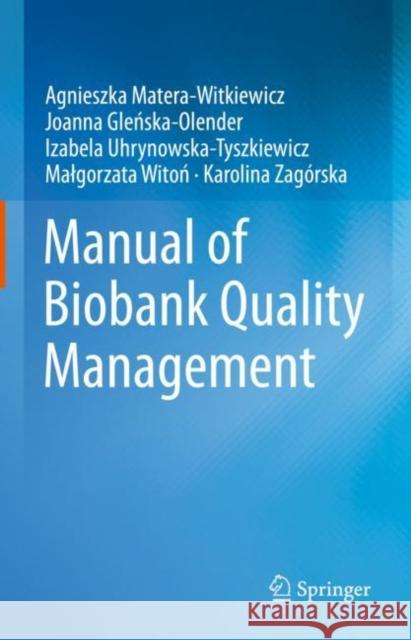
Agnieszka Matera-Witkiewicz; Joanna Gleńska-Olender; Izabela Uhrynowska-Tyszkiewicz
Manual of Biobank Quality Management Agnieszka Matera-Witkiewicz Joanna Gleńska-Olender Izabela Uhrynowska-Tyszkiewicz 9783031125584 Springer - książkaWidoczna okładka, to zdjęcie poglądowe, a rzeczywista szata graficzna może różnić się od prezentowanej.

Manual of Biobank Quality Management

ISBN-13: 9783031125584 / Angielski / Twarda / 2023 / 152 str.

Agnieszka Matera-Witkiewicz; Joanna Gleńska-Olender; Izabela Uhrynowska-Tyszkiewicz
cena 240,93
(netto: 229,46 VAT:  5%)

Najniższa cena z 30 dni: 212,02
Termin realizacji zamówienia:
ok. 22 dni roboczych.

Darmowa dostawa!
inne wydania

This pioneering handbook serves as an essential tool for any biobanking entity to create, implement and continuously improve their Quality Management System (QMS). Written in a concise and highly readable manner all biobanking related QMS aspects, ranging from legal aspects to safety matters, are addressed according to the best knowledge in compliance with the dedicated Biobanks ISO standards. Following a practical approach by making use of FAQ and common practice sections this book guides the readers through this complex field in an easy-to understand way.The guidelines are convergent not only with ISO 20387:2018Biotechnology - Biobanking - General requirements for biobankingbut also with ISO 9001:2015, ISO 19011:2018, ISO 27000:2014, and ISO 27002:2013. Furthermore, they are compatible, among others with the recommendations of the Organization for Economic Cooperation and Development (OECD), IARC, and ISBERBest Practices.Aimed at both biobank employees and other stakeholders (e.g. public bodies, political bodies, hospitals, pharmaceutical industry, funders) at any level of experience the book serves as valuable source for self-education and teaching. The manual complies to the principles of responsibility, openness, and transparency and can be used by any biobanking unit regardless of the biological material the biobank operates with and independent of their associated biobank network.On behalf of a group of specialists and experts in the area of biobanking, regarding Quality Management Systems (QMS), Ethical, Legal and Societal Issues (ELSI) and IT solutions, the authors present with this book a significant achievement based on activities within the project, European Research Infrastructure BBMRI-ERIC „Quality Standards for Polish Biobanks” Handbook (QSPB).


This pioneering handbook serves as an essential tool for any biobanking entity to create, implement and continuously improve their Quality Management System (QMS). Written in a concise and highly readable manner all biobanking related QMS aspects, ranging from legal aspects to safety matters, are addressed according to the best knowledge in compliance with the dedicated Biobanks ISO standards. Following a practical approach by making use of FAQ and common practice sections this book guides the readers through this complex field in an easy-to understand way.The guidelines are convergent not only with ISO 20387:2018 Biotechnology - Biobanking - General requirements for biobanking but also with ISO 9001:2015, ISO 19011:2018, ISO 27000:2014, and ISO 27002:2013. Furthermore, they are compatible, among others with the recommendations of the Organization for Economic Cooperation and Development (OECD), IARC, and ISBER Best Practices.Aimed at both biobank employees and other stakeholders (e.g. public bodies, political bodies, hospitals, pharmaceutical industry, funders) at any level of experience the book serves as valuable source for self-education and teaching. The manual complies to the principles of responsibility, openness, and transparency and can be used by any biobanking unit regardless of the biological material the biobank operates with and independent of their associated biobank network.On behalf of a group of specialists and experts in the area of biobanking, regarding Quality Management Systems (QMS), Ethical, Legal and Societal Issues (ELSI) and IT solutions, the authors present with this book a significant achievement based on activities within the project, European Research Infrastructure BBMRI-ERIC „Quality Standards for Polish Biobanks” Handbook (QSPB). 
 

Kategorie:
Nauka, Biologia i przyroda
Kategorie BISAC:
Science > Biotechnology
Science > Biologia i przyroda
Medical > Medycyna
Wydawca:
Springer
Język:
Angielski
ISBN-13:
9783031125584
Rok wydania:
2023
Dostępne języki:
Ilość stron:
152
Oprawa:
Twarda
Dodatkowe informacje:
Wydanie ilustrowane

Dictionary


1. Management of Biobanks

1.1. Organization

1.1.1. Organizational structure of the organization/institution under which the biobank operates

1.1.2. Organizational chart of the biobank

1.2. Biobank's mission and scope of activity

1.3. Biobank’s objectives and their monitoring

1.4. Communication

1.4.1. External communication

1.4.2. Internal communication


2. Quality Management

2.1. General requirements

2.2. Quality policy

2.3. Setting objectives

2.4. Risk and opportunity management

2.4.1. Identification of risk and

2.4.2. Risk and opportunities assessment (evaluation and analysis)

2.4.3. Reaction to risk and opportunities

2.4.4. Monitoring of risk and opportunities


3. Documentation and Records

3.1. General requirements

3.1.1. Traceability of documentation

3.1.2. Readability of documentation

3.1.3. Availability of documentation for biobank employees

3.1.4. Confidentiality

3.1.5. Supervision of changes in documentation

3.1.6. Backup / safety copies of documentation

3.2. Implementing documentation

3.2.1. Responsibility for dealing with documentation

3.2.2. Update and withdrawal of documentation

3.2.3. Training after documentation updates

3.2.4. Documentation distribution

3.3. Storage of QMS documentation

3.3.1. Records

3.4. Verification of documentation

3.4.1. Periodic and incidental verification of documentation


4. Human Resources Management

4.1. Human resources management policy

4.2. Biobank employee identification

4.3. Admission of an employee to the biobank

4.3.1. Scope of initial training

4.3.2. On-the-job training

4.4. Responsibility and permissions of key personnel

4.5. Biobank personnel training (improvement training)

4.6. Verification of biobank employees’ knowledge

4.7. Training documentation

4.8. Termination of employment


5. Ethical and Legal Aspects

5.1. Compliance with ethical and legal requirements

5.2. Ethical advice and approval

5.3. Impartiality

5.3.1. Impartiality safeguarding

5.3.2. Risks to impartiality

5.3.3. Transparency and documentation

5.3.4. Responsible supervision

5.3.5. Communication

5.4. Confidentiality and privacy

5.5. Respect for autonomy

5.5.1. General requirements

5.5.2. Informed consent

5.5.3. Re-contacting with participants

5.5.4. Right to refuse consent and right to withdraw consent

5.5.5. The right to know and not to know the results

5.5.6. Consent from participants who are not capable to give a consent

5.6. Sharing material and data

5.7. Proprietary rights and commercialization


6. Supplies, Materials Management

6.1. Materials receipt rules

6.2. Reception, qualification and acceptance of materials

6.3. Qualification of suppliers

6.4. Handling of materials stored in storage space

6.5. Handling of materials used in daily work


7. Equipment

7.1. Acceptance of the equipment

7.1.1. Device acceptance criteria

7.1.2. Acceptance or rejection of the equipment

7.1.2.1. Installation qualification (IQ)

7.1.2.2. Operational qualification (OQ)

7.1.2.3. Performance qualification (PQ)

7.1.3. Final qualification report (IQ, OQ, PQ)

7.2. Rules for supervision over equipment

7.3. Recordings of equipment operation

7.3.1. Key parameters defined internally

7.3.2. Parameters verified/actions performed directly by the user (user maintenance)

7.3.3. Parameters verified/actions performed by an external company

7.3.4. Recordings from maintenance, cleaning of the equipment

7.4. Work with equipment outside the supervision

7.5. Requalification of critical equipment


8. Traceability

8.1. Traceability system

8.2. Unique identification of biological material


9. Environmental and Staff Hygiene

9.1. Personnel hygiene and safety

9.1.1. Occupational health and safety

9.1.1.1. Occupational risk

9.1.1.2. Periodic examinations

9.1.1.3. Personal protective equipment

9.1.1.4. Handling of clothing and protective equipment

9.1.2. Chemical and hazardous substances

9.1.3. Work with potentially infectious material derived from humans

9.1.3.1. The list of employees exposed to biological agents

9.1.3.2. Occupational exposure

9.1.3.3. Disinfection

9.2. Process environment

9.2.1. Environmental conditions and staff hygiene

9.3. Waste management


10. Biobanking Processes and Quality Control

10.1. The life cycle of biological material and critical processes

10.1.1. Acquisition of the biological material and related data

10.1.2. Transport of biological materials and associated data

10.1.2.1. Transport from and to the biobank (shipping)

10.1.2.2. Transport within the biobank

10.1.3. Reception, qualification and acceptance of biological material and associated data for inventory

10.1.4. The process of handling of biological material and associated data

10.1.4.1. Processing of material and data

10.1.4.2. Storage of material and data

10.1.5. Transport of material and data within the biobank

10.1.6. Process of withdrawing biological material and associated data

10.2. Quality control


11. Deviations, Nonconforming Product/Data or Service

11.1. Deviations/Nonconformities

11.2. Corrective and correction actions

11.3. Complaints

11.4. Nonconforming output/service

11.4.1. Identification of nonconforming products/services and accompanying documentation

11.4.2. Rejection of nonconforming product/service


12. Audits

12.1. Internal audit

12.2. Auditor’s competences and qualifications


13. Improvement

13.1. Tools for improving the effectiveness of biobank

13.2. Management review

13.2.1. Conducting a management review


14. Biobank Cooperation in the Scientific, Research and Development Area

14.1 General requirements

14.2 Sharing of biological material and data for research

14.3. Cooperation agreements

14.4. Communication during scientific cooperation

14.4.1. Informing about irregularities in the course of research


15. Safety & Security

15.1. Security procedures

15.2. Biological material safety

15.3. Information security

15.4. Basic methods of securing it infrastructure and data processing

15.4.1. Awareness of the functioning the biobank in the organization

15.4.2. General principles for the secure exchange of information

15.4.3. Security of processed data

15.4.4. Basic methods of securing access to the premises

15.4.5. Operating systems and software

15.4.6. Anti-virus software

15.4.7. User and password management

15.4.8. Lan network

15.4.9. Emergency power supply

15.4.10. Basic features of the biobank it system

15.4.11. Backups

15.4.12. External services including cloud services

15.4.13. Personnel


Agnieszka Matera-Witkiewicz: PhD Pharmacy, Biotechnologist, Clinical Trials Management, R&D Project Manager; Wroclaw Medical University Biobank concept creator-first Integrated Biobank in Poland with ISO9001 Quality Certificate; BBMRI.pl Quality Manager; BBMRI-ERIC Quality Expert/Auditor; ISO9001 Lead Auditor, Polish Committee for Standardization TC 287 Biotechnology expert; ISO Expert TC 276 Biotechnology WG2 Biobanks and Bioresources; ESBB member; Co-author and concept creator of “Quality Standards for Polish Biobanks Handbook”; she prepared first biobank in Poland to accreditation according to ISO 20387-2021-01.

Joanna Gleńska-Olender: PhD in biological sciences; QMS Expert, Lead Auditor and Trainer in BBMRI.pl; Polish Committee for Standardization TC 287 Biotechnology expert; ISO Expert TC 276 Biotechnology WG2 Biobanks and Bioresources; Co-author of “Quality Standards for Polish Biobanks Handbook”; biobanking experience from 2014.

Izabela Uhrynowska-Tyszkiewicz: Physician, Doctor of Medicine, academic teacher; area of interest in terms of quality and safety of human somatic tissues and cells intended for human application, application of computer systems in the practice of tissue and cell banking, coding of tissues and cells, legal aspects of tissue and cell banking. Co-author of “Quality Standards for Polish Biobanks Handbook”.

Małgorzata Witoń: Biotechnologist and scientist with special interest in Quality Management and biobanking as well as digital pathology; started professional career as a clinical embryologist and academic teacher; several years of experience in the application and implementation of R&D projects and in working on the QMS implementation and maintenance; co-author of “Quality Standards for Polish Biobanks Handbook”.

Karolina Zagórska: A graduate of Medical Analytics, Certified Laboratory Diagnostician, post-graduate studies Microbiology, Hygiene and Quality in Industry. Technical expert in the BBMRI.QM Services. A member at the Polish Committee for Standardization (PKN) at KT 287 for Biotechnology and Expert at ISO TC 276 Biotechnology, WG 2 Biobanking and Bioresources; co-author of “Quality Standards for Polish Biobanks Handbook”.

Katarzyna Ferdyn: From 2004 is working in the biotechnological area; experience in biobanking processes mapping, processes implementation including tissue and cell banking; Polish Committee for Standardization TC 287 Biotechnology expert; co-author of “Quality Standards for Polish Biobanks Handbook”; QMS Expert, Lead Auditor and Trainer in BBMRI.pl in 2017-2019.

Michał Laskowski: M.Sc. of Medical Diagnostic, Medical University of Lublin, Poland. In biobanking area from 2014. From 2017 biobanking specialist at Wroclaw Medical University Biobank; responsible for development of technological and procedural solutions regarding the collection of biological material and data. Representative in Polish Committee for Standardization and ISO Working Groups; co-author of “Quality Standards for Polish Biobanks Handbook”; he prepared first biobank in Poland to accreditation according to ISO 20387-2021-01.

Patrycja Sitek: MSC of Biotechnology, MSC of Chemistry, 14 years of experience in the field of GMP and Tissue Banking industry. From 2019 IRCA ISO 9001 Lead auditor with experience in biobanking. BBMRI pl and BBMRI ERIC auditor, trainer and consultant; co-author of “Quality Standards for Polish Biobanks Handbook”.

Błażej Marciniak: Information technology expert, gained experience in the startup environment, since 2009 associated with the University of Łódź, and since 2014 with the Biobank Laboratory. In Biobank, he manages IT resources, coordinates IT projects in the field of digitization of science resources and data sharing infrastructure. Co-organizer of bioinformatics hackathons; co-author of “Quality Standards for Polish Biobanks Handbook”.

Jakub Pawlikowski: M.D., Ph.D., J.D., M.A.: graduated in medicine, law and philosophy. Professor at Department of Humanities and Social Medicine at Medical University of Lublin (Poland). His research interests focuses on research ethics, medical law and public health. He is a member of international ELSI expert groups in BBMRI.ERIC and a coordinator of ELSI area in BBMRI.pl; co-author of “Quality Standards for Polish Biobanks Handbook”.

Dominik Strapagiel: Biobank Lab Head at the University of Lodz. He leads development of the integrated database which consists of genomic, health and phenotypic data collected in POPULOUS cohort study of the Biobank - Łódź project.; He is ISO 9001 and ISO 27001 lead auditor. 

This pioneering handbook serves as an essential tool for any biobanking entity to create, implement and continuously improve their Quality Management System (QMS). Written in a concise and highly readable manner all biobanking related QMS aspects, ranging from legal aspects to safety matters, are addressed according to the best knowledge in compliance with the dedicated Biobanks ISO standards. Following a practical approach by making use of FAQ and common practice sections this book guides the readers through this complex field in an easy-to understand way.

The guidelines are convergent not only with ISO 20387:2018 Biotechnology - Biobanking - General requirements for biobanking but also with ISO 9001:2015, ISO 19011:2018, ISO 27000:2014, and ISO 27002:2013. Furthermore, they are compatible, among others with the recommendations of the Organization for Economic Cooperation and Development (OECD), IARC, and ISBER Best Practices.

Aimed at both biobank employees and other stakeholders (e.g. public bodies, political bodies, hospitals, pharmaceutical industry, funders) at any level of experience the book serves as valuable source for self-education and teaching. The manual complies to the principles of responsibility, openness, and transparency and can be used by any biobanking unit regardless of the biological material the biobank operates with and independent of their associated biobank network.

On behalf of a group of specialists and experts in the area of biobanking, regarding Quality Management Systems (QMS), Ethical, Legal and Societal Issues (ELSI) and IT solutions, the authors present with this book a significant achievement based on activities within the project, European Research Infrastructure BBMRI-ERIC „Quality Standards for Polish Biobanks” Handbook (QSPB).




Udostępnij

Facebook - konto krainaksiazek.pl


Opinie o Krainaksiazek.pl na Opineo.pl

Partner Mybenefit

Krainaksiazek.pl w programie rzetelna firma Krainaksiaze.pl - płatności przez paypal

Czytaj nas na:

Facebook - krainaksiazek.pl
  • książki na zamówienie
  • granty
  • książka na prezent
  • kontakt
  • pomoc
  • opinie
  • regulamin
  • polityka prywatności

Zobacz:

  • Księgarnia czeska

  • Wydawnictwo Książkowe Klimaty

1997-2026 DolnySlask.com Agencja Internetowa

© 1997-2022 krainaksiazek.pl
     
KONTAKT | REGULAMIN | POLITYKA PRYWATNOŚCI | USTAWIENIA PRYWATNOŚCI
Zobacz: Księgarnia Czeska | Wydawnictwo Książkowe Klimaty | Mapa strony | Lista autorów
KrainaKsiazek.PL - Księgarnia Internetowa

Polityka prywatnosci - link
Krainaksiazek.pl - płatnośc Przelewy24
Przechowalnia Przechowalnia



