• Wyszukiwanie zaawansowane
  • Kategorie
  • Kategorie BISAC
  • Książki na zamówienie
  • Promocje
  • Granty
  • Książka na prezent
  • Opinie
  • Pomoc
  • Załóż konto
  • Zaloguj się

Management by Business Process: A Managerial Perspective of People, Process, and Technology » książka


zaloguj się | załóż konto
Logo Krainaksiazek.pl

koszyk

konto

szukaj
topmenu
Księgarnia internetowa
Szukaj
Książki na zamówienie
Promocje
Granty
Książka na prezent
Moje konto
Pomoc
 
 
Wyszukiwanie zaawansowane
Pusty koszyk
Bezpłatna dostawa dla zamówień powyżej 20 złBezpłatna dostawa dla zamówień powyżej 20 zł

Kategorie główne

• Nauka
 [2949965]
• Literatura piękna
 [1857847]

  więcej...
• Turystyka
 [70818]
• Informatyka
 [151303]
• Komiksy
 [35733]
• Encyklopedie
 [23180]
• Dziecięca
 [617748]
• Hobby
 [139972]
• AudioBooki
 [1650]
• Literatura faktu
 [228361]
• Muzyka CD
 [398]
• Słowniki
 [2862]
• Inne
 [444732]
• Kalendarze
 [1620]
• Podręczniki
 [167233]
• Poradniki
 [482388]
• Religia
 [509867]
• Czasopisma
 [533]
• Sport
 [61361]
• Sztuka
 [243125]
• CD, DVD, Video
 [3451]
• Technologie
 [219309]
• Zdrowie
 [101347]
• Książkowe Klimaty
 [123]
• Zabawki
 [2362]
• Puzzle, gry
 [3791]
• Literatura w języku ukraińskim
 [253]
• Art. papiernicze i szkolne
 [7933]
Kategorie szczegółowe BISAC

Management by Business Process: A Managerial Perspective of People, Process, and Technology

ISBN-13: 9783031116360 / Angielski / Miękka / 2022 / 190 str.
José Osvaldo de Sordi
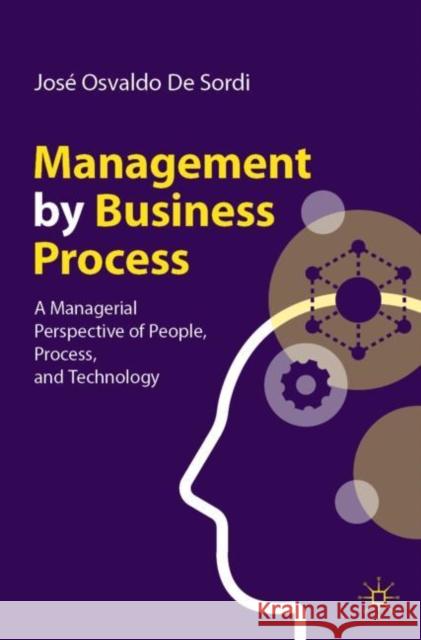
Management by Business Process: A Managerial Perspective of People, Process, and Technology Jos? Osvaldo d 9783031116360 Palgrave MacMillan - książkaWidoczna okładka, to zdjęcie poglądowe, a rzeczywista szata graficzna może różnić się od prezentowanej.

Management by Business Process: A Managerial Perspective of People, Process, and Technology

ISBN-13: 9783031116360 / Angielski / Miękka / 2022 / 190 str.

José Osvaldo de Sordi
cena 443,82 zł
(netto: 422,69 VAT:  5%)

Najniższa cena z 30 dni: 385,52 zł
Termin realizacji zamówienia:
ok. 22 dni roboczych
Bez gwarancji dostawy przed świętami

Darmowa dostawa!

This textbook presents an integrated view of three themes relevant to the operationalization of Management by Business Process (M-B-BP): people, process, and technology. Whereas most Business Process Management (BPM) textbooks focus on software technology issues and ontological standards for the integration of various software layers, this book focuses on the managerial perspective, managerial decisions regarding the configurations of the company's structural variables that are most favorable to the best operationalization and evolution of the M-B-BP approach. Among the structural variables of the scope of managerial choices that support the discussion are: work specialization, work grouping, the chain of command, the extent of control, the decision process, and work formalization.To support businesses managed through an organizational structure oriented by business processes, it is essential that the manager has a set of knowledge, technical skills, and professional demeanor. This text focuses on these aspects, presenting: a) the theoretical foundation, describing the central concepts of the M-B-BP approach; b) the set of necessary techniques from different areas, describing and exemplifying those skills; and c) the required behaviors of managers and employees for structuring, operation, management, and continuous improvement of the organization's business processes.For students of M-B-BP, there are examples and cases that discuss business situations and themes to aid in grasping the material while at the end of the chapters there are reflection questions as well as lists of complementary material (articles, videos, web sites). They will gain an understanding of how to create a culture of improvement.The English translation of this book from its Portuguese original manuscript was done with the help of artificial intelligence (machine translation by the service provider DeepL.com). A subsequent human revision of the content was done by the author.


This textbook presents an integrated view of three themes relevant to the operationalization of Management by Business Process (M-B-BP): people, process, and technology. Whereas most Business Process Management (BPM) textbooks focus on software technology issues and ontological standards for the integration of various software layers, this book focuses on the managerial perspective, managerial decisions regarding the configurations of the company's structural variables that are most favorable to the best operationalization and evolution of the M-B-BP approach. Among the structural variables of the scope of managerial choices that support the discussion are: work specialization, work grouping, the chain of command, the extent of control, the decision process, and work formalization.To support businesses managed through an organizational structure oriented by business processes, it is essential that the manager has a set of knowledge, technical skills, and professional demeanor. This text focuses on these aspects, presenting: a) the theoretical foundation, describing the central concepts of the M-B-BP approach; b) the set of necessary techniques from different areas, describing and exemplifying those skills; and c) the required behaviors of managers and employees for structuring, operation, management, and continuous improvement of the organization's business processes.For students of M-B-BP, there are examples and cases that discuss business situations and themes to aid in grasping the material while at the end of the chapters there are reflection questions as well as lists of complementary material (articles, videos, web sites). They will gain an understanding of how to create a culture of improvement. The English translation of this book from its Portuguese original manuscript was done with the help of artificial intelligence (machine translation by the service provider DeepL.com). A subsequent human revision of the content was done by the author.

Kategorie:
Nauka, Ekonomia i biznes
Kategorie BISAC:
Business & Economics > Information Management
Business & Economics > Zarządzenie i techniki zarządzania
Computers > Business & Productivity Software - Business Intelligence
Wydawca:
Palgrave MacMillan
Język:
Angielski
ISBN-13:
9783031116360
Rok wydania:
2022
Dostępne języki:
Ilość stron:
190
Waga:
0.30 kg
Wymiary:
23.39 x 15.6 x 1.14
Oprawa:
Miękka
Dodatkowe informacje:
Wydanie ilustrowane

Chapter 1 - Introduction to the administrative approach to process management

1.1 Theoretical foundation: general systems theory

1.2 Its challenge: to be an alternative to the limitations of the scientific approach in the context of modern organizations

1.3 Your object of interest: the business process

1.4 Its introduction in organizations 

1.5 Its essence as an administrative approach

1.6 False synonyms: "process management" and "management by process".


Chapter 2 - Discerning between functional management and business process management

              2.1 Distinctive characteristics related to People

2.1.1      People allocation: represents the arrangement of the human operational set that performs the tasks within the organization

2.1.2      Operational autonomy: indicates the degree of autonomy and control that each employee has over the tasks under their responsibility        

2.1.3      Performance assessment: describes the criteria for valuing and promoting the work of individuals

2.1.4      Chain of command: identifies the chain of command which supervises the operational work

2.1.5      Empowerment of individuals: describes the list of competencies and the vision direction of the operational work objectives             

              2.2 Distinctive characteristics related to Process

2.2.1      Organizational structure: the organizational model on which the company is structured

2.2.2      Performance measures: these characterise the ways in which work is    assessed

2.2.3      Nature of work: relating to the characteristics of tasks requiring specific skills for implementation

2.2.4      Organisation of work: identifies the way in which operational work is organised within the company structure

2.2.5      Scale of organizational values: refers to the values cultivated by the organization in order to direct the behavioral movement of employees

              2.3 Distinctive characteristics related to Technology

2.3.1      Utilisation of technology: deals with the use of information technology (IT)     resources to support the execution and management of processes

2.3.2      External relationship: with the consumer market and with suppliers and customers

2.4  Business architecture according to the management approach        

2.4.1      Evolutionary history of business architectures

2.4.2      Initiatives to change companies' business architectures

2.4.3      Breaking paradigms for introducing MBP in conventional companies with functional organization

2.4.3.1 (Re)design of processes


Chapter 3 - Management by Business Process Technical Vocabulary            

2.1             Importance of the common dialect for process management

2.2             Levels of abstraction of work performed

2.2.1          Business process

2.2.2          Process

2.2.3          Subprocess

2.2.4          Further levels of subprocesses

2.2.5          Task

2.3             Scope of the business process

2.4             Products and customers

2.5             Resources associated to the business process

2.6             Workflow and instancing of business transactions

2.7             Business event and states that characterize it

2.8             Data, information, knowledge and intellectual capital

2.9             Business rule and its exceptions

2.10           Organizational unit, functional area and their roles in relation to the processes

2.11           Employees and their skills

2.12           Throughput, lead time and other performance indicators

2.13           Best practices and benchmarking

2.14           Process losses


Chapter 4 - Ontologies and Techniques for Business Process Specification

4.1   Objects (entities that constitute the process)

4.2   Properties (attributes of each entity)

4.3   Associations (relationships between entities)

4.4   Contextualized techniques for understanding the process

4.4.1        Process operation diagram

4.4.2        Flowchart for task description

4.4.3        State diagram (events)

4.4.4        Interaction Diagram

4.4.5        Decomposition diagram

4.5   Differentiation between modeling notations and their different purposes

4.5.1        Process centric (BPMN)

4.5.2        Data Centricity (MER)

4.5.3        Object-oriented (UML)


Chapter 5 - Approach to Management by Business Process (MBP)

5.1   Overview of organizational phases and assets associated with your practice

5.2   Description of the central phases

5.2.1        Business process design

5.2.1.1     Current model (as is)

5.2.1.2     Target model (to be)

5.2.2        Business process operation/automation

5.2.2.1     Recognition of the current stage of each instantiated / "in operation" transaction

5.2.2.2     Recognition of the workload of each process operator

5.2.2.3     Exception identification and handling

5.2.2.4     Context-based (on demand) process handling


5.2.3        Business process measurement and analysis

5.2.3.1     Basic business process indicators (BBPI)

5.2.3.1.1 The number of process instances (long-term)

5.2.3.1.2 Average time required to complete a process instance (long-term)

5.2.3.1.3 The average time that each process step requires (long-term)

5.2.3.1.4 The number of process instances created in the last hour (short-term)

5.2.3.1.5 The time required for a particular step (short-term)

5.2.3.2     Indicadores de Produção

5.2.3.2.1 Throughput, Lead time, Availability, Production process ratio,  Allocation efficiency, Technical efficiency, Worker efficiency, entre outros

5.2.3.3     Indicadores de Qualidade

5.2.3.3.1 Scrap ratio, Actual to planned scrap ratio, Rework ratio, Fall off ratio, First time quality, Quality buy rate, entre outros

5.2.3.4     Indicadores de Manutenção

5.2.3.4.1  Mean time to failure,  Mean time to repair, Mean operating time between failures, Mean delay time, Mean setup time, entre outros

5.2.3.5     Indicadores almejados

5.2.3.5.1  Best practices e Benchmarking

5.2.3.6     Systemic archetypes for problem analysis

5.2.3.6.1 Identification of systemic loops

5.2.3.6.2 Importance of the holistic/systemic vision

5.2.4        Modification, testing and development of the business process

5.2.4.1     Synchronization and coherence between design, test, training and operation environments

5.2.4.2     Flexibility and agility in meeting the demands of the business environment

5.2.4.3     Knowledge management (KM) and the continuous improvement of business processes

5.2.4.3.1 Functionalities supporting the internalisation of knowledge

5.2.4.3.2 Features to support the socialisation of knowledge

5.2.4.3.3 Functionalities supporting the externalisation of knowledge

5.2.4.3.4 Functionalities supporting the combination of knowledge

5.2.4.3.5 Final considerations on KM applied to MBP


Chapter 6 - Process management and the attractiveness of jobs

6.1            The challenge of "attitude" in the modern company     

6.2            Motivational practices and their effects on attitude       

6.2.1         Motivational theories: classical and contemporary

6.2.2        Convergent aspects between management by processes and contemporary motivational theories 

6.2.2.1     Creating attractive and motivating work positions for employees          

6.2.2.2     Maintenance of challenges that inspire and motivate employees          

6.2.3        Reflections on motivational practices and management by processes

6.3            Multifunctionality as an instrument for flexibility

6.3.1            Challenges for implementation of motivational practices in the context of management by processes

6.3.2            Multifunctionality in the context of micro and small enterprises


Chapter 7 - Technologies in support of management by business processes

7.1   Main technologies in support of MBP

7.1.1          Business Process Management System (BPMS)

7.1.2            Repository

7.1.3            Workflow - automation and control

7.1.4            Business Process Simulation - simulation

7.1.5            Enterprise Application Integration (EAI) - connecting information systems of different generations and technologies

7.1.6        Business Process Execution Language (BPEL) - execution

7.2            Functionalities required for the MBPS solution

7.2.1        Resources for optimizing process operation and making it more flexible

7.2.2        Resources for process operation management

7.2.3        Resources for process planning and design

7.3            Culture and organizational climate for development of the BPMS solution

7.4          Business Ontology

7.5            The components of the BPMS architecture

7.5.1        Analysis of BPMS components from the perspective of a practical case      

7.6            Systematic approach to integration between information systems

7.6.1        Business environment justifications for the growing demand for effective solutions for integration between information systems

7.6.2        Concepts of the systematic approach

7.6.3        Technologies for business process integration            

7.6.4        Case study on business process integration with great software diversity


Chapter 8 - The role of professionals and the area of management by processes

8.1   Business Process Manager

8.2   Team for management by business processes

8.3   Areas of support for process management


Chapter 9 - Organization as a business process

9.1   Synergy between business process and strategic direction


9.2   Techniques for structuring organizations


9.3   Key resources as stable nouns (entities)

9.4   Entification and the balancing between verbs (processes) and nouns ("things" or entities)

9.5   Techniques that balance and integrate processes and data

9.6   Dynamics of business processes and change management

9.7   MBP Training             

9.8   Organizational culture              


Chapter 10 - Imapct of the Management by Business Processes in the structural variables of the organization

10.1  Specialization of work

10.2  Work grouping

10.3  Chain of command

10.4  Inspection scope

10.5  Decision-making process

10.6  Formalization of work


Chapter 11 - Maturity models for business process analysis

11.1   Culture       

11.2   People       

11.3   Strategy     

11.4   Project management

11.5   Information and communication technologies (ICT)          

11.6   Measurements         


Chapter 12 - Other demands of the business environment that drive the adoption of the MBP approach

12.1 Concept of compliance

12.2  Compliance references (ISO, SOX, BASILEIA, FDA, ...)

12.3  Relevance of the management approach by process to compliance compliance


Chapter 13 – New technologies and new business demands in the MBP context

11.1 Organizational improvisation in times of crisis                   

11.2 Robotic Process Automation (RPA)

11.2.1 Social bot

11.3 Design thinking and its impacts without MBP approach

11.3.1 Customer journey maps

11.4 Augmented processes

11.5 Process mining

11.6 Exploratory process innovation

José Osvaldo De Sordi is Lecturer/Researcher of the PhD Program in Business Management at Centro Universitário Campo Limpo Paulista (UNIFACCAMP), Brazil and Professor of the Administration course at Federal University of São Paulo (UNIFESP), Brazil. He has published 10 books, one of them focused on the Business Process Management.

This textbook presents an integrated view of three themes relevant to the operationalization of Management by Business Process (M-B-BP): people, process, and technology. Whereas most Business Process Management (BPM) textbooks focus on software technology issues and ontological standards for the integration of various software layers, this book focuses on the managerial perspective, managerial decisions regarding the configurations of the company's structural variables that are most favorable to the best operationalization and evolution of the M-B-BP approach. Among the structural variables of the scope of managerial choices that support the discussion are: work specialization, work grouping, the chain of command, the extent of control, the decision process, and work formalization.

To support businesses managed through an organizational structure oriented by business processes, it is essential that the manager has a set of knowledge, technical skills, and professional demeanor. This text focuses on these aspects, presenting: a) the theoretical foundation, describing the central concepts of the M-B-BP approach; b) the set of necessary techniques from different areas, describing and exemplifying those skills; and c) the required behaviors of managers and employees for structuring, operation, management, and continuous improvement of the organization's business processes.

For students of M-B-BP, there are examples and cases that discuss business situations and themes to aid in grasping the material while at the end of the chapters there are reflection questions as well as lists of complementary material (articles, videos, web sites). They will gain an understanding of how to create a culture of improvement.


The English translation of this book from its Portuguese original manuscript was done with the help of artificial intelligence (machine translation by the service provider DeepL.com). A subsequent human revision of the content was done by the author.



José Osvaldo De Sordi is Lecturer/Researcher of the PhD Program in Business Management at Centro Universitário Campo Limpo Paulista (UNIFACCAMP), Brazil and Professor of the Administration course at Federal University of São Paulo (UNIFESP), Brazil. He has published 10 books, one of them focused on the Business Process Management.


This book is a translation of an original German edition. The translation was done with the help of artificial intelligence (machine translation by the service DeepL.com). A subsequent human revision was done primarily in terms of content, so that the book will read stylistically differently from a conventional translation.


Udostępnij

Facebook - konto krainaksiazek.pl


Opinie o Krainaksiazek.pl na Opineo.pl

Partner Mybenefit

Krainaksiazek.pl w programie rzetelna firma Krainaksiaze.pl - płatności przez paypal

Czytaj nas na:

Facebook - krainaksiazek.pl
  • książki na zamówienie
  • granty
  • książka na prezent
  • kontakt
  • pomoc
  • opinie
  • regulamin
  • polityka prywatności

Zobacz:

  • Księgarnia czeska

  • Wydawnictwo Książkowe Klimaty

1997-2025 DolnySlask.com Agencja Internetowa

© 1997-2022 krainaksiazek.pl
     
KONTAKT | REGULAMIN | POLITYKA PRYWATNOŚCI | USTAWIENIA PRYWATNOŚCI
Zobacz: Księgarnia Czeska | Wydawnictwo Książkowe Klimaty | Mapa strony | Lista autorów
KrainaKsiazek.PL - Księgarnia Internetowa

Polityka prywatnosci - link
Krainaksiazek.pl - płatnośc Przelewy24
Przechowalnia Przechowalnia





