• Wyszukiwanie zaawansowane
  • Kategorie
  • Kategorie BISAC
  • Książki na zamówienie
  • Promocje
  • Granty
  • Książka na prezent
  • Opinie
  • Pomoc
  • Załóż konto
  • Zaloguj się

Maize Improvement: Current Advances in Yield, Quality, and Stress Tolerance under Changing Climatic Scenarios » książka


zaloguj się | załóż konto
Logo Krainaksiazek.pl

koszyk

konto

szukaj
topmenu
Księgarnia internetowa
Szukaj
Książki na zamówienie
Promocje
Granty
Książka na prezent
Moje konto
Pomoc
 
 
Wyszukiwanie zaawansowane
Pusty koszyk
Bezpłatna dostawa dla zamówień powyżej 20 złBezpłatna dostawa dla zamówień powyżej 20 zł

Kategorie główne

• Nauka
 [2946600]
• Literatura piękna
 [1856966]

  więcej...
• Turystyka
 [72221]
• Informatyka
 [151456]
• Komiksy
 [35826]
• Encyklopedie
 [23190]
• Dziecięca
 [619653]
• Hobby
 [140543]
• AudioBooki
 [1577]
• Literatura faktu
 [228355]
• Muzyka CD
 [410]
• Słowniki
 [2874]
• Inne
 [445822]
• Kalendarze
 [1744]
• Podręczniki
 [167141]
• Poradniki
 [482898]
• Religia
 [510455]
• Czasopisma
 [526]
• Sport
 [61590]
• Sztuka
 [243598]
• CD, DVD, Video
 [3423]
• Technologie
 [219201]
• Zdrowie
 [101638]
• Książkowe Klimaty
 [124]
• Zabawki
 [2473]
• Puzzle, gry
 [3898]
• Literatura w języku ukraińskim
 [254]
• Art. papiernicze i szkolne
 [8170]
Kategorie szczegółowe BISAC

Maize Improvement: Current Advances in Yield, Quality, and Stress Tolerance under Changing Climatic Scenarios

ISBN-13: 9783031216398 / Angielski / Twarda / 2023 / 400 str.
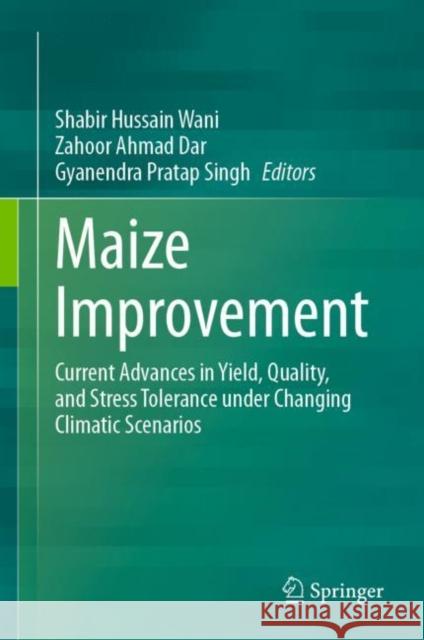
Shabir Hussain Wani; Zahoor Ahmad Dar; Gyanendra Pratap Singh
Maize Improvement: Current Advances in Yield, Quality, and Stress Tolerance under Changing Climatic Scenarios Shabir Hussain Wani Zahoor Ahmad Dar Gyanendra Pratap Singh 9783031216398 Springer - książkaWidoczna okładka, to zdjęcie poglądowe, a rzeczywista szata graficzna może różnić się od prezentowanej.

Maize Improvement: Current Advances in Yield, Quality, and Stress Tolerance under Changing Climatic Scenarios

ISBN-13: 9783031216398 / Angielski / Twarda / 2023 / 400 str.

Shabir Hussain Wani; Zahoor Ahmad Dar; Gyanendra Pratap Singh
cena 726,29 zł
(netto: 691,70 VAT:  5%)

Najniższa cena z 30 dni: 693,97 zł
Termin realizacji zamówienia:
ok. 22 dni roboczych
Bez gwarancji dostawy przed świętami

Darmowa dostawa!
inne wydania

Maize is one of the most generally grown cereal crops at global level, followed by wheat and rice. Maize is the major crop in China both in terms of yield and acreage. In 2012, worldwide maize production was about 840 million tons. Maize has long been a staple food of most of the global population (particularly in South America and Africa) and a key nutrient resource for animal feed and for food industrial materials. Maize belts vary from the latitude 58° north to the latitude 40° south, and maize ripens every month of the year. Abiotic and biotic stresses are common in maize belts worldwide. Abiotic stresses (chiefly drought, salinity, and extreme temperatures), together with biotic stresses (primarily fungi, viruses, and pests), negatively affect maize growth, development, production and productivity. In the recent past, intense droughts, waterlogging, and extreme temperatures have relentlessly affected maize growth and yield. In China, 60% of the maize planting area is prone to drought, and the resultant yield loss is 20%–30% per year; in India, 25%–30% of the maize yield is lost as a result of waterlogging each year. The biotic stresses on maize are chiefly pathogens (fungal, bacterial, and viral), and the consequential syndromes, like ear/stalk rot, rough dwarf disease, and northern leaf blight, are widespread and result in grave damage. Roughly 10% of the global maize yield is lost each year as a result of biotic stresses. For example, the European corn borer [ECB, Ostrinianubilalis (Hübner)] causes yield losses of up to 2000 million dollars annually in the USA alone in the northern regions of China, the maize yield loss reaches 50% during years when maize badly affected by northern leaf blight. In addition, abiotic and biotic stresses time and again are present at the same time and rigorously influence maize production. To fulfill requirements of each maize-growing situation and to tackle the above mentions stresses in an effective way sensibly designed multidisciplinary strategy for developing suitable varieties for each of these stresses has been attempted during the last decade.  Genomics is a field of supreme significance for elucidating the genetic architecture of complex quantitative traits and characterizing germplasm collections to achieve precise and specific manipulation of desirable alleles/genes. Advances in genotyping technologies and high throughput phenomics approaches have resulted in accelerated crop improvement like genomic selection, speed breeding, particularly in maize.  Molecular breeding tools like collaborating all omics, has led to the development of maize genotypes having higher yields, improved quality and resilience to biotic and abiotic stresses. Through this book, we bring into one volume the various important aspects of maize improvement and the recent technological advances in development of maize genotypes with high yield, high quality and resilience to biotic and abiotic stresses


Maize is one of the most generally grown cereal crops at global level, followed by wheat and rice. Maize is the major crop in China both in terms of yield and acreage. In 2012, worldwide maize production was about 840 million tons. Maize has long been a staple food of most of the global population (particularly in South America and Africa) and a key nutrient resource for animal feed and for food industrial materials. Maize belts vary from the latitude 58° north to the latitude 40° south, and maize ripens every month of the year. Abiotic and biotic stresses are common in maize belts worldwide. Abiotic stresses (chiefly drought, salinity, and extreme temperatures), together with biotic stresses (primarily fungi, viruses, and pests), negatively affect maize growth, development, production and productivity. In the recent past, intense droughts, waterlogging, and extreme temperatures have relentlessly affected maize growth and yield. In China, 60% of the maize planting area is prone to drought, and the resultant yield loss is 20%–30% per year; in India, 25%–30% of the maize yield is lost as a result of waterlogging each year. The biotic stresses on maize are chiefly pathogens (fungal, bacterial, and viral), and the consequential syndromes, like ear/stalk rot, rough dwarf disease, and northern leaf blight, are widespread and result in grave damage. Roughly 10% of the global maize yield is lost each year as a result of biotic stresses. For example, the European corn borer [ECB, Ostrinianubilalis (Hübner)] causes yield losses of up to 2000 million dollars annually in the USA alone in the northern regions of China, the maize yield loss reaches 50% during years when maize badly affected by northern leaf blight. In addition, abiotic and biotic stresses time and again are present at the same time and rigorously influence maize production. To fulfill requirements of each maize-growing situation and to tackle the above mentions stresses in an effective way sensibly designed multidisciplinary strategy for developing suitable varieties for each of these stresses has been attempted during the last decade.  Genomics is a field of supreme significance for elucidating the genetic architecture of complex quantitative traits and characterizing germplasm collections to achieve precise and specific manipulation of desirable alleles/genes. Advances in genotyping technologies and high throughput phenomics approaches have resulted in accelerated crop improvement like genomic selection, speed breeding, particularly in maize.  Molecular breeding tools like collaborating all omics, has led to the development of maize genotypes having higher yields, improved quality and resilience to biotic and abiotic stresses. Through this book, we bring into one volume the various important aspects of maize improvement and the recent technological advances in development of maize genotypes with high yield, high quality and resilience to biotic and abiotic stresses

Kategorie:
Nauka, Biologia i przyroda
Kategorie BISAC:
Technology & Engineering > Agriculture - General
Science > Botanika
Science > Life Sciences - Ecology
Wydawca:
Springer
Język:
Angielski
ISBN-13:
9783031216398
Rok wydania:
2023
Dostępne języki:
Ilość stron:
400
Oprawa:
Twarda
Dodatkowe informacje:
Wydanie ilustrowane

REVISED Table of contents

Sr. No.

Chapter title

Authors and their affiliations


Maize Genome


1

Genome diversity in Maize

Victor Llaca

DuPont Agricultural Biotechnology, Experimental Station, P.O. Box 80353, Wilmington, DE 19880-0353, USA

Email: victor.llaca@usa.dupont.com

2

Maize biodiversity: state of the art and future perspective for breeding

Ir. RP Mainali

Researcher, National Genebank, NARC, PO Box 3055 Kathmandu, Nepal

Adjunct Asst Professor, HICAST, NEPAL
Former National Consultant, FAO, Nepal

Email: mainalism.rp@gmail.com

3

European maize landraces made accessible for plant breeding and genome-based studies

Chris-Carolin Schön

Plant Breeding, TUM School of Life Sciences Weihenstephan, Technical University of Munich, 85354 Freising, Germany

Email: chris.schoen@tum.de

4

Maize genome analysis to elucidate evolution with time

Prof. Dr. Klaus F. X. Maye

Helmholtz Zentrum München
Deutsches Forschungszentrum für Gesundheit und Umwelt (GmbH)
Plant Genome and Systems Biology
Ingolstädter Landstr. 1
85764 Neuherberg


Email: k.mayer@helmholtz-muenchen.de


QTL/GWAS


5

QTL mapping for high temperature stress in Maize

Dr Jackson NiyorugiraSebigunda

Central Luzon State University, Science City of Munoz, Nueva Ecija, Philippines

Email: niyojack9@gmail.com, Jackson.sebigunda@afri-ecoimpact.com


6

QTL mapping advances for European Corn Borer Resistance in maize

Dr. Ali Razzak

Centre of Agricultural Biochemistry and Biotechnology (CABB), University of Agriculture, Faisalabad 38040,

Pakistan

Email: ali.razzaq254@gmail.com

7

GWAS for maize yield Improvement

Dr Baljeet Singh

LPU, Ludhiana

Punjab, India

Email: baljeet46254@gmail.com


Biology


8

Transcriptional Factor; a molecular switch to adapt Abiotic Stress mechanism in maize

Dr MQU Farooqi

School of Agriculture and Environment; Faculty of Science

The University of Western Australia, Perth WA 6009 Australia


Email:  mqfarooqi@kangwon.ac.kr


9

Gene expression Divergence in Maize

Emily B. Josephs

Department of Plant Biology, Michigan State University, East Lansing, MI

Email:  josep993@msu.edu

10

Physiological and Biochemical Responses of Maize under Drought Stress

Suphia Rafique

Department of Biotechnology, Faculty of Chemicals and Life Sciences, Jamia Hamdard, New Delhi, 110062, India.

Email: Suphia123@gmail.com


11

Fungal Pathogen Induced Modulation of Structural and Functional Proteins in Zea mays

Dr Sushil Kumar 

Assistant Professor in Botany

Shaheed Mangal Pandey Govt Girls PG College

Madhavpuram, Meerut- 250002, U.P., India

Email: skg1979@gmail.com


Method


12

Maize improvement using recent Omics approaches

Dr.PTV Lakshmi,

Professor

Phytomatics lab,

Centre for Bioinformatics,

School of Life Sciences,

Pondicherry University-605014

E-mail: lakanna@bicpu.edu.in

Profile: pondiuni.irins.org/profile/65064

13

Molecular Genetic Approaches to Maize Improvement.

Gurleen Sidhu,

Department of Plant Agriculture, University of Guelph, Canada

Email: gsidhu04@uoguelph.ca

14

Genomic selection in maize improvement

Vishal Singh,

Department of Plants, Soils and Climate

Utah State University,

4820 Old Main Hill, Logan, UT 84322

15

Genetic engineering for improvement of qualitative and quantitative traits in Maize

Shabir H Wani , Monika Bansal

MOUNTAIN RESEARCH CENTRE FOR  FIELD CROPS, KHUDWANI ANANTNAG-192101, Sher-e-Kashmir University of Agricultural Sciences and Technology of Kashmir, J&K, India

Email: shabirhwani@skuastkashmir.ac.in


Improvement


16

Potential of phenomics in climate resilient maize breeding

Dr.  Basavaraj P S

ICAR-National Institute of Abiotic Stress Management, Baramati-413115

basavaraj.ps@icar.gov.in

mob-7760113636


17

Current Genomic Approaches for biotic stress tolerance in Maize

Moutoshi Chakraborty

IBGE, BSMRAU, Bangladesh

 Email: moutoshi1313@gmail.com

18

Genomics approaches for ascertaining Drought stress responses in Maize

Dr. Javed Akhatar

DBT Centre of Excellence on Brassicas, Department of Plant Breeding and Genetics, Punjab Agricultural University, Ludhiana, India
Email: javedpbg@pau.edu

19

Genotyping advances for Heat stress Tolerance in Maize

Dr Gurmukh S Johal

Department of Botany and Plant Pathology, Purdue University, West Lafayette, Indiana, USA.

Email: gjohal@purdue.edu


20

Biofortification in Maize through Marker Assisted Breeding

Dr. Niraj Tripathi

Directorate of Research Services

J.N. Agricultural University,

Jabalpur 482004 MP, India

Email:tripathi.niraj@gmail.com

21

Molecular breeding approaches to improve NUE in Maize

Mohd Shamshad and A K Pandey

1 Department of Plant Breeding & Genetics, Punjab Agricultural University, Ludhiana (India)

2 Genomics and Molecular Breeding Lab, National Institute of Plant Genomics Research, New Delhi

Corresponding author email- shamshad.rattan@gmail.com

22

Molecular breeding (QTL mapping) for Phosphorus Use Efficiency in Maize

Dr M C Kamboj

professor at Department of Plant breeding CCSHAU Hisar

Email:  kunduantim@gmail.com

23

Maize improvement for water use efficiency: Advances in Recent molecular marker technology.

K.N.S.Usha Kiranmayee,

Visiting Scientist,

Research Program-Genetic Gains,

Ph: 918801772588
ICRISAT.


Email: knskira@gmail.com


24

Genome editing Advances for Maize Improvement

Dr. Ali Razzak

Centre of Agricultural Biochemistry and Biotechnology (CABB), University of Agriculture, Faisalabad 38040,

Pakistan

Email: ali.razzaq254@gmail.com


Dr. Shabir Hussain Wani is senior Assistant professor at Mountain Research Centre for Field Crops, Khudwani –192101, Sher-e-Kashmir University of Agricultural Sciences and Technology of Kashmir, J&K, India. He received Ph.D. degree in plant breeding and genetics on “transgenic rice for abiotic stress tolerance” from the Punjab Agricultural University Ludhiana, India. After obtaining his Ph.D. he worked as research associate in the Biotechnology Laboratory, Central Institute of Temperate Horticulture (ICAR), Srinagar, India. He then joined the Krishi Vigyan Kendra (Farm Science Centre) as program coordinator at Senapati, Manipur, India. He teaches courses related to plant breeding, seed science and technology, and stress breeding and has published more than 100 papers/chapters in journals and books of international and national repute. He served as guest editor and reviews editor for journal Frontier in Plant Science (2015-2018). He has also edited several books on current topics in crop improvement for abiotic stress tolerance published by Springer Nature and CRC press USA. His Ph.D. research fetched first prize in the North Zone Competition, at national level, in India. He was awarded  Young Scientist Award from the Society for Promotion of Plant Sciences, Jaipur, India, in 2009. He is a fellow of the Society for Plant Research, India. Recently he also received Young Scientist Award (Agriculture) 2015 from Society for Plant Research, Meerut, India. He also served as visiting Scientist at Department of Plant Soil and Microbial Sciences, Michigan State University, USA under the UGC Raman Post Doctoral Fellowship programme. Currently, he is in charge of Wheat improvement programme at MRCFC Khudwani SKAUST Kashmir.


Maize is one of the most generally grown cereal crops at global level, followed by wheat and rice. Maize is the major crop in China both in terms of yield and acreage. In 2012, worldwide maize production was about 840 million tons. Maize has long been a staple food of most of the global population (particularly in South America and Africa) and a key nutrient resource for animal feed and for food industrial materials. Maize belts vary from the latitude 58° north to the latitude 40° south, and maize ripens every month of the year. Abiotic and biotic stresses are common in maize belts worldwide. Abiotic stresses (chiefly drought, salinity, and extreme temperatures), together with biotic stresses (primarily fungi, viruses, and pests), negatively affect maize growth, development, production and productivity. In the recent past, intense droughts, waterlogging, and extreme temperatures have relentlessly affected maize growth and yield. In China, 60% of the maize planting area is prone to drought, and the resultant yield loss is 20%–30% per year; in India, 25%–30% of the maize yield is lost as a result of waterlogging each year. The biotic stresses on maize are chiefly pathogens (fungal, bacterial, and viral), and the consequential syndromes, like ear/stalk rot, rough dwarf disease, and northern leaf blight, are widespread and result in grave damage. Roughly 10% of the global maize yield is lost each year as a result of biotic stresses. For example, the European corn borer [ECB, Ostrinia nubilalis (Hübner)] causes yield losses of up to 2000 million dollars annually in the USA alone in the northern regions of China, the maize yield loss reaches 50% during years when maize badly affected by northern leaf blight. In addition, abiotic and biotic stresses time and again are present at the same time and rigorously influence maize production. To fulfill requirements of each maize-growing situation and to tackle the above mentions stresses in an effective way sensibly designed multidisciplinary strategy for developing suitable varieties for each of these stresses has been attempted during the last decade.  Genomics is a field of supreme significance for elucidating the genetic architecture of complex quantitative traits and characterizing germplasm collections to achieve precise and specific manipulation of desirable alleles/genes. Advances in genotyping technologies and high throughput phenomics approaches have resulted in accelerated crop improvement like genomic selection, speed breeding, particularly in maize.  Molecular breeding tools like collaborating all omics, has led to the development of maize genotypes having higher yields, improved quality and resilience to biotic and abiotic stresses. Through this book, we bring into one volume the various important aspects of maize improvement and the recent technological advances in development of maize genotypes with high yield, high quality and resilience to biotic and abiotic stresses.


Udostępnij

Facebook - konto krainaksiazek.pl


Opinie o Krainaksiazek.pl na Opineo.pl

Partner Mybenefit

Krainaksiazek.pl w programie rzetelna firma Krainaksiaze.pl - płatności przez paypal

Czytaj nas na:

Facebook - krainaksiazek.pl
  • książki na zamówienie
  • granty
  • książka na prezent
  • kontakt
  • pomoc
  • opinie
  • regulamin
  • polityka prywatności

Zobacz:

  • Księgarnia czeska

  • Wydawnictwo Książkowe Klimaty

1997-2025 DolnySlask.com Agencja Internetowa

© 1997-2022 krainaksiazek.pl
     
KONTAKT | REGULAMIN | POLITYKA PRYWATNOŚCI | USTAWIENIA PRYWATNOŚCI
Zobacz: Księgarnia Czeska | Wydawnictwo Książkowe Klimaty | Mapa strony | Lista autorów
KrainaKsiazek.PL - Księgarnia Internetowa

Polityka prywatnosci - link
Krainaksiazek.pl - płatnośc Przelewy24
Przechowalnia Przechowalnia





