• Wyszukiwanie zaawansowane
  • Kategorie
  • Kategorie BISAC
  • Książki na zamówienie
  • Promocje
  • Granty
  • Książka na prezent
  • Opinie
  • Pomoc
  • Załóż konto
  • Zaloguj się

Machine Learning and Its Application to Reacting Flows: ML and Combustion » książka


zaloguj się | załóż konto
Logo Krainaksiazek.pl

koszyk

konto

szukaj
topmenu
Księgarnia internetowa
Szukaj
Książki na zamówienie
Promocje
Granty
Książka na prezent
Moje konto
Pomoc
 
 
Wyszukiwanie zaawansowane
Pusty koszyk
Bezpłatna dostawa dla zamówień powyżej 20 złBezpłatna dostawa dla zamówień powyżej 20 zł

Kategorie główne

• Nauka
 [2949965]
• Literatura piękna
 [1857847]

  więcej...
• Turystyka
 [70818]
• Informatyka
 [151303]
• Komiksy
 [35733]
• Encyklopedie
 [23180]
• Dziecięca
 [617748]
• Hobby
 [139972]
• AudioBooki
 [1650]
• Literatura faktu
 [228361]
• Muzyka CD
 [398]
• Słowniki
 [2862]
• Inne
 [444732]
• Kalendarze
 [1620]
• Podręczniki
 [167233]
• Poradniki
 [482388]
• Religia
 [509867]
• Czasopisma
 [533]
• Sport
 [61361]
• Sztuka
 [243125]
• CD, DVD, Video
 [3451]
• Technologie
 [219309]
• Zdrowie
 [101347]
• Książkowe Klimaty
 [123]
• Zabawki
 [2362]
• Puzzle, gry
 [3791]
• Literatura w języku ukraińskim
 [253]
• Art. papiernicze i szkolne
 [7933]
Kategorie szczegółowe BISAC

Machine Learning and Its Application to Reacting Flows: ML and Combustion

ISBN-13: 9783031162473 / Angielski / Twarda / 2023 / 348 str.
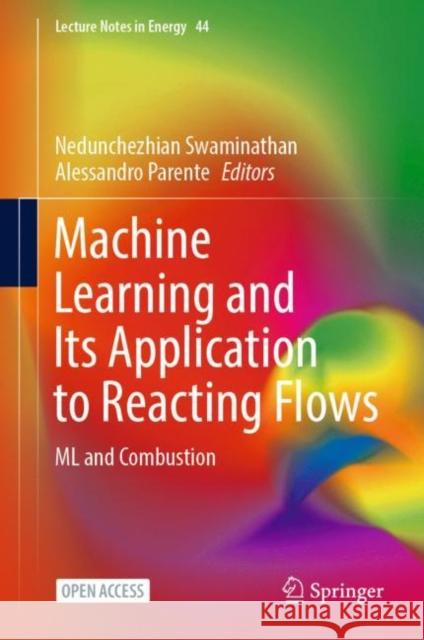
Nedunchezhian Swaminathan; Alessandro Parente
Machine Learning and Its Application to Reacting Flows: ML and Combustion Nedunchezhian Swaminathan Alessandro Parente 9783031162473 Springer - książkaWidoczna okładka, to zdjęcie poglądowe, a rzeczywista szata graficzna może różnić się od prezentowanej.

Machine Learning and Its Application to Reacting Flows: ML and Combustion

ISBN-13: 9783031162473 / Angielski / Twarda / 2023 / 348 str.

Nedunchezhian Swaminathan; Alessandro Parente
cena 201,72 zł
(netto: 192,11 VAT:  5%)

Najniższa cena z 30 dni: 192,74 zł
Termin realizacji zamówienia:
ok. 22 dni roboczych
Bez gwarancji dostawy przed świętami

Darmowa dostawa!
inne wydania

This open access book introduces and explains machine learning (ML) algorithms and techniques developed for statistical inferences on a complex process or system and their applications to simulations of chemically reacting turbulent flows.These two fields, ML and turbulent combustion, have large body of work and knowledge on their own, and this book brings them together and explain the complexities and challenges involved in applying ML techniques to simulate and study reacting flows.  This is important as to the world’s total primary energy supply (TPES), since more than 90% of this supply is through combustion technologies and the non-negligible effects of combustion on environment.  Although alternative technologies based on renewable energies are coming up, their shares for the TPES is are less than 5% currently and one needs a complete paradigm shift to replace combustion sources.  Whether this is practical or not is entirely a different question, and an answer to this question depends on the respondent.  However, a pragmatic analysis suggests that the combustion share to TPES is likely to be more than 70% even by 2070.  Hence, it will be prudent to take advantage of ML techniques to improve combustion sciences and technologies so that efficient and “greener” combustion systems that are friendlier to the environment can be designed.The book covers the current state of the art in these two topics and outlines the challenges involved, merits and drawbacks of using ML for turbulent combustion simulations including avenues which can be explored to overcome the challenges.  The required mathematical equations and backgrounds are discussed with ample references for readers to find further detail if they wish.  This book is unique since there is not any book with similar coverage of topics, ranging from big data analysis and machine learning algorithm to their applications for combustion science and system design for energy generation.


This open access book introduces and explains machine learning (ML) algorithms and techniques developed for statistical inferences on a complex process or system and their applications to simulations of chemically reacting turbulent flows.These two fields, ML and turbulent combustion, have large body of work and knowledge on their own, and this book brings them together and explain the complexities and challenges involved in applying ML techniques to simulate and study reacting flows.  This is important as to the world’s total primary energy supply (TPES), since more than 90% of this supply is through combustion technologies and the non-negligible effects of combustion on environment.  Although alternative technologies based on renewable energies are coming up, their shares for the TPES is are less than 5% currently and one needs a complete paradigm shift to replace combustion sources.  Whether this is practical or not is entirely a different question, and an answer to this question depends on the respondent.  However, a pragmatic analysis suggests that the combustion share to TPES is likely to be more than 70% even by 2070.  Hence, it will be prudent to take advantage of ML techniques to improve combustion sciences and technologies so that efficient and “greener” combustion systems that are friendlier to the environment can be designed. The book covers the current state of the art in these two topics and outlines the challenges involved, merits and drawbacks of using ML for turbulent combustion simulations including avenues which can be explored to overcome the challenges.  The required mathematical equations and backgrounds are discussed with ample references for readers to find further detail if they wish.  This book is unique since there is not any book with similar coverage of topics, ranging from big data analysis and machine learning algorithm to their applications for combustion science and system design for energy generation.  

Kategorie:
Technologie
Kategorie BISAC:
Technology & Engineering > Power Resources - Fossil Fuels
Science > Termodynamika
Computers > Artificial Intelligence - General
Wydawca:
Springer
Seria wydawnicza:
Lecture Notes in Energy
Język:
Angielski
ISBN-13:
9783031162473
Rok wydania:
2023
Dostępne języki:
Numer serii:
000444183
Ilość stron:
348
Oprawa:
Twarda

Introduction.- ML Algorithms, Techniques and their Application to Reactive Molecular Dynamics Simulations.- Big Data Analysis, Analytics & ML role.- ML for SGS Turbulence (including scalar flux) Closures.- ML for Combustion Chemistry.- Applying CNNs to model SGS flame wrinkling in thickened flame LES (TFLES).- Machine Learning Strategy for Subgrid Modelling of Turbulent Combustion using Linear Eddy Mixing based Tabulation.- MILD Combustion–Joint SGS FDF.- Machine Learning for Principal Component Analysis & Transport.- Super Resolution Neural Network for Turbulent non-premixed Combustion.- ML in Thermoacoustics.- Concluding Remarks & Outlook.


Nedunchezhian Swaminathan is a Professor of Mechanical Engineering in Cambridge University, UK, and Fellow and Director of Studies in Robinson College, Cambridge.  He is a Fellow of The Combustion Institute since 2018.  Swaminathan holds visiting Professorships in many overseas Universities and consults to a number of industries in Transport and Energy Sectors.   He has 25 years of research and teaching experiences in the fields of Combustion, Turbulence, Combustion Noise and Instabilities, and Simulations of Flows with Multi-physics occurring in engineering applications and geophysics. 

Alessandro Parente is Professor of Thermodynamics, Fluid Mechanics and Combustion at the Aero-Thermo-Mechanical Department of Université Libre de Bruxelles, as well as director of the Combustion and Robust Optimisation research center (BURN, burn-research.be). In this capacity, he also serves as vice-president of the Belgian Section of the Combustion Institute. The research interests of Dr. Parente are in the field of turbulent/chemistry interaction in turbulent combustion and reduced-order models, non-conventional fuels and pollutant formation in combustion systems, novel combustion technologies, numerical simulation of atmospheric boundary layer flows, and validation and uncertainty quantification.  

This open access book introduces and explains machine learning (ML) algorithms and techniques developed for statistical inferences on a complex process or system and their applications to simulations of chemically reacting turbulent flows.

These two fields, ML and turbulent combustion, have large body of work and knowledge on their own, and this book brings them together and explain the complexities and challenges involved in applying ML techniques to simulate and study reacting flows.  This is important as to the world’s total primary energy supply (TPES), since more than 90% of this supply is through combustion technologies and the non-negligible effects of combustion on environment.  Although alternative technologies based on renewable energies are coming up, their shares for the TPES is are less than 5% currently and one needs a complete paradigm shift to replace combustion sources.  Whether this is practical or not is entirely a different question, and an answer to this question depends on the respondent.  However, a pragmatic analysis suggests that the combustion share to TPES is likely to be more than 70% even by 2070.  Hence, it will be prudent to take advantage of ML techniques to improve combustion sciences and technologies so that efficient and “greener” combustion systems that are friendlier to the environment can be designed. 

The book covers the current state of the art in these two topics and outlines the challenges involved, merits and drawbacks of using ML for turbulent combustion simulations including avenues which can be explored to overcome the challenges.  The required mathematical equations and backgrounds are discussed with ample references for readers to find further detail if they wish.  This book is unique since there is not any book with similar coverage of topics, ranging from big data analysis and machine learning algorithm to their applications for combustion science and system design for energy generation.  



Udostępnij

Facebook - konto krainaksiazek.pl


Opinie o Krainaksiazek.pl na Opineo.pl

Partner Mybenefit

Krainaksiazek.pl w programie rzetelna firma Krainaksiaze.pl - płatności przez paypal

Czytaj nas na:

Facebook - krainaksiazek.pl
  • książki na zamówienie
  • granty
  • książka na prezent
  • kontakt
  • pomoc
  • opinie
  • regulamin
  • polityka prywatności

Zobacz:

  • Księgarnia czeska

  • Wydawnictwo Książkowe Klimaty

1997-2025 DolnySlask.com Agencja Internetowa

© 1997-2022 krainaksiazek.pl
     
KONTAKT | REGULAMIN | POLITYKA PRYWATNOŚCI | USTAWIENIA PRYWATNOŚCI
Zobacz: Księgarnia Czeska | Wydawnictwo Książkowe Klimaty | Mapa strony | Lista autorów
KrainaKsiazek.PL - Księgarnia Internetowa

Polityka prywatnosci - link
Krainaksiazek.pl - płatnośc Przelewy24
Przechowalnia Przechowalnia



