• Wyszukiwanie zaawansowane
  • Kategorie
  • Kategorie BISAC
  • Książki na zamówienie
  • Promocje
  • Granty
  • Książka na prezent
  • Opinie
  • Pomoc
  • Załóż konto
  • Zaloguj się

Lonely Children and Adolescents: Self-Perceptions, Social Exclusion, and Hope » książka


zaloguj się | załóż konto
Logo Krainaksiazek.pl

koszyk

konto

szukaj
topmenu
Księgarnia internetowa
Szukaj
Książki na zamówienie
Promocje
Granty
Książka na prezent
Moje konto
Pomoc
 
 
Wyszukiwanie zaawansowane
Pusty koszyk
Bezpłatna dostawa dla zamówień powyżej 20 złBezpłatna dostawa dla zamówień powyżej 20 zł

Kategorie główne

• Nauka
 [2950116]
• Literatura piękna
 [1816336]

  więcej...
• Turystyka
 [70365]
• Informatyka
 [151382]
• Komiksy
 [36157]
• Encyklopedie
 [23168]
• Dziecięca
 [611655]
• Hobby
 [135936]
• AudioBooki
 [1800]
• Literatura faktu
 [225852]
• Muzyka CD
 [388]
• Słowniki
 [2970]
• Inne
 [446238]
• Kalendarze
 [1179]
• Podręczniki
 [166839]
• Poradniki
 [469514]
• Religia
 [507394]
• Czasopisma
 [506]
• Sport
 [61426]
• Sztuka
 [242327]
• CD, DVD, Video
 [3461]
• Technologie
 [219652]
• Zdrowie
 [98967]
• Książkowe Klimaty
 [123]
• Zabawki
 [2482]
• Puzzle, gry
 [3735]
• Literatura w języku ukraińskim
 [264]
• Art. papiernicze i szkolne
 [7903]
Kategorie szczegółowe BISAC

Lonely Children and Adolescents: Self-Perceptions, Social Exclusion, and Hope

ISBN-13: 9781461423751 / Angielski / Miękka / 2011 / 303 str.
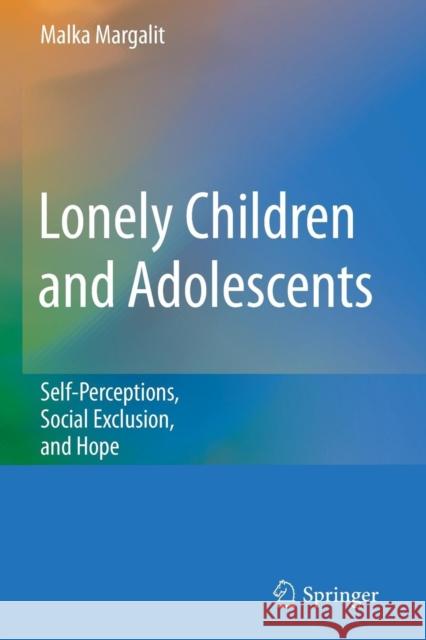
Malka Margalit
Lonely Children and Adolescents: Self-Perceptions, Social Exclusion, and Hope Margalit, Malka 9781461423751 Springer, Berlin - książkaWidoczna okładka, to zdjęcie poglądowe, a rzeczywista szata graficzna może różnić się od prezentowanej.

Lonely Children and Adolescents: Self-Perceptions, Social Exclusion, and Hope

ISBN-13: 9781461423751 / Angielski / Miękka / 2011 / 303 str.

Malka Margalit
cena 201,24
(netto: 191,66 VAT:  5%)

Najniższa cena z 30 dni: 192,74
Termin realizacji zamówienia:
ok. 16-18 dni roboczych.

Darmowa dostawa!
inne wydania

From texting and social networking sites to after-school activities, young people have many opportunities to interact with one another, and yet loneliness and isolation trouble today's youth in increasing numbers. Many children and teens report feeling lonely even in the midst of family and friends, and childhood loneliness is a prime risk factor for adult alienation. Lonely Children and Adolescents: Self-Perceptions, Social Exclusion, and Hope illuminates seldom-explored experiences of social isolation among young people as well as the frustrations of the parents and teachers who wish to help. This groundbreaking book conceptualizes loneliness not simply as the absence of social connections, but as a continuum of developmental experience, often growing out of the conflict between opposite needs: to be like one's peers yet be one's unique self. The author draws clear distinctions between loneliness and solitude and identifies genetic and environmental characteristics (i.e., social, psychological, familial, and educational) that can be reinforced to help children become more resilient and less isolated. In addition, therapeutic approaches are described that challenge loneliness by encouraging empowerment, resilience, and hope, from proven strategies to promising tech-based interventions. Highlights include: - Developmental perspectives on loneliness. - Schools and the role of teachers, from preschool to high school. - Peer relations (e.g., cliques, bullies, exclusion, and popularity). - Lonely children, lonely parents: models of coping. - Loneliness in the virtual world. - Prevention and intervention strategies at home, at school, in therapy. Asking its readers to rethink many of their assumptions about social competence and isolation, this volume is essential reading for researchers and professionals in clinical child, school, developmental, and educational psychology; allied education disciplines; social work; and social and personality psychology.


From texting and social networking sites to after-school activities, young people have many opportunities to interact with one another, and yet loneliness and isolation trouble today s youth in increasing numbers. Many children and teens report feeling lonely even in the midst of family and friends, and childhood loneliness is a prime risk factor for adult alienation.§Lonely Children and Adolescents: Self-Perceptions, Social Exclusion, and Hope illuminates seldom-explored experiences of social isolation among young people as well as the frustrations of the parents and teachers who wish to help. This groundbreaking book conceptualizes loneliness not simply as the absence of social connections, but as a continuum of developmental experience, often growing out of the conflict between opposite needs: to be like one s peers yet be one s unique self. The author draws clear distinctions between loneliness and solitude and identifies genetic and environmental characteristics (i.e., social, psychological, familial, and educational) that can be reinforced to help children become more resilient and less isolated. In addition, therapeutic approaches are described that challenge loneliness by encouraging empowerment, resilience, and hope, from proven strategies to promising tech-based interventions.§Highlights include: Developmental perspectives on loneliness. Schools and the role of teachers, from preschool to high school. Peer relations (e.g., cliques, bullies, exclusion, and popularity). Lonely children, lonely parents: models of coping. Loneliness in the virtual world. Prevention and intervention strategies at home, at school, in therapy.§Asking its readers to rethink many of their assumptions about social competence and isolation, this volume is essential reading for researchers and professionals in clinical child, school, developmental, and educational psychology; allied education disciplines; social work; and social and personality psychology.

Kategorie:
Nauka, Psychologia
Kategorie BISAC:
Psychology > Psychotherapy - Child & Adolescent
Education > Philosophy, Theory & Social Aspects
Social Science > Social Work
Wydawca:
Springer, Berlin
Język:
Angielski
ISBN-13:
9781461423751
Rok wydania:
2011
Wydanie:
2010
Ilość stron:
303
Waga:
0.45 kg
Wymiary:
23.39 x 15.6 x 1.7
Oprawa:
Miękka
Wolumenów:
01
Dodatkowe informacje:
Wydanie ilustrowane

From the reviews:

"This book describes the experience of loneliness in childhood, not just based on lack of social interaction, but as a developmental experience while the child strives to be a unique individual. ... The book is intended for researchers and professionals in clinical, child, school, developmental, and educational psychology, social work, and social and personality psychology. ... it provides useful, practical information for therapists. ... book is a helpful resource for professionals to help them give children support they need." (Gary B. Kaniuk, Doody's Review Service, January, 2011)

---

"Today social networking, interactive computer games, messaging, and other lines of communication are providing new avenues to stay connected, but loneliness still remains a painful emotional experience for many young people. Dr. Margolit's book is divided into nine chapters that address the meaning of loneliness, developmemal perspectives, characteristics of loneliness in different environments, and prevention and intervention strategies... I recommend that professionals who work with children, adolescents, and their families read this informative book." (Sandra Mosk, The Educational Therapist, Volume 33, Number 1, April/May 2012)

Loneliness Conceptualization.- Abilities, Difficulties and Developmental Perspectives.- Loneliness in the Family.- School is a Lonely Place.- Peer Relations and Loneliness Within Different Cultures.- Loneliness and Virtual Connections.- Children’s and Parents’ Coping.- Prevention and Intervention Approaches.- Risks, Resilience, Empowerment and Hope: Summary and Future Directions.

Malka Margalit, Ph.D., was the Head of the Jaime and Joan Constantiner School of Education, Tel-Aviv University. She received her Ph.D. from London University and was nominated full professor in 1994. She has published her research in 4 books, 110 articles in international peer-reviewed journals, and several chapters in professional books. Professor Margalit is the Vice President for International Development of the IARLD (International Academy of Research in Learning Disabilities), is on the coordinating board of the International Society for Research in Early Intervention, and was Chairperson of the Israeli Council of Psychologists, Director of the Sneurson Psycho-Educational Center and representative of the Israeli Psychologists’ organizations in the National Health Committee of the Israeli Ministry of Health. She was also the chairperson of the Shalem Foundation research Committee, Chairperson of the Committee on Disability and Rehabilitation in the International Council of Psychologists, and the Vice Chairperson of the International Association of Special Education. She received the Enoch Award for Scientific Contribution to Special Education and has frequently been invited as an international evaluator to present her research in international conferences around the world. Professor Margalit is a certificated senior educational and rehabilitational psychologist. She is a member of several international professional organizations, and on the editorial boards of several scientific journals, including the Journal of Learning Disabilities, European Journal of Special Needs Education, and Exceptional Children.

Professor Margalit was nominated by the Minister of Science and the Minister of Education to chair the national committee that examined the needs of students with learning disabilities in Israel (Margalit Committee). The report’s conclusions were presented in 1997, and are currently being implemented throughout the Israeli educational system. She also chaired the national committee to evaluate the implementation of the Special Education Law (Margalit Committee II). In her research, through her books, chapters and research articles, Professor Margalit examines in depth children’s loneliness and the impact of emotions and motivation on learning and adaptive development. She is employing empowering models such as Hope Theory to promote growth and adjustment instead of the traditional focus on the causes for dysfunction. She is conducting research on the contributions of friends (including Internet support and virtual friends), schools and families to the adjustment of children with special needs versus typical development. Her studies examine methods for promoting effective coping, enhancing personal strength and reframing difficulties into challenges including the use of technology to enhance empowerment processes.

From texting and social networking sites to after-school activities, young people have many opportunities to interact with one another, and yet loneliness and isolation trouble today’s youth in increasing numbers. Many children and teens report feeling lonely even in the midst of family and friends, and childhood loneliness is a prime risk factor for adult alienation.

Lonely Children and Adolescents: Self-Perceptions, Social Exclusion, and Hope illuminates seldom-explored experiences of social isolation among young people as well as the frustrations of the parents and teachers who wish to help. This groundbreaking book conceptualizes loneliness not simply as the absence of social connections, but as a continuum of developmental experience, often growing out of the conflict between opposite needs: to be like one’s peers yet be one’s unique self. The author draws clear distinctions between loneliness and solitude and identifies genetic and environmental characteristics (i.e., social, psychological, familial, and educational) that can be reinforced to help children become more resilient and less isolated. In addition, therapeutic approaches are described that challenge loneliness by encouraging empowerment, resilience, and hope, from proven strategies to promising tech-based interventions.

Highlights include:

• Developmental perspectives on loneliness.
• Schools and the role of teachers, from preschool to high school.
• Peer relations (e.g., cliques, bullies, exclusion, and popularity).
• Lonely children, lonely parents: models of coping.
• Loneliness in the virtual world.
• Prevention and intervention strategies at home, at school, in therapy.

Asking its readers to rethink many of their assumptions about social competence and isolation, this volume is essential reading for researchers and professionals in clinical child, school, developmental, and educational psychology; allied education disciplines; social work; and social and personality psychology.




Udostępnij

Facebook - konto krainaksiazek.pl


Opinie o Krainaksiazek.pl na Opineo.pl

Partner Mybenefit

Krainaksiazek.pl w programie rzetelna firma Krainaksiaze.pl - płatności przez paypal

Czytaj nas na:

Facebook - krainaksiazek.pl
  • książki na zamówienie
  • granty
  • książka na prezent
  • kontakt
  • pomoc
  • opinie
  • regulamin
  • polityka prywatności

Zobacz:

  • Księgarnia czeska

  • Wydawnictwo Książkowe Klimaty

1997-2026 DolnySlask.com Agencja Internetowa

© 1997-2022 krainaksiazek.pl
     
KONTAKT | REGULAMIN | POLITYKA PRYWATNOŚCI | USTAWIENIA PRYWATNOŚCI
Zobacz: Księgarnia Czeska | Wydawnictwo Książkowe Klimaty | Mapa strony | Lista autorów
KrainaKsiazek.PL - Księgarnia Internetowa

Polityka prywatnosci - link
Krainaksiazek.pl - płatnośc Przelewy24
Przechowalnia Przechowalnia



