• Wyszukiwanie zaawansowane
  • Kategorie
  • Kategorie BISAC
  • Książki na zamówienie
  • Promocje
  • Granty
  • Książka na prezent
  • Opinie
  • Pomoc
  • Załóż konto
  • Zaloguj się

Life Cycle Inventory Analysis: Methods and Data » książka


zaloguj się | załóż konto
Logo Krainaksiazek.pl

koszyk

konto

szukaj
topmenu
Księgarnia internetowa
Szukaj
Książki na zamówienie
Promocje
Granty
Książka na prezent
Moje konto
Pomoc
 
 
Wyszukiwanie zaawansowane
Pusty koszyk
Bezpłatna dostawa dla zamówień powyżej 20 złBezpłatna dostawa dla zamówień powyżej 20 zł

Kategorie główne

• Nauka
 [2949965]
• Literatura piękna
 [1857847]

  więcej...
• Turystyka
 [70818]
• Informatyka
 [151303]
• Komiksy
 [35733]
• Encyklopedie
 [23180]
• Dziecięca
 [617748]
• Hobby
 [139972]
• AudioBooki
 [1650]
• Literatura faktu
 [228361]
• Muzyka CD
 [398]
• Słowniki
 [2862]
• Inne
 [444732]
• Kalendarze
 [1620]
• Podręczniki
 [167233]
• Poradniki
 [482388]
• Religia
 [509867]
• Czasopisma
 [533]
• Sport
 [61361]
• Sztuka
 [243125]
• CD, DVD, Video
 [3451]
• Technologie
 [219309]
• Zdrowie
 [101347]
• Książkowe Klimaty
 [123]
• Zabawki
 [2362]
• Puzzle, gry
 [3791]
• Literatura w języku ukraińskim
 [253]
• Art. papiernicze i szkolne
 [7933]
Kategorie szczegółowe BISAC

Life Cycle Inventory Analysis: Methods and Data

ISBN-13: 9783030622725 / Angielski / Miękka / 2022
Ciroth, Andreas
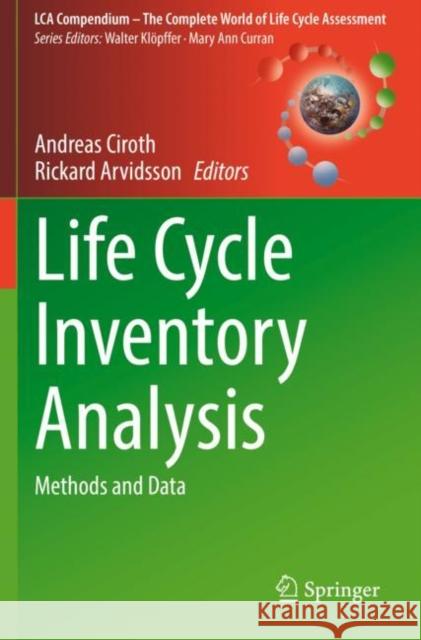
Life Cycle Inventory Analysis: Methods and Data Ciroth, Andreas 9783030622725 Springer International Publishing - książkaWidoczna okładka, to zdjęcie poglądowe, a rzeczywista szata graficzna może różnić się od prezentowanej.

Life Cycle Inventory Analysis: Methods and Data

ISBN-13: 9783030622725 / Angielski / Miękka / 2022

Ciroth, Andreas
cena 363,12 zł
(netto: 345,83 VAT:  5%)

Najniższa cena z 30 dni: 346,96 zł
Termin realizacji zamówienia:
ok. 22 dni roboczych
Bez gwarancji dostawy przed świętami

Darmowa dostawa!
inne wydania

Life Cycle Inventory (LCI) Analysis is the second phase in the Life Cycle Assessment (LCA) framework. Since the first attempts to formalize life cycle assessment in the early 1970, life cycle inventory analysis has been a central part.   Chapter 1 “Introduction to Life Cycle Inventory Analysis“ discusses the history of inventory analysis from the 1970s through SETAC and the ISO standard. In Chapter 2 “Principles of Life Cycle Inventory Modeling”, the general principles of setting up an LCI model and LCI analysis are described by introducing the core LCI model and extensions that allow addressing reality better. Chapter 3 “Development of Unit Process Datasets” shows that developing unit processes of high quality and transparency is not a trivial task, but is crucial for high-quality LCA studies. Chapter 4 “Multi-functionality in Life Cycle Inventory Analysis: Approaches and Solutions” describes how multi-functional processes can be identified. In Chapter 5 “Data Quality in Life Cycle Inventories”, the quality of data gathered and used in LCI analysis is discussed. State-of-the-art indicators to assess data quality in LCA are described and the fitness for purpose concept is introduced. Chapter 6 “Life Cycle Inventory Data and Databases“ follows up on the topic of LCI data and provides a state-of-the-art description of LCI databases. It describes differences between foreground and background data, recommendations for starting a database, data exchange and quality assurance concepts for databases, as well as the scientific basis of LCI databases. Chapter 7 “Algorithms of Life Cycle Inventory Analysis“ provides the mathematical models underpinning the LCI. Since Heijungs and Suh (2002), this is the first time that this aspect of LCA has been fundamentally presented.In Chapter 8 “Inventory Indicators in Life Cycle Assessment”, the use of LCI data to create aggregated environmental and resource indicators is described. Such indicators include the cumulative energy demand and various water use indicators. Chapter 9 “The Link Between Life Cycle Inventory Analysis and Life Cycle Impact Assessment” uses four examples to discuss the link between LCI analysis and LCIA. A clear and relevant link between these phases is crucial.


Kategorie:
Nauka, Biologia i przyroda
Kategorie BISAC:
Science > Environmental Science (see also Chemistry - Environmental)
Law > Civil Law
Technology & Engineering > Environmental - General
Wydawca:
Springer International Publishing
Seria wydawnicza:
LCA Compendium – The Complete World of Life Cycle Assessme
Język:
Angielski
ISBN-13:
9783030622725
Rok wydania:
2022
Waga:
0.39 kg
Wymiary:
23.5 x 15.5
Oprawa:
Miękka


Life Cycle Inventory Analysis – LCI

Editors: Andreas Ciroth, Germany and Rickard Arvidsson, Sweden

1 Introduction to "Life Cycle Inventory Analysis

Rickard Arvidsson and Andreas Ciroth

2 Principles of Life Cycle Inventory Modeling: The Basic Model, Extensions and Conventions

Andreas Ciroth, Francesca Recanati and Rickard Arvidsson

3 Development of Unit Process Datasets

Xiaojin Zhang, Hongtao Wang and Karin Treyer

4 Multi-functionality in Life Cycle Inventory Analysis: Approaches and Solutions

Jeroen Guinée, Reinout Heijungs and Rolf Frischknecht

5 Data Quality in Life Cycle Inventories

Andreas Ciroth

6 Life Cycle Inventory Data and Databases

Andreas Ciroth and Salwa Burhan

7 Algorithms of Life Cycle Inventory Analysis

Michael Srocka and Flavio

8 Inventory Indicators in Life Cycle Assessment

Rickard Arvidsson

9 The Link Between Life Cycle Inventory Analysis and Life Cycle Impact Assessment

Jutta Hildenbrand and Rickard Arvidsson

10 Conclusions : The Editors

​Andreas Ciroth is founder and director of GreenDelta, a consulting and software company with focus on sustainability assessment and life cycle analyses. Environmental engineer by education, he finished his PhD (error calculation in LCA) in 2001 at the TU Berlin and is working since then on sustainability topics. He is leading the openLCA project to create a free, open source sustainability assessment software.

Andreas is co-chair of the working group on meta-data descriptors in the Global Network of Interoperable Databases, and an international expert in LCA software and databases. In 2015, he supported UNEP in projects related to LCA database creation in Malaysia and Brazil, including training and capacity building.

Andreas was the first subject editor of The International Journal of Life Cycle Assessment (founded in 1996 by Walter Klöpffer) for the field of “uncertainties”, nominated in 2004, and still holds this position. He is also member of the Editorial Board.

See also Ciroth A (2017) Goal and Scope Connection to the Interpretation Phase. Chapter 5 “Goal and Scope Definition in Life Cycle Assessment” (Curran MA ed). In: LCA Compendium – The Complete World of Life Cycle Assessment (Klöpffer W, Curran MA, series eds). Springer, Dordrecht, pp 161-167

Rickard Arvidsson has a bachelor’s and master’s degree in bioengineering. He obtained his PhD degree in Energy and environment from Chalmers University of Technology, Sweden, in 2012. Currently he works as an associate professor at the division of Environmental Systems Analysis, department of Technology Management and Economics, Chalmers University of Technology. He mainly conducts research on environmental and sustainability assessments, including life cycle assessment, social life cycle assessment, environmental risk assessment, material flow analysis and substance flow analysis. The current research has a focus on emerging technologies and novel, advanced materials, including nanomaterials and new battery chemistry. His teaching duties mainly include two master’s courses in life cycle assessment and environmental risk assessment, as well as the supervision of master’s thesis projects. He has been a guest researcher at the department of Environment at the Technical University of Denmark and is a board member of the Swedish Life Cycle Center. In 2018, he received the Young Scientist LCA Award by the Society for Environmental Toxicology and Chemistry Europe, for his contributions to the development of prospective life cycle assessment.


Life Cycle Inventory (LCI) Analysis is the second phase in the Life Cycle Assessment (LCA) framework. Since the first attempts to formalize life cycle assessment in the early 1970, life cycle inventory analysis has been a central part.  


Chapter 1 “Introduction to Life Cycle Inventory Analysis“ discusses the history of inventory analysis from the 1970s through SETAC and the ISO standard.

In Chapter 2 “Principles of Life Cycle Inventory Modeling”, the general principles of setting up an LCI model and LCI analysis are described by introducing the core LCI model and extensions that allow addressing reality better.

Chapter 3 “Development of Unit Process Datasets” shows that developing unit processes of high quality and transparency is not a trivial task, but is crucial for high-quality LCA studies.

Chapter 4 “Multi-functionality in Life Cycle Inventory Analysis: Approaches and Solutions” describes how multi-functional processes can be identified.

In Chapter 5 “Data Quality in Life Cycle Inventories”, the quality of data gathered and used in LCI analysis is discussed. State-of-the-art indicators to assess data quality in LCA are described and the fitness for purpose concept is introduced.

Chapter 6 “Life Cycle Inventory Data and Databases“ follows up on the topic of LCI data and provides a state-of-the-art description of LCI databases. It describes differences between foreground and background data, recommendations for starting a database, data exchange and quality assurance concepts for databases, as well as the scientific basis of LCI databases.

Chapter 7 “Algorithms of Life Cycle Inventory Analysis“ provides the mathematical models underpinning the LCI. Since Heijungs and Suh (2002), this is the first time that this aspect of LCA has been fundamentally presented.

In Chapter 8 “Inventory Indicators in Life Cycle Assessment”, the use of LCI data to create aggregated environmental and resource indicators is described. Such indicators include the cumulative energy demand and various water use indicators.

Chapter 9 “The Link Between Life Cycle Inventory Analysis and Life Cycle Impact Assessment” uses four examples to discuss the link between LCI analysis and LCIA. A clear and relevant link between these phases is crucial.




Udostępnij

Facebook - konto krainaksiazek.pl


Opinie o Krainaksiazek.pl na Opineo.pl

Partner Mybenefit

Krainaksiazek.pl w programie rzetelna firma Krainaksiaze.pl - płatności przez paypal

Czytaj nas na:

Facebook - krainaksiazek.pl
  • książki na zamówienie
  • granty
  • książka na prezent
  • kontakt
  • pomoc
  • opinie
  • regulamin
  • polityka prywatności

Zobacz:

  • Księgarnia czeska

  • Wydawnictwo Książkowe Klimaty

1997-2025 DolnySlask.com Agencja Internetowa

© 1997-2022 krainaksiazek.pl
     
KONTAKT | REGULAMIN | POLITYKA PRYWATNOŚCI | USTAWIENIA PRYWATNOŚCI
Zobacz: Księgarnia Czeska | Wydawnictwo Książkowe Klimaty | Mapa strony | Lista autorów
KrainaKsiazek.PL - Księgarnia Internetowa

Polityka prywatnosci - link
Krainaksiazek.pl - płatnośc Przelewy24
Przechowalnia Przechowalnia




