• Wyszukiwanie zaawansowane
  • Kategorie
  • Kategorie BISAC
  • Książki na zamówienie
  • Promocje
  • Granty
  • Książka na prezent
  • Opinie
  • Pomoc
  • Załóż konto
  • Zaloguj się

Leveraging Emotional and Artificial Intelligence for Organisational Performance » książka


zaloguj się | załóż konto
Logo Krainaksiazek.pl

koszyk

konto

szukaj
topmenu
Księgarnia internetowa
Szukaj
Książki na zamówienie
Promocje
Granty
Książka na prezent
Moje konto
Pomoc
 
 
Wyszukiwanie zaawansowane
Pusty koszyk
Bezpłatna dostawa dla zamówień powyżej 20 złBezpłatna dostawa dla zamówień powyżej 20 zł

Kategorie główne

• Nauka
 [2946912]
• Literatura piękna
 [1852311]

  więcej...
• Turystyka
 [71421]
• Informatyka
 [150889]
• Komiksy
 [35717]
• Encyklopedie
 [23177]
• Dziecięca
 [617324]
• Hobby
 [138808]
• AudioBooki
 [1671]
• Literatura faktu
 [228371]
• Muzyka CD
 [400]
• Słowniki
 [2841]
• Inne
 [445428]
• Kalendarze
 [1545]
• Podręczniki
 [166819]
• Poradniki
 [480180]
• Religia
 [510412]
• Czasopisma
 [525]
• Sport
 [61271]
• Sztuka
 [242929]
• CD, DVD, Video
 [3371]
• Technologie
 [219258]
• Zdrowie
 [100961]
• Książkowe Klimaty
 [124]
• Zabawki
 [2341]
• Puzzle, gry
 [3766]
• Literatura w języku ukraińskim
 [255]
• Art. papiernicze i szkolne
 [7810]
Kategorie szczegółowe BISAC

Leveraging Emotional and Artificial Intelligence for Organisational Performance

ISBN-13: 9789819918645 / Angielski
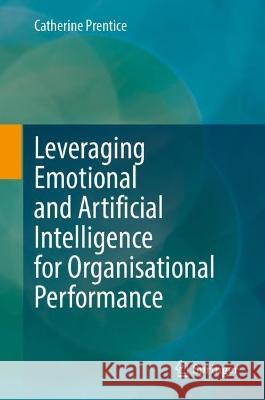
Catherine Prentice
Leveraging Emotional and Artificial Intelligence for Organisational Performance Catherine Prentice 9789819918645 Springer - książkaWidoczna okładka, to zdjęcie poglądowe, a rzeczywista szata graficzna może różnić się od prezentowanej.

Leveraging Emotional and Artificial Intelligence for Organisational Performance

ISBN-13: 9789819918645 / Angielski

Catherine Prentice
cena 605,23
(netto: 576,41 VAT:  5%)

Najniższa cena z 30 dni: 578,30
Termin realizacji zamówienia:
ok. 22 dni roboczych
Bez gwarancji dostawy przed świętami

Darmowa dostawa!
inne wydania

This book takes a fresh stance and views EI and AI as services that are provided by service employees and machines as organisational offerings to customers. As emotional intelligence (EI) and artificial intelligence (AI) have been cited to have broad effects on individuals, businesses and beyond, this book is focused on the organisational context, specifically how they affect employees and customers from a marketing perspective. The stance in this book is consistent with the conceptualisation of a service. This book holds that intelligence in businesses must turn into organisational assets to manifest their values. Further, this book explores this service-dominant logic era, and compared to tangible products, service plays a key role in organisational performance and customer relationship with the organisation. Intelligence exhibited either by human or machine is not a tangible product, but can be utilised as a service to assist employees in performing tasks and delivering services as ll as facilitating business transaction and customer experience.This book is structured as follows. Chapters 2 and 3 demystify emotional and artificial intelligence, from different perspectives, including conceptualisations, the history and evolution of the concepts, how they function and where they can apply to. These discussions help readers understand what exactly these two intelligences are. Chapters 4 and 5 analyse how emotional intelligence is related to employees and customers, respectively, with a focus on service organisations. Chapters 6–8 are dedicated to anatomising AI and how it is operationalised as a service to influence employees and customers. Specifically, viewing AI as a service, Chapter 6 examines the impact of AI service quality and how it is related to employee service quality. Chapter 7 analyses the influence of AI service quality on customers. Based on the discussion in Chapters 6 and 7, Chapter 8 is extended to develop a scale to measure such AI service, named AI service quality.The last three chapters of this book integrate EI and AI to analyse their respective impacts on employees and customers. Chapter 9 proposes EI as a moderator of AI, whereas Chapter 10 proposes AI as a moderator of EI. Chapter 11 employs service profit chain to integrate EI and AI in the chain relationship to understand their effects on both employees and customers. This chapter broadly covers the service industry with a focus on tourism and hospitality sector. The discussion on the impact of EI and AI is complemented with empirical studies conducted in tourism or hospitality context to address their effects in these sectors.


This book takes a fresh stance and views EI and AI as services that are provided by service employees and machines as organisational offerings to customers. As emotional intelligence (EI) and artificial intelligence (AI) have been cited to have broad effects on individuals, businesses and beyond, this book is focused on the organisational context, specifically how they affect employees and customers from a marketing perspective. The stance in this book is consistent with the conceptualisation of a service. This book holds that intelligence in businesses must turn into organisational assets to manifest their values. Further, this book explores this service-dominant logic era, and compared to tangible products, service plays a key role in organisational performance and customer relationship with the organisation. Intelligence exhibited either by human or machine is not a tangible product, but can be utilised as a service to assist employees in performing tasks and delivering services as ll as facilitating business transaction and customer experience.

This book is structured as follows. Chapters 2 and 3 demystify emotional and artificial intelligence, from different perspectives, including conceptualisations, the history and evolution of the concepts, how they function and where they can apply to. These discussions help readers understand what exactly these two intelligences are. Chapters 4 and 5 analyse how emotional intelligence is related to employees and customers, respectively, with a focus on service organisations. Chapters 6–8 are dedicated to anatomising AI and how it is operationalised as a service to influence employees and customers. Specifically, viewing AI as a service, Chapter 6 examines the impact of AI service quality and how it is related to employee service quality. Chapter 7 analyses the influence of AI service quality on customers. Based on the discussion in Chapters 6 and 7, Chapter 8 is extended to develop a scale to measure such AI service, named AI service quality.

The last three chapters of this book integrate EI and AI to analyse their respective impacts on employees and customers. Chapter 9 proposes EI as a moderator of AI, whereas Chapter 10 proposes AI as a moderator of EI. Chapter 11 employs service profit chain to integrate EI and AI in the chain relationship to understand their effects on both employees and customers. This chapter broadly covers the service industry with a focus on tourism and hospitality sector. The discussion on the impact of EI and AI is complemented with empirical studies conducted in tourism or hospitality context to address their effects in these sectors.

Kategorie:
Informatyka, Bazy danych
Kategorie BISAC:
Computers > Artificial Intelligence - General
Business & Economics > Strategia biznesowa
Business & Economics > Information Management
Wydawca:
Springer
Język:
Angielski
ISBN-13:
9789819918645

Introduction.- Demystify emotional intelligence.- Demystify artificial intelligence.- EI and employees.- EI and customers.- AI and employees.- AI and customers.- Development of artificial intelligence service quality scale.- EI, AI and employees.- EI, AI and customers.- EI, AI, employees and customers.


Professor Catherine Prentice is a Professor of Marketing, Head of Marketing Discipline, University of Southern Queensland, Australia, the director of Asia Pacific Association for Gambling Studies and a founding committee of New Silk Road World Forum. Prior to her academic career, Catherine had worked in various industries for over a decade as a business owner of 12 medical clinics, travel agency, restaurants as well as a senior corporate executive at one of the largest corporations in Asia Pacific. She has published extensively in top-tier marketing and management journals. Her main research interests include artificial intelligence, emotional intelligence, service research, consumer psychology, consumer behaviours, branding, services and relationship marketing, and gambling studies. She currently serves as Associate Editor of several Q1 journals and an editorial member of over a dozen of Q1 journals.

This book takes a fresh stance and views EI and AI as services that are provided by service employees and machines as organisational offerings to customers. As emotional intelligence (EI) and artificial intelligence (AI) have been cited to have broad effects on individuals, businesses and beyond, this book is focused on the organisational context, specifically how they affect employees and customers from a marketing perspective. The stance in this book is consistent with the conceptualisation of a service. This book holds that intelligence in businesses must turn into organisational assets to manifest their values. Further, this book explores this service-dominant logic era, and compared to tangible products, service plays a key role in organisational performance and customer relationship with the organisation. Intelligence exhibited either by human or machine is not a tangible product, but can be utilised as a service to assist employees in performing tasks and delivering services as well as facilitating business transaction and customer experience.


This book is structured as follows. Chapters 2 and 3 demystify emotional and artificial intelligence, from different perspectives, including conceptualisations, the history and evolution of the concepts, how they function and where they can apply to. These discussions help readers understand what exactly these two intelligences are. Chapters 4 and 5 analyse how emotional intelligence is related to employees and customers, respectively, with a focus on service organisations. Chapters 6–8 are dedicated to anatomising AI and how it is operationalised as a service to influence employees and customers. Specifically, viewing AI as a service, Chapter 6 examines the impact of AI service quality and how it is related to employee service quality. Chapter 7 analyses the influence of AI service quality on customers. Based on the discussion in Chapters 6 and 7, Chapter 8 is extended to develop a scale to measure such AI service, named AI service quality.

The last three chapters of this book integrate EI and AI to analyse their respective impacts on employees and customers. Chapter 9 proposes EI as a moderator of AI, whereas Chapter 10 proposes AI as a moderator of EI. Chapter 11 employs service profit chain to integrate EI and AI in the chain relationship to understand their effects on both employees and customers. This chapter broadly covers the service industry with a focus on tourism and hospitality sector. The discussion on the impact of EI and AI is complemented with empirical studies conducted in tourism or hospitality context to address their effects in these sectors.




Udostępnij

Facebook - konto krainaksiazek.pl


Opinie o Krainaksiazek.pl na Opineo.pl

Partner Mybenefit

Krainaksiazek.pl w programie rzetelna firma Krainaksiaze.pl - płatności przez paypal

Czytaj nas na:

Facebook - krainaksiazek.pl
  • książki na zamówienie
  • granty
  • książka na prezent
  • kontakt
  • pomoc
  • opinie
  • regulamin
  • polityka prywatności

Zobacz:

  • Księgarnia czeska

  • Wydawnictwo Książkowe Klimaty

1997-2025 DolnySlask.com Agencja Internetowa

© 1997-2022 krainaksiazek.pl
     
KONTAKT | REGULAMIN | POLITYKA PRYWATNOŚCI | USTAWIENIA PRYWATNOŚCI
Zobacz: Księgarnia Czeska | Wydawnictwo Książkowe Klimaty | Mapa strony | Lista autorów
KrainaKsiazek.PL - Księgarnia Internetowa

Polityka prywatnosci - link
Krainaksiazek.pl - płatnośc Przelewy24
Przechowalnia Przechowalnia



