• Wyszukiwanie zaawansowane
  • Kategorie
  • Kategorie BISAC
  • Książki na zamówienie
  • Promocje
  • Granty
  • Książka na prezent
  • Opinie
  • Pomoc
  • Załóż konto
  • Zaloguj się

Lepidoptera and Conservation » książka


zaloguj się | załóż konto
Logo Krainaksiazek.pl

koszyk

konto

szukaj
topmenu
Księgarnia internetowa
Szukaj
Książki na zamówienie
Promocje
Granty
Książka na prezent
Moje konto
Pomoc
 
 
Wyszukiwanie zaawansowane
Pusty koszyk
Bezpłatna dostawa dla zamówień powyżej 20 złBezpłatna dostawa dla zamówień powyżej 20 zł

Kategorie główne

• Nauka
 [2950560]
• Literatura piękna
 [1849509]

  więcej...
• Turystyka
 [71097]
• Informatyka
 [151150]
• Komiksy
 [35848]
• Encyklopedie
 [23178]
• Dziecięca
 [617388]
• Hobby
 [139064]
• AudioBooki
 [1657]
• Literatura faktu
 [228597]
• Muzyka CD
 [383]
• Słowniki
 [2855]
• Inne
 [445295]
• Kalendarze
 [1464]
• Podręczniki
 [167547]
• Poradniki
 [480102]
• Religia
 [510749]
• Czasopisma
 [516]
• Sport
 [61293]
• Sztuka
 [243352]
• CD, DVD, Video
 [3414]
• Technologie
 [219456]
• Zdrowie
 [101002]
• Książkowe Klimaty
 [124]
• Zabawki
 [2311]
• Puzzle, gry
 [3459]
• Literatura w języku ukraińskim
 [254]
• Art. papiernicze i szkolne
 [8079]
Kategorie szczegółowe BISAC

Lepidoptera and Conservation

ISBN-13: 9781118409213 / Angielski / Twarda / 2013 / 280 str.
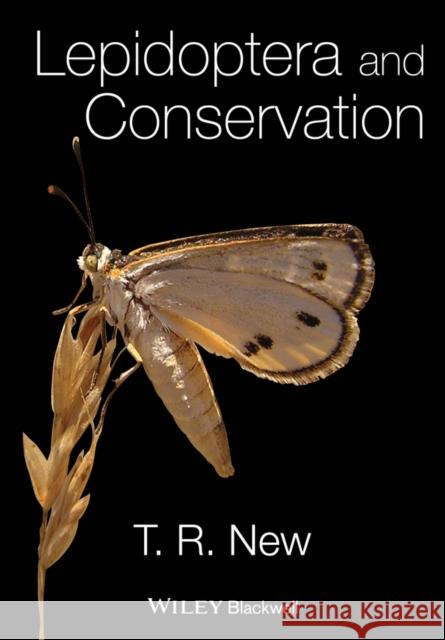
T. R. New
Lepidoptera and Conservation New, T. R. 9781118409213 John Wiley & Sons - książkaWidoczna okładka, to zdjęcie poglądowe, a rzeczywista szata graficzna może różnić się od prezentowanej.

Lepidoptera and Conservation

ISBN-13: 9781118409213 / Angielski / Twarda / 2013 / 280 str.

T. R. New
cena 301,44
(netto: 287,09 VAT:  5%)

Najniższa cena z 30 dni: 299,59
Termin realizacji zamówienia:
ok. 30 dni roboczych
Dostawa w 2026 r.

Darmowa dostawa!

The third in a trilogy of global overviews of conservation of diverse and ecologically important insect groups. The first two were Beetles in Conservation (2010) and Hymenoptera and Conservation (2012). Each has different priorities and emphases that collectively summarise much of the progress and purpose of invertebrate conservation.


Much of the foundation of insect conservation has been built on concerns for Lepidoptera, particularly butterflies as the most popular and best studied of all insect groups. The long-accepted worth of butterflies for conservation has led to elucidation of much of the current rationale of insect species conservation, and to definition and management of their critical resources, with attention to the intensively documented British fauna 'leading the world' in this endeavour.

In Lepidoptera and Conservation, various themes are treated through relevant examples and case histories, and sufficient background given to enable non-specialist access. Intended for not only entomologists but conservation managers and naturalists due to its readable approach to the subject.

The third in a trilogy of global overviews of conservation of diverse and ecologically important groups. The first two were Beetles and Conservation (2010) and Hymenoptera and Conservation (2012).  Each has different priorities and emphases that collectively summarise much of the progress and purpose of invertebrate conservation.

Kategorie:
Technologie
Kategorie BISAC:
Science > Life Sciences - Zoology - Entomology
Wydawca:
John Wiley & Sons
Język:
Angielski
ISBN-13:
9781118409213
Rok wydania:
2013
Ilość stron:
280
Waga:
0.70 kg
Wymiary:
24.64 x 17.02 x 1.78
Oprawa:
Twarda
Wolumenów:
01
Dodatkowe informacje:
Bibliografia

For this reason, it will serve as an important introduction to Lepidoptera conservation for graduate students and biologists, as well as a reference for conservation practitioners.   (The Quarterly Review of Biology, 1 December 2015)

As with New s previous books, this is well written, easy–to–understand, comprehensive, and highly organized, providing a valuable overview of the challenges and goals associated with conservation efforts.  Summing Up: Highly recommended.  Upper–division undergraduates and above; general readers.   (Choice, 1 October 2014)


Preface viii

Acknowledgements xiii

1 Lepidoptera and Invertebrate Conservation 1

Introduction 1

Biological background 3

Sources of information 11

2 The Diversity of Lepidoptera 16

Introduction 16

Distinguishing taxa 19

Drivers of diversity 28

3 Causes for Concern 32

Introduction: Historical background 32

Extinctions and declines 33

4 Support for Flagship Taxa 40

Introduction 40

Community endeavour 41

Flagships 44

5 Studying and Sampling Lepidoptera for Conservation 48

Introduction 48

Sampling methods 50

Interpretation for conservation 64

Priorities amongst species 66

Priority for conservation 71

Species to areas 76

Critical faunas 82

Related approaches 85

6 Population Structures and Dynamics 94

Introduction: Distinguishing populations 94

Metapopulation biology 97

Vulnerability 108

7 Understanding Habitats 117

Introduction: The meaning of habitat 117

Habitat loss 123

8 Communities and Assemblages 142

Introduction: Expanding the context 142

Vulnerable groups 144

Habitats and landscapes 147

Assessing changes 152

Forests 152

Agriculture 153

Urbanisation 155

9 Single Species Studies: Benefits and Limitations 161

Introduction 161

Some case histories 168

The Large blue butterfly, Maculinea arion, in England 169

The Large copper butterfly, Lycaena dispar, in England 170

The Brenton blue butterfly, Orachrysops niobe, in South Africa 172

The Richmond birdwing butterfly, Ornithoptera richmondia, in Australia 173

The Golden sun–moth, Synemon plana, in south–eastern Australia 174

The New Forest burnet moth, Zygaena viciae, in Scotland 175

The Essex emerald moth, Thetidia smaragdaria maritima, in England 176

The Fabulous green sphinx of Kaua i, Tinostoma smaragditis, in Hawai i 177

Blackburn s sphinx moth, Manduca blackburni, in Hawai i 177

Variety of contexts 179

10 Ex Situ Conservation 183

Introduction: Contexts and needs 183

Lepidoptera in captivity 187

Inbreeding 188

Pathogens 189

Translocations and quality control 190

Assisted colonisation 192

11 Lepidoptera and Protective Legislation 197

Introduction 197

Prohibition of collecting 201

12 Defining and Alleviating Threats: Recovery Planning 206

Introduction: The variety of threats to Lepidoptera 206

Alien species 207

Diseases 209

Climate change 210

Exploitation for human need 214

Light pollution 217

Pesticides 218

Habitat manipulation and management 219

Grazing 225

Mowing 228

Coppicing 229

Burning 229

13 Assessing Conservation Progress, Outcomes and Prospects 241

Introduction 241

Monitoring conservation progress 242

Indicators 246

Future priorities and needs 255

Index 260

Tim New is Emeritus Professor in the Department of Zoology, La Trobe University, Melbourne. He has written extensively on insectconservation, including volumes on Hymenoptera (2012) and beetles (2010) both published by Wiley–Blackwell. An entomologist with wide interests in insect conservation, systematics and ecology, he is recognised as one of the leading advocates for the importance of insects in conservation.

Lepidoptera, the butterflies and moths, is the leading flagship group for advancing interest in insect conservation. One of the largest insect orders, with numerous intricate ecological interactions, their long aesthetic attraction to naturalists and collectors has contributed to a unique cumulative historical record of information on diversity, biology, habitat relationships, distribution, and interactions with people. Collectively, this information has ensured that many declines and extinctions of species particularly of butterflies in the northern hemisphere have been brought forcefully and unambiguously to human notice. Both theoretical and practical aspects of their conservation have proliferated in recent decades, and the relevant scientific literature on Lepidoptera ecology and conservation (both peer–reviewed and in unpublished reports) continues to burgeon in extent and complexity.

This book is a global overview of Lepidoptera conservation and its roles in providing lessons for wider insect conservation. It brings together some of the highly scattered information into a synthesis for research workers, conservation managers, naturalists and students, in a manner that assumes little previous knowledge, and provides a substantial list of relevant references for further information. The book emphasises the contrasts between the progress possible for the better–documented northern temperate regions and for the rest of the world, but examples and cases noted demonstrate also the increasing urgency and novel initiatives that continue to develop.

New, T. R. Dr Tim New is Reader and Associate Professor in Zo... więcej >


Udostępnij

Facebook - konto krainaksiazek.pl


Opinie o Krainaksiazek.pl na Opineo.pl

Partner Mybenefit

Krainaksiazek.pl w programie rzetelna firma Krainaksiaze.pl - płatności przez paypal

Czytaj nas na:

Facebook - krainaksiazek.pl
  • książki na zamówienie
  • granty
  • książka na prezent
  • kontakt
  • pomoc
  • opinie
  • regulamin
  • polityka prywatności

Zobacz:

  • Księgarnia czeska

  • Wydawnictwo Książkowe Klimaty

1997-2025 DolnySlask.com Agencja Internetowa

© 1997-2022 krainaksiazek.pl
     
KONTAKT | REGULAMIN | POLITYKA PRYWATNOŚCI | USTAWIENIA PRYWATNOŚCI
Zobacz: Księgarnia Czeska | Wydawnictwo Książkowe Klimaty | Mapa strony | Lista autorów
KrainaKsiazek.PL - Księgarnia Internetowa

Polityka prywatnosci - link
Krainaksiazek.pl - płatnośc Przelewy24
Przechowalnia Przechowalnia




