• Wyszukiwanie zaawansowane
  • Kategorie
  • Kategorie BISAC
  • Książki na zamówienie
  • Promocje
  • Granty
  • Książka na prezent
  • Opinie
  • Pomoc
  • Załóż konto
  • Zaloguj się

Learning Through Practice: Models, Traditions, Orientations and Approaches » książka


zaloguj się | załóż konto
Logo Krainaksiazek.pl

koszyk

konto

szukaj
topmenu
Księgarnia internetowa
Szukaj
Książki na zamówienie
Promocje
Granty
Książka na prezent
Moje konto
Pomoc
 
 
Wyszukiwanie zaawansowane
Pusty koszyk
Bezpłatna dostawa dla zamówień powyżej 20 złBezpłatna dostawa dla zamówień powyżej 20 zł

Kategorie główne

• Nauka
 [2946600]
• Literatura piękna
 [1856966]

  więcej...
• Turystyka
 [72221]
• Informatyka
 [151456]
• Komiksy
 [35826]
• Encyklopedie
 [23190]
• Dziecięca
 [619653]
• Hobby
 [140543]
• AudioBooki
 [1577]
• Literatura faktu
 [228355]
• Muzyka CD
 [410]
• Słowniki
 [2874]
• Inne
 [445822]
• Kalendarze
 [1744]
• Podręczniki
 [167141]
• Poradniki
 [482898]
• Religia
 [510455]
• Czasopisma
 [526]
• Sport
 [61590]
• Sztuka
 [243598]
• CD, DVD, Video
 [3423]
• Technologie
 [219201]
• Zdrowie
 [101638]
• Książkowe Klimaty
 [124]
• Zabawki
 [2473]
• Puzzle, gry
 [3898]
• Literatura w języku ukraińskim
 [254]
• Art. papiernicze i szkolne
 [8170]
Kategorie szczegółowe BISAC

Learning Through Practice: Models, Traditions, Orientations and Approaches

ISBN-13: 9789048139385 / Angielski / Twarda / 2010 / 288 str.
Stephen Billett
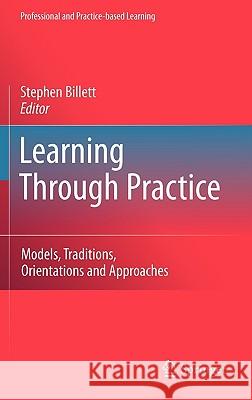
Learning Through Practice: Models, Traditions, Orientations and Approaches Billett, Stephen 9789048139385 Springer - książkaWidoczna okładka, to zdjęcie poglądowe, a rzeczywista szata graficzna może różnić się od prezentowanej.

Learning Through Practice: Models, Traditions, Orientations and Approaches

ISBN-13: 9789048139385 / Angielski / Twarda / 2010 / 288 str.

Stephen Billett
cena 685,93 zł
(netto: 653,27 VAT:  5%)

Najniższa cena z 30 dni: 616,85 zł
Termin realizacji zamówienia:
ok. 22 dni roboczych
Bez gwarancji dostawy przed świętami

Darmowa dostawa!
inne wydania

Practice-based learning-the kind of education that comes from experiencing real work in real situations-has always been a prerequisite to qualification in professions such as medicine. However, there is growing interest in how practice-based models of learning can assist the initial preparation for and further development of skills for a wider range of occupations. Rather than being seen as a tool of first-time training, it is now viewed as a potentially important facet of professional development and life-long learning. This book provides perspectives on practice-based learning from a range of disciplines and fields of work. The collection here draws on a wide spectrum of perspectives to illustrate as well as to critically appraise approaches to practice-based learning. The book's two sections first explore the conceptual foundations of learning through practice, and then provide detailed examples of its implementation. Long-standing practice-based approaches to learning have been used in many professions and trades. Indeed, admission to the trades and major professions (e.g. medicine, law, accountancy) can only be realised after completing extended periods of practice in authentic practice settings. However, the growing contemporary interest in using practice-based learning in more extensive contexts has arisen from concerns about the direct employability of graduates and the increasing focus on occupation-specific courses in both vocations and higher education. It is an especially urgent issue in an era of critical skill shortages, rapidly transforming work requirements and an aging workforce combined with a looming shortage of new workforce entrants. We must better understand how existing models of practice-based learning are enacted in order to identify how they can be applied to different kinds of employment and workplaces. The contributions to this volume explore ways in which learning through practice can be conceptualised, enacted, and appraised through an analysis of the traditions, purposes, and processes that support this learning-including curriculum models and pedagogic practices.


Kategorie:
Podręczniki
Kategorie BISAC:
Education > Counseling - Career Development
Education > Adult & Continuing Education
Education > Teaching - General
Wydawca:
Springer
Seria wydawnicza:
Professional and Practice-Based Learning
Język:
Angielski
ISBN-13:
9789048139385
Rok wydania:
2010
Wydanie:
2010
Numer serii:
000398521
Ilość stron:
288
Waga:
0.61 kg
Wymiary:
23.39 x 15.6 x 1.91
Oprawa:
Twarda
Wolumenów:
01
Dodatkowe informacje:
Wydanie ilustrowane

From the reviews:

"Aim of this book is to provide an overview of how learning through practice can be conceptionalised, enacted and appraised. ... Those who have tended to focus on teacher education as an example of workplace learning will find wide range of contexts discussed here to be stimulating." (Michael Hammond, Teacher Development, October, 2011)

Series Foreword Series Editors’ Foreword Contents Contributors 1. Learning through Practice 1.1 Learning through Practice 1.2 Emerging and Growing Interest in Learning through Practice 1.3 Approaches to and Models of Learning through Practice 1.4 Section One: Conceptual Premises of Learning through Practice 1.5 Section Two: Instances of Practice 2. Learning in Praxis, Learning for Praxis 2.1 Introduction 2.2 Praxis and Theory 2.2.1 A Historical Perspective 2.2.2 A Phenomenological Perspective 2.3 Learning at/for Work: A Case from Fish Culture 2.4 Coda 3. Knowledge, Working Practices, and Learning 3.1 My Perspective on Knowledge 3.2 Learning Trajectories 3.3 The Construction of Professional Practices in the Workplace 3.4 How do People Learn at Work? 3.5 Transfer of Knowledge Between Contexts 3.6 Factors Affecting Learning at Work 3.7 The Role of the Manager in Supporting Learning 4. The Practices of Learning through Occupations 4.1 Learning for and through Practice 4.2 Historical Conceptions of Learning through Practice and their Worth 4.3 Participatory Practice: A Conception of Learning through Practice 4.4 Individuals’ Engagement, Agency, and Subjectivity Invitational Qualities 4.5 Intersubjectivity, Appropriation, and Extending Knowledge 4.6 Participation and Learning 5. Objectual Practice and Learning in Professional Work 5.1 Professional Work and Learning 5.2 New Contexts for Professional Work 5.3 Object-related Learning 5.4 The Study 5.5 Dynamics of Objectual Practice in Computer Engineering 5.5.1 Interplay between Explorative and Confirmative Practice 5.5.2 Linking Practitioners with Wider Knowledge Communities 5.5.3 Mediating Participation along Multiple Timescales 5.5.4 Facilitating Reflexive Learning 5.6 Concluding Remarks 6. Learning through and about Practice: A Lifeworld Perspective 6.1 A Need to Reexamine Learning through Practice 6.2 Historical Development of Lifeworld Perspective 6.3 Ways of Being in Workplace Contexts 6.4 Learning Ways of Being in Higher Education Contexts 6.5 Learning from a Lifeworld Perspective: Developing Ways of Being 7. Conceptualising Professional Identification as Flexibility, Stability and Ambivalence 7.1. Learning and Professional Identification as Life Politics 7.1.1 Flexibility – Stability – Ambivalence 7.2 Empirical Data 7.3 Becoming an Engineer or a Physician 7.3.1 Becoming an Engineer 7.3.2 Becoming a Physician 7.4 Being an Engineer or a Physician 7.4.1 Identification as a Flexible Strategy or a Permanent State 7.4.2 Engineer – Confined to Workplace, Occupation, and Hours 7.4.3 Physician – Profession Associated with Personality 7.5 Flexibility, Stability, and Ambivalence in Practice 7.6 Work, Life Politics, and Sustainable Life 7.6.1 Lifelong Qualification as Exclusion 7.6.2 Learning and Professional Identification as Life Politics 7.7 Concluding Remarks 8. Developing Vocational Practice and Social Capital in Jewellery 8.1 Introduction 8.2 Workplace and Practice-based Learning 8.3 The Development of Work Placement Scheme in the Jewellery Industry 8.4 The Development of Vocational Practice in the Jewellery Industry 8.5 Practice-based Learning: Epistemic and Pedagogic Issues 8.6 Conclusion 9. Guidance as an Interactional Accomplishment Practice-based Learning within the Swiss VET System 9.1 Introduction 9.2 Apprenticeship in the Swiss VET System 9.3 Researching Vocational Learning and Language-in-Interaction 9.4 An Interactional Approach to Guidance in the Workplace 9.4.1 Spontaneous Guidance 9.4.2 Requested Guidance 9.4.3 Distributed Guidance 9.4.4 Denied Guidance 9.5 Concluding Remarks and Practical Implications 10. Cooperative Education: Integrating Classroom and Workplace Learning 10.1 Cooperative Education as a Model of Practice-based Learning 10.2 The Development of Cooperative Education 10.3 The Organisational Milieu of Cooperative Education 10.4 Theorising Learning in Cooperative Education 10.5 Integrating Classroom and Workplace Learning 10.6 The Real Value of Cooperative Education 11. Individual Learning Paths of Employees in the Context of Social Networks 11.1 Introduction 11.2 Viewing the Organisation as a Network of Actors 11.3 Learning-Relevant Experiences Gained from the Work Network 11.3.1 How Actors Organise Work: A Cycle 11.3.2 Four Ideal Types of Work Process 11.3.3 Three Dimensions in Work-Network Structures 11.4 Learning-Relevant Experiences Gained in the Learning Network 11.4.1 Actors Organise Learning Networks: A Cycle 11.4.2 Actors Create Learning Programmes 11.4.3 Four Ideal Types of Learning Network 11.4.4 The Importance of Actors’ Action Theories 11.5 How do Employees create their Individual Learning Paths? 11.6 Learning, Networks, Structure, and Agency 12. Apprenticeships: What happens in On-the-Job Training (OJT)? 12.1 Apprenticeship and Learning 12.1.1 Institutional History of Apprenticeship Programmes in the US 12.2 Methodology of this Study 12.3 The Physical Context of the Classroom as compared to the Field 12.4 On the Job: The Worksite itself as Resource for Learning 12.5 On the Job: Tools and Equipment as Resources for Learning 12.6 Learning Through Interaction without Master-Apprentice Relationships 12.7 Learning and the ‘Bottom Line’ 12.8 What can go Wrong 12.9 Apprenticeship Learning as Reproduction of the Economic Viability 12.10 Conclusion 13. Interactive Research as a Strategy for Practice-based Learninge 13.1 Introduction 13.2 Towards a Model of Competence Development 13.3 Cultural Context of Teachers’ Learning and Professional Growth 13.4 Interactive Research 13.5 The Interactive Processes – The ‘Quality Case’ 13.5.1 Local Schools’ Collective Competence Development 13.6 The Practice-based Model 13.6.1 Identifying Practice 13.6.2 Reflective Transformation 13.6.3 Joint Construction and Institutionalisation of Tools 13.6.4 Professional Growth and Remaking of Practice 14. The Relationship between Coach and Coachees 14.1 Coaching 14.1.1 The Coaching Relationship 14.2 Coachees’ Accounts of the Coaching Relationship 14.3 Conclusion: Crucial Aspects of an Effective Coaching Relationship 15. The Development of Airline Pilot Skills through Simulated Practice 15.1 Pilot Training 15.2 Early Flight and Pilot Training 15.3 Pilot Education in the Jet Age 15.4 Influences on Major Aviation Training 15.4.1 Crew Resource Management and Nontechnical Skills 15.4.2 Technology 15.4.3 Simulation 15.5 Pilot Training into the Future 15.6 Practice-based Learning in Aviation

Practice-based learning—the kind of education that comes from experiencing real work in real situations—has always been a prerequisite to qualification in professions such as medicine. However, there is growing interest in how practice-based models of learning can assist the initial preparation for and further development of skills for a wider range of occupations. Rather than being seen as a tool of first-time training, it is now viewed as a potentially important facet of professional development and life-long learning. This book provides perspectives on practice-based learning from a range of disciplines and fields of work. The collection here draws on a wide spectrum of perspectives to illustrate as well as to critically appraise approaches to practice-based learning. The book’s two sections first explore the conceptual foundations of learning through practice, and then provide detailed examples of its implementation. Long-standing practice-based approaches to learning have been used in many professions and trades. Indeed, admission to the trades and major professions (e.g. medicine, law, accountancy) can only be realised after completing extended periods of practice in authentic practice settings. However, the growing contemporary interest in using practice-based learning in more extensive contexts has arisen from concerns about the direct employability of graduates and the increasing focus on occupation-specific courses in both vocations and higher education. It is an especially urgent issue in an era of critical skill shortages, rapidly transforming work requirements and an aging workforce combined with a looming shortage of new workforce entrants. We must better understand how existing models of practice-based learning are enacted in order to identify how they can be applied to different kinds of employment and workplaces. The contributions to this volume explore ways in which learning through practice can be conceptualised, enacted, and appraised through an analysis of the traditions, purposes, and processes that support this learning—including curriculum models and pedagogic practices.



Udostępnij

Facebook - konto krainaksiazek.pl


Opinie o Krainaksiazek.pl na Opineo.pl

Partner Mybenefit

Krainaksiazek.pl w programie rzetelna firma Krainaksiaze.pl - płatności przez paypal

Czytaj nas na:

Facebook - krainaksiazek.pl
  • książki na zamówienie
  • granty
  • książka na prezent
  • kontakt
  • pomoc
  • opinie
  • regulamin
  • polityka prywatności

Zobacz:

  • Księgarnia czeska

  • Wydawnictwo Książkowe Klimaty

1997-2025 DolnySlask.com Agencja Internetowa

© 1997-2022 krainaksiazek.pl
     
KONTAKT | REGULAMIN | POLITYKA PRYWATNOŚCI | USTAWIENIA PRYWATNOŚCI
Zobacz: Księgarnia Czeska | Wydawnictwo Książkowe Klimaty | Mapa strony | Lista autorów
KrainaKsiazek.PL - Księgarnia Internetowa

Polityka prywatnosci - link
Krainaksiazek.pl - płatnośc Przelewy24
Przechowalnia Przechowalnia




