• Wyszukiwanie zaawansowane
  • Kategorie
  • Kategorie BISAC
  • Książki na zamówienie
  • Promocje
  • Granty
  • Książka na prezent
  • Opinie
  • Pomoc
  • Załóż konto
  • Zaloguj się

Learning, Teaching, and Assessment Methods for Contemporary Learners: Pedagogy for the Digital Generation » książka


zaloguj się | załóż konto
Logo Krainaksiazek.pl

koszyk

konto

szukaj
topmenu
Księgarnia internetowa
Szukaj
Książki na zamówienie
Promocje
Granty
Książka na prezent
Moje konto
Pomoc
 
 
Wyszukiwanie zaawansowane
Pusty koszyk
Bezpłatna dostawa dla zamówień powyżej 20 złBezpłatna dostawa dla zamówień powyżej 20 zł

Kategorie główne

• Nauka
 [2949965]
• Literatura piękna
 [1857847]

  więcej...
• Turystyka
 [70818]
• Informatyka
 [151303]
• Komiksy
 [35733]
• Encyklopedie
 [23180]
• Dziecięca
 [617748]
• Hobby
 [139972]
• AudioBooki
 [1650]
• Literatura faktu
 [228361]
• Muzyka CD
 [398]
• Słowniki
 [2862]
• Inne
 [444732]
• Kalendarze
 [1620]
• Podręczniki
 [167233]
• Poradniki
 [482388]
• Religia
 [509867]
• Czasopisma
 [533]
• Sport
 [61361]
• Sztuka
 [243125]
• CD, DVD, Video
 [3451]
• Technologie
 [219309]
• Zdrowie
 [101347]
• Książkowe Klimaty
 [123]
• Zabawki
 [2362]
• Puzzle, gry
 [3791]
• Literatura w języku ukraińskim
 [253]
• Art. papiernicze i szkolne
 [7933]
Kategorie szczegółowe BISAC

Learning, Teaching, and Assessment Methods for Contemporary Learners: Pedagogy for the Digital Generation

ISBN-13: 9789811967337 / Angielski / Miękka / 2022 / 342 str.
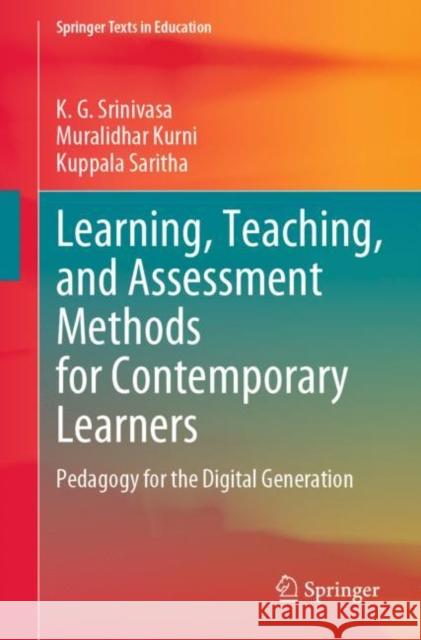
K. G. Srinivasa; Muralidhar Kurni; Kuppala Saritha
Learning, Teaching, and Assessment Methods for Contemporary Learners: Pedagogy for the Digital Generation K. G. Srinivasa Muralidhar Kurni Kuppala Saritha 9789811967337 Springer - książkaWidoczna okładka, to zdjęcie poglądowe, a rzeczywista szata graficzna może różnić się od prezentowanej.

Learning, Teaching, and Assessment Methods for Contemporary Learners: Pedagogy for the Digital Generation

ISBN-13: 9789811967337 / Angielski / Miękka / 2022 / 342 str.

K. G. Srinivasa; Muralidhar Kurni; Kuppala Saritha
cena 403,47 zł
(netto: 384,26 VAT:  5%)

Najniższa cena z 30 dni: 346,96 zł
Termin realizacji zamówienia:
ok. 22 dni roboczych
Bez gwarancji dostawy przed świętami

Darmowa dostawa!

This textbook tackles the matter of contemporary learners’ needs, and introduces modern learning, teaching, and assessment methods. It provides a deeper understanding of these methods so that the students and teachers can create teaching and learning opportunities for themselves and others. It explores the meaning of ‘pedagogy’, why it is essential, and how pedagogy has evolved to take 21st-century skills and learning into account. This textbook showcases various modern learning, teaching, and assessment methods for contemporary learners in an increasingly digital environment. Each chapter presents insights and case studies that show how such modern methods can be applied to classrooms, and how they can support the existing curriculum. It shows students, educators, and researchers alike how to effectively make sense of and use modern learning, teaching, and assessment methods in everyday practice.


This textbook tackles the matter of contemporary learners’ needs, and introduces modern learning, teaching, and assessment methods. It provides a deeper understanding of these methods so that the students and teachers can create teaching and learning opportunities for themselves and others. It explores the meaning of ‘pedagogy’, why it is essential, and how pedagogy has evolved to take 21st-century skills and learning into account. This textbook showcases various modern learning, teaching, and assessment methods for contemporary learners in an increasingly digital environment. Each chapter presents insights and case studies that show how such modern methods can be applied to classrooms, and how they can support the existing curriculum. It shows students, educators, and researchers alike how to effectively make sense of and use modern learning, teaching, and assessment methods in everyday practice.

Kategorie:
Podręczniki
Kategorie BISAC:
Education > Professional Development
Education > Teacher Training & Certification
Education > Testing & Measurement
Wydawca:
Springer
Seria wydawnicza:
Springer Texts in Education
Język:
Angielski
ISBN-13:
9789811967337
Rok wydania:
2022
Dostępne języki:
Numer serii:
000794579
Ilość stron:
342
Waga:
0.50 kg
Wymiary:
23.39 x 15.6 x 1.91
Oprawa:
Miękka
Dodatkowe informacje:
Wydanie ilustrowane

Chapter 1. Introduction
     1.1. What is Pedagogy?
     1.2. Why Pedagogy is Important?
     1.3. Different Types of Pedagogies
     1.4. How is Pedagogy Changing?
     1.5. How does pedagogy impact the learner?
     1.6. Modern learning, teaching, and assessment methods 
1.6.1. Crossover Learning
1.6.2. Learning Through Collaborative Argumentation
1.6.3. Incidental Learning
1.6.4. Context-Based Learning
1.6.5. Computational Thinking
1.6.6. Learning by Doing
1.6.7. Embodied Learning
1.6.8. Adaptive Teaching/Learning
1.6.9. Analytics of Emotions
1.6.10. Stealth Assessment
Chapter 2. Crossover Learning
     2.1. What is Crossover Learning? 
     2.2. Why is it good to implement?
     2.3. Why is Crossover Learning Working in the Classroom?
     2.4. How to implement it?
     2.5. Limitations / Major Barriers and Disadvantages of adopting Crossover Learning
     2.6. Case Studies 

Chapter 3. Learning Through Collaborative Argumentation
     3.1. What is Collaborative Argumentation?
     3.2. Benefits of Argumentation
     3.3. Techniques for Effective Collaborative Argumentation
     3.4. Preparing Classroom Environments for Collaborative Argumentation
     3.5. Case Studies

Chapter 4. Incidental Learning
     4.1. What is Incidental Learning?
     4.2. What is the Impact of Incidental Learning?
     4.3. How to Engage with Incidental Teaching?
     4.4. Incidental Learning in the Classroom
     4.5. Incidental Learning and Intentional Learning
     4.6. Informal and Intentional Learning
     4.7. Case Studies 

Chapter 5. Context-Based Learning
     5.1. What is Context-Based Learning?
     5.2. Why Context-Based Learning?
     5.3. Context-Based Learning and Competence
     5.4. Impact on Students’ Learning
     5.5. Creating Context-Based Learning Environments
     5.6. Connecting Concepts and Contexts
     5.7. Selection of Contexts
     5.8. Assessment in context-based teaching and learning
     5.9. Case Studies

Chapter 6. Computational Thinking
     6.1. What is Computational Thinking? 
     6.2. Why Computational Thinking is important?
     6.3. Key Skills for Computational thinking
     6.4. Six Principles of Computational Thinking
     6.5. Learning Strategies for Developing Computational Thinking Skills
     6.6. Computational thinking in practice
     6.7. Thinking computationally
     6.8. Assessment of computational thinking
     6.9. Case Studies

Chapter 7. Learning by Doing
     7.1. What is Learning-by-doing? 
     7.2. Why Learning-by-doing is important? / Why is Learning-by-doing effective?
     7.3. What We Learn When We Learn by Doing
     7.4. How to do it? / Learning Styles
     7.5. Learning-by-doing examples
     7.6. Challenges of Learning-by-doing
     7.7. Case Studies

Chapter 8. Embodied Learning
     8.1. What is Embodied Learning?
     8.2. The Role of Embodiment in Learning
                  8.3. Principles of embodied learning
                  8.4. How to bring in the concept of Embodied Learning in Classrooms?
                  8.5. How Can Embodied Learning Help Students?
                  8.6. Case Studies

Chapter 9. Adaptive Teaching/Learning
     9.1. What is Adaptive Teaching/Learning
     9.2. Technology and Methodology
     9.3. Implementations
     9.4. Development Tools
     9.5. How Adaptive Learning is Changing Traditional Teaching Methods?
     9.6. How to Adapt Your Teaching Strategies to Student Needs?
     9.7. How to Apply Adaptive Learning in Practice?
     9.8. Benefits of Adaptive Learning
    9.9. Adaptive Learning Is the Future of Online Education
    9.10. Case Studies

Chapter 10. Analytics of Emotions
     10.1. What is Emotional Analytics, and Why is it Important?
     10.2. How Emotional Analytics works
     10.3. How Emotions Affect Learning and Teaching
     10.4. Uses of emotions analytics
     10.5. Impact of emotions analytics
     10.6. Emotion Analytics Techniques
     10.7. Emotion Analytics Applications
     10.8. Emotional Learning Analytics
     10.9. Case Studies

Chapter 11. Stealth Assessment
                   11.1. Problems with Current Assessments
                   11.2. What is Stealth Assessment?
                   11.3. Is Stealth Assessment Practical?
                   11.4. Stealth assessment in the classroom
                   11.5. Stealth assessment and Evidence-centered design
                   11.6. Best Practices
                   11.7. Case Studies
     
Chapter-12: Pedagogy for E-learning
12.1. Concept and Definition of E-learning
12.2. Types of E-Learning
12.3. E-Learning contributions to Education
12.4. Pros and Cons of E-Learning
12.5. Modern e-learning pedagogy
12.6. Models of E-learning and teaching
12.7. Case Study

Chapter 13. Harnessing the Power of AI to Education
13.1. Introduction
13.2. The need for AI in Education
13.3. The Role of AI in Education
13.4. The Impact of AI on Education
13.5. Technologies for AI in Education
13.6. Best practices for incorporating AI in Education
13.7. Applications of AI in Education
13.8. Pros and Cons of Using AI in Education
13.9. AI based Educational Tools
13.10. Usage of AI in Education – Present and Future
13.11. The Future of Education is AI-Assisted, not AI-Led
13.12. Case Study

Dr Srinivasa K G is a Professor in the Department of Data Science and Artificial Intelligence at the International Institute of Information Technology, Naya Raipur, India. He is the recipient of a number of awards for his scholarly work, has published more than 150 research papers at international conferences and journals, and has authored eight textbooks. Dr Srinivasa has been a visiting researcher at several universities abroad, is the Principal Investigator for a number of funded projects, and is the senior member of the Institute of Electrical and Electronics Engineers (IEEE) and Association for Computing Machinery (ACM). His research areas include data mining, machine learning, and cloud computing, innovative teaching practices in engineering education, pedagogy, outcomes-based education, and teaching philosophy.
 
Dr Muralidhar Kurni is Associate Professor in the department of CSE at Anantha Lakshmi Institute of Technology & Sciences, Ananthapuramu, India. He received his Ph.D. in Computer Science and Engineering from JNTUA, Ananthapuram, in 2021. He is a senior member of IEEE and a professional member of ACM. His research interests include Learning Analytics, Learning Strategies, Digital Pedagogy, Design Thinking, Pedagogy refinement & Engineering Education Research.
 
Dr Saritha K is Associate Professor, Department of Computer Science Engineering, Presidency University, Bangalore, India. Previously she worked as Principal, S.V. Degree & P.G. College, Anantapur. She has conducted several skill development activities for students at Madanapalle Institute of Technology & Science, and two of the student applications developed during the period were selected as 'Best Applications' by the Andhra Pradesh State Government. Dr Saritha K has more than twenty years of teaching experience and has presented more than 15 papers at various national & international conferences and in journals. Her research interests are digital pedagogy, design thinking, pedagogy refinement, data mining, and machine learning.

This textbook tackles the matter of contemporary learners’ needs, and introduces modern learning, teaching, and assessment methods. It provides a deeper understanding of these methods so that the students and teachers can create teaching and learning opportunities for themselves and others. It explores the meaning of ‘pedagogy’, why it is essential, and how pedagogy has evolved to take 21st-century skills and learning into account. This textbook showcases various modern learning, teaching, and assessment methods for contemporary learners in an increasingly digital environment. Each chapter presents insights and case studies that show how such modern methods can be applied to classrooms, and how they can support the existing curriculum. It shows students, educators, and researchers alike how to effectively make sense of and use modern learning, teaching, and assessment methods in everyday practice.




Udostępnij

Facebook - konto krainaksiazek.pl


Opinie o Krainaksiazek.pl na Opineo.pl

Partner Mybenefit

Krainaksiazek.pl w programie rzetelna firma Krainaksiaze.pl - płatności przez paypal

Czytaj nas na:

Facebook - krainaksiazek.pl
  • książki na zamówienie
  • granty
  • książka na prezent
  • kontakt
  • pomoc
  • opinie
  • regulamin
  • polityka prywatności

Zobacz:

  • Księgarnia czeska

  • Wydawnictwo Książkowe Klimaty

1997-2025 DolnySlask.com Agencja Internetowa

© 1997-2022 krainaksiazek.pl
     
KONTAKT | REGULAMIN | POLITYKA PRYWATNOŚCI | USTAWIENIA PRYWATNOŚCI
Zobacz: Księgarnia Czeska | Wydawnictwo Książkowe Klimaty | Mapa strony | Lista autorów
KrainaKsiazek.PL - Księgarnia Internetowa

Polityka prywatnosci - link
Krainaksiazek.pl - płatnośc Przelewy24
Przechowalnia Przechowalnia




