• Wyszukiwanie zaawansowane
  • Kategorie
  • Kategorie BISAC
  • Książki na zamówienie
  • Promocje
  • Granty
  • Książka na prezent
  • Opinie
  • Pomoc
  • Załóż konto
  • Zaloguj się

Learn Motivation Postsecondary Classroom » książka


zaloguj się | załóż konto
Logo Krainaksiazek.pl

koszyk

konto

szukaj
topmenu
Księgarnia internetowa
Szukaj
Książki na zamówienie
Promocje
Granty
Książka na prezent
Moje konto
Pomoc
 
 
Wyszukiwanie zaawansowane
Pusty koszyk
Bezpłatna dostawa dla zamówień powyżej 20 złBezpłatna dostawa dla zamówień powyżej 20 zł

Kategorie główne

• Nauka
 [2948695]
• Literatura piękna
 [1824038]

  więcej...
• Turystyka
 [70868]
• Informatyka
 [151073]
• Komiksy
 [35227]
• Encyklopedie
 [23181]
• Dziecięca
 [621575]
• Hobby
 [138961]
• AudioBooki
 [1642]
• Literatura faktu
 [228651]
• Muzyka CD
 [371]
• Słowniki
 [2933]
• Inne
 [445341]
• Kalendarze
 [1243]
• Podręczniki
 [164416]
• Poradniki
 [479493]
• Religia
 [510449]
• Czasopisma
 [502]
• Sport
 [61384]
• Sztuka
 [243086]
• CD, DVD, Video
 [3417]
• Technologie
 [219673]
• Zdrowie
 [100865]
• Książkowe Klimaty
 [124]
• Zabawki
 [2168]
• Puzzle, gry
 [3372]
• Literatura w języku ukraińskim
 [260]
• Art. papiernicze i szkolne
 [7838]
Kategorie szczegółowe BISAC

Learn Motivation Postsecondary Classroom

ISBN-13: 9781882982592 / Angielski / Twarda / 2007 / 280 str.
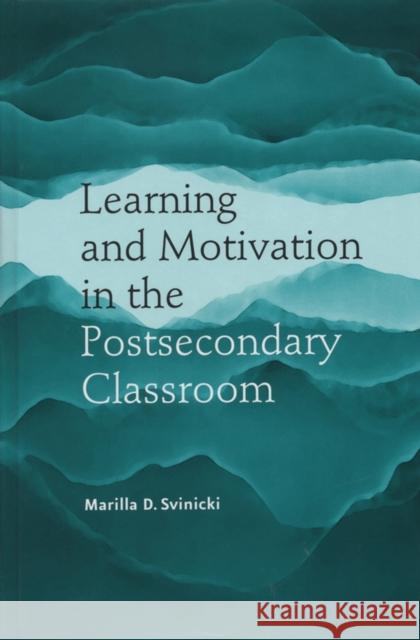
Marilla D. Svinicki
Learn Motivation Postsecondary Classroom Svinicki, Marilla D. 9781882982592 Anker Publishing Company, Incorporated - książkaWidoczna okładka, to zdjęcie poglądowe, a rzeczywista szata graficzna może różnić się od prezentowanej.

Learn Motivation Postsecondary Classroom

ISBN-13: 9781882982592 / Angielski / Twarda / 2007 / 280 str.

Marilla D. Svinicki
cena 180,02
(netto: 171,45 VAT:  5%)

Najniższa cena z 30 dni: 177,82
Termin realizacji zamówienia:
ok. 30 dni roboczych.

Darmowa dostawa!

While the annals of educational psychology and scholarship of learning theory are vast, this book distills the most important material that the higher education faculty need, translating it into clear language, and rendering from it examples that can be readily applied in the college classroom. Understanding theory can enrich one's own teaching by increasing efficiency and effectiveness of both the instructor and the student, promoting creativity, encouraging self-reflection and professional development, and advancing classroom research. Finally, a good grounding in theory can help faculty navigate when a student is having difficulty. This clearly written book outlines the learning theories: cognitive, concept learning, social learning, and constructivist, as well as the motivation theories: expectancy value, attribution, achievement goal orientation, and self-determination. It then delves deeper into each one, showing how to develop rich, meaningful instruction so that students master basic information and move into deeper levels of learning.


Kategorie:
Nauka, Pedagogika i oświata
Kategorie BISAC:
Education > Classroom Management
Education > Educational Psychology
Education > Schools - Levels - Higher
Wydawca:
Anker Publishing Company, Incorporated
Język:
Angielski
ISBN-13:
9781882982592
Rok wydania:
2007
Ilość stron:
280
Waga:
0.50 kg
Wymiary:
23.65 x 16.03 x 1.96
Oprawa:
Twarda
Wolumenów:
01
Dodatkowe informacje:
Bibliografia
Wydanie ilustrowane

Author Marilla D. Svinicki writes that she intends Learning and Motivation in the Postsecondary Classroom to function as a practical resource for postsecondary instructors to help them better understand how students learn and what difficulties students face in trying to master material. Svinicki, who has a PhD in Psychology and specializes in how learning and motivation are translated into teaching practice, also states that she hopes the book will serve as a bridge between the theoretical community of educational psychology and the college classroom.
Toward this end, she organizes Learning almost like a handbook. Chapters are arranged in a straightforward, easily accessible manner, each unit building on information presented. She begins with an explanation of cognitive learning theory and how instructors can gear lessons to assist students with mastering basic information. She then goes on to discuss how instructors may support students to deeper levels of understanding and involvement with the material. She also makes a point that material is only useful to students when it can be applied outside the classroom and offers a chapter related to community and service–oriented learning.
Additionally, Svinicki addresses new approaches to higher education beyond traditional pedagogical approaches and recommends strategies to make students responsible and independent ­ what she calls "self–regulating learners." She concludes the book with ways instructors can design material to address individual learning styles.
While Svinicki succeeds in her overall objectives, one inherent drawback in this style of book regarding application of educational theories in the classroom is that it is a discussion of these theories rather than a direct application of them. She offers examples and suggestions, but the book would be more practical in a "hands–on," interactive environment such as a workshop or retreat where instructors would be able to roll play, practice, exchange ideas and information. The text would also make an excellent supplement to an education course geared to majors specializing in secondary education. Svinicki offers an easy to follow, practical road map for instructors in their quest to facilitate a classroom of students with varying levels of interest and capability.
James Driggers, UNC Asheville ( UNC′s Effective Teaching Website, June 2004)

Dedication.

About the Author.

Preface.

1 My Attempt to Motivate You to Learn About Learning.

2 Helping Students Learn the Content.

3 Helping Students Understand.

4 Helping Students Develop Skills, Including Intellectual Skills.

5 Helping Students Retain and Use What They′ve Learned in Other Settings.

6 Helping Students Help Themselves.

7 Motivating Students to Learn.

8 What to Do About Individual Differences in Learning.

9 Ptting It All Together.

Appendix: The Theories in a Nutshell.

Bibliography.

Index.

Marilla D. Svinicki has a Ph.D. in psychology from the University of Colorado at Boulder and is director of the Center for Teaching Effectiveness and associate professor of educational psychology at the University of Texas at Austin. She is also the editor in chief of the series New Directions for Teaching and Learning. She has published two edited books and many chapters on the topic of learning in postsecondary classrooms. Her teaching and research interests are in the areas of learning and motivation as translated into teaching practice.

While there is much available research and theory about learning and motivation, until now there has been no resource that translates esoteric findings into everyday language and examples that can be readily applied in college classrooms. This book brings the findings and theories of educational psychology to classroom faculty, helping them to adopt a scholarly approach to understanding their students′ learning problems.

Nine clearly written chapters demonstrate how learning theories can be successfully adapted to the classroom, and a useful appendix succinctly outlines the theories: cognitive, concept learning, social learning, constructivism, and motivational.

  • Chapter 1 presents an overview and purposes of learning and motivation theories for postsecondary settings, and discusses the value of being a reflective practitioner and grounding instructional decisions in research and theory about learning.
  • Chapter 2 examines the findings from the cognitive theory of learning and how instruction can be developed to help students master basic information.
  • Chapter 3 discusses teaching for understanding. To be able to really use information they are learning, students have to understand it at more than a surface level.
  • Chapter 4 explores social learning theory to introduce ways of helping students master new skills.
  • Chapter 5 examines what is known about transfer and how to promote it.
  • Chapter 6 discusses self–regulated learning and presents strategies for students to master in order to become independent learners.
  • Chapter 7 introduces some of the wide variety of theories that have been proposed as explanations of learner motivation and synthesizes them into a set of practical strategies for instructors to follow.
  • Chapter 8 discusses some practical differences in learners that can inform instructional design more meaningfully.
  • Chapter 9 illustrates how the theories can be combined into an instructional design process that is truly based on solid research.

Svinicki, Marilla D. Marilla D. Svinicki has a Ph.D. in psychology from... więcej >


Udostępnij

Facebook - konto krainaksiazek.pl


Opinie o Krainaksiazek.pl na Opineo.pl

Partner Mybenefit

Krainaksiazek.pl w programie rzetelna firma Krainaksiaze.pl - płatności przez paypal

Czytaj nas na:

Facebook - krainaksiazek.pl
  • książki na zamówienie
  • granty
  • książka na prezent
  • kontakt
  • pomoc
  • opinie
  • regulamin
  • polityka prywatności

Zobacz:

  • Księgarnia czeska

  • Wydawnictwo Książkowe Klimaty

1997-2026 DolnySlask.com Agencja Internetowa

© 1997-2022 krainaksiazek.pl
     
KONTAKT | REGULAMIN | POLITYKA PRYWATNOŚCI | USTAWIENIA PRYWATNOŚCI
Zobacz: Księgarnia Czeska | Wydawnictwo Książkowe Klimaty | Mapa strony | Lista autorów
KrainaKsiazek.PL - Księgarnia Internetowa

Polityka prywatnosci - link
Krainaksiazek.pl - płatnośc Przelewy24
Przechowalnia Przechowalnia






