• Wyszukiwanie zaawansowane
  • Kategorie
  • Kategorie BISAC
  • Książki na zamówienie
  • Promocje
  • Granty
  • Książka na prezent
  • Opinie
  • Pomoc
  • Załóż konto
  • Zaloguj się

Leadership Paradigms for Remote Agile Development: How To Lead Your Team Remotely » książka


zaloguj się | załóż konto
Logo Krainaksiazek.pl

koszyk

konto

szukaj
topmenu
Księgarnia internetowa
Szukaj
Książki na zamówienie
Promocje
Granty
Książka na prezent
Moje konto
Pomoc
 
 
Wyszukiwanie zaawansowane
Pusty koszyk
Bezpłatna dostawa dla zamówień powyżej 20 złBezpłatna dostawa dla zamówień powyżej 20 zł

Kategorie główne

• Nauka
 [2952079]
• Literatura piękna
 [1850969]

  więcej...
• Turystyka
 [71058]
• Informatyka
 [151066]
• Komiksy
 [35579]
• Encyklopedie
 [23181]
• Dziecięca
 [620496]
• Hobby
 [139036]
• AudioBooki
 [1646]
• Literatura faktu
 [228729]
• Muzyka CD
 [379]
• Słowniki
 [2932]
• Inne
 [445708]
• Kalendarze
 [1409]
• Podręczniki
 [164793]
• Poradniki
 [480107]
• Religia
 [510956]
• Czasopisma
 [511]
• Sport
 [61267]
• Sztuka
 [243299]
• CD, DVD, Video
 [3411]
• Technologie
 [219640]
• Zdrowie
 [100984]
• Książkowe Klimaty
 [124]
• Zabawki
 [2281]
• Puzzle, gry
 [3363]
• Literatura w języku ukraińskim
 [258]
• Art. papiernicze i szkolne
 [8020]
Kategorie szczegółowe BISAC

Leadership Paradigms for Remote Agile Development: How To Lead Your Team Remotely

ISBN-13: 9781484287187 / Angielski / Miękka / 2022 / 168 str.
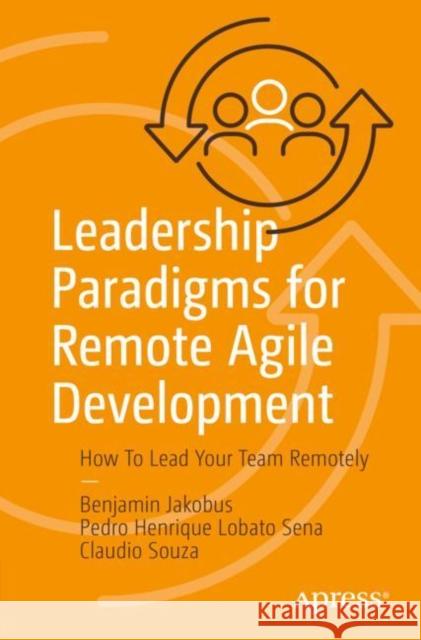
Benjamin Jakobus; Pedro Henrique Lobato Sena; Claudio Souza
Leadership Paradigms for Remote Agile Development: How To Lead Your Team Remotely Benjamin Jakobus Pedro Henrique Lobato Sena Claudio Souza 9781484287187 Apress - książkaWidoczna okładka, to zdjęcie poglądowe, a rzeczywista szata graficzna może różnić się od prezentowanej.

Leadership Paradigms for Remote Agile Development: How To Lead Your Team Remotely

ISBN-13: 9781484287187 / Angielski / Miękka / 2022 / 168 str.

Benjamin Jakobus; Pedro Henrique Lobato Sena; Claudio Souza
cena 141,19
(netto: 134,47 VAT:  5%)

Najniższa cena z 30 dni: 134,90
Termin realizacji zamówienia:
ok. 22 dni roboczych
Dostawa w 2026 r.

Darmowa dostawa!

If you are asking yourselfWhy are my engineers unable to deliver?,Why are so many engineers leaving?orWhy is our software riddled with bugs?, then you've come to the right place. This book acts as a concise, practical guide on how to lead successful agile projects in a remote environment.The authors draw from industry experience and a wide range of fields and disciplines--from software engineering to criminology and sociology--to teach you how to maintain technical oversight, manage deadlines, and calibrate expectations, while also creating and maintaining a healthy remote work environment. You will gain both practical tips grounded in reality, while learning why such tips work by navigating the background on which they are founded--from Broken Window Theory, Labeling Theory to the Dunning-Kruger Effect.Leadership Paradigms for Remote Agile Developmentwill show you how to avoid the most common mistakes and pitfalls that cause engineering projects to fail while at the same time maintaining high ethical standards.What You'll LearnManage feedback, reduce bureaucracy, create and adapt processesUnderstand what to look for in new hiresCarve out a solid road to success for any type of software projectWho This Book Is ForAnyone who is in, or wishes to move into, an IT leadership position, such as senior software engineers, founders, engineering managers, or team/tech leads.

If you are asking yourself Why are my engineers unable to deliver?, Why are so many engineers leaving? or Why is our software riddled with bugs?, then you've come to the right place. This book acts as a concise, practical guide on how to lead successful agile projects in a remote environment. 


The authors draw from industry experience and a wide range of fields and disciplines--from software engineering to criminology and sociology--to teach you how to maintain technical oversight, manage deadlines, and calibrate expectations, while also creating and maintaining a healthy remote work environment. You will gain both practical tips grounded in reality, while learning why such tips work by navigating the background on which they are founded--from Broken Window Theory, Labeling Theory to the Dunning-Kruger Effect. 

Leadership Paradigms for Remote Agile Development will show you how to avoid the most common mistakes and pitfalls that cause engineering projects to fail while at the same time maintaining high ethical standards. 

What You'll Learn
  • Manage feedback, reduce bureaucracy, create and adapt processes  
  • Understand what to look for in new hires
  • Carve out a solid road to success for any type of software project

Who This Book Is For

Anyone who is in, or wishes to move into, an IT leadership position, such as senior software engineers, founders, engineering managers, or team/tech leads.

Kategorie:
Nauka, Ekonomia i biznes
Kategorie BISAC:
Business & Economics > Information Management
Business & Economics > Zarządzenie i techniki zarządzania
Business & Economics > Zarządzenie zasobami ludzkimi
Wydawca:
Apress
Język:
Angielski
ISBN-13:
9781484287187
Rok wydania:
2022
Dostępne języki:
Ilość stron:
168
Waga:
0.26 kg
Wymiary:
23.39 x 15.6 x 0.97
Oprawa:
Miękka
Dodatkowe informacje:
Wydanie ilustrowane

Introduction

Introduction to the book, including outline of core competencies, structure, definitions and
concepts.

Chapter 1 - Remote work and the new normal
Here we present the differences in leading an in-person team versus a remote team, detailing
how asynchronous work differs to other models, and discuss how the dawn of remote work
emphasizes the importance of strong organization. The chapter lists concrete tools,
frameworks and tips that leaders can adopt to make their company more “remote friendly”.

Chapter 2 - Leadership
Explains why good leadership is so important and what the core competencies of a good
leaders are. That is, what a good leader should and should not do. The chapter then details the
9 pillars of good leadership: shielding one’s team, maintaining technical oversight and
presence, the problem of micromanagement, how to calibrate expectations, how to manage
deadlines and how to prioritize features.

Chapter 3 - Hire the right people
Begins by discussing why people matter and then explains why and how to hire the right
people, as well as why so many companies fail to do so. The chapter then dives into details
on the importance of experience, what makes for good and bad software engineers and the
impact of cognitive biases. The chapter finishes by discussing the cost of hiring and the cost
of bad engineers.

Chapter 4 - On breaking windows and writing code
This chapter is all about job execution. That is, how to create an environment in which
engineers are able to give their best. The chapter begins by explaining the broken window
theory (a well-known theory in sociology and criminology) and how it relates to software project management. The key message in the chapter is that, if you place good professionals
into a dysfunctional environment, these professionals are most likely to contribute further to
its decline. The chapter then details how to create and maintain well-functioning working
environments.

Chapter 5 - Feedback - How to ask, receive and act upon it
The objective of this chapter is to turn the reader into a better communicator. That is, it
explains why listening matters, how to become a better listener, and how to act on feedback
produced in a highly dynamic environment.

Chapter 6 - The cost of change
This chapter focuses on both the costs of changing and standing still. That is, it discusses how
to strike a balance between meeting market demands, finding a product market fit (if not
found already), and engineering a good product. We look at this balance both at a macro-level
and a micro-level. That is, on one hand the company needs to be responsive to change and
cannot become a massive oil tanker. And, on the other hand, we need to be able to determine
what degrees of change are permissible at a product level as changes in direction impact the
overall codebase and architecture.

Chapter 7 - Managing expectations
Here we discuss unrealistic expectations, artificial deadlines, the cost of switching direction,
the (hidden) complexities of developing software and the cost of rushing.

Chapter 8: Reduce bureaucracy
This chapter begins by discussing the impact of a heavy bureaucracy and how to reduce it
whilst still maintaining an audit trail. The chapter then details concrete steps and processes
that leaders can adopt to reduce paperwork and maximize productivity whilst at the same
time being able to vet and audit all decisions and actions taken.

Chapter 9: Ethics
A weak ethical position results in brain-drain and is generally bad for business. As such, this
chapter begins by exploring the main causes of weak ethical positions and then details the
direct impact that this has on a business. The chapter then explains how to create and maintain strong ethical standards - both by discussing possible pitfalls (such as the dangers
posed by aggressive marketing) and highlighting concrete steps (such as high internal
communication standards) that leaders can take.
The key point presented by this chapter is that we should all strive to earn money by
providing value; not by driving metrics.
We should earn money by providing value; not by driving metrics.

Benjamin Jakobus is a tech lead at a large Fintech company. Over the course of his career, he has worked as a software engineer across a range of industries, from large multinationals to small silicon valley startups. He is the author of "Mastering Bootstrap 4", published in 2 editions by Packt Publishing, and occasionally writes and contributes to technical and scientific articles.

He received his M.Sc. in "Advanced Computing" from Imperial College London, and his B.Sc. in Computer Science from University College Cork. Born in Germany and raised in Ireland, he currently lives in Brazil.

Pedro Sena is a Senior Software Engineer with over 15 years of experience, 12 of those working remotely. He created software for a wide range of industries, including shop floor automation, tourism, banking and e-commerce as well as different types of SaaS (Software as a Service) applications.

He received his degree as “Technologist in Informatics” from FASP, in Brazil where he was born and currently lives.

Claudio Souza is a Software Engineering Leader and Founder with over 25 years of experience, 10 of those in remote organizations.

He started as a software developer in a small consulting company until he became a Staff Engineer in Latin America's largest Newsmedia corps. During his career, he designed and implemented applications currently serving over 600m users.

He's experienced Eng. Leader and G.M, having interviewed over 2000 people, hiring and managing over 200, and led over $300M in revenue while directly managing organizations with over fifty people.

He studied Computer Science at Moacyr Sreder Bastos University in Rio de Janeiro, Brazil, where he was born and currently lives in Connecticut, United States.


If you are asking yourself Why are my engineers unable to deliver?, Why are so many engineers leaving? or Why is our software riddled with bugs?, then you've come to the right place. This book acts as a concise, practical guide on how to lead successful agile projects in a remote environment. 


The authors draw from industry experience and a wide range of fields and disciplines--from software engineering to criminology and sociology--to teach you how to maintain technical oversight, manage deadlines, and calibrate expectations, while also creating and maintaining a healthy remote work environment. You will gain both practical tips grounded in reality, while learning why such tips work by navigating the background on which they are founded--from Broken Window Theory, Labeling Theory to the Dunning-Kruger Effect. 

Leadership Paradigms for Remote Agile Development will show you how to avoid the most common mistakes and pitfalls that cause engineering projects to fail while at the same time maintaining high ethical standards. 

You will:
  • Manage feedback, reduce bureaucracy, create and adapt processes  
  • Understand what to look for in new hires
  • Carve out a solid road to success for any type of software project



Udostępnij

Facebook - konto krainaksiazek.pl


Opinie o Krainaksiazek.pl na Opineo.pl

Partner Mybenefit

Krainaksiazek.pl w programie rzetelna firma Krainaksiaze.pl - płatności przez paypal

Czytaj nas na:

Facebook - krainaksiazek.pl
  • książki na zamówienie
  • granty
  • książka na prezent
  • kontakt
  • pomoc
  • opinie
  • regulamin
  • polityka prywatności

Zobacz:

  • Księgarnia czeska

  • Wydawnictwo Książkowe Klimaty

1997-2025 DolnySlask.com Agencja Internetowa

© 1997-2022 krainaksiazek.pl
     
KONTAKT | REGULAMIN | POLITYKA PRYWATNOŚCI | USTAWIENIA PRYWATNOŚCI
Zobacz: Księgarnia Czeska | Wydawnictwo Książkowe Klimaty | Mapa strony | Lista autorów
KrainaKsiazek.PL - Księgarnia Internetowa

Polityka prywatnosci - link
Krainaksiazek.pl - płatnośc Przelewy24
Przechowalnia Przechowalnia






