• Wyszukiwanie zaawansowane
  • Kategorie
  • Kategorie BISAC
  • Książki na zamówienie
  • Promocje
  • Granty
  • Książka na prezent
  • Opinie
  • Pomoc
  • Załóż konto
  • Zaloguj się

Lead-Free Solder Process Development » książka


zaloguj się | załóż konto
Logo Krainaksiazek.pl

koszyk

konto

szukaj
topmenu
Księgarnia internetowa
Szukaj
Książki na zamówienie
Promocje
Granty
Książka na prezent
Moje konto
Pomoc
 
 
Wyszukiwanie zaawansowane
Pusty koszyk
Bezpłatna dostawa dla zamówień powyżej 20 złBezpłatna dostawa dla zamówień powyżej 20 zł

Kategorie główne

• Nauka
 [2946600]
• Literatura piękna
 [1856966]

  więcej...
• Turystyka
 [72221]
• Informatyka
 [151456]
• Komiksy
 [35826]
• Encyklopedie
 [23190]
• Dziecięca
 [619653]
• Hobby
 [140543]
• AudioBooki
 [1577]
• Literatura faktu
 [228355]
• Muzyka CD
 [410]
• Słowniki
 [2874]
• Inne
 [445822]
• Kalendarze
 [1744]
• Podręczniki
 [167141]
• Poradniki
 [482898]
• Religia
 [510455]
• Czasopisma
 [526]
• Sport
 [61590]
• Sztuka
 [243598]
• CD, DVD, Video
 [3423]
• Technologie
 [219201]
• Zdrowie
 [101638]
• Książkowe Klimaty
 [124]
• Zabawki
 [2473]
• Puzzle, gry
 [3898]
• Literatura w języku ukraińskim
 [254]
• Art. papiernicze i szkolne
 [8170]
Kategorie szczegółowe BISAC

Lead-Free Solder Process Development

ISBN-13: 9780470410745 / Angielski / Twarda / 2011 / 284 str.
Jasbir Bath; Greg Henshall; Carol A. Handwerker
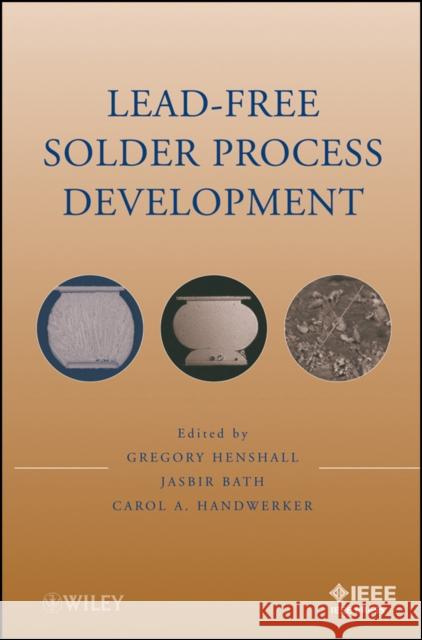
Lead-Free Solder Process Development Jasbir Bath Greg Henshall Carol A. Handwerker 9780470410745 IEEE Computer Society Press - książkaWidoczna okładka, to zdjęcie poglądowe, a rzeczywista szata graficzna może różnić się od prezentowanej.

Lead-Free Solder Process Development

ISBN-13: 9780470410745 / Angielski / Twarda / 2011 / 284 str.

Jasbir Bath; Greg Henshall; Carol A. Handwerker
cena 542,89 zł
(netto: 517,04 VAT:  5%)

Najniższa cena z 30 dni: 538,44 zł
Termin realizacji zamówienia:
ok. 30 dni roboczych
Bez gwarancji dostawy przed świętami

Darmowa dostawa!

Discusses the growth mechanisms of tin whiskers and the effective mitigation strategies necessary to reduce whisker growth risks This book covers key tin whisker topics, ranging from fundamental science to practical mitigation strategies. The text begins with a review of the characteristic properties of local microstructures around whisker and hillock grains to identify why these particular grains and locations become predisposed to forming whiskers and hillocks. The book discusses the basic properties of tin-based alloy finishes and the effects of various alloying elements on whisker formation, with a focus on potential mechanisms for whisker suppression or enhancement for each element. Tin whisker risk mitigation strategies for each tier of the supply chain for high reliability electronic systems are also described.

  • Discusses whisker formation factors including surface grain geometry, crystallographic orientation-dependent surface grain boundary structure, and the localization of elastic strain/strain energy density distribution
  • Examines how whiskers and hillocks evolve in time through real-time studies of whisker growth with the scanning electron microscope/focused ion beaming milling (SEM/FIB)
  • Covers characterization methods of tin and tin-based alloy finishes such as transmission electron microscopy (TEM), scanning electron microscopy (SEM), and electron backscatter diffraction (EBSD)
  • Reviews theories of mechanically-induced tin whiskers with case studies using pure tin and other lead-free finishes shown to evaluate the pressure-induced tin whiskers
Mitigating Tin Whisker Risks: Theory and Practice is intended for the broader electronic packaging and manufacturing community including: manufacturing engineers, packaging development engineers, as well as engineers and researchers in high reliability industries.

Kategorie:
Technologie
Kategorie BISAC:
Technology & Engineering > Electronics - Semiconductors
House & Home > Power Tools
Technology & Engineering > Materials Science - Metals & Alloys
Wydawca:
IEEE Computer Society Press
Język:
Angielski
ISBN-13:
9780470410745
Rok wydania:
2011
Ilość stron:
284
Waga:
0.56 kg
Wymiary:
23.62 x 16.0 x 2.29
Oprawa:
Twarda
Wolumenów:
01
Dodatkowe informacje:
Bibliografia
Wydanie ilustrowane

Technical Reviewers.

Preface.

Introduction.

Contributors.

1. Regulatory and Voluntary Drivers for Environmental Improvement: Hazardous Substances, Lifecycle Design and End of Life (John Hawley).

1.1 Introduction.

1.2 Substances of Environmental Concern.

1.3 Design for Environment/Energy Efficiency.

1.4 Recycling and Take–back.

1.5 Summary.

1.6 References.

2. Lead–free Surface Mount Technology (Jasbir Bath, Jennifer Nguyen and Sundar Sethuraman).

2.1 Introduction.

2.2 No–clean and Water–soluble Lead–free Pastes.

2.3 Solder Paste Handling.

2.4 Board and Stencil Design.

2.5 Screen Printing and Printability of Lead–free Solder Pastes.

2.6 Paste inspection.

2.7 Component Placement (Paste Tackiness).

2.8 Reflow Soldering and the Reflow Profile.

2.9 Effect of Nitrogen versus Air Atmosphere during Lead–free Reflow.

2.10 Head–in–Pillow Component Soldering Defect.

2.11 Solder Joint Visual Inspection.

2.12 AOI (Automated Optical Inspection).

2.13 X–ray Inspection.

2.14 ICT/Functional Testing.

2.15 Conclusions.

2.16 Future Work.

2.17 Acknowledgements.

2.18 References.

3. Lead–free Wave Soldering (Dennis Barbini and Jasbir Bath).

3.0 Introduction.

3.1 Wave soldering process boundaries.

3.2 Soldering temperatures on the chip and main soldering waves.

3.3 Alloys for Lead–free Wave Soldering.

3.4 The function of nitrogen in wave soldering.

3.5 The effect of PCB Design on wave solder joint formation.

3.6 Standards related to wave soldering.

3.7 Conclusions.

3.8 Future work.

3.9 Acknowledgements.

3.10 References.

4. Lead–free Rework (Alan Donaldson).

4.1 Introduction.

4.2 Surface Mount Technology (SMT) Hand Soldering/Touch–up.

4.3 BGA/CSP Rework.

4.4 BGA Socket Rework.

4.5 X–ray.

4.6 Through–hole Hand Soldering Rework.

4.7 Through–hole Mini–pot/Solder Fountain Rework.

4.8 Best Practices and Rework Equipment Calibrations.

4.9 Conclusions.

4.10 Future Work.

4.11 References.

5 Lead–Free Alloys for BGA/CSP Components (Gregory A. Henshall).

5.1 Introduction.

5.2 Overview of New Lead–Free Alloys.

5.3 Benefits of New Alloys for BGAs and CSPs.

5.4 Technical Concerns .

5.5 Management of New Alloys.

5.6 Future Work.

5.7 Summary and Conclusions.

5.8 Acknowledgements.

5.9 References.

6 Growth Mechanisms and Mitigation Strategies of Tin Whisker Growth (Peng Su).

6.1 Introduction.

6.2 Role of stress in whisker growth.

6.3 Understanding standard acceleration tests.

6.4 Plating process optimization and other mitigation strategies.

6.5 Whisker growth on board–mounted components.

6.6 Summary.

6.7 References.

7. Testability of Lead–Free Printed Circuit Assemblies (Rosa D.Reinosa and Aileen M. Allen).

7.1 Introduction.

7.2 Contact Repeatability of Lead–Free Boards.

7.3 Probe Wear and Contamination.

7.4 Board Flexure.

7.5 Conclusions.

7.6 Acknowledgments.

7.7 References.

8. Board–Level Solder Joint Reliability of High Performance Computers under Mechanical Loading (Keith Newman).

8.1 Introduction.

8.2 Establishing PWB Strain Limits for Manufacturing.

8.3. SMT Component Fracture Strength Characterization.

8.4 PWB Fracture Strength Characterization.

8.5 PWB Strain Characterization.

8.6. Solder Joint Fracture Prediction Modeling.

8.7. Fracture Strength Optimization.

8.8 Conclusions.

8.9 Acknowledgments.

8.10 References.

9. Lead–Free Reliability in Aerospace/Military Environments (Thomas A. Woodrow and Jasbir Bath).

9.1 Introduction.

9.2 Aerospace/Military Consortia.

9.3 Lead–Free Control Plans for Aerospace/Military Electronics.

9.4 Aerospace/Military Lead–Free Reliability Concerns.

9.5 Summary and Conclusions.

9.6 References.

10. Lead–Free Reliability in Automotive Environments (Richard D. Parke).

10.1 Introduction to Electronics in Automotive Environments.

10.2 Performance Risks and Issues.

10.3 Legislation Driving Lead–Free Automotive Electronics.

10.4 Reliability Requirements for Automotive Environments.

10.5 Failure Modes of Lead–free Joints.

10.6 Impact to Lead–free Component Procurement and Management.

10.7 Change versus Risks.

10.8 Summary and Conclusions.

References.

Index.

GREGORY HENSHALL is Master Engineer at Hewlett–Packard Company in Palo Alto, California. He has more than twenty years′ experience in materials research and development, including twelve years of experience with soldering alloys and electronics manufacturing and nine years focused on lead–free technology. Dr. Henshall currently serves as chair for the iNEMI (International Electronics Manufacturing Initiative) Lead–Free Alloy Alternatives Project.

JASBIR BATH is the owner of Bath Technical Consultancy LLC in Fremont, California. He has over fifteen years′ experience in research, design, development, and implementation in the areas of soldering, surface mount, and packaging technologies working for companies including Flextronics International/Solectron Corporation and ITRI (International Tin Research Institute). Bath has been chair of various iNEMI lead–free consortia involving OEMs, EMS, and component and material supplier companies on alloy selection, assembly, and rework.

CAROL A. HANDWERKER is the Reinhardt Schuhmann Jr. Professor of Materials Engineering at Purdue University, Indiana. Previously, she was chief of the Metallurgy Division at the National Institute of Standards and Technology (NIST), where she participated in the NCMS (National Center for Manufacturing Sciences) Lead–Free Solder Project and co–chaired the iNEMI Lead–Free Alloy Selection Team. Dr. Handwerker is currently active on the iNEMI Technical, Research, and Environmental Leadership Steering Committees, as well as a participant in a range of iNEMI project teams.

A fully up–to–date approach to implementing lead–free soldering

Environmental and health concerns have led to a growing movement to eliminate lead from electronics, specifically from electronics soldering. Lead–based solder has been used for many years with a good history of use, so the change to lead–free solder alternatives requires companies to re–examine, develop, and re–test manufacturing processes as they make the transition.

Lead–Free Solder Process Development covers general lead–free soldering topics written by those specializing in these areas. Timely and up to date, this reference covers key topics including legislation, SMT, wave, rework, alloys, test, and reliability. It provides updates in areas where research is ongoing and addresses various topics that are relevant to lead–free soldering, including:

  • Government and legislative activities

  • Lead–free SMT assembly

  • Lead–free wave soldering

  • Lead–free rework

  • Lead–free alloys for BGA/CSP components

  • Lead–free mechanical reliability

  • Tin whiskers

  • Lead–free reliability in aerospace and military environments

  • Lead–free reliability in automotive environments

  • Testability of lead–free printed circuit assemblies

Emphasizing practical knowledge of lead–free soldering rather than theory, Lead–Free Solder Process Development is written by experts who are or who have been heavily involved in lead–free implementation at the product level. Being an up–to–date book on this changing field, it is an essential read for engineers in the industry who are or will be migrating to lead–free soldering.


Udostępnij

Facebook - konto krainaksiazek.pl


Opinie o Krainaksiazek.pl na Opineo.pl

Partner Mybenefit

Krainaksiazek.pl w programie rzetelna firma Krainaksiaze.pl - płatności przez paypal

Czytaj nas na:

Facebook - krainaksiazek.pl
  • książki na zamówienie
  • granty
  • książka na prezent
  • kontakt
  • pomoc
  • opinie
  • regulamin
  • polityka prywatności

Zobacz:

  • Księgarnia czeska

  • Wydawnictwo Książkowe Klimaty

1997-2025 DolnySlask.com Agencja Internetowa

© 1997-2022 krainaksiazek.pl
     
KONTAKT | REGULAMIN | POLITYKA PRYWATNOŚCI | USTAWIENIA PRYWATNOŚCI
Zobacz: Księgarnia Czeska | Wydawnictwo Książkowe Klimaty | Mapa strony | Lista autorów
KrainaKsiazek.PL - Księgarnia Internetowa

Polityka prywatnosci - link
Krainaksiazek.pl - płatnośc Przelewy24
Przechowalnia Przechowalnia






