Law and Religion » książka





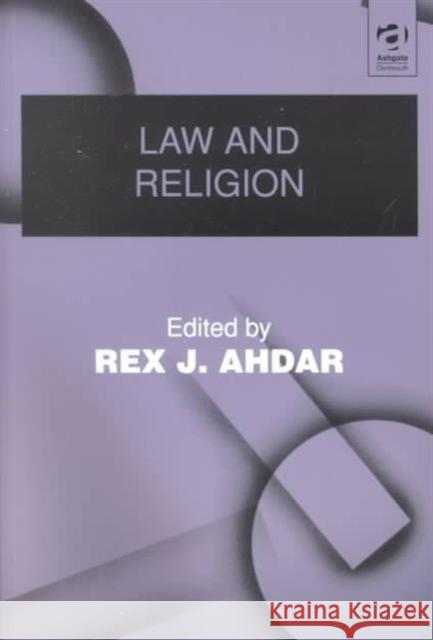
Law and Religion
ISBN-13: 9781840147575 / Angielski / Miękka / 2000 / 556 str.
Law and Religion
ISBN-13: 9781840147575 / Angielski / Miękka / 2000 / 556 str.
(netto: 74,59 VAT: 5%)
Najniższa cena z 30 dni: 75,51
ok. 16-18 dni roboczych.
Darmowa dostawa!
The global resurgence of religion in the latter part of the twentieth century contradicts the supposed inevitability of the secularization process. Modernization was meant to spell the decline of religion. Instead, as distinguished sociologist of religion, Peter Berger, noted recently, 'secularization theory has been falsifieda The world today is massively religious and it is anything but the secularized world that had been predicted by many analysts of modernity.' The major world religions, particularly in their conservative, orthodox or traditionalist forms-as well as multifarious new religious movements-are making increasingly difficult claims upon modern democratic states. Fundamental liberal concepts of tolerance and neutrality are receiving renewed and critical scrutiny in the wake of such claims. As the new millennium commences this volume explores a range of topics concerning the complex interaction between law and religion. What evidence concerning 'cults' should be admitted in trials involving minority religious groups? Are blasphemous works of art the lawa s concern? What is the likely impact of the new UK Human Rights Act 1998 upon religious organizations? To what extent does the the United Nations advance religious freedom. Can one learn much from the morass of American cases on religion? Scholars from the United Kingdom, the United States, The Netherlands and Australasia expose the recurrent dilemmas and tensions in this field and analyze important issues of religious freedom and courtsa treatment of religious controversy. The European and American approaches to religious liberty are highlighted as is the international dimension to religious rights."




Czytaj nas na:
KrainaKsiazek.PL - Księgarnia Internetowa


