• Wyszukiwanie zaawansowane
  • Kategorie
  • Kategorie BISAC
  • Książki na zamówienie
  • Promocje
  • Granty
  • Książka na prezent
  • Opinie
  • Pomoc
  • Załóż konto
  • Zaloguj się

Law, Resources and Time-Space Constructing: Internal Evolutionary Logic for Chinese Judiciary During the 19th Century » książka


zaloguj się | załóż konto
Logo Krainaksiazek.pl

koszyk

konto

szukaj
topmenu
Księgarnia internetowa
Szukaj
Książki na zamówienie
Promocje
Granty
Książka na prezent
Moje konto
Pomoc
 
 
Wyszukiwanie zaawansowane
Pusty koszyk
Bezpłatna dostawa dla zamówień powyżej 20 złBezpłatna dostawa dla zamówień powyżej 20 zł

Kategorie główne

• Nauka
 [2946912]
• Literatura piękna
 [1852311]

  więcej...
• Turystyka
 [71421]
• Informatyka
 [150889]
• Komiksy
 [35717]
• Encyklopedie
 [23177]
• Dziecięca
 [617324]
• Hobby
 [138808]
• AudioBooki
 [1671]
• Literatura faktu
 [228371]
• Muzyka CD
 [400]
• Słowniki
 [2841]
• Inne
 [445428]
• Kalendarze
 [1545]
• Podręczniki
 [166819]
• Poradniki
 [480180]
• Religia
 [510412]
• Czasopisma
 [525]
• Sport
 [61271]
• Sztuka
 [242929]
• CD, DVD, Video
 [3371]
• Technologie
 [219258]
• Zdrowie
 [100961]
• Książkowe Klimaty
 [124]
• Zabawki
 [2341]
• Puzzle, gry
 [3766]
• Literatura w języku ukraińskim
 [255]
• Art. papiernicze i szkolne
 [7810]
Kategorie szczegółowe BISAC

Law, Resources and Time-Space Constructing: Internal Evolutionary Logic for Chinese Judiciary During the 19th Century

ISBN-13: 9789811680571 / Angielski / Miękka / 2023 / 265 str.
Zhang Shiming
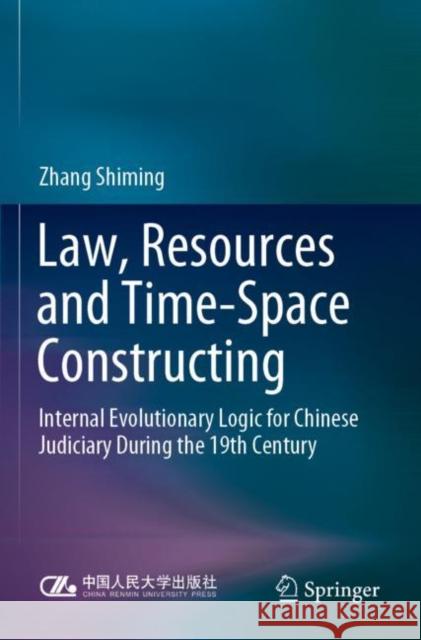
Law, Resources and Time-Space Constructing: Internal Evolutionary Logic for Chinese Judiciary During the 19th Century Zhang Shiming 9789811680571 Springer - książkaWidoczna okładka, to zdjęcie poglądowe, a rzeczywista szata graficzna może różnić się od prezentowanej.

Law, Resources and Time-Space Constructing: Internal Evolutionary Logic for Chinese Judiciary During the 19th Century

ISBN-13: 9789811680571 / Angielski / Miękka / 2023 / 265 str.

Zhang Shiming
cena 481,91
(netto: 458,96 VAT:  5%)

Najniższa cena z 30 dni: 462,63
Termin realizacji zamówienia:
ok. 22 dni roboczych
Bez gwarancji dostawy przed świętami

Darmowa dostawa!
inne wydania

This book studies the judicial evolution of the Qing Dynasty. It sums up the changes from six major aspects:1. Banfang(班房)emerged in the late Qianlong period; 2. The opening of capital appeals(京控)early in Jiaqing’s reign; 3. The consular jurisdiction was established during Daoguang’s reign; 4. The execution on the spot (就地正法)was started in Daoguang and Xianfeng periods; 5. The introduction of fashenju (发审局,a interrogatory court) happened during Tongzhi’s reign; 6. Late in Guangxu’s reign, banishment was abolished, and reforms were made for prisons.In the past, people did not have a comprehensive understanding of these big changes. From the perspective of legal culture,  scholars often criticize traditional Chinese law focuses on criminal law while ignores civil law in terms of legal culture, but this situation can be explained in part by the inadequate allocation of resources and authoritarian resources in traditional societies. Using a large number of archives and precious materials such as private notes that were not noticed by academics in the past, this book adopts the research path of new historical jurisprudence to explore the inner logic of judicial evolution in the Qing Dynasty, focusing on the triangular connection between legal rules, resources, and temporal and spatial constructions, which is an important contribution to the study of traditional Chinese law.


This book studies the judicial evolution of the Qing Dynasty. It sums up the changes from six major aspects: 
1. Banfang(班房)emerged in the late Qianlong period; 2. The opening of capital appeals(京控)early in Jiaqing’s reign; 3. The consular jurisdiction was established during Daoguang’s reign; 4. The execution on the spot (就地正法)was started in Daoguang and Xianfeng periods; 5. The introduction of fashenju (发审局,a interrogatory court) happened during Tongzhi’s reign; 6. Late in Guangxu’s reign, banishment was abolished, and reforms were made for prisons. 

In the past, people did not have a comprehensive understanding of these big changes. From the perspective of legal culture,  scholars often criticize traditional Chinese law focuses on criminal law while ignores civil law in terms of legal culture, but this situation can be explained in part by the inadequate allocation of resources and authoritarian resources in traditional societies. Using a large number of archives and precious materials such as private notes that were not noticed by academics in the past, this book adopts the research path of new historical jurisprudence to explore the inner logic of judicial evolution in the Qing Dynasty, focusing on the triangular connection between legal rules, resources, and temporal and spatial constructions, which is an important contribution to the study of traditional Chinese law.

Kategorie:
Nauka, Historia
Kategorie BISAC:
History > Asia - China
Law > Reference
Social Science > General
Wydawca:
Springer
Język:
Angielski
ISBN-13:
9789811680571
Rok wydania:
2023
Dostępne języki:
Ilość stron:
265
Waga:
0.42 kg
Wymiary:
23.5 x 15.5
Oprawa:
Miękka
Dodatkowe informacje:
Wydanie ilustrowane

Introduction.- Between “Paper Law” and “Living Law”: Banfang in Qing Dynasty.- Inter-Law: Consular Jurisdiction and Modern Judicial Operation in China.- Institutional Constraints and Innovations: The Adjudicative Bureaus (Fashenju) in Late-Qing China.- A Study on Execution on the Spot in Late Qing.- Painting and Photography in Foreigners’ Construction of An Image of Qing Dynasty Law.- Re-Examination of Abolishing Consular Jurisdiction as the Start of Law Modification in Late Qing.- Conclusion.- Index.

Zhang Shiming is a professor of law and doctoral supervisor, Renmin University, China. He won the special prize of the "13th Beijing Philosophy and Social Science Outstanding Achievement Award", the first prize of the third "Chinese Law Outstanding Achievement Award" of the Chinese Law Society, successively studied in the Max Planck Institute of Intellectual Property, Competition Law and Tax Law, the University of Freiburg in Germany, the Princeton Institute for Advanced Study in the United States, and the University of Tokyo in Japan. He is the chief editor of "Economic Law and Legal Anthropology Research Series" (ten currently published books such as "Systemization and Methodology of Economic Law: New Developments in Competition Law", "The Philosophy of Economic Law", and "The Theory of Competition Law and Intellectual Property"). 

His personal representative monographs include "Law, Resources and the Construction of Time and Space: China from 1644 to 1945" (Originally published by Guangdong People's Publishing House, 2012 in Chinese) completed with 17 years of hard work and "Economic Law Theory Evolution Theory" "(Revised third Chinese edition), and so on.

This book studies the judicial evolution of the Qing Dynasty. It sums up the changes from six major aspects: 
1. Banfang(班房)emerged in the late Qianlong period; 2. The opening of capital appeals(京控)early in Jiaqing’s reign; 3. The consular jurisdiction was established during Daoguang’s reign; 4. The execution on the spot (就地正法)was started in Daoguang and Xianfeng periods; 5. The introduction of fashenju (发审局,a interrogatory court) happened during Tongzhi’s reign; 6. Late in Guangxu’s reign, banishment was abolished, and reforms were made for prisons. 

In the past, people did not have a comprehensive understanding of these big changes. From the perspective of legal culture,  scholars often criticize traditional Chinese law focuses on criminal law while ignores civil law in terms of legal culture, but this situation can be explained in part by the inadequate allocation of resources and authoritarian resources in traditional societies. Using a large number of archives and precious materials such as private notes that were not noticed by academics in the past, this book adopts the research path of new historical jurisprudence to explore the inner logic of judicial evolution in the Qing Dynasty, focusing on the triangular connection between legal rules, resources, and temporal and spatial constructions, which is an important contribution to the study of traditional Chinese law.




Udostępnij

Facebook - konto krainaksiazek.pl


Opinie o Krainaksiazek.pl na Opineo.pl

Partner Mybenefit

Krainaksiazek.pl w programie rzetelna firma Krainaksiaze.pl - płatności przez paypal

Czytaj nas na:

Facebook - krainaksiazek.pl
  • książki na zamówienie
  • granty
  • książka na prezent
  • kontakt
  • pomoc
  • opinie
  • regulamin
  • polityka prywatności

Zobacz:

  • Księgarnia czeska

  • Wydawnictwo Książkowe Klimaty

1997-2025 DolnySlask.com Agencja Internetowa

© 1997-2022 krainaksiazek.pl
     
KONTAKT | REGULAMIN | POLITYKA PRYWATNOŚCI | USTAWIENIA PRYWATNOŚCI
Zobacz: Księgarnia Czeska | Wydawnictwo Książkowe Klimaty | Mapa strony | Lista autorów
KrainaKsiazek.PL - Księgarnia Internetowa

Polityka prywatnosci - link
Krainaksiazek.pl - płatnośc Przelewy24
Przechowalnia Przechowalnia




