• Wyszukiwanie zaawansowane
  • Kategorie
  • Kategorie BISAC
  • Książki na zamówienie
  • Promocje
  • Granty
  • Książka na prezent
  • Opinie
  • Pomoc
  • Załóż konto
  • Zaloguj się

Landscape Genetics: Concepts, Methods, Applications » książka


zaloguj się | załóż konto
Logo Krainaksiazek.pl

koszyk

konto

szukaj
topmenu
Księgarnia internetowa
Szukaj
Książki na zamówienie
Promocje
Granty
Książka na prezent
Moje konto
Pomoc
 
 
Wyszukiwanie zaawansowane
Pusty koszyk
Bezpłatna dostawa dla zamówień powyżej 20 złBezpłatna dostawa dla zamówień powyżej 20 zł

Kategorie główne

• Nauka
 [2946912]
• Literatura piękna
 [1852311]

  więcej...
• Turystyka
 [71421]
• Informatyka
 [150889]
• Komiksy
 [35717]
• Encyklopedie
 [23177]
• Dziecięca
 [617324]
• Hobby
 [138808]
• AudioBooki
 [1671]
• Literatura faktu
 [228371]
• Muzyka CD
 [400]
• Słowniki
 [2841]
• Inne
 [445428]
• Kalendarze
 [1545]
• Podręczniki
 [166819]
• Poradniki
 [480180]
• Religia
 [510412]
• Czasopisma
 [525]
• Sport
 [61271]
• Sztuka
 [242929]
• CD, DVD, Video
 [3371]
• Technologie
 [219258]
• Zdrowie
 [100961]
• Książkowe Klimaty
 [124]
• Zabawki
 [2341]
• Puzzle, gry
 [3766]
• Literatura w języku ukraińskim
 [255]
• Art. papiernicze i szkolne
 [7810]
Kategorie szczegółowe BISAC

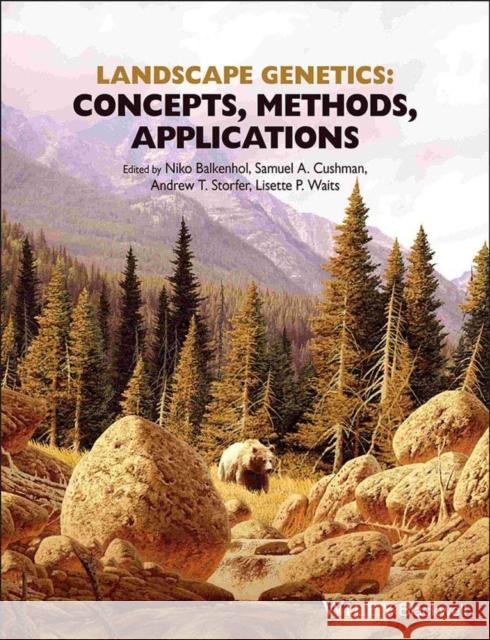
Landscape Genetics: Concepts, Methods, Applications

ISBN-13: 9781118525289 / Angielski / Twarda / 2015 / 288 str.
Niko Balkenhol; Samuel Cushman; Andrew Storfer
Landscape Genetics: Concepts, Methods, Applications Balkenhol, Niko; Cushman, Samuel; Storfer, Andrew 9781118525289 John Wiley & Sons - książkaWidoczna okładka, to zdjęcie poglądowe, a rzeczywista szata graficzna może różnić się od prezentowanej.

Landscape Genetics: Concepts, Methods, Applications

ISBN-13: 9781118525289 / Angielski / Twarda / 2015 / 288 str.

Niko Balkenhol; Samuel Cushman; Andrew Storfer
cena 668,16
(netto: 636,34 VAT:  5%)

Najniższa cena z 30 dni: 545,90
Termin realizacji zamówienia:
ok. 16-18 dni roboczych
Dostawa w 2026 r.

Darmowa dostawa!
inne wydania

Despite the substantial interest in landscape genetics from the scientific community, learning about the concepts and methods underlying the field remains very challenging. The reason for this is the highly interdisciplinary nature of the field, which combines population genetics, landscape ecology, and spatial statistics. These fields have traditionally been treated separately in classes and textbooks, and very few scientists have received the interdisciplinary training necessary to efficiently teach or apply the diversity of techniques encompassed by landscape genetics. To address the current knowledge gap, this book provides the first in depth treatment of landscape genetics in a single volume. Specifically, this book delivers fundamental concepts and methods underlying the field, covering particularly important analytical methods in detail, and presenting empirical and theoretical applications of landscape genetics for a variety of environments and species. Consistent with the interdisciplinary nature of landscape genetics, the book combines an introductory, textbook like section with additional sections on advanced topics and applications that are more typical of edited volumes. The chapter topics and the expertise of the authors and the editorial team make the book a standard reference for anyone interested in landscape genetics. The book includes contributions from many of the leading researchers in landscape genetics. The group of scientists we have assembled has worked on several collaborative projects over the last years, including a large number of peer reviewed papers, several landscape genetics workshops at international conferences, and a distributed graduate seminar on landscape genetics. Based on the experiences gained during these collaborative teaching and research activities, the book includes chapters that synthesize fundamental concepts and methods underlying landscape genetics (Part 1), chapters on advanced topics that deserve a more in depth treatment (Part 2), and chapters illustrating the use of concepts and methods in empirical applications (Part 3). This structure ensures a high usefulness of the book for beginning landscape geneticists and experienced researchers alike, so that it has a broad target audience. At least one of the four co editors is involved in almost every chapter of the book, thereby ensuring a high consistency and coherency among chapters.


Kategorie:
Nauka, Biologia i przyroda
Kategorie BISAC:
Science > Life Sciences - Ecology
Science > Life Sciences - Evolution
Wydawca:
John Wiley & Sons
Język:
Angielski
ISBN-13:
9781118525289
Rok wydania:
2015
Ilość stron:
288
Waga:
0.92 kg
Wymiary:
24.89 x 19.05 x 2.03
Oprawa:
Twarda
Wolumenów:
01
Dodatkowe informacje:
Bibliografia
Glosariusz/słownik

List of contributors ix

Website xi

Acknowledgments xiii

Glossary xv

1 INTRODUCTION TO LANDSCAPE GENETICS CONCEPTS METHODS APPLICATIONS 1
Niko Balkenhol, Samuel A. Cushman, Andrew Storfer, and Lisette P. Waits

1.1 Introduction 1

1.2 Defining landscape genetics 2

1.3 The three analytical steps of landscape genetics 3

1.4 The interdisciplinary challenge of landscape genetics 3

1.5 Structure of this book concepts methods applications 5

References 6

PART 1: CONCEPTS

2 BASICS OF LANDSCAPE ECOLOGY: AN INTRODUCTION TO LANDSCAPES AND POPULATION PROCESSES FOR LANDSCAPE GENETICISTS 11
Samuel A. Cushman, Brad H. McRae, and Kevin McGarigal

2.1 Introduction 11

2.2 How landscapes affect population genetic processes 12

2.3 Defining the landscape for landscape genetic research 16

2.4 Defining populations and characterizing dispersal processes 21

2.5 Putting it together: combinations of landscape and population models 24

2.6 Frameworks for delineating landscapes and populations for landscape genetics 26

2.7 Current challenges and future opportunities 30

References 30

3 BASICS OF POPULATION GENETICS: QUANTIFYING NEUTRAL AND ADAPTIVE GENETIC VARIATION FOR LANDSCAPE GENETIC STUDIES 35
Lisette P. Waits and Andrew Storfer

3.1 Introduction 35

3.2 Overview of landscape influences on genetic variation 36

3.3 Overview of DNA types and molecular methods 38

3.4 Important population genetic models 41

3.5 Measuring genetic diversity 45

3.6 Evaluating genetic structure and detecting barriers 46

3.7 Estimating gene flow using indirect and direct methods 50

3.8 Conclusion and future directions 52

References 53

4 BASICS OF STUDY DESIGN: SAMPLING LANDSCAPE HETEROGENEITY AND GENETIC VARIATION FOR LANDSCAPE GENETIC STUDIES 58
Niko Balkenhol and Marie–Josée Fortin

4.1 Introduction 58

4.2 Study design terminology used in this chapter 59

4.3 General study design considerations 60

4.4 Considerations for landscape genetic study design 61

4.5 Current knowledge about study design effects in landscape genetics 66

4.6 Recommendations for optimal sampling strategies in landscape genetics 71

4.7 Conclusions and future directions 73

References 74

5 BASICS OF SPATIAL DATA ANALYSIS: LINKING LANDSCAPE AND GENETIC DATA FOR LANDSCAPE GENETIC STUDIES 77
Helene H. Wagner and Marie–Josée Fortin

5.1 Introduction 77

5.2 How to model landscape effects on genetic variation 84

5.3 How to model isolation–by–distance 93

5.4 Future directions 95

Acknowledgments 96

References 96

PART 2: METHODS

6 SIMULATION MODELING IN LANDSCAPE GENETICS 101
Erin Landguth Samuel A. Cushman and Niko Balkenhol

6.1 Introduction 101

6.2 A brief overview of models and simulations 101

6.3 General benefits of simulation modeling 102

6.4 Landscape genetic simulation modeling 103

6.5 Examples of simulation modeling in landscape genetics 104

6.6 Designing and choosing landscape genetic simulation models 108

6.7 The future of landscape genetic simulation modeling 111

References 111

7 CLUSTERING AND ASSIGNMENT METHODS IN LANDSCAPE GENETICS 114
Olivier François and Lisette P. Waits

7.1 Introduction 114

7.2 Exploratory data analysis and model–based clustering for population structure analysis 115

7.3 Spatially explicit methods in landscape genetics 119

7.4 Spatial EDA methods: spatial PCA and spatial factor analysis 119

7.5 Spatial MBC methods 120

7.6 Habitat and environmental heterogeneity models 121

7.7 Discussion 123

References 125

8 RESISTANCE SURFACE MODELING IN LANDSCAPE GENETICS 129
Stephen F. Spear Samuel A. Cushman and Brad H. McRae

8.1 Introduction 129

8.2 Techniques for parameterizing resistance surfaces 133

8.3 Estimating connectivity from resistance surfaces 137

8.4 Statistical validation of resistance surfaces 139

8.5 The future of the resistance surface in landscape genetics 142

8.6 Conclusions 144

References 144

9 GENOMIC APPROACHES IN LANDSCAPE GENETICS 149
Andrew Storfe,r Michael F. Antolin, Stéphanie Manel, Bryan K. Epperson, and Kim T. Scribner

9.1 Introduction 149

9.2 Current landscape genomics methods 150

9.3 General challenges in landscape genomics 157

9.4 Spatial autocorrelation 157

9.5 Applications of landscape genomics to climate change 159

References 160

10 GRAPH THEORY AND NETWORK MODELS IN LANDSCAPE GENETICS 165
Melanie Murphy, Rodney Dyer, and Samuel A. Cushman

10.1 Introduction 165

10.2 Background on graph theory 167

10.3 Landscape genetic applications 170

10.4 Recommendations for using graph approaches in landscape genetics 175

10.5 Current research needs 176

10.6 Conclusion potential for application of graphs for conservation 176

References 177

PART 3: APPLICATIONS

11 LANDSCAPES AND PLANT POPULATION GENETICS 183
Rodney J. Dyer

11.1 Introduction 183

11.2 Contemporary population genetic processes 186

11.3 Historical population genetic processes 190

11.4 Future research 192

References 194

12 APPLICATIONS OF LANDSCAPE GENETICS TO CONNECTIVITY RESEARCH IN TERRESTRIAL ANIMALS 199
Lisette P. Waits, Samuel A. Cushman, and Steve F. Spear

12.1 Introduction 199

12.2 General overview of terrestrial animal study systems and research challenges 199

12.3 Detecting barriers and defining corridors 202

12.4 Evaluating population dynamics 205

12.5 Detecting and predicting the response to landscape change 206

12.6 Common limitations of landscape genetic studies involving terrestrial animals 208

12.7 Testing ecological hypotheses about gene flow in heterogeneous landscapes 208

12.8 Knowledge gaps and future directions 213

References 214

13 WATERSCAPE GENETICS APPLICATIONS OF LANDSCAPE GENETICS TO RIVERS LAKES AND SEAS 220
Kimberly A. Selkoe Kim T. Scribner and Heather M. Galindo

13.1 Introduction 220

13.2 Understanding marine and freshwater environments 223

13.3 Typical research questions and approaches 229

13.4 Applications of landscape genetic approaches 234

13.5 Future directions: knowledge gaps research challenges and limitations 237

Acknowledgments 238

References 238

14 CURRENT STATUS FUTURE OPPORTUNITIES AND REMAINING CHALLENGES IN LANDSCAPE
GENETICS 247
Niko Balkenhol, Samuel A. Cushman, Lisette P. Waits, and Andrew Storfer

14.1 Introduction 247

14.2 Conclusion 1: issues of scale need to be considered 248

14.3 Conclusion 2: sampling needs to specifically target landscape genetic questions 248

14.4 Conclusion 3: choice of appropriate statistical methods remains challenging 249

14.5 Conclusion 4: simulations play a key role in landscape genetics 249

14.6 Conclusion 5: measures of genetic variation are rarely developed specifically for landscape genetics 249

14.7 Conclusion 6: landscape resistance is just one of the possible landscape genetic relationships 250

14.8 Conclusion 7: genomics provides novel opportunities but also creates new challenges 250

14.9 Conclusion 8: the scope of landscape genetics needs to expand 251

14.10 Conclusion 9: specific hypotheses are rarely stated in current landscape genetic studies 251

14.11 Conclusion 10: a comprehensive theory for landscape genetics is currently missing 252

14.12 The future of landscape genetics 252

References 253

Index 257

Prof. Niko Balkenhol, Dept.of Wildlife Sciences, Georg–August–University Göttingen, Büsgenweg 3, 37077
Göttingen, Germany

Samuel Cushman, US Forest Service, Forest and Woodlands Ecosystems Program, Rockyn Mountain Research Station, Flagstaff, AZ, USA

Andrew Storfer, School of Biological Sciences, Washington State University, Pullman, WA, USA

Prof. Lisette Waits, Dept. Fish and Wildlife Sciences,University of Idaho, Moscow ID, USA

Landscape genetics is an exciting and rapidly growing field, melding methods and theory from landscape ecology and population genetics to address some of the most challenging and urgent ecological and evolutionary topics of our time. Landscape genetic approaches now enable researchers to study in detail how environmental complexity in space and time affect gene flow, genetic drift, and local adaptation. However, learning about the concepts and methods underlying the field remains challenging due to the highly interdisciplinary nature of the field, which relies on topics that have traditionally been treated separately in classes and textbooks. In this edited volume, some of the leading experts in landscape genetics provide the first comprehensive introduction to underlying concepts, commonly used methods, and current and future applications of landscape genetics. Consistent with the interdisciplinary nature of the field, the book includes textbook–like chapters that synthesize fundamental concepts and methods underlying landscape genetics (Part 1), chapters on advanced topics that deserve a more in–depth treatment (Part 2), and chapters illustrating the use of concepts and methods in empirical applications (Part 3). Aimed at beginning landscape geneticists and experienced researchers alike, this book will be helpful for all scientists and practitioners interested in learning, teaching, and applying landscape genetics.


Udostępnij

Facebook - konto krainaksiazek.pl


Opinie o Krainaksiazek.pl na Opineo.pl

Partner Mybenefit

Krainaksiazek.pl w programie rzetelna firma Krainaksiaze.pl - płatności przez paypal

Czytaj nas na:

Facebook - krainaksiazek.pl
  • książki na zamówienie
  • granty
  • książka na prezent
  • kontakt
  • pomoc
  • opinie
  • regulamin
  • polityka prywatności

Zobacz:

  • Księgarnia czeska

  • Wydawnictwo Książkowe Klimaty

1997-2025 DolnySlask.com Agencja Internetowa

© 1997-2022 krainaksiazek.pl
     
KONTAKT | REGULAMIN | POLITYKA PRYWATNOŚCI | USTAWIENIA PRYWATNOŚCI
Zobacz: Księgarnia Czeska | Wydawnictwo Książkowe Klimaty | Mapa strony | Lista autorów
KrainaKsiazek.PL - Księgarnia Internetowa

Polityka prywatnosci - link
Krainaksiazek.pl - płatnośc Przelewy24
Przechowalnia Przechowalnia





