• Wyszukiwanie zaawansowane
  • Kategorie
  • Kategorie BISAC
  • Książki na zamówienie
  • Promocje
  • Granty
  • Książka na prezent
  • Opinie
  • Pomoc
  • Załóż konto
  • Zaloguj się

L2 Pragmatic Competence in Chinese Efl Routines » książka


zaloguj się | załóż konto
Logo Krainaksiazek.pl

koszyk

konto

szukaj
topmenu
Księgarnia internetowa
Szukaj
Książki na zamówienie
Promocje
Granty
Książka na prezent
Moje konto
Pomoc
 
 
Wyszukiwanie zaawansowane
Pusty koszyk
Bezpłatna dostawa dla zamówień powyżej 20 złBezpłatna dostawa dla zamówień powyżej 20 zł

Kategorie główne

• Nauka
 [2949965]
• Literatura piękna
 [1857847]

  więcej...
• Turystyka
 [70818]
• Informatyka
 [151303]
• Komiksy
 [35733]
• Encyklopedie
 [23180]
• Dziecięca
 [617748]
• Hobby
 [139972]
• AudioBooki
 [1650]
• Literatura faktu
 [228361]
• Muzyka CD
 [398]
• Słowniki
 [2862]
• Inne
 [444732]
• Kalendarze
 [1620]
• Podręczniki
 [167233]
• Poradniki
 [482388]
• Religia
 [509867]
• Czasopisma
 [533]
• Sport
 [61361]
• Sztuka
 [243125]
• CD, DVD, Video
 [3451]
• Technologie
 [219309]
• Zdrowie
 [101347]
• Książkowe Klimaty
 [123]
• Zabawki
 [2362]
• Puzzle, gry
 [3791]
• Literatura w języku ukraińskim
 [253]
• Art. papiernicze i szkolne
 [7933]
Kategorie szczegółowe BISAC

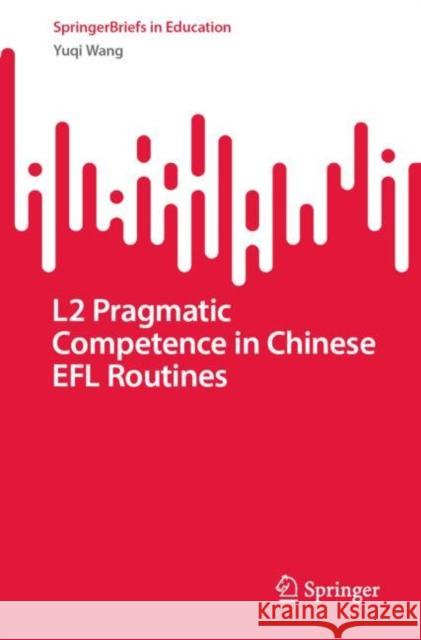
L2 Pragmatic Competence in Chinese Efl Routines

ISBN-13: 9789811963513 / Angielski / Miękka / 2022
Yuqi Wang
L2 Pragmatic Competence in Chinese Efl Routines Wang, Yuqi 9789811963513 Springer Nature Singapore - książkaWidoczna okładka, to zdjęcie poglądowe, a rzeczywista szata graficzna może różnić się od prezentowanej.

L2 Pragmatic Competence in Chinese Efl Routines

ISBN-13: 9789811963513 / Angielski / Miękka / 2022

Yuqi Wang
cena 201,72 zł
(netto: 192,11 VAT:  5%)

Najniższa cena z 30 dni: 192,74 zł
Termin realizacji zamówienia:
ok. 22 dni roboczych
Bez gwarancji dostawy przed świętami

Darmowa dostawa!

This book adopts a cross-sectional approach and mainly focuses on one of the core pragmatic constructs, formulaic/pragmatic routines, in addition to components put forward by Roever (2011) and Taguchi (2013). It actively integrates multidimensional pragmatic modalities—including both production (initiating and responding) and reception (recognition, comprehension, and perception), together with learners’ cognitive processes—rather than one or two types of task modalities. Focusing more on the Chinese EFL context instead of Japanese or European L1 learners, it also takes advantage of an emerging instrument, the computer-animated elicitation task, for data collection based on authentic oral responses and to avoid “coached” responses. The socio-cognitive approach, proposed by the famous linguistic expert Prof. Istvan Kecskes, is subsequently applied to conduct an in-depth analysis of the data. Hence, the book introduces a new and fruitful theoretical perspective to the traditional L2 pragmatic research field. 

Kategorie:
Nauka, Językoznawstwo
Kategorie BISAC:
Language Arts & Disciplines > Linguistics - Pragmatics
Education > Language Experience Approach
Psychology > Developmental - Child
Wydawca:
Springer Nature Singapore
Seria wydawnicza:
SpringerBriefs in Education
Język:
Angielski
ISBN-13:
9789811963513
Rok wydania:
2022
Waga:
0.24 kg
Wymiary:
23.5 x 15.5
Oprawa:
Miękka
Dodatkowe informacje:
Wydanie ilustrowane

"Wang Yuqi should be applauded for this wonderful book written in a concise and comprehensible manner that offers plenty of food for thought for anyone interested in L2 pragmatics, and beyond. This is a book which has had a profound influence on us ... . We often refer to it as a source of ideas and inspiration as well as recommending it to others. ... it will serve as the go-to guide for all L2 language learners and teachers." (Chili Li, Journal of Pragmatics, Vol. 213, 2023)

ABSTRACT

LIST OF TABLES
LIST OF FIGURES
LIST OF ABBREVIATIONS AND ACRONYMS
Chapter One Introduction
1.1 Research Background
1.2 Rationale of the Book
1.3 Research Objectives and Questions
1.4 Significance of the Book
1.5 Organization of the Book
Chapter Two Literature Review
2.1 A General Picture of Routines
2.1.1 Terms, Definitions, and Shared Distinguishing Features
2.1.2 Classification
2.2 Development of L2 Pragmatic Competence of Routines
2.2.1 General Proficiency vs. Pragmatic Competence of Routines
2.2.2 Study-abroad Experience vs. Pragmatic Competence of Routines
2.2.3 EP & SA Experience vs. Pragmatic Competence of Routines
2.3 Summary
Chapter Three Theoretical Foundation
3.1 Pragmatics & Second Language Pragmatics
3.1.1 Pragmatics
3.1.2 Interlanguage/Second Language Pragmatics
3.2 L2 Pragmatic Competence
3.2.1 Communicative Competence & Pragmatic competence
3.2.2 L2 Pragmatic Competence
3.2.3 Influencing Factors for L2 Pragmatic Competence
3.3 Pragmatic Theories
3.3.1 Speech Act Theory
3.3.2 Cooperative Principle
3.4 Acquisitional Theories in L2 Pragmatics
3.4.1 The Two-Dimensional Model
3.4.2 Skill-Acquisition Theories
3.4.3 Language Socialization
3.4.4 The Native Speaker Norm
3.5 Socio-Cognitive Theories in L2 Pragmatics
3.5.1 The Socio-cognitive Approach
3.5.2 Prior Context Knowledge vs. Actual Situational Context Knowledge
3.5.3 Conceptual Socialization
3.6 Summary
Chapter Four Research Methodology
4.1 Participants


4.2 Research Design
4.3 Data Collection
4.3.1 Data Collection Methods
4.3.2 Rationale of Oral DCT
4.4 Instrumentation
4.4.1 Computer Animated Production Task
4.4.2 Computer Animated Recognition Task
4.4.3 Computer Animated Comprehension Task
4.4.4 Computer Animation Perception Task
4.4.5 Computer Animated Retrospective Review
4.5 Data Collection Procedure
4.6 Data Analysis
4.6.1 Transcription of Each Formulaic Task
4.6.2 Coding Evaluation Criteria for Routine Production
4.6.3 Coding Evaluation Criteria for Routine Comprehension
4.6.4 Coding Evaluation Criteria for Routine Recognition & Perception
4.6.5 Statistical Methods in Data Analysis
4.7 Verification for Inter-Rater Reliability
4.8 Ethical Considerations
4.9 Summary
Chapter Five Results
5.1 Results for Routine Production
5.1.1 Results for Initiating Utterances
5.1.2 Results for Responding Utterances
5.2 Results for Routine Recognition
5.3 Results for Routine Comprehension
5.4 Results for Routine Perception
5.5 Summary
Chapter Six Discussion
6.1 Productive Pragmatic Competence of Routines
6.1.1 The Holistic Trend of ProPCR
6.1.2 The Impact of EP, SA Experience, and Both Combined on ProPCR
6.1.3 Learners’ Specific Performance in ProPCR
6.2 Recognitive Pragmatic Competence of Routines
6.2.1 The Holistic Trend of RPCR
6.2.2 The Impact of EP, SA Experience, and Both Combined on RPCR
6.2.3 Learners’ Specific Performance in RPCR
6.3 Comprehensive Pragmatic Competence of Routines
6.3.1 The Holistic Trend of CPCR
6.3.2 The Impact of EP, SA Experience, and Both Combined on CPCR
6.3.3 Learners’ Specific Performance in CPCR
6.4 Perceptive Pragmatic Competence of Routines
6.4.1 The holistic Trend of PerPCR
6.4.2 The Impact of EP, SA Experience, and Both Combined on PerPCR
6.4.3 Learners’ Specific Performance in PerPCR
6.5 Retrospective Review for Cognitive Process
6.5.1 Learners’ Cognitive Processes
6.5.2 Factors Affecting Learners’ Formulaic Performance
6.5.3 Methods for Improving Learners’ Formulaic Performance
6.5.4 Summary
Chapter Seven Conclusion
7.1 Summary of the Findings
7.2 Implications of the Present Study
7.3 Limitations of the Present Study
7.4 Suggestions for Future Research
REFERENCES
APPENDICES
Appendix 1 Survey for Personal Background Information
Appendix 2 Scenarios & Target Response Set for Initiating Utterances
Appendix 3 Scenarios & Target Response Set for Responding Utterances
Appendix 4 Scenarios & Target Selection for Routine Recognition
Appendix 5 Target Responses for Routine Comprehension
Appendix 6 Target Responses for Routine Perception

Dr. Yuqi Wang is a postdoc at Beihang University, where he conducts L2 pragmatic research with a team of leading international scholars. To date, Dr. Wang has published in several leading international and Chinese journals, including Pragmatics and Society and Foreign Language World. In addition to managing various research projects and being awarded numerous national scholarships, he recently co-edited the Chinese translation of Peter Grundy’s Doing Pragmatics with Commercial Press, a top publisher in China. 

This book adopts a cross-sectional approach and mainly focuses on one of the core pragmatic constructs, formulaic/pragmatic routines, in addition to components put forward by Roever (2011) and Taguchi (2013). It actively integrates multidimensional pragmatic modalities—including both production (initiating and responding) and reception (recognition, comprehension, and perception), together with learners’ cognitive processes—rather than one or two types of task modalities. Focusing more on the Chinese EFL context instead of Japanese or European L1 learners, it also takes advantage of an emerging instrument, the computer-animated elicitation task, for data collection based on authentic oral responses and to avoid “coached” responses. The socio-cognitive approach, proposed by the famous linguistic expert Prof. Istvan Kecskes, is subsequently applied to conduct an in-depth analysis of the data. Hence, the book introduces a new and fruitful theoretical perspective to the traditional L2 pragmatic research field. 



Udostępnij

Facebook - konto krainaksiazek.pl


Opinie o Krainaksiazek.pl na Opineo.pl

Partner Mybenefit

Krainaksiazek.pl w programie rzetelna firma Krainaksiaze.pl - płatności przez paypal

Czytaj nas na:

Facebook - krainaksiazek.pl
  • książki na zamówienie
  • granty
  • książka na prezent
  • kontakt
  • pomoc
  • opinie
  • regulamin
  • polityka prywatności

Zobacz:

  • Księgarnia czeska

  • Wydawnictwo Książkowe Klimaty

1997-2025 DolnySlask.com Agencja Internetowa

© 1997-2022 krainaksiazek.pl
     
KONTAKT | REGULAMIN | POLITYKA PRYWATNOŚCI | USTAWIENIA PRYWATNOŚCI
Zobacz: Księgarnia Czeska | Wydawnictwo Książkowe Klimaty | Mapa strony | Lista autorów
KrainaKsiazek.PL - Księgarnia Internetowa

Polityka prywatnosci - link
Krainaksiazek.pl - płatnośc Przelewy24
Przechowalnia Przechowalnia





