• Wyszukiwanie zaawansowane
  • Kategorie
  • Kategorie BISAC
  • Książki na zamówienie
  • Promocje
  • Granty
  • Książka na prezent
  • Opinie
  • Pomoc
  • Załóż konto
  • Zaloguj się

Korpuskeln Und Strahlung in Materie I / Corpuscles and Radiation in Matter I » książka


zaloguj się | załóż konto
Logo Krainaksiazek.pl

koszyk

konto

szukaj
topmenu
Księgarnia internetowa
Szukaj
Książki na zamówienie
Promocje
Granty
Książka na prezent
Moje konto
Pomoc
 
 
Wyszukiwanie zaawansowane
Pusty koszyk
Bezpłatna dostawa dla zamówień powyżej 20 złBezpłatna dostawa dla zamówień powyżej 20 zł

Kategorie główne

• Nauka
 [2946912]
• Literatura piękna
 [1852311]

  więcej...
• Turystyka
 [71421]
• Informatyka
 [150889]
• Komiksy
 [35717]
• Encyklopedie
 [23177]
• Dziecięca
 [617324]
• Hobby
 [138808]
• AudioBooki
 [1671]
• Literatura faktu
 [228371]
• Muzyka CD
 [400]
• Słowniki
 [2841]
• Inne
 [445428]
• Kalendarze
 [1545]
• Podręczniki
 [166819]
• Poradniki
 [480180]
• Religia
 [510412]
• Czasopisma
 [525]
• Sport
 [61271]
• Sztuka
 [242929]
• CD, DVD, Video
 [3371]
• Technologie
 [219258]
• Zdrowie
 [100961]
• Książkowe Klimaty
 [124]
• Zabawki
 [2341]
• Puzzle, gry
 [3766]
• Literatura w języku ukraińskim
 [255]
• Art. papiernicze i szkolne
 [7810]
Kategorie szczegółowe BISAC

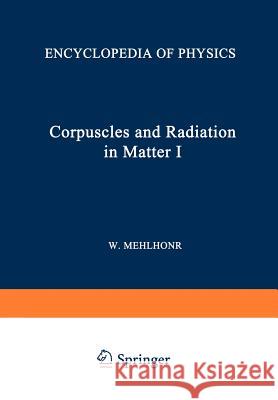
Korpuskeln Und Strahlung in Materie I / Corpuscles and Radiation in Matter I

ISBN-13: 9783642464553 / Angielski / Miękka / 2012 / 632 str.
T. Aberg; G. Howat; L. Karlsson
Korpuskeln Und Strahlung in Materie I / Corpuscles and Radiation in Matter I Mehlhorn, W. 9783642464553 Springer - książkaWidoczna okładka, to zdjęcie poglądowe, a rzeczywista szata graficzna może różnić się od prezentowanej.

Korpuskeln Und Strahlung in Materie I / Corpuscles and Radiation in Matter I

ISBN-13: 9783642464553 / Angielski / Miękka / 2012 / 632 str.

T. Aberg; G. Howat; L. Karlsson
cena 401,58
(netto: 382,46 VAT:  5%)

Najniższa cena z 30 dni: 385,52
Termin realizacji zamówienia:
ok. 22 dni roboczych
Dostawa w 2026 r.

Darmowa dostawa!

This volume deals with specific fields of atomic physics: photoionization, photoelectron spectroscopy and the Auger effect. Here a vast amount of experimental and theoretical results has emerged during the last two decades, indeed in the case of photoelectron spectroscopy the field itself has been developed only since the mid-fifties. Experimentally, this was mostly due to the development of high resolution electron spectrometers and the availability or the development of new radiation sources (e. g. synchrotron radiation, reso- nance radiation of rare gas discharge lamps, monochromatized characteristic X-radiation). Here, not only first-order effects with high precision but, even more important, also second-order effects caused by electron correlation were studied. Parallel to the development of new experimental methods, an impor- tant step beyond the independent-particle model was made on the theoretical side through the development of various approaches to treat electron cor- relation effects seen in photoionization and electron spectroscopy. Volume 31 is divided into the following chapters: Theory of Photoion- ization, Atomic Photoionization, Photoelectron Spectroscopy, and Theory of the Auger Effect. A chapter on Auger Electron Spectrometry could not be includ- ed since the manuscript was not sent in due time. Freiburg, September W. MEHLHORN 1982 Contents Theory of Atomic Photoionization. By Professor Dr. ANTHONY F. STARACE, Behlen Laboratory of Physics, Department of Physics and Astronomy, The University of Nebraska, Lincoln, NE 68588 (USA). (With 40 Figures) 1. Introduction I. General considerations 5 2. Introduction 5 3. Derivation of the general cross-section formula 6 4. The final-state wave function . . . . . . .


Kategorie:
Nauka, Fizyka
Kategorie BISAC:
Science > Physics - Condensed Matter
Science > Spectroscopy & Spectrum Analysis
Science > Chemia - Fizyczna
Wydawca:
Springer
Seria wydawnicza:
Handbuch Der Physik Encyclopedia of Physics / R Ntgenstrahle
Język:
Angielski
ISBN-13:
9783642464553
Rok wydania:
2012
Wydanie:
Softcover Repri
Numer serii:
000455366
Ilość stron:
632
Waga:
1.10 kg
Wymiary:
24.4 x 17.0
Oprawa:
Miękka
Wolumenów:
01

Theory of Atomic Photoionization.- 1. Introduction.- I. General considerations.- 2. Introduction.- 3. Derivation of the general cross-section formula.- 4. The final-state wave function.- 5. Alternative expressions for the transition matrix element.- 6. Cross-section formulae in terms of the final-state channel wave functions.- 7. The angular distribution asymmetry parameter.- 8. The atomic oscillator strength.- 9. Limiting cases and approximations to the general formulae.- II. The central potential model and its predictions.- 10. The central potential model.- 11. Predictions for the high-energy behavior of the cross section.- 12. Predictions for the near-threshold behavior of the cross section.- 13. Bibliographic note on central potential model calculations.- III. General methods for including electron correlation.- a) Whole-space correlation theories.- 14. Introduction.- 15. Configuration interaction in the continuum.- 16. Procedures derived from a variational principle.- 17. Many-body perturbation theory.- 18. The random-phase approximation.- b) Partitioned-space correlation theories.- 19. Introduction.- 20. Quantum defect theory.- 21. The R matrix theory.- 22. Discrete basis-set methods.- IV. Specialized topics in the theory of photoionization.- 23. Photoelectron angular distributions.- 24. Multiple photoionization.- Atomic Photoionization.- 1. Introduction.- 2. Historical Review.- I. Absorption of radiation.- 3. General concepts.- 4. Error analysis.- II. Experimental techniques.- 5. Light sources.- ?) DC glow discharge.- ?) Spark discharge.- ?) Synchrotron radiation.- 6. Monochromators and spectrographs.- 7. Absorption and photoionization cells.- ?) Double beam.- ?) Split beam.- ?) Double ion chamber.- ?) Heat pipes.- ?) Atomic beams.- 8. Branching-ratio studies.- ?) Mass spectrometers.- ?) Electron energy analyzers.- ?) Ion chambers.- ?) Fluorescence spectrometry.- 9. Electron-impact “photoionization”.- III. Photoionization measurements.- 10. Total photoionization cross sections.- ?) The rare gases.- ?) The alkali metals.- ?) Cross sections of some miscellaneous atoms.- ?) Ionic-and excited-state atoms.- 11. Partial photoionization cross sections.- ?) Ionization from specific orbitals.- ?) Multiple ionization.- ?) Angular distribution of photoelectrons.- 12. Summary of atoms studied and the future.- General references.- Photoelectron Spectroscopy.- I. Introduction.- 1. Scope and abstract.- 2. Historical background.- II. Experimental procedures and general features of photoelectron spectra.- 3. Photon sources.- ?) Introduction.- ?) X-ray sources. Monochromatization.- ?) UV-source. Filtering and polarization.- ?) Synchrotron radition.- 4. Electron energy analyzers and detectors.- ?) Introduction.- ?) Dispersive analyzers.- ?) Nondispersive analyzers.- ?) Preretardation in dispersive analyzers.- ?) Electron detection.- 5. Sample preparation procedures.- ?) Vacuum requirements.- ?) Gases.- ?) Liquids.- ?) Solids and surfaces.- 6. General features of photoelectron spectra.- ?) Introduction.- ?) Calibration of photoelectron spectra.- ?) Intensities of photoelectron lines.- ?) Widths of photoelectron lines.- 7. Theoretical models for photoelectron spectra.- ?) Koopmans’ theorem and.?SCF binding energies.- ?) Correlation in initial and final states.- ?) Intensities of one-electron and multi-electron transitions.- ?) Vibrational excitations, Franck-Condon principle.- III. Atomic photoelectron spectra.- 8. Core electron ionization.- ?) The Ne1s spectrum.- ?) The Xe4s, 4p spectrum.- 9. Valence electron ionization.- ?) Inner valence ionization.- ?) Outer valence ionization.- 10. Tables of electron binding energies and relative multiplet intensities for atoms.- ?) Atomic binding energies.- ?) Relative multiplet intensities for ionization of open shell atoms.- IV. Core level studies in molecules and condensed matter.- 11. Chemical shifts of core electron lines.- ?) Introduction.- ?) Basic model considerations.- ?) Orbital energy shifts.- ?) Ground state potential models (GPM).- ?) Core shift models including relaxation.- ?) Relations to other experimental data. The thermodynamic model.- 12. Multiple excitations in core ionization of molecules and solids.- ?) Molecular core electron spectra.- ?) Many-electron effects in solid core photoelectron spectra.- ?) Vibrational excitations in core electron spectra.- ?) Core line multiplet structure in molecules and solids.- 13. Core electron spectra of molecules on metal surfaces. ESCA diffraction.- V. Valence level studies in molecules and condensed matter.- 14. General features of molecular valence electron spectra.- ?) Introduction.- ?) Electron binding energies of main bands.- ?) Intensities of main bands.- ?) Satellite structure.- ?) Spin-orbit and Jahn-Teller interactions.- 15. Vibrational and rotational excitations in valence electron spectra.- ?) Vibrational selection rules.- ?) Hot bands.- ?) Qualitative correspondence between vibrational structure and orbital shapes.- ?) Calculation of vibrational structure.- ?) Rotational excitations.- 16. Angular distributions of molecular valence photoelectrons.- ?) General aspects.- ?) Photoelectron energy dependence of the asymmetry parameter.- ?) Vibrational state dependence of the asymmetry parameter.- ?) Rotational state dependence of the asymmetry parameter.- ?) Asymmetry parameters for interpretation of valence spectra.- 17. Molecular structure and bonding.- ?) MO methods for characterization of spectra and correlation with chemical reaction parameters.- ?) Biological molecules.- ?) Molecular conformations, equilibrium systems and chemical reactions.- ?) Short-lived species.- e) Ionically bonded molecules.- ?) Negative ions.- 18. Valence electron studies of single crystals and adsorbates.- ?) Selection rules in photoionization from solids.- ?) Two-dimensional band structures.- ?) Three-dimensional band structures.- ?) Angular studies of adsorbates.- 19. Density of states structure from photoelectron spectra.- ?) Solid valence photoelectron spectra in the high photon energy limit.- ?) Metal valence bands.- ?) Alloy valence bands.- ?) Formation of valence bands in extended systems.- Appendix: Graph of electron binding energies for the elements.- Theory of the Auger Effect.- I. A nonrelativistic scattering approach to the decay of inner-shell vacancy states.- 1. Boundary conditions.- 2. Nonresonant multichannel scattering.- 3. Resonant scattering including channel interaction.- 4. Autoionization and the Auger effect as resonance scattering. The concept of nonradiative transitions.- 5. Spontaneous photon emission as resonance scattering.- 6. Final-state photon-electron interactions and additivity of nonradiative and radiative widths.- II. Nonrelativistic theory of nonradiative transitions.- 7. Central field model and classification of nonradiative transitions.- 8. Many-electron theory and frozen-core approximation.- ?) LS- coupling.- ?) Intermediate coupling and configuration interaction.- ?) jj coupling.- ?) Variational principle and Hartree-Fock method.- ?) Electrons and holes.- 9. Probability of nonradiative transitions.- ?) LS- and jj-coupling limit.- ?) Intermediate coupling and configuration interaction.- ?) The open-shell case.- ?) Relationship between the intensity and probability.- 10. Beyond the independent-electron frozen-core approximation.- ?) Relaxation.- ?) Interchannel interaction.- ?) Perturbation approaches to the Auger effect.- III. Relativistic theory of nonradiative transitions.- 11. Basic Hamiltonian and the electron-electron interaction.- 12. A relativistic nonradiative transition probability.- 13. Intermediate coupling.- IV. Angular distribution of Auger electrons.- 14. General considerations.- ?) Photoionization.- ?) Ionization by high-energy electron impact.- 15. Auger electron angular distributions.- ?) Noncoincidence experiments.- ?) Some features of noncoincidence angular distributions.- ?) Coincidence experiments.- V. The calculation of nonradiative transition energies.- 16. General aspects of hole-state and binding energies.- ?) The level shift.- ?) Variational collapse.- ?) Perturbation analysis of binding energies.- ?) Relativistic and quantum-electrodynamical effects.- ?) Correlation.- 17. Semiempirical treatments.- 18. Ab initio calculations.- ?) Self-consistent-field methods.- ?) Correlation effects.- VI. The calculation of nonradiative transition amplitudes.- 19. Computation of radial wave functions.- ?) The nonrelativistic treatment.- ?) Some approximate potential methods.- ?) The relativistic treatment.- ?) Some practical considerations.- 20. On factors affecting the nonradiative transition amplitudes.- ?) Relativistic effects.- ?) The choice of the local potential and kinetic energy.- ?) The effect of bound orbital basis set and relaxation.- ?) Correlation effects.- Appendices.- A. Some formulae for the treatment of the continuous spectrum.- B. Relationship between the configuration interaction and the projection operator approach in the theory of resonances.- C. A derivation of the Fano profile from scattering theory.- D. Equivalence of electron and hole wave functions with respect to symmetry.- E. Conversion and normalization factors.- General references.


Udostępnij

Facebook - konto krainaksiazek.pl


Opinie o Krainaksiazek.pl na Opineo.pl

Partner Mybenefit

Krainaksiazek.pl w programie rzetelna firma Krainaksiaze.pl - płatności przez paypal

Czytaj nas na:

Facebook - krainaksiazek.pl
  • książki na zamówienie
  • granty
  • książka na prezent
  • kontakt
  • pomoc
  • opinie
  • regulamin
  • polityka prywatności

Zobacz:

  • Księgarnia czeska

  • Wydawnictwo Książkowe Klimaty

1997-2025 DolnySlask.com Agencja Internetowa

© 1997-2022 krainaksiazek.pl
     
KONTAKT | REGULAMIN | POLITYKA PRYWATNOŚCI | USTAWIENIA PRYWATNOŚCI
Zobacz: Księgarnia Czeska | Wydawnictwo Książkowe Klimaty | Mapa strony | Lista autorów
KrainaKsiazek.PL - Księgarnia Internetowa

Polityka prywatnosci - link
Krainaksiazek.pl - płatnośc Przelewy24
Przechowalnia Przechowalnia






