• Wyszukiwanie zaawansowane
  • Kategorie
  • Kategorie BISAC
  • Książki na zamówienie
  • Promocje
  • Granty
  • Książka na prezent
  • Opinie
  • Pomoc
  • Załóż konto
  • Zaloguj się

Issues and Reviews in Teratology: Volume 5 » książka


zaloguj się | załóż konto
Logo Krainaksiazek.pl

koszyk

konto

szukaj
topmenu
Księgarnia internetowa
Szukaj
Książki na zamówienie
Promocje
Granty
Książka na prezent
Moje konto
Pomoc
 
 
Wyszukiwanie zaawansowane
Pusty koszyk
Bezpłatna dostawa dla zamówień powyżej 20 złBezpłatna dostawa dla zamówień powyżej 20 zł

Kategorie główne

• Nauka
 [2952079]
• Literatura piękna
 [1850969]

  więcej...
• Turystyka
 [71058]
• Informatyka
 [151066]
• Komiksy
 [35579]
• Encyklopedie
 [23181]
• Dziecięca
 [620496]
• Hobby
 [139036]
• AudioBooki
 [1646]
• Literatura faktu
 [228729]
• Muzyka CD
 [379]
• Słowniki
 [2932]
• Inne
 [445708]
• Kalendarze
 [1409]
• Podręczniki
 [164793]
• Poradniki
 [480107]
• Religia
 [510956]
• Czasopisma
 [511]
• Sport
 [61267]
• Sztuka
 [243299]
• CD, DVD, Video
 [3411]
• Technologie
 [219640]
• Zdrowie
 [100984]
• Książkowe Klimaty
 [124]
• Zabawki
 [2281]
• Puzzle, gry
 [3363]
• Literatura w języku ukraińskim
 [258]
• Art. papiernicze i szkolne
 [8020]
Kategorie szczegółowe BISAC

Issues and Reviews in Teratology: Volume 5

ISBN-13: 9781461278474 / Angielski / Miękka / 2011 / 338 str.
H. Kalter
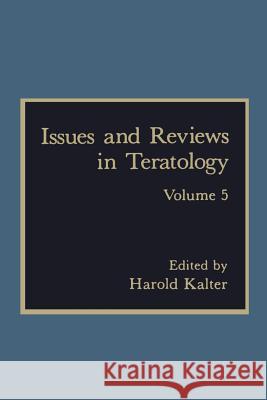
Issues and Reviews in Teratology: Volume 5 Kalter, H. 9781461278474 Springer - książkaWidoczna okładka, to zdjęcie poglądowe, a rzeczywista szata graficzna może różnić się od prezentowanej.

Issues and Reviews in Teratology: Volume 5

ISBN-13: 9781461278474 / Angielski / Miękka / 2011 / 338 str.

H. Kalter
cena 201,24
(netto: 191,66 VAT:  5%)

Najniższa cena z 30 dni: 192,74
Termin realizacji zamówienia:
ok. 22 dni roboczych
Dostawa w 2026 r.

Darmowa dostawa!

Why Efforts to Expand the Meaning of "Teratogen" Are Unacceptable Disagreement about nomenclature in teratology is not new. Dissent even about the very fabric of the discipline-what congenital malformations consist of-has often been voiced. Time, instead of resolving such diffi culties, has sometimes worsened them. For example, in the past it was agreed that congenital malforma tions are abnormalities of structure present at birth, but differences of opinion concerning where the line between normal and abnormal was to be drawn prevailed. It was obvious that, in order to discover the causes of congenital malformations and cast strategies for their prevention, it would be necessary to have knowledge of the baseline of their frequency, and that this required uniformity of definition of terms. Since malfor mations of primary social concern are those having grave outcomes (and are, paradoxically, also the commonest ones), it is logical that such condi tions were the first consideration of investigators and were the defects whose frequency was considered to comprise the required baseline."


Kategorie:
Nauka, Biologia i przyroda
Kategorie BISAC:
Medical > Ginekologia i położnictwo
Science > Biologia rozwoju
Medical > Genetyka kliniczna
Wydawca:
Springer
Język:
Angielski
ISBN-13:
9781461278474
Rok wydania:
2011
Wydanie:
Softcover Repri
Ilość stron:
338
Waga:
0.50 kg
Wymiary:
22.9 x 15.2
Oprawa:
Miękka
Wolumenów:
01
Dodatkowe informacje:
Wydanie ilustrowane

1 Of Mice and Children: Reminiscences of a Teratogeneticist.- 1. Prenatal and Family History.- 2. Childhood.- 3. The Nuclear Family.- 4. School.- 5. University.- 6. Graduate School.- 7. Graduate Studies.- 8. Royal Canadian Air Force.- 9. Medical School.- 10. Getting Started—Medical Genetics.- 11. Medical Genetics Comes of Age.- 12. Genetic Counseling.- 13. The Teratology Connection.- 14. Cleft Palate and Cortisone.- 15. The Multifactorial/Threshold Model.- 16. The Human Connection.- 17. 6-Aminonicotinamide.- 18. Spin-offs.- 19. Cleft Lip.- 20. Studies in Medical Genetics.- 21. The Terato-Clinical Genetics Dilemma.- 22. The Books.- 23. Travels.- 24. International Conferences on Congenital Malformations.- 25. World Health Organization Committee.- 26. Thalidomide.- 27. Saccharin a Teratogen?.- 28. The Anomalad.- 29. Agent Orange.- 30. Sickle-Cell Screening.- 31. Newfoundland.- 32. Personal History.- References.- 2 The Concept of Homology in Comparative Mammalian Teratology.- 1. Introduction.- 2. Homology.- 3. Concept of Phenotype.- 4. Some Issues in Comparative Pathogenesis.- 4.1. Ectodermal Dysplasia in Man and Dog.- 4.2. Glycogen Storage Disease Type VII in Man and Dog.- 4.3. HPRT Deficiency in Man and Mouse.- 5. Homologous Common Congenital Malformations.- 5.1. Neural Tube Defects (NTD).- 5.2. Congenital Heart Defects.- 5.3. Cleft Lip and Palate.- 6. Searching for Homologous Congenital Defects.- 6.1. The Mammalian X Chromosome.- 6.2. Autosomally Linked Homologies.- 7. Do Names and Definitions Matter?.- 8. Some Concluding Thoughts.- References.- 3 Short-Term Methods of Assessing Developmental Toxicity Hazard: Status and Critical Evaluation.- 1. Introduction.- 2. The Drive to Develop New Methods of Detecting Developmental Hazard Potential.- 2.1. Basis of the Drive.- 2.2. Alternative Methods as a Driving Force.- 3. Goals of in Vitro and Alternative Methods in Developmental Toxicology.- 3.1. Elucidation of Normal and Abnormal Development.- 3.2. Detection of Developmental Toxicity Potential.- 3.3. Replacement of in Vivo by in Vitro Testing.- 3.4. Reduction of Expenses Associated with in Vivo Testing.- 4. Testing Chemicals of Unknown Embryotoxic Activity.- 4.1. Terminology Applied.- 4.2. Selective Embryotoxicity and Developmental Hazard.- 5. In Vitro Systems Explored for Prescreening Purposes.- 5.1. Scientific Basis for Test Design.- 5.2. Actively Explored Test Systems.- 6. Most Frequently Published in Vitro Prescreening Systems.- 6.1. Primary Cell Cultures of Phylogenetically Lower Cells.- 6.2. Culture of Mammalian Cells.- 6.3. Intact Lower Animals.- 6.4. Whole Embryo Culture (WEC) of Rodent Embryos.- 6.5. Short-Term Tests with Pregnant Laboratory Animals.- 7. Assessment of Proposed in Vitro Tests.- 7.1. Developmental Hazard Potential and A/D Ratio.- 7.2. Physicochemical Properties of Test Chemicals.- 7.3. Chemical Exposure and the Role of Metabolism.- 8. Comments on Validation.- 8.1. Selection of Chemicals.- 8.2. Endpoint Selection and Designation of Test Outcome.- 8.3. Proposed Changes in the Approach to Validation.- 9. Outlook for the Future: Genetic Toxicology versus Developmental Toxicology. Can One Glean Anything from Genetic Toxicology?.- References.- 4 Twinning in Spontaneous Abortions and Developmental Abnormalities.- 1. Introduction.- 2. Types of Twins.- 2.1. Monozygotic Twins.- 2.2. Dizygotic Twins.- 2.3. Polar Body Twinning.- 3. Spontaneous Abortions.- 4. Developmental Abnormalities.- 4.1. Conjoined Twins.- 4.2. Severe Discordant Anomalies.- 4.3. Mosaics and Chimeras.- 5. The Vanishing Twin.- 6. Incidence of Twinning.- References.- 5 Experimental Induction of Dominant Mutations in Mammals by Ionizing Radiations and Chemicals.- 1. Introduction.- 2. Gametogenesis.- 3. Review of Results Obtained for Different Endpoints.- 3.1. Skeletal Abnormalities.- 3.2. Cataracts.- 3.3. Dominant Visible Mutations.- 3.4. Litter-Size Reduction.- 3.5. Congenital Malformations.- 3.6. Stunted Growth.- 3.7. Shortened Life Span.- 3.8. Tumors.- 3.9. Effects on Behavior.- 3.10. Miscellaneous Experiments.- 4. Genetic Risk Estimation.- 4.1. Indirect Method.- 4.2. Direct Method.- 5. Special Considerations for Future Study of Induction of Dominant Mutations.- References.- 6 The Teratology and Developmental Toxicity of Cadmium.- 1. Introduction.- 2. Cadmium as a Teratogen.- 2.1. General Properties.- 2.2. Mechanisms of Teratogenesis.- 2.3. Genetic Considerations.- 3. Cadmium and the Chorioallantoic Placenta.- 4. Chronic Exposure to Cadmium during Pregnancy.- 4.1. Fetal Growth Retardation.- 4.2. Cadmium in the Placenta and Fetus.- 5. Cadmium Exposure in the Perinatal Period.- 6. Summary.- References.- 7 Epidemiologic Aspects of Down Syndrome: Sex Ratio, Incidence, and Recent Impact of Prenatal Diagnosis.- 1. Introduction.- 2. Sex Ratio in Down Syndrome.- 2.1. Historical Perspective.- 2.2. Etiologic Relevance of Sex Ratio.- 2.3. Sex Ratios in Total Live Births.- 2.4. A Critique of Available Sex Ratio Data for Trisomy 21.- 2.5. Current Live-Birth Data from Atlanta and Southwest Ohio.- 2.6. Sex Ratio in Translocation Down Syndrome.- 2.7. Effect of Maternal Age on Sex Ratio in Down Syndrome.- 2.8. Sex Ratio in Trisomy 21 Fetuses Diagnosed Prenatally.- 2.9. Summary and Conclusions for Sex Ratio in Down Syndrome.- 3. Incidence of Down Syndrome and Effects of Demographic Changes.- 3.1. Historical Perspective.- 3.2. Effects of Demographic Changes.- 3.3. Incidence Rate Projections in the United States.- 3.4. Environmental Effects on Incidence Rates.- 3.5. Effects of Elective Abortion on Incidence Rates.- 4. Effects of Prenatal Diagnosis on Incidence Rates of Down Syndrome.- 5. Concluding Remarks.- References.


Udostępnij

Facebook - konto krainaksiazek.pl


Opinie o Krainaksiazek.pl na Opineo.pl

Partner Mybenefit

Krainaksiazek.pl w programie rzetelna firma Krainaksiaze.pl - płatności przez paypal

Czytaj nas na:

Facebook - krainaksiazek.pl
  • książki na zamówienie
  • granty
  • książka na prezent
  • kontakt
  • pomoc
  • opinie
  • regulamin
  • polityka prywatności

Zobacz:

  • Księgarnia czeska

  • Wydawnictwo Książkowe Klimaty

1997-2025 DolnySlask.com Agencja Internetowa

© 1997-2022 krainaksiazek.pl
     
KONTAKT | REGULAMIN | POLITYKA PRYWATNOŚCI | USTAWIENIA PRYWATNOŚCI
Zobacz: Księgarnia Czeska | Wydawnictwo Książkowe Klimaty | Mapa strony | Lista autorów
KrainaKsiazek.PL - Księgarnia Internetowa

Polityka prywatnosci - link
Krainaksiazek.pl - płatnośc Przelewy24
Przechowalnia Przechowalnia






