Islam and the Last Day: Christian Perspectives on Islamic Eschatology » książka





Islam and the Last Day: Christian Perspectives on Islamic Eschatology
ISBN-13: 9780992476311 / Angielski / Miękka / 2014 / 194 str.
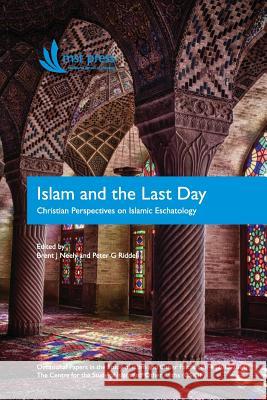
On one level, it is patently obvious that eschatology is a crucial element of the religion of Islam. The Qur'an virtually thunders with warnings of impending cataclysm; it issues shrill warning of certain judgment; and it promises rewards as exhortation to the pious. 'The Hour' (of the resurrection to judgment) relentlessly impresses itself on the listener. The 'Fire' and 'Paradise' are famous motifs of the book (particularly the Meccan suras). On the other hand, some elements of Islamic teaching on the interim state of the individual between death and final judgment, or aspects of Islamic expectation about the earth's last days are much less well known. When it comes to the events ushering in the Final Day, the unpredictable energy of Muslim apocalyptic may be compared to the preparation of traditional Arab coffee which is brought to a frothy boil and then allowed to settle back again prior to the next surge: that is, apocalyptic tumult periodically erupts onto the canvas of Muslim society and then recedes, but never disappears, ready to burst out once again at a later time. For some it will be a surprise to discover that a number of scholars attribute the incredible energy and success of the early Islamic conquests to apocalyptic fervour, that is, to the conviction that the end-of-the-world was imminent. A certain type of eschatological dynamic and disruptive energy has been unleashed by apocalyptic expectation throughout Islamic history (both Sunni and Shi'i), including considerable 'latter-days' agitation associated with the recent conflicts in both Iraq and Syria. In its broadest sense, eschatology is a concern of most religious worldviews. That is, eschatology is related to 'last things' or, we might say, 'ends, ' goals, or those things of utmost significance. For most religious systems there is a sense that ultimate meaning and purpose transcend our mere temporal physical existence. In the monotheistic religions in particular the importance of eschatology is very pronounced, sometimes with a rather 'sharp edge.' This is so because Judaism, Christianity, and Islam all hold to a more-or-less 'historical' or 'meta-narratival' construction of history and proclaim the one God as personal, as creator, and as judge: the human story is, at some level, under divine supervision and will one day be brought to conclusion, humanity held to account
On one level, it is patently obvious that eschatology is a crucial element of the religion of Islam. The Quran virtually thunders with warnings of impending cataclysm; it issues shrill warning of certain judgment; and it promises rewards as exhortation to the pious. The Hour (of the resurrection to judgment) relentlessly impresses itself on the listener. The Fire and Paradise are famous motifs of the book (particularly the Meccan suras). On the other hand, some elements of Islamic teaching on the interim state of the individual between death and final judgment, or aspects of Islamic expectation about the earths last days are much less well known.When it comes to the events ushering in the Final Day, the unpredictable energy of Muslim apocalyptic may be compared to the preparation of traditional Arab coffee which is brought to a frothy boil and then allowed to settle back again prior to the next surge: that is, apocalyptic tumult periodically erupts onto the canvas of Muslim society and then recedes, but never disappears, ready to burst out once again at a later time. For some it will be a surprise to discover that a number of scholars attribute the incredible energy and success of the early Islamic conquests to apocalyptic fervour, that is, to the conviction that the end-of-the-world was imminent. A certain type of eschatological dynamic and disruptive energy has been unleashed by apocalyptic expectation throughout Islamic history (both Sunni and Shii), including considerable latter-days agitation associated with the recent conflicts in both Iraq and Syria.In its broadest sense, eschatology is a concern of most religious worldviews. That is, eschatology is related to last things or, we might say, ends, goals, or those things of utmost significance. For most religious systems there is a sense that ultimate meaning and purpose transcend our mere temporal physical existence. In the monotheistic religions in particular the importance of eschatology is very pronounced, sometimes with a rather sharp edge. This is so because Judaism, Christianity, and Islam all hold to a more-or-less historical or meta-narratival construction of history and proclaim the one God as personal, as creator, and as judge: the human story is, at some level, under divine supervision and will one day be brought to conclusion, humanity held to account.




Czytaj nas na:
KrainaKsiazek.PL - Księgarnia Internetowa


