• Wyszukiwanie zaawansowane
  • Kategorie
  • Kategorie BISAC
  • Książki na zamówienie
  • Promocje
  • Granty
  • Książka na prezent
  • Opinie
  • Pomoc
  • Załóż konto
  • Zaloguj się

Investigative Psychology : Offender Profiling and the Analysis of Criminal Action » książka

zaloguj się | załóż konto
Logo Krainaksiazek.pl

koszyk

konto

szukaj
topmenu
Księgarnia internetowa
Szukaj
Książki na zamówienie
Promocje
Granty
Książka na prezent
Moje konto
Pomoc
 
 
Wyszukiwanie zaawansowane
Pusty koszyk
Bezpłatna dostawa dla zamówień powyżej 20 złBezpłatna dostawa dla zamówień powyżej 20 zł

Kategorie główne

• Nauka
 [2946600]
• Literatura piękna
 [1856966]

  więcej...
• Turystyka
 [72221]
• Informatyka
 [151456]
• Komiksy
 [35826]
• Encyklopedie
 [23190]
• Dziecięca
 [619653]
• Hobby
 [140543]
• AudioBooki
 [1577]
• Literatura faktu
 [228355]
• Muzyka CD
 [410]
• Słowniki
 [2874]
• Inne
 [445822]
• Kalendarze
 [1744]
• Podręczniki
 [167141]
• Poradniki
 [482898]
• Religia
 [510455]
• Czasopisma
 [526]
• Sport
 [61590]
• Sztuka
 [243598]
• CD, DVD, Video
 [3423]
• Technologie
 [219201]
• Zdrowie
 [101638]
• Książkowe Klimaty
 [124]
• Zabawki
 [2473]
• Puzzle, gry
 [3898]
• Literatura w języku ukraińskim
 [254]
• Art. papiernicze i szkolne
 [8170]
Kategorie szczegółowe BISAC

Investigative Psychology : Offender Profiling and the Analysis of Criminal Action

ISBN-13: 9780470023969 / Angielski / Twarda / 2009 / 496 str.
David Canter; Donna Youngs
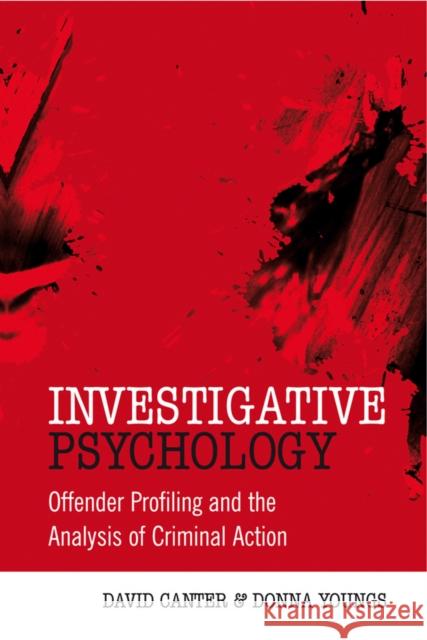
Investigative Psychology : Offender Profiling and the Analysis of Criminal Action David Canter Donna Youngs 9780470023969 John Wiley & Sons - książkaWidoczna okładka, to zdjęcie poglądowe, a rzeczywista szata graficzna może różnić się od prezentowanej.

Investigative Psychology : Offender Profiling and the Analysis of Criminal Action

ISBN-13: 9780470023969 / Angielski / Twarda / 2009 / 496 str.

David Canter; Donna Youngs
cena 896,45 zł
(netto: 853,76 VAT:  5%)

Najniższa cena z 30 dni: 889,10 zł
Termin realizacji zamówienia:
ok. 30 dni roboczych
Bez gwarancji dostawy przed świętami

Darmowa dostawa!

This ground-breaking text is the first to provide a detailed overview of Investigative Psychology, from the earliest work through to recent studies, including descriptions of previously unpublished internal reports. Crucially it provides a framework for students to explore this exciting terrain, combining Narrative Theory and an Action Systems framework. It includes empirically tested models for Offender Profiling and guidance for investigations, as well as an agenda for research in Investigative Psychology. Investigative Psychology features:

  • The full range of crimes from fraud to terrorism, including burglary, serial killing, arson, rape, and organised crime
  • Important methodologies including multi-dimensional scaling and the Radex approach as well as Social Network Analysis
  • Geographical Offender Profiling, supported by detailed analysis of the underlying psychological processes that make this such a valuable investigative decision support tool
  • The full range of investigative activities, including effective information collection, detecting deception and the development of decision support systems.
In effect, this text introduces an exciting new paradigm for a wide range of psychological contributions to all forms of investigation within and outside of law enforcement. Each chapter has actual cases and quotations from offenders and ends with questions for discussion and research, making this a valuable text for undergraduate and postgraduate courses in Applied and Forensic Psychology, Criminology, Socio-Legal Studies and related disciplines.

Kategorie:
Nauka, Psychologia
Kategorie BISAC:
Psychology > Forensic Psychology
Wydawca:
John Wiley & Sons
Język:
Angielski
ISBN-13:
9780470023969
Rok wydania:
2009
Ilość stron:
496
Waga:
0.95 kg
Wymiary:
24.38 x 16.76 x 3.05
Oprawa:
Twarda
Wolumenów:
01
Dodatkowe informacje:
Bibliografia
Glosariusz/słownik

Preface.

Acknowledgements.

PART I The Road to Investigative Psychology.

The Emergence of Investigative Psychology from Offender Profiling.

1 Introducing Investigative Psychology.

Psychology and Investigations.

The Emergence of IP.

Origins in ′Offender Profiling′.

The Investigative Cycle.

Disciplines Drawn On by IP.

Mind the Gap Bridging Policing and Psychology.

System Integration versus Expert Opinion.

Questions that Investigative Psychologists Ask.

Beyond Crime and Criminals.

Linking Theory and Practice The Book Ahead.

Summary.

Further Reading.

Questions for Discussion and Research.

2 Foundations: Description and Classification.

Psychology and Investigations.

Historical Background.

Profiling Emerges.

The Significance of Inference.

Investigative Psychology and Offender Profiling.

3 The Coming of the Informed Detective.

Medical Contributions.

From Fact to Fiction to Fact.

Distinguishing Deduction and Induction.

Reverse Diagnosis.

Serial Killers.

Jack the Ripper.

Beyond Speculation.

4 The Age of Profiling and the Road to Investigative Psychology.

Understanding Criminal Actions.

The Emergence of Investigative Advice.

The FBI Behavioral Science Unit.

The Emergence of Investigative Psychology.

PART II Fundamentals.

A Framework for Studying Criminal Actions and Inferences about Offenders.

5 The Radex of Criminality.

The A – > C Equations.

The Hierarchy of Criminal Variation.

A Model of Criminal Variation.

The Radex of Criminality.

Development and Change.

6 Personal Narratives of Crime.

The Narratives of Criminality.

Empirical Study of Criminal Narratives.

Scripts and Narratives.

7 Finding Action Patterns and Drawing Profiles.

Criminal Actions.

Salience.

The Basis for Inferences.

An Action System of Crime Differentiation.

The Example of Arson.

Narratives as Action Systems.

Forms of Inference: Towards a Narrative Action System Model of Inference.

8 Criminal Psychogeography.

Modelling Criminals′ Use of Space.

The Behavioural Approach and Propinquity.

The Cognitive Approach and Morphology of Crime Locations.

Settings for Personal Narratives.

The Value of Imaginary Maps.

Temporal Changes.

Emotionality, Crime Type and Distance.

Challenges to the Study of Criminal Geography.

Research Agenda.

9 Investigative Information.

The Challenges of Investigative Information.

Weaknesses in Identification and Eyewitness Testimony.

Investigative Interviewing.

Interview Procedures.

The Cognitive Interview.

PACE and PEACE.

Research Approach to Investigative Information.

10 Suspect Interviewing and Deception.

The People of the Drama: Explanatory Roles in the Investigation of Crime.

Strengths and Constraints of Investigative Information.

Suspects.

Ekman′s IEE Approach.

Psychophysiological Lie Detectors.

The Reid Approach to Interrogation.

False Confessions.

False Allegations.

Written Accounts.

PART III Profiling Criminal Actions.

Models of Offending Behaviour and Applications of Investigative Psychology.

11 Acquisitive Crime.

Differentiating Acquisitive Crime.

Problems with Typologies.

Burglary.

Modelling Burglary.

Offending Styles: A Narrative Action System for Burglary.

Robbery.

Modelling Robbery.

Modelling Fraud.

Differentiating Fraud and Fraudsters.

Narratives of Fraud.

12 Sexual Offences.

The Role of the Victim in Violent Crime.

Strategies for Destruction of the Person.

Differentiating Rape.

Identifying Different Styles of Rape Action.

Characteristics of Rapists.

Sexual Assaults on Males.

Stalking.

13 Murder.

Murder.

Offending Style in Murder: Understanding the Context of the Encounter.

Contract Murder.

Serial Murder.

Sexual Murder.

Offender Characteristics.

14 Organised Crime.

The Social Nature of Crime.

What is Organised Crime?

Cultural Ideologies and Criminal Networks.

Criminal ′Careers′ within Criminal ′Organisations′.

Social Network Analysis.

Destructive Organisational Psychology.

15 Terrorism.

The Great Variety of Terrorism.

Difficulties in Studying Terrorists.

Modes of Terrorism.

Explanations for Terrorism.

Terrorism as Process.

16 Investigative Psychology in Action.

Helping the Police with their Enquiries.

Assessment and Improvement of Investigative Information.

Decision Support Systems.

Dragnet and Other Geographical Profiling Systems.

Linking Cases (Comparative Case Analysis).

Emerging Areas of IP.

Six Fundamentals of IP.

The Wider Reaches of an Investigative Psychology.

Conclusions.

Further Reading.

Questions for Discussion and Research.

Glossary.

References.

Index.

Until the development of Investigative Psychology, profiling was based on little more than the informed personal expertise of experienced detectives. Spearheaded by David Canter and his associates, the new discipline of Investigative Psychology has emerged out of a quarter century of research and involvement in many actual cases.

This ground–breaking text is the first to provide a detailed overview of the field, from the earliest work through to recent studies, including descriptions of previously unpublished internal reports. Crucially it provides a framework for students to explore this exciting terrain, combining Narrative Theory and an Action Systems framework. It includes empirically tested models for Offender Profiling and guidance for investigations, as well as an agenda for research in Investigative Psychology.

Investigative Psychology features:

  • The full range of crimes from fraud to terrorism, including burglary, serial killing, arson, rape, and organised crime.
  • Important methodologies including multi–dimensional scaling and the Radex approach as well as Social Network Analysis.
  • Geographical Offender Profiling, supported by detailed analysis of the underlying psychological processes that make this such a valuable investigative decision support tool.
  • The full range of investigative activities, including effective information collection, detecting deception and the development of decision support systems.


In effect, this text introduces an exciting new paradigm for a wide range of psychological contributions to all forms of investigation within and outside of law enforcement. Each chapter has actual cases and quotations from offenders and ends with questions for discussion and research, making this a valuable text for undergraduate and postgraduate courses in Applied and Forensic Psychology, Criminology, Socio–Legal Studies and related disciplines.

Visit the companion website at www.wileyeurope.com/college/canter for teaching resources and student resources on research methodologies linked to the book.

Canter, David David Canter is Professor of Psychology at the Uni... więcej >


Udostępnij

Facebook - konto krainaksiazek.pl


Opinie o Krainaksiazek.pl na Opineo.pl

Partner Mybenefit

Krainaksiazek.pl w programie rzetelna firma Krainaksiaze.pl - płatności przez paypal

Czytaj nas na:

Facebook - krainaksiazek.pl
  • książki na zamówienie
  • granty
  • książka na prezent
  • kontakt
  • pomoc
  • opinie
  • regulamin
  • polityka prywatności

Zobacz:

  • Księgarnia czeska

  • Wydawnictwo Książkowe Klimaty

1997-2025 DolnySlask.com Agencja Internetowa

© 1997-2022 krainaksiazek.pl
     
KONTAKT | REGULAMIN | POLITYKA PRYWATNOŚCI | USTAWIENIA PRYWATNOŚCI
Zobacz: Księgarnia Czeska | Wydawnictwo Książkowe Klimaty | Mapa strony | Lista autorów
KrainaKsiazek.PL - Księgarnia Internetowa

Polityka prywatnosci - link
Krainaksiazek.pl - płatnośc Przelewy24
Przechowalnia Przechowalnia







