• Wyszukiwanie zaawansowane
  • Kategorie
  • Kategorie BISAC
  • Książki na zamówienie
  • Promocje
  • Granty
  • Książka na prezent
  • Opinie
  • Pomoc
  • Załóż konto
  • Zaloguj się

Invertebrate Bacteriology: Function, Evolution and Biological Ties » książka


zaloguj się | załóż konto
Logo Krainaksiazek.pl

koszyk

konto

szukaj
topmenu
Księgarnia internetowa
Szukaj
Książki na zamówienie
Promocje
Granty
Książka na prezent
Moje konto
Pomoc
 
 
Wyszukiwanie zaawansowane
Pusty koszyk
Bezpłatna dostawa dla zamówień powyżej 20 złBezpłatna dostawa dla zamówień powyżej 20 zł

Kategorie główne

• Nauka
 [2949965]
• Literatura piękna
 [1857847]

  więcej...
• Turystyka
 [70818]
• Informatyka
 [151303]
• Komiksy
 [35733]
• Encyklopedie
 [23180]
• Dziecięca
 [617748]
• Hobby
 [139972]
• AudioBooki
 [1650]
• Literatura faktu
 [228361]
• Muzyka CD
 [398]
• Słowniki
 [2862]
• Inne
 [444732]
• Kalendarze
 [1620]
• Podręczniki
 [167233]
• Poradniki
 [482388]
• Religia
 [509867]
• Czasopisma
 [533]
• Sport
 [61361]
• Sztuka
 [243125]
• CD, DVD, Video
 [3451]
• Technologie
 [219309]
• Zdrowie
 [101347]
• Książkowe Klimaty
 [123]
• Zabawki
 [2362]
• Puzzle, gry
 [3791]
• Literatura w języku ukraińskim
 [253]
• Art. papiernicze i szkolne
 [7933]
Kategorie szczegółowe BISAC

Invertebrate Bacteriology: Function, Evolution and Biological Ties

ISBN-13: 9789402408829 / Angielski / Twarda / 2016 / 349 str.
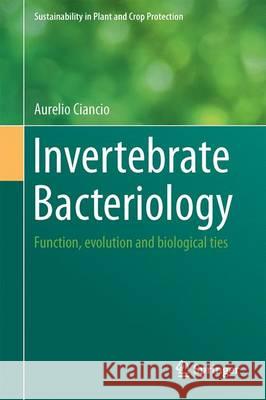
Aurelio Ciancio
Invertebrate Bacteriology: Function, Evolution and Biological Ties Ciancio, Aurelio 9789402408829 Springer - książkaWidoczna okładka, to zdjęcie poglądowe, a rzeczywista szata graficzna może różnić się od prezentowanej.

Invertebrate Bacteriology: Function, Evolution and Biological Ties

ISBN-13: 9789402408829 / Angielski / Twarda / 2016 / 349 str.

Aurelio Ciancio
cena 605,23 zł
(netto: 576,41 VAT:  5%)

Najniższa cena z 30 dni: 578,30 zł
Termin realizacji zamówienia:
ok. 22 dni roboczych
Bez gwarancji dostawy przed świętami

Darmowa dostawa!

This compendium reviews different processes acting on bacterial groups that evolved one or more relationships with members of the most important invertebrate Phyla. Starting from principles of basic bacteriology the book provides data on bacteria interactions with pests, animal or human diseases. Being present in all environments, from deep see to crops, animals or plants, invertebrates represent the most significant and ancient fraction of the eukaryotic biomass on earth. Their evolutive adaptations and links with bacteria, established over time scales of ages, range from vectored diseases to speciation, within a wide range of environmental niches and biocenosis, including oceanic hydrothermal vents. Main functional processes include pathogenicity, parasitism, transmission, immunity, symbiosis and speciation. A review about recent advances achieved in these research topics is given, focussing on one or more aspects concerning significant evolutive paths of bacteria and underlying functional links. Rather than proceeding through the order and structure of taxonomies, the volume is organized by processes, examining their functional role in different lineages, including but not limited to insects or nematodes. Processes involved in parasitism focus, at a finer level, on examples from many taxa. Molecular aspects underpinning these and other functional processes include the effects of horizontal gene transfer, the mechanisms active in immune defense and vectoring, and the antibacterial peptides. Finally, the effects of climate warming, biological invasions and agriculture are examined, with particular attention to farming and environment.


Kategorie:
Nauka, Biologia i przyroda
Kategorie BISAC:
Science > Life Sciences - Zoology - Entomology
Science > Bakteriologia
Technology & Engineering > Agriculture - General
Wydawca:
Springer
Seria wydawnicza:
Sustainability in Plant and Crop Protection
Język:
Angielski
ISBN-13:
9789402408829
Rok wydania:
2016
Wydanie:
2016
Numer serii:
000778756
Ilość stron:
349
Waga:
7.34 kg
Wymiary:
23.5 x 15.5
Oprawa:
Twarda
Wolumenów:
01

SECTION I - STRUCTURE AND GENERAL PROCESSES
I The Bacterial Cell  
1 Introduction
2 Structure and Functioning
2.1 The cell wall
2.2 Secretion Systems (SS)
2.3 Cytoskeleton
2.4 Chromosome and Plasmids
2.5 Flagella and Pili
2.6 Quorum Sensing
2.6 CRISPR-CAS System
3 Metabolism
4 Identification
II Bacteria and Eukaryotes Evolution
1 Introduction
2 Evolutionary Processes
3 Bacterial Diversity
4 Eukaryota and Metazoa Evolution
3 Symbiotic Relationships
1 Introduction
2 Symbiosis and Evolution
2.1 The Age of Symbiotic Associations
2.2 Endosymbiosis
2.3 Ectosymbionts (epibionts)
3 Functionality of symbiosis
3.1 Specificity
3.2 Acquisition
3.3 Benefits of Symbiosis
4 Adaptive Processes
4.1 Reproductive Manipulation
4.2 Host Adaptive Changes
4.3 Genome reduction
4 Parasitic Endosymbionts
1 Introduction
2 Parasitism Evolution
2.1 Red Queen Model
2.2 Genetic Races and Coevolution
3 Host-parasite Interactions
3.1 Environmental Factors
3.2 Resistance
3.3. Toxins
4 Diseases
4.1. Pathogenicity and Virulence
4.2 Specificity
4.3 Examples of Invertebrate Diseases
5 Travelling Bacteria: Vectors
<1 Introduction
2 Disease Transmission
2.1 Human diseases
2.2 Animal Diseases
6 Travelling Bacteria: Phoresy
1 Introduction
2 Insect-Associated Bacteria
3 Other Invertebrate Bacteria
3.1 Slug Parasitic Nematodes
3.2 Grass Gall Nematodes
3.3 Microbiovorous Nematodes
3.4 Anellids
SECTION II - MOLECULAR PROCESSES
<7 Defense and Immune Systems
1 Introduction
2 Origins and Evolution
3 Humoral defense
3.1 Melanization and Phenoloxidase Activity
3.2 Receptors and Recognition
3.3 Lectin-Mediated Complement and Activation
3.4 Antimicrobial Peptides (AMPs)
3.5 Heat shock proteins (HSPs)
3.6 Nitric Oxide (NO) and Reactive Oxygen Species (ROS)
3.7 Lysozyme and other Pathways
4 Cellular Defense Processes
4.1. Phagocytosis
4.2. Encapsulation and Hemolymph Coagulation
5 Selectivity, Specificity and Evasion
8 Horizontal Gene Transfer
1 Introduction
2 Evolutionary Benefits
2.1 Transferred Gene Categories
2.2 Acquisition and Insertion Mechanisms
2.3 Selection and Expression
3 HGT Dimensions
3.1 HGT Prevalence
3.2 Large  Genome Insertions
9 The -omics race
1 Introduction
2 Genomics
2.1 Organization
2.2 Genome Analysis Tools
2.3 Recombination
2.4 Genome Reductionism
3 Other –Omics
3.1 Metagenomics<
3.2 Metatranscriptomics
3.3 Metabolomics and Proteomics
SECTION III - APPLIED APPROACHES
10 Applications in Farming
1 Introduction
2 Applied Aspects
2.1 Crops
2.2 Aquatic Industries
3 Regulation
3.1 Biological Control and Management
3.2 Regulation mechanisms
4 GM Crops 
11 Environmental Interactions 
1 Introduction
2 Effects on Ecosystem Services
2.1 Invertebrate Services
2.2 Heavy Metals Pollution
2.3 Pesticides
<2.4 Oil Spills
3 Climate Changes
3.1 Effects on Diseases
3.2 Environmental Effects
Index

This compendium reviews different processes acting on bacterial groups that evolved one or more relationships with members of the most important invertebrate Phyla. Starting from principles of basic bacteriology the book provides data on bacteria interactions with pests, animal or human diseases. Being present in all environments, from deep see to crops, animals or plants, invertebrates represent the most significant and ancient fraction of the eukaryotic biomass on earth. Their evolutive adaptations and links with bacteria, established over time scales of ages, range from vectored diseases to speciation, within a wide range of environmental niches and biocenosis, including oceanic hydrothermal vents. Main functional processes include pathogenicity, parasitism, transmission, immunity, symbiosis and speciation. A review about recent advances achieved in these research topics is given, focussing on one or more aspects concerning significant evolutive paths of bacteria and underlying functional links. Rather than proceeding through the order and structure of taxonomies, the volume is organized by processes, examining their functional role in different lineages, including but not limited to insects or nematodes. Processes involved in parasitism focus, at a finer level, on examples from many taxa. Molecular aspects underpinning these and other functional processes include the effects of horizontal gene transfer, the mechanisms active in immune defense and vectoring, and the antibacterial peptides. Finally, the effects of climate warming, biological invasions and agriculture are examined, with particular attention to farming and environment. 



Udostępnij

Facebook - konto krainaksiazek.pl


Opinie o Krainaksiazek.pl na Opineo.pl

Partner Mybenefit

Krainaksiazek.pl w programie rzetelna firma Krainaksiaze.pl - płatności przez paypal

Czytaj nas na:

Facebook - krainaksiazek.pl
  • książki na zamówienie
  • granty
  • książka na prezent
  • kontakt
  • pomoc
  • opinie
  • regulamin
  • polityka prywatności

Zobacz:

  • Księgarnia czeska

  • Wydawnictwo Książkowe Klimaty

1997-2025 DolnySlask.com Agencja Internetowa

© 1997-2022 krainaksiazek.pl
     
KONTAKT | REGULAMIN | POLITYKA PRYWATNOŚCI | USTAWIENIA PRYWATNOŚCI
Zobacz: Księgarnia Czeska | Wydawnictwo Książkowe Klimaty | Mapa strony | Lista autorów
KrainaKsiazek.PL - Księgarnia Internetowa

Polityka prywatnosci - link
Krainaksiazek.pl - płatnośc Przelewy24
Przechowalnia Przechowalnia





