Introduction to Reliability Engineering » książka





Introduction to Reliability Engineering
ISBN-13: 9781119640561 / Angielski / Twarda / 2022 / 640 str.
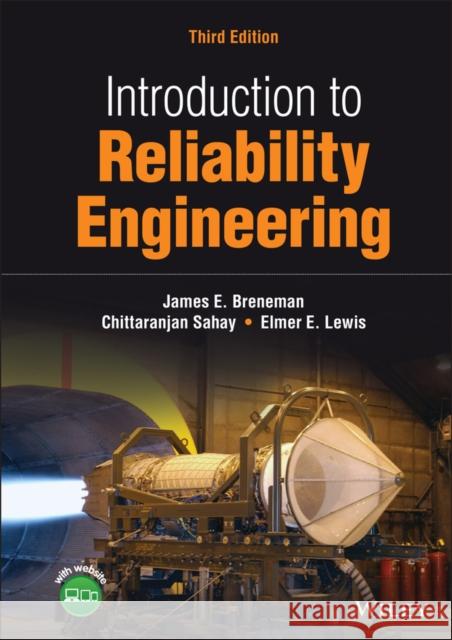
Introduction to Reliability Engineering
ISBN-13: 9781119640561 / Angielski / Twarda / 2022 / 640 str.
(netto: 593,86 VAT: 5%)
Najniższa cena z 30 dni: 615,94
ok. 30 dni roboczych.
Darmowa dostawa!
1 INTRODUCTION1.1 Reliability Defined1.2 Performance, Cost and Reliability1.3 Quality, Reliability and Safety Linkage1.4 Quality, Reliability and Safety Engineering Tasks1.5 Preview2 PROBABILITY AND DISCRETE DISTRIBUTIONS2.1 Introduction2.2 Probability ConceptsSample SpaceOutcomeEventProbability AxiomsMore than two eventsCombinations and Permutations2.3 Discrete Random VariablesProperties of Discrete VariablesThe Binomial DistributionThe Poisson DistributionConfidence IntervalsMotivation for Confidence IntervalsIntroduction to Confidence IntervalsBinomial Confidence IntervalsCumulative sums of the Poisson Distribution (Thorndike Chart)3 Exponential Distribution and Reliability Basics3.1 Introduction3.2 Reliability CharacterizationBasic definitionsThe Bathtub curve3.3 Constant Failure Rate modelThe Exponential DistributionDemand failuresTime determinations3.4 Time Dependent Failure rates3.5 Component Failures and Failure ModesFailure mode ratesComponent counts3.6 Replacements3.7 RedundancyActive and Standby RedundancyActive ParallelStandby ParallelConstant Failure Rate Models3.8 Redundancy limitationsCommon-mode failuresLoad sharingSwitching & Standby failuresCool, Warm and Hot Standby3.9 Multiply Redundant Systems1/N Active Redundancy1/N Standby Redundancym/N Active Redundancy3.10 Redundancy AllocationHigh and Low level redundancyFail-safe and Fail-to-DangerVoting Systems3.11 Redundancy in Complex ConfigurationsSerial-Parallel configurationsLinked configurations4 Continuous Distributions- Part 1 Normal & Related Distributions4.1 Introduction4.2 Properties of Continuous Random variablesProbability Distribution FunctionsCharacteristics of a Probability DistributionSample StatisticsTransformation of Variables4.3 Empirical Cumulative Distribution Function4.4 Uniform Distribution4.5 Normal and Related DistributionsThe Normal DistributionCentral Limit TheoremThe Central Limit Theorem in PracticeThe Log Normal DistributionLog Normal Distribution from a Physics of Failure Perspective4.6 Confidence IntervalsPoint & Interval EstimatesEstimate of the MeanNormal & Lognormal parameters5 Continuous Distributions- Part 2 Weibull & Extreme Value Distributions5.1 IntroductionThe "weakest link" theory from a Physics of Failure point of viewUses of Weibull and Extreme Value DistributionsOther ConsiderationsAge parameters and sample sizesEngineering Changes, Maintenance Plan Evaluation and Risk PredictionWeibulls with cusps or curvesSystem WeibullsNo failure WeibullsSmall sample Weibulls5.2 Statistics of the Weibull DistributionWeibull "Mathematics"The Weibull Probability PlotProbability Plotting Points--Median RanksHow to do a "Weibull Analysis"Weibull plots and their estimates of b, hThe 3-Parameter Weibull didn't work, what are my choices?The data has a "dogleg" bend or cusp when plotted on Weibull paper.Steep Weibull slopes (ß's) may hide problems.Low Time Failures and close Serial numbers---Batch problemsMaximum Likelihood Estimates of ß and etaWeibayes AnalysisWeibayes backgroundWeibull Analysis with failure times only and unknown times on remaining populationShifting Weibull ProcedureConfidence bounds and the Weibull DistributionArbitrary Censored DataThe Weibull Distribution in a System of Independent failure modes5.3 Extreme Value DistributionsSmallest & Largest Extreme Value distributionsExtreme Value and Weibull Distribution Point Estimates & Confidence Intervals5.4 Introduction to Risk analysisRisk Analysis "Mathematics"Supplement 1- Weibull derived from weakest link theorySupplement 2: Comparing two distributions using Supersmith(TM)6 RELIABILITY TESTING6.1 Introduction6.2 Attribute Testing (Binomial Testing)The Classical Success RunZero Failure Attribute TestsNon-ZERO Failure Attribute Tests6.3 Constant Failure Rate EstimatesCensoring on the RightMTTF EstimatesConfidence Intervals6.4 Weibull Substantiation and Reliability TestingZero-Failure Test Plans for Substantiation TestingWeibull Zero-Failure test Plans for Reliability TestingDesigning the Test PlanTotal Test TimeWhy not Simply Test to Failure?6.5 How to Reduce Test TimeRun (simultaneously) more test samples than you intend to failSudden Death TestingSequential Testing6.6 Normal & Lognormal Reliability Testing6.7 Accelerated Life TestingCompressed Time TestingAdvanced Stress Testing-Linear & Acceleration ModelsLinear Model Stress testingAdvanced Stress Testing - Acceleration ModelsThe Arrhenius ModelThe Inverse Power Law ModelOther Acceleration Models6.8 Reliability Enhancement ProceduresReliability Growth Modeling & TestingCalculation of Reliability Growth parametersGoodness of Fit tests for Reliability Growth ModelsEnvironmental Stress ScreeningWhat "Screens" are used for ESS?Thermal cyclingRandom VibrationOther ScreensHighly Accelerated Life TestsHighly Accelerated Stress ScreeningSupplement 1 Substantiation Testing: Characteristic Life multipliers for Zero failure Test at 80%, 90%, 95%, 99% ConfidenceSupplement 2 Substantiation Testing Tables for Zero failure Test at 80%, 90%, 95%, 99% ConfidenceSupplement 3 CRITICAL VALUES FOR CRAMER-VON MISES GOODNESS-OF-FIT TESTSupplement 4 Other Reliability Growth ModelsSupplement 5 Chi-Square Table7 Failure Modes & Effects Analysis (FMEA) - Design & Process7.1 Introduction7.2 Functional FMEA7.3 Design FMEADesign FMEA Procedure7.4 Process FMEA(PFMEA)7.5 FMEA SummaryFMEA OutputsFMEA Pitfalls that can be preventedSupplement 1 Shortcut tables for stalled FMEA TeamsSupplement 2 Future changes in FMEA ApproachesSupplement 3 DFMEA and PFMEA Forms8 LOADS, CAPACITY, AND RELIABILITY8.1 Introduction8.2 Reliability with a Single LoadingLoad ApplicationDefinitions8.3 Reliability and Safety FactorsNormal DistributionsLognormal DistributionsCombined Distributions8.4 Repetitive LoadingLoading VariabilityVariable Capacity8.5 The Bathtub Curve--ReconsideredSingle Failure ModesCombined Failure ModesSupplement 1: The Dirac Delta Distribution9 MAINTAINED SYSTEMS9.1 Introduction9.2 Preventive MaintenanceIdealized MaintenanceImperfect MaintenanceRedundant Components9.3 Corrective MaintenanceAvailabilityMaintainability9.4 Repair: Revealed FailuresConstant Repair RatesConstant Repair Times9.5 Testing and Repair: Unrevealed FailuresIdealized Periodic TestsReal Periodic Tests9.6 System AvailabilityRevealed FailuresUnrevealed Failures10 FAILURE INTERACTIONS10.1 Introduction10.2 Markov AnalysisTwo Independent ComponentsLoad-Sharing Systems10.3 Reliability with Standby SystemsIdealized SystemFailures in the Standby StateSwitching FailuresPrimary System Repair10.4 Multicomponent SystemsMulticomponent Markov FormulationsCombinations of Subsystems10.5 AvailabilityStandby RedundancyShared Repair CrewsMarkov Availability-Advantages & Disadvantages11 SYSTEM SAFETY ANALYSIS11.1 Introduction11.2 Product and Equipment Hazards11.3 Human ErrorRoutine OperationsEmergency Operations11.4 Methods of AnalysisFailure Modes Effects and Criticality Analysis (FMECA)Event Trees11.5 Fault TreesFault-Tree ConstructionNomenclatureFault ClassificationFault Tree ExamplesDirect Evaluation of Fault TreesQualitative EvaluationQuantitative EvaluationFault-Tree Evaluation by Cut SetsQualitative AnalysisQuantitative Analysis11.6 Reliability/Safety Risk AnalysisAPPENDICESA USEFUL MATHEMATICAL RELATIONSHIPSB BINOMIAL CONFIDENCE CHARTSC STANDARD NORMAL CDFD NONPARAMETRIC METHODS AND PROBABILITY PLOTTINGD1 IntroductionD2 Nonparametric Methods for Probability PlottingD3 Parametric MethodsD4 Goodness-of-FitSupplement 1 Further Details of Weibull Probability plottingSupplement 2 Median Rank adjustment for SUSPENDED TEST ITEMSSupplement 3 Generating a Probability Plot in MINITABANSWERS TO ODD-NUMBERED EXERCISESINDEX
James E. Breneman established and headed the Engineering Technical University at Pratt and Whitney, which provided more than 450,000 hours of instruction to employees during his tenure. Now retired, Breneman has taught many public course offerings for the ASQ Reliability & Risk Division. In 2018 he was awarded the Eugene L. Grant Medal for outstanding leadership in educational programs in quality.Chittaranjan Sahay holds the Vernon D. Roosa Distinguished Professor Chair in Manufacturing and Professorship in Mechanical Engineering at the University of Hartford, where he has held various offices including Associate Dean and Director of the Graduate Programs of the College of Engineering, Technology, and Architecture, and Chairman of the Mechanical Engineering Department.Elmer E. Lewis is Professor of Mechanical Engineering at Northwestern University's McCormick School of Engineering and Applied Science. He has held appointments as Visiting Professor at the University of Stuttgart and as Guest Scientist at the Nuclear Research Center at Karlsruhe, Germany. He has been a frequent consultant to Argonne and Los Alamos National Laboratories as well as a number of industrial firms.




Czytaj nas na:
1997-2026 DolnySlask.com Agencja Internetowa
KrainaKsiazek.PL - Księgarnia Internetowa


