• Wyszukiwanie zaawansowane
  • Kategorie
  • Kategorie BISAC
  • Książki na zamówienie
  • Promocje
  • Granty
  • Książka na prezent
  • Opinie
  • Pomoc
  • Załóż konto
  • Zaloguj się

Introduction to Programming with Modula-2 » książka

zaloguj się | załóż konto
Logo Krainaksiazek.pl

koszyk

konto

szukaj
topmenu
Księgarnia internetowa
Szukaj
Książki na zamówienie
Promocje
Granty
Książka na prezent
Moje konto
Pomoc
 
 
Wyszukiwanie zaawansowane
Pusty koszyk
Bezpłatna dostawa dla zamówień powyżej 20 złBezpłatna dostawa dla zamówień powyżej 20 zł

Kategorie główne

• Nauka
 [2950560]
• Literatura piękna
 [1849509]

  więcej...
• Turystyka
 [71097]
• Informatyka
 [151150]
• Komiksy
 [35848]
• Encyklopedie
 [23178]
• Dziecięca
 [617388]
• Hobby
 [139064]
• AudioBooki
 [1657]
• Literatura faktu
 [228597]
• Muzyka CD
 [383]
• Słowniki
 [2855]
• Inne
 [445295]
• Kalendarze
 [1464]
• Podręczniki
 [167547]
• Poradniki
 [480102]
• Religia
 [510749]
• Czasopisma
 [516]
• Sport
 [61293]
• Sztuka
 [243352]
• CD, DVD, Video
 [3414]
• Technologie
 [219456]
• Zdrowie
 [101002]
• Książkowe Klimaty
 [124]
• Zabawki
 [2311]
• Puzzle, gry
 [3459]
• Literatura w języku ukraińskim
 [254]
• Art. papiernicze i szkolne
 [8079]
Kategorie szczegółowe BISAC

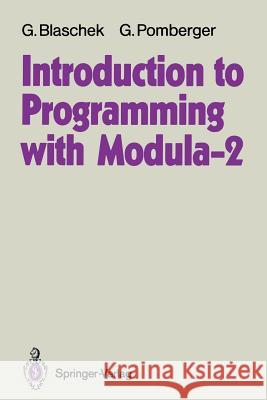
Introduction to Programming with Modula-2

ISBN-13: 9783540520382 / Angielski / Miękka / 1990 / 261 str.
Ga1/4nther Blaschek; Gustav Pomberger; G'Unther Blaschek
Introduction to Programming with Modula-2 Ga1/4nther Blaschek Gustav Pomberger G'Unther Blaschek 9783540520382 Springer-Verlag - książkaWidoczna okładka, to zdjęcie poglądowe, a rzeczywista szata graficzna może różnić się od prezentowanej.

Introduction to Programming with Modula-2

ISBN-13: 9783540520382 / Angielski / Miękka / 1990 / 261 str.

Ga1/4nther Blaschek; Gustav Pomberger; G'Unther Blaschek
cena 200,77
(netto: 191,21 VAT:  5%)

Najniższa cena z 30 dni: 192,74
Termin realizacji zamówienia:
ok. 22 dni roboczych
Dostawa w 2026 r.

Darmowa dostawa!

Intended to establish a solid foundation in the techniques of programming in Modula-2 for both the novice and the experienced programmer. The authors seek to familiarize the reader with the concept of algorithms and show how to implement algorithms in Modula-2.


Kategorie:
Informatyka, Bazy danych
Kategorie BISAC:
Computers > Languages - General
Computers > Programming - Compilers
Computers > Software Development & Engineering - General
Wydawca:
Springer-Verlag
Język:
Angielski
ISBN-13:
9783540520382
Rok wydania:
1990
Wydanie:
Softcover Repri
Ilość stron:
261
Waga:
0.42 kg
Wymiary:
23.5 x 15.5
Oprawa:
Miękka
Wolumenów:
01
Dodatkowe informacje:
Bibliografia
Wydanie ilustrowane

1 Algorithms.- 1.1 Examples of Algorithms.- 1.2 Definition of the Term “Algorithm”.- 1.3 Objects and Actions.- 1.4 Means of Representing Algorithms.- 1.5 Some Simple Algorithms.- 1.6 Algorithms and Programs.- Exercises.- 2 Principles of Program Development.- 2.1 The Principle of Stepwise Refinement.- 2.2 Data Capsules.- 2.3 The Module Concept.- Exercises.- 3 The Programming Language Modula-2.- 3.1 Notation for Language Description.- 3.2 Lexical Elements of Modula-2.- 3.2.1 Identifiers.- 3.2.2 Keywords.- 3.2.3 Numbers.- 3.2.4 Character Strings.- 3.2.5 Operators and Delimiters.- 3.2.6 Separation of Symbols.- 3.2.7 Comments.- Exercises.- 3.3 Elementary Program Structure.- 3.4 Declarations.- 3.4.1 Data Types.- 3.4.1.1 Predefined Data Types.- 3.4.1.2 Elementary User-Defined Data Types.- 3.4.1.3 Structured Data Types.- 3.4.2 Declaration of Constants.- 3.4.3 Declaration of Types.- 3.4.4 Declaration of Variables.- 3.4.5 Type Identity Among Objects.- Exercises.- 3.5 Expressions.- 3.5.1 Classes of Expressions.- 3.5.2 Operands.- 3.5.3 Operators.- 3.5.4 Rules for Writing Expressions.- 3.5.5 Expression Compatibility of Operands.- Exercises.- 3.6 Statements.- 3.6.1 Assignment.- 3.6.2 Conditional Statements.- 3.6.2.1 The IF Statement.- 3.6.2.2 The CASE Statement.- Exercises.- 3.6.3 Loops.- 3.6.3.1 The WHILE Statement.- 3.6.3.2 The REPEAT Statement.- 3.6.3.3 The FOR Statement.- 3.6.3.4 The LOOP and EXIT Statements.- Exercises.- 3.6.4 The WITH Statement.- Exercises.- 3.7 Procedures.- 3.7.1 Declaration of Procedures.- 3.7.2 Invocation of Procedures.- 3.7.3 The RETURN Statement.- 3.7.4 Function Procedures.- 3.7.5 Scope and Lifetime of Objects in Procedures.- 3.7.6 Data Exchange Between Procedures.- 3.7.7 ARRAY Parameters.- 3.7.8 Standard Procedures.- 3.7.9 PROCEDURE Types and Procedure Variables.- Exercises.- 3.8 The Module Concept of Modula-2.- 3.8.1 Local Modules.- 3.8.2 Scope and Lifetime of Objects in Modules.- 3.8.3 Modules and Separate Compilation.- 3.8.3.1 Definition Modules.- 3.8.3.2 Implementation Modules.- Exercises.- 3.9 System-Dependent Language Properties.- 3.9.1 The Module SYSTEM.- 3.9.2 Type Transfer Functions.- 3.9.3 Absolute Addressing of Variables.- 3.10 Processes and Coroutines.- 3.10.1 Creation and Synchronization of Processes.- 3.10.2 Interrupts and Priorities.- 4 Writing Modula-2 Programs.- 4.1 Some Simple Modula-2 Programs.- 4.2 Input/Output.- 4.2.1 The Module Terminal.- 4.2.2 The Modules InOut and RealInOut.- 4.2.3 The Module FileSystem.- 4.3 Dynamic Data Structures.- 4.3.1 Working with Dynamic Data Structures.- 4.3.2 Dynamically Created RECORDS with Variants.- 4.4 Recursion.- 4.4.1 Recursive Procedures.- 4.4.2 Inner Structure of Recursive Procedures and How They Work.- 4.4.3 Some Examples of Recursive Algorithms.- 4.4.4 Advantages and Disadvantages of Recursive Programming.- 4.5 Language Extension Modules.- 4.5.1 The Module MathLib0.- 4.5.2 The Module String.- 4.5.3 The Module Storage.- 4.6 Parallel Processes.- Exercises.- 5 Programming Style and Program Testing.- 5.1 Programming Style.- 5.1.1 Structure.- 5.1.2 Naming Conventions.- 5.1.3 Commentary.- 5.1.4 Outward Form of Programs.- 5.2 Program Testing.- 5.2.1 Types of Error.- 5.2.2 The Testing Procedure.- 5.2.3 Built-in Testing and Debugging Aids.- 5.2.4 Debuggers.- 6 Software Engineering with Modula-2.- 6.1 Modula-2 as a Tool for Specification.- 6.2 Modularizing and Structuring.- 6.3 Data Capsules and Data Abstraction.- 6.4 Separate Compilation and Type Binding.- Appendix A: Syntax Diagrams.- Appendix B: Predefined Identifiers.- Appendix C: Compatibility Rules.- Appendix D: ASCII Table.- References.

Professor Gustav Pomberger wurde 1949 in Gosau geboren und absolvierte das Studium der Elektrotechnik und Informatik. Erste berufliche Tätigkeit als Konstruktionsingenieur im Elektromaschinenbau, 1980 Promotion, 1984 Professor an der Universität Zürich. Seit 1987ordentlicher Professor für Wirtschaftsinformatik und Software Engineering an der Johannes Kepler Universität in Linz.


Udostępnij

Facebook - konto krainaksiazek.pl


Opinie o Krainaksiazek.pl na Opineo.pl

Partner Mybenefit

Krainaksiazek.pl w programie rzetelna firma Krainaksiaze.pl - płatności przez paypal

Czytaj nas na:

Facebook - krainaksiazek.pl
  • książki na zamówienie
  • granty
  • książka na prezent
  • kontakt
  • pomoc
  • opinie
  • regulamin
  • polityka prywatności

Zobacz:

  • Księgarnia czeska

  • Wydawnictwo Książkowe Klimaty

1997-2025 DolnySlask.com Agencja Internetowa

© 1997-2022 krainaksiazek.pl
     
KONTAKT | REGULAMIN | POLITYKA PRYWATNOŚCI | USTAWIENIA PRYWATNOŚCI
Zobacz: Księgarnia Czeska | Wydawnictwo Książkowe Klimaty | Mapa strony | Lista autorów
KrainaKsiazek.PL - Księgarnia Internetowa

Polityka prywatnosci - link
Krainaksiazek.pl - płatnośc Przelewy24
Przechowalnia Przechowalnia






