• Wyszukiwanie zaawansowane
  • Kategorie
  • Kategorie BISAC
  • Książki na zamówienie
  • Promocje
  • Granty
  • Książka na prezent
  • Opinie
  • Pomoc
  • Załóż konto
  • Zaloguj się

Introduction to Nanoscience and Nanotechnology » książka


zaloguj się | załóż konto
Logo Krainaksiazek.pl

koszyk

konto

szukaj
topmenu
Księgarnia internetowa
Szukaj
Książki na zamówienie
Promocje
Granty
Książka na prezent
Moje konto
Pomoc
 
 
Wyszukiwanie zaawansowane
Pusty koszyk
Bezpłatna dostawa dla zamówień powyżej 20 złBezpłatna dostawa dla zamówień powyżej 20 zł

Kategorie główne

• Nauka
 [2949965]
• Literatura piękna
 [1857847]

  więcej...
• Turystyka
 [70818]
• Informatyka
 [151303]
• Komiksy
 [35733]
• Encyklopedie
 [23180]
• Dziecięca
 [617748]
• Hobby
 [139972]
• AudioBooki
 [1650]
• Literatura faktu
 [228361]
• Muzyka CD
 [398]
• Słowniki
 [2862]
• Inne
 [444732]
• Kalendarze
 [1620]
• Podręczniki
 [167233]
• Poradniki
 [482388]
• Religia
 [509867]
• Czasopisma
 [533]
• Sport
 [61361]
• Sztuka
 [243125]
• CD, DVD, Video
 [3451]
• Technologie
 [219309]
• Zdrowie
 [101347]
• Książkowe Klimaty
 [123]
• Zabawki
 [2362]
• Puzzle, gry
 [3791]
• Literatura w języku ukraińskim
 [253]
• Art. papiernicze i szkolne
 [7933]
Kategorie szczegółowe BISAC

Introduction to Nanoscience and Nanotechnology

ISBN-13: 9781119172239 / Angielski / Twarda / 2021 / 416 str.
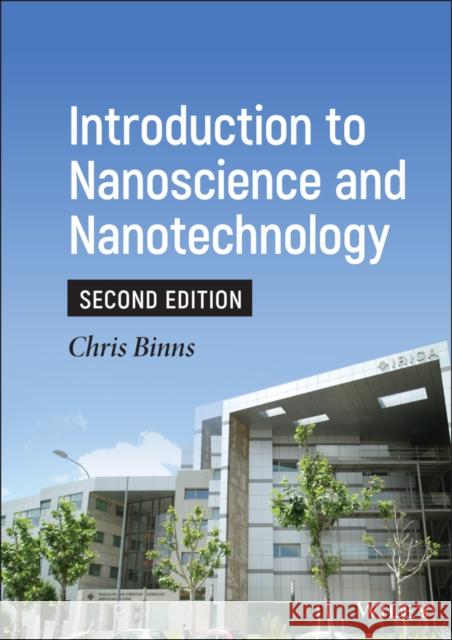
Chris Binns
Introduction to Nanoscience and Nanotechnology Chris Binns   9781119172239 John Wiley & Sons Inc - książkaWidoczna okładka, to zdjęcie poglądowe, a rzeczywista szata graficzna może różnić się od prezentowanej.

Introduction to Nanoscience and Nanotechnology

ISBN-13: 9781119172239 / Angielski / Twarda / 2021 / 416 str.

Chris Binns
cena 481,40
(netto: 458,48 VAT:  5%)

Najniższa cena z 30 dni: 477,46
Termin realizacji zamówienia:
ok. 30 dni roboczych
Bez gwarancji dostawy przed świętami

Darmowa dostawa!

The book presents nanoscience and nanotechnology to a broad audience that does not necessarily have a scientific background. This book starts with the fundamental physicochemical properties of nanoparticles and nanostructures, and discusses how these special properties can be manipulated to produce high-performance materials and devices. In the following chapters, the scope is broadened to cover naturally occurring nanoparticles and artificially-engineered carbon nanoparticles, their mechanical properties, and their importance to the rest of nanotechnology. The book also covers the two design ideologies for manufacturing nanostructures, the bottom-up and top-down methods, and discusses how these two can be combined to allow for the imaging, probing and manipulation of nanostructures. The remainder of the book surveys the current state of nanotechnology, including the use of single-nanoparticle devices in data storage, electronics, optics, and solar power; advances in nanoparticle manufacturing and biotechnology that can lead to powerful new cancer treatments; and the use of nanotechnology to study the "quantum vacuum."


Kategorie:
Technologie
Kategorie BISAC:
Technology & Engineering > Nanotechnology & MEMS
Technology & Engineering > Electrical
Science > Nanoscience
Wydawca:
John Wiley & Sons Inc
Język:
Angielski
ISBN-13:
9781119172239
Rok wydania:
2021
Ilość stron:
416
Waga:
1.03 kg
Wymiary:
25.65 x 17.78 x 2.29
Oprawa:
Twarda
Wolumenów:
01
Dodatkowe informacje:
Glosariusz/słownik

Preface to Second Edition ixAcknowledgments xIntroduction to Second Edition 11 Size Matters 131.1 The Fundamental Importance of Size 131.2 The Magnetic Behavior of Nanoparticles 161.3 The Mechanical Properties of Nanostructured Materials 261.4 The Chemical Properties of Nanoparticles 271.5 Nanoparticles Interacting with Bacteria and Viruses 29Problems 31References 322 Nanoparticles and the Environment 352.1 Nanoparticles in the Atmosphere 352.2 Atmospheric Nanoparticles and Health 392.2.1 Entry Via the Lungs 392.2.2 Entry Via the Intestines 422.2.3 Nanoparticles and the Skin 432.2.4 Air Quality Specifications 442.3 Nanoparticles and Clouds 442.4 Marine Aerosol 482.5 Effect of Cosmic Rays on Atmospheric Aerosol 502.6 Nanoparticles in Space 512.7 Environmental Applications of Nanoparticles 522.7.1 Water Remediation Using Magnetic Nanoparticles 522.7.2 Conversion of Waste Plastics to High-Grade Materials (Upcycling) 55Problems 57References 593 Carbon Nanostructures: Bucky Balls and Nanotubes 613.1 Why Carbon? 613.2 Discovery of the First Fullerene - C60 623.3 Structural Symmetry of the Closed Fullerenes 643.4 Smaller Fullerenes and "Shrink-Wrapping" Atoms 683.5 Larger Fullerenes 703.6 Electronic Properties of Individual Fullerenes 723.7 Materials Produced by Assembling Fullerenes (Fullerites and Fullerides) 763.8 Discovery of Carbon Nanotubes 813.9 Structure of Single-Wall Carbon Nanotubes (SWNTs) 823.10 Electronic Properties of SWNTs 843.11 Electronic Transport in Carbon Nanotubes 863.12 Field Emission from Carbon Nanotubes 873.13 Mechanical Properties of Nanotubes 883.14 Thermal Conductivity of Nanotubes 923.15 Carbon Nanohorns 933.16 Carbon Nanobuds and Pea Pods 94Problems 95References 964 Graphene 994.1 Background 994.1.1 Low-Dimensional Materials 994.1.2 Discovery of Graphene 1014.2 Electrical Properties of Graphene 1014.2.1 Electrical Conduction in Normal Metals 1014.2.2 Electrical Conduction in Semiconductors 1044.2.3 Electrical Conduction in Graphene 1074.3 Graphene as a Testbed for Relativistic Quantum Effects 1124.4 Thermal Conductivity of Graphene 1124.5 Mechanical Strength of Graphene 1164.6 Superconductivity in Graphene Bilayers 1174.7 Current Technological Applications of Graphene 1204.7.1 Graphene Batteries 1204.7.2 Graphene Nanoelectromechanical Systems (NEMS) Accelerometers 1244.7.3 Graphene Membranes for Water Desalination 1254.8 Summary 126Problems 126References 1285 The Nanotechnology Toolkit 1315.1 Making Nanostructures Using Bottom-Up Methods 1315.1.1 Making Nanoparticles Using Supersaturated Vapor 1315.1.2 Sources Producing Nanoparticle Beams in Vacuum 1335.1.3 Synthesis of Alloy, Core-Shell, and Janus Nanoparticles 1375.1.4 Mass Selection of Charged Nanoparticle Beams in Vacuum 1415.1.5 Aerodynamic Lensing and Mass Selection of Neutral Nanoparticles 1475.1.6 Plasma, Spark and Flame Metal Aerosol Sources 1475.1.7 Size Selection of Nanoparticles in Aerosols 1505.1.8 Chemical Synthesis of Nanoparticles in Liquid Suspensions 1535.1.9 Biological Synthesis of Magnetic Nanoparticles 1565.1.10 Gas-Phase Synthesis of Hydrosols 1575.1.11 Size Determination of Nanoparticles in Liquids 1575.1.12 Synthesis of Graphene 1605.1.13 Synthesis of Fullerenes 1625.1.14 Synthesis of Carbon Nanotubes 1635.1.15 Controlling the Growth of SWNTs 1655.2 Making Nanostructures Using Top-Down Methods 1675.2.1 Electron-Beam Lithography 1685.2.2 Manufacturing Nanostructures Using Focused Ion Beams 1715.3 Combining Bottom-up and Top-Down Nanostructures 1765.4 Imaging, Probing, and Manipulating Nanostructures 1805.4.1 Scanning Tunneling Microscope 1805.4.2 Manipulating Atoms and Molecules with STM 1855.4.3 Scanning Tunneling Spectroscopy (STS) 1895.4.4 Atomic Force Microscopy 1925.4.5 AFM Imaging of Biological Samples in Liquids 1955.4.6 Dip-Pen Nanolithography 1985.4.7 Electron Microscopy 200Problems 204References 2066 Single-Nanoparticles Devices 2116.1 Data Storage on Magnetic Nanoparticles 2116.2 Quantum Dots 2186.3 Quantum Dot Solar Cells 2226.4 Nanoparticles as Transistors 2266.5 Carbon Nano-Electronics 2326.5.1 Fullerene SET 2326.5.2 Porphyrin Molecule SET 2346.5.3 Carbon Nanotube SET 2366.5.4 Limitations of SETs in Applications and Moving to Multiple Transistor Devices 2366.6 Carbon Nanotube Light Emitters and Detectors 239Problems 240References 2407 Hydrosols, Nanobubbles, and Nanoscale Interfaces 2437.1 Reynolds Number 2437.2 Brownian Motion 2457.3 Stability of Hydrosols 2507.4 Nanobubbles 2577.4.1 Fundamental Considerations 2577.4.2 Synthesis of Bulk Nanobubbles 2607.4.3 Properties of Bulk Nanobubbles 2627.4.4 Surface Nanobubbles 2657.4.5 Applications of Nanobubbles 2677.5 Nanofluidics 271Problems 277References 2788 Magic Beacons and Magic Bullets: The Medical Applications of Functional Nanoparticles 2818.1 Nanoparticles Interacting with Living Organisms 2828.1.1 Targeted Nanovectors for Therapy and Diagnosis 2828.1.2 Uptake of Nanomaterials by the Body 2848.1.3 Types of Core Nanoparticle in Nanovectors 2868.1.4 Targeting to Tumors by Enhanced Permeability and Retention (EPR) 2888.1.5 Some Elementary Cell Biology 2898.1.5.1 The Outer Cell Membrane (Plasma Membrane) 2908.1.5.2 Membrane Proteins 2918.1.5.3 Internal Cell Structure 2928.1.5.4 Cytoskeleton 2928.1.6 "Trojan horse" Targeting Using Stem Cells and Macrophages 2948.1.7 Molecular Targeting 2968.1.8 Magnetic Targeting 3028.2 Treatment of Tumors by Hyperthermia 3048.2.1 Biological Response to Heating 3048.2.2 Magnetic Nanoparticle Hyperthermia (MNH) 3078.2.2.1 Current State of the art in Clinical Trials 3078.2.2.2 Limitations on the Applied RF Magnetic Field 3098.2.2.3 Heating Mechanisms of Magnetic Nanoparticles in an AMF 3118.2.2.4 New Nanoparticles for MNH 3168.2.3 Optical Hyperthermia Using Near-Infrared Radiation 3188.2.4 Hyperthermia with Carbon Nanotubes 3268.3 Medical Diagnosis and "Theranostics" using Nanomaterials 3278.3.1 Magnetic Resonance Imaging (MRI) and Contrast Enhancement Using Magnetic Nanoparticles 3288.3.2 Magnetic Particle Imaging (MPI) 3318.3.3 Imaging Using Au Nanoparticles 3378.3.4 Imaging Using QDs 3398.4 Antibacterial and Antiviral Applications of Nanoparticles 3438.4.1 Nanoparticle Delivery Systems for Covid 19 Vaccines 3438.4.2 Antibacterial Action of Ag Nanoparticles 3438.4.3 Antiviral Action of Nanoparticles 346Problems 347References 3489 Radical Nanotechnology 3559.1 Locomotion for Nanobots and Nanofactories 3569.1.1 Movement Within the Nanofactory using Kinesin 3569.1.2 Moving Small Cargo in the Nanofactory: DNA Walkers 3649.1.3 Propulsion for Swimmers 3699.2 Onboard Processing for Nanomachines 3749.3 Medical Micro/Nanobots 3749.4 Molecular Assembly 376Problems 379References 37910 Prodding the Cosmic Fabric 38110.1 Zero-Point Energy of Space 38110.2 The Casimir Force 38510.3 The Casimir Force in Micro-and Nanomachines 38910.4 Controlling the Casimir Force Using Phase-Change Materials 39410.5 Repulsive Casimir Forces 395Problems 397References 398Glossary 401Index 403

Chris Binns, PhD, is Beatriz Gallindo Professor at the University of Castilla-La Mancha, Spain and Professor of Nanoscience in the Department of Physics and Astronomy at the University of Leicester, United Kingdom. His research is most recently focused on magnetic nanoparticles and their biomedical applications.


Udostępnij

Facebook - konto krainaksiazek.pl


Opinie o Krainaksiazek.pl na Opineo.pl

Partner Mybenefit

Krainaksiazek.pl w programie rzetelna firma Krainaksiaze.pl - płatności przez paypal

Czytaj nas na:

Facebook - krainaksiazek.pl
  • książki na zamówienie
  • granty
  • książka na prezent
  • kontakt
  • pomoc
  • opinie
  • regulamin
  • polityka prywatności

Zobacz:

  • Księgarnia czeska

  • Wydawnictwo Książkowe Klimaty

1997-2025 DolnySlask.com Agencja Internetowa

© 1997-2022 krainaksiazek.pl
     
KONTAKT | REGULAMIN | POLITYKA PRYWATNOŚCI | USTAWIENIA PRYWATNOŚCI
Zobacz: Księgarnia Czeska | Wydawnictwo Książkowe Klimaty | Mapa strony | Lista autorów
KrainaKsiazek.PL - Księgarnia Internetowa

Polityka prywatnosci - link
Krainaksiazek.pl - płatnośc Przelewy24
Przechowalnia Przechowalnia





