• Wyszukiwanie zaawansowane
  • Kategorie
  • Kategorie BISAC
  • Książki na zamówienie
  • Promocje
  • Granty
  • Książka na prezent
  • Opinie
  • Pomoc
  • Załóż konto
  • Zaloguj się

Introduction to Cybersecurity » książka


zaloguj się | załóż konto
Logo Krainaksiazek.pl

koszyk

konto

szukaj
topmenu
Księgarnia internetowa
Szukaj
Książki na zamówienie
Promocje
Granty
Książka na prezent
Moje konto
Pomoc
 
 
Wyszukiwanie zaawansowane
Pusty koszyk
Bezpłatna dostawa dla zamówień powyżej 20 złBezpłatna dostawa dla zamówień powyżej 20 zł

Kategorie główne

• Nauka
 [2949965]
• Literatura piękna
 [1857847]

  więcej...
• Turystyka
 [70818]
• Informatyka
 [151303]
• Komiksy
 [35733]
• Encyklopedie
 [23180]
• Dziecięca
 [617748]
• Hobby
 [139972]
• AudioBooki
 [1650]
• Literatura faktu
 [228361]
• Muzyka CD
 [398]
• Słowniki
 [2862]
• Inne
 [444732]
• Kalendarze
 [1620]
• Podręczniki
 [167233]
• Poradniki
 [482388]
• Religia
 [509867]
• Czasopisma
 [533]
• Sport
 [61361]
• Sztuka
 [243125]
• CD, DVD, Video
 [3451]
• Technologie
 [219309]
• Zdrowie
 [101347]
• Książkowe Klimaty
 [123]
• Zabawki
 [2362]
• Puzzle, gry
 [3791]
• Literatura w języku ukraińskim
 [253]
• Art. papiernicze i szkolne
 [7933]
Kategorie szczegółowe BISAC

Introduction to Cybersecurity

ISBN-13: 9783031414626 / Angielski / Miękka / 2023
Robin Sharp
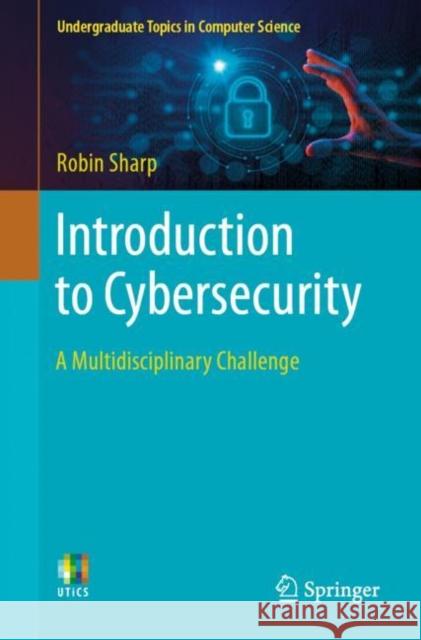
Introduction to Cybersecurity Robin Sharp 9783031414626 Springer Nature Switzerland - książkaWidoczna okładka, to zdjęcie poglądowe, a rzeczywista szata graficzna może różnić się od prezentowanej.

Introduction to Cybersecurity

ISBN-13: 9783031414626 / Angielski / Miękka / 2023

Robin Sharp
cena 262,25 zł
(netto: 249,76 VAT:  5%)

Najniższa cena z 30 dni: 250,57 zł
Termin realizacji zamówienia:
ok. 22 dni roboczych
Bez gwarancji dostawy przed świętami

Darmowa dostawa!

This book provides an introduction to the basic ideas involved in cybersecurity, whose principal aim is protection of IT systems against unwanted behaviour mediated by the networks which connect them. Due to the widespread use of the Internet in modern society for activities ranging from social networking and entertainment to distribution of utilities and public administration, failures of cybersecurity can threaten almost all aspects of life today.Cybersecurity is a necessity in the modern world, where computers and other electronic devices communicate via networks, and breakdowns in cybersecurity cost society many resources.The aims of cybersecurity are quite simple: data must not be read, modified, deleted or made unavailable by persons who are not allowed to. To meet this major challenge successfully in the digitally interconnected world, one needs to master numerous disciplines because modern IT systems contain software, cryptographic modules, computing units, networks, and human users—all of which can influence the success or failure in the effort.Topics and features:

  • Introduces readers to the main components of a modern IT system: basic hardware, networks, operating system, and network-based applications
  • Contains numerous theoretical and practical exercises to illustrate important topics
  • Discusses protective mechanisms commonly used to ensure cybersecurity and how effective they are
  • Discusses the use of cryptography for achieving security in IT systems
  • Explains how to plan for protecting IT systems based on analysing the risk of various forms of failure
  • Illustrates how human users may affect system security and ways of improving their behaviour
  • Discusses what to do if a security failure takes place
  • Presents important legal concepts relevant for cybersecurity, including the concept of cybercrime
This accessible, clear textbook is intended especially for students starting a relevant course in computer science or engineering, as well as for professionals looking for a general introduction to the topic.Dr. Robin Sharp is an emeritus professor in the Cybersecurity Section at DTU Compute, the Dept. of Applied Mathematics and Computer Science at the Technical University of Denmark (DTU).

Kategorie:
Informatyka
Kategorie BISAC:
Computers > Security - Cryptography & Encryption
Computers > Internet - Online Safety & Privacy
Wydawca:
Springer Nature Switzerland
Seria wydawnicza:
Undergraduate Topics in Computer Science
Język:
Angielski
ISBN-13:
9783031414626
Rok wydania:
2023
Waga:
0.86 kg
Wymiary:
23.5 x 15.5
Oprawa:
Miękka
Dodatkowe informacje:
Wydanie ilustrowane

• Chapter 1. Introduction: Why cybersecurity?

Aim: To provide a general introduction to basic concepts.

Information security vs. cybersecurity. The development of the Internet. Cyberattacks today. Security targets and policies. Cybersecurity as a multi-disciplinary challenge.

Reader’s guide.

• Chapter 2. Technique and human beings

Aim: To describe how human weaknesses can lead to security failures.

What are psychological attacks based on? Curiosity, helpfulness, sympathy and hate, belief in authority, making rapid decisions. Phishing. Humans vs. machines.

• Chapter 3. Risk

Aim: To explain the meaning of risk, and how to analyse it.

What is risk? What are “threats” in IT systems? Countering risk. Risk management. Systematic security analysis (ISO/IEC 27002; OCTAVE). Risk management as a PDCA

process.

• Chapter 4. Cryptography

Aim: To describe basic techniques of cryptography as a tool to provide confidentiality.

Some central concepts: Cryptosystems and cryptanalysis. Classical symmetric encryption. Modern ideas: One-time pads, confusion and diffusion, DES, AES and

symmetric stream ciphers. Asymmetric cryptosystems such as RSA.

• Chapter 5. Applied Cryptography

Aim: To show how cryptography can be used to achieve aims other than confidentiality.

Integrity (hash functions and MAC). Electronic signatures with RSA and DSS. Planning for the future. Authentication. Key distribution. Certificates and trust models.

Electronic identities.

• Chapter 6. Communication networks

Aim: To explain how communication networks such as the Internet work.

Basic network concepts: Layered architectures, services and protocols. Communication in the Internet: TCP and UDP Ports, functions in TCP and IP, DNS. How do the

layers work together? Technology: Shared cable-based media, wireless networks, mobile telephones in the internet.

• Chapter 7. Network Applications

Aim: To introduce some simple Internet applications.

Some simple applications in the Internet: Mail transfer, MIME, transfer of web pages. How do they work and where are the challenges for cybersecurity?

• Chapter 8. Network Security

Aim: To illustrate how networks are commonly protected against various forms of attack.

Cryptographic protection in the Internet layers. Mail security. Tunneling, VPNs and Tor. SSL/TLS for securing application protocols. Firewalls: types, placement and risks.

Intrusion Detection Systems (IDS). Security in wireless networks: WiFi, Bluetooth, GSM and UMTS. Eavesdropping on mobile networks. Denial of Service (DoS) attacks in

the Internet layers. Distributed DoS. Permanent DoS. Measures against DoS attacks. Risks and countermeasures in DNS and SNMP. Critical infrastructure protection.

• Chapter 9. Security in operating systems

Aim: To explain how the operating system supports security.

User authentication: Biometrics, passwords, pattern locks and MFA. Authentication through the net. Authorisation, protection & rights: MAC, DAC and RBAC. Access

Control mechanisms. Access Control in file systems, memory, hardware units, and the CPU. Bypassing access control: Rootkits. Reference Monitors. Encryption in the

operating system. Updating the operating system. What the OS cannot do.

• Chapter 10. Software security

Aim: To explain how security failures arise in software, and how they can be avoided or counteracted.

Classes of security failure in software: Buffer overflow, incomplete mediation and Time-of-check-to-Time-of-use errors. Detection of programming errors. Malicious code.

Antivirus systems. SQL and LDAP injection and countermeasures. Vulnerabilities in HTTP and in web servers. Cross-site scripting. Dynamic generation of web content.

• Chapter 11. Incident handling and system availability

Aim: To describe how to plan for and deal with security incidents of various degrees of seriousness.

Reacting to security incidents: Incident reporting. Investigation of incidents in ordinary computers and smartphones. Dealing with encrypted units. Business Continuity

Planning. Disaster Recovery Planning. The NIST Cybersecurity Framework. Security awareness.

• Chapter 12. Law and ethics

Aim: To review how the law helps the fight against cybercrime, and some ethical issues not covered by the law.

Computer crime and the Council of Europe conventions on cybercrime and terrorism. Protection of personal data and GDPR. Protection of healthcare data. Ethical

issues: Datamining, tracking and protection against breaches of privacy.

• Epilogue

Aim: To provoke the reader to think about the extent to which true cybersecurity can be achieved in practice.

• Appendix A. What’s in the box?

Aim: To explain what IT systems are made up of.

Hardware. Software. Networks. Systems and Systems of Systems.

• Appendix B. Mathematics

Basic concepts. Euclid’s algorithm. Euclid’s extended algorithm. The Chinese remainder theorem. Why does RSA work? The birthday paradox.

• Appendix C. Acronyms

• References

• Index

After obtaining a Ph.D in physics from Cambridge University, Robin Sharp has been working in the IT area since the early 1970s. He has many years experience in the design and analysis of computer networks, both at the academic level and in collaboration with industrial companies. He is currently an emeritus profesor at DTU Compute, the Department of Applied Mathematics and Computer Science at the Technical University of Denmark (DTU), where he has been employed since 1973.

He is the author of the book “Principles of Protocol Design” on network protocols, whose second edition was published by Springer Verlag in 2008. His book “What’s Cybersecurity All About?”, aimed at ordinary computer users, was published by Polyteknisk Forlag, the university publishers at DTU, in 2020.

Since the 1990s, the main focus of his work has been on security in networks and methods for secure design of computer systems. This has included work on aspects of human interaction with computer systems and its affect on cybersecurity. He has had the operative responsibility for IT security as CISO at DTU Compute.

Robin Sharp is an experienced teacher, having taught courses on computer security and network security since the middle 1990s, including a course for non-IT specialists, which has been an inspiration for the current book.

Cybersecurity is a necessity in the modern world, where computers and other electronic devices communicate via networks, and breakdowns in cybersecurity cost society many resources.

The aims of cybersecurity are quite simple: data must not be read, modified, deleted or made unavailable by persons who are not allowed to. To meet this major challenge successfully in the digitally interconnected world, one needs to master numerous disciplines because modern IT systems contain software, cryptographic modules, computing units, networks, and human users—all of which can influence the success or failure in the effort.

Topics and features:

  • Introduces readers to the main components of a modern IT system: basic hardware, networks, operating system, and network-based applications
  • Contains numerous theoretical and practical exercises to illustrate important topics
  • Discusses protective mechanisms commonly used to ensure cybersecurity and how effective they are
  • Discusses the use of cryptography for achieving security in IT systems
  • Explains how to plan for protecting IT systems based on analysing the risk of various forms of failure
  • Illustrates how human users may affect system security and ways of improving their behaviour
  • Discusses what to do if a security failure takes place
  • Presents important legal concepts relevant for cybersecurity, including the concept of cybercrime


This accessible, clear textbook is intended especially for students starting a relevant course in computer science or engineering, as well as for professionals looking for a general introduction to the topic.

Dr. Robin Sharp is an emeritus professor in the Cybersecurity Section at DTU Compute, the Dept. of Applied Mathematics and Computer Science at the Technical University of Denmark (DTU).


Udostępnij

Facebook - konto krainaksiazek.pl


Opinie o Krainaksiazek.pl na Opineo.pl

Partner Mybenefit

Krainaksiazek.pl w programie rzetelna firma Krainaksiaze.pl - płatności przez paypal

Czytaj nas na:

Facebook - krainaksiazek.pl
  • książki na zamówienie
  • granty
  • książka na prezent
  • kontakt
  • pomoc
  • opinie
  • regulamin
  • polityka prywatności

Zobacz:

  • Księgarnia czeska

  • Wydawnictwo Książkowe Klimaty

1997-2025 DolnySlask.com Agencja Internetowa

© 1997-2022 krainaksiazek.pl
     
KONTAKT | REGULAMIN | POLITYKA PRYWATNOŚCI | USTAWIENIA PRYWATNOŚCI
Zobacz: Księgarnia Czeska | Wydawnictwo Książkowe Klimaty | Mapa strony | Lista autorów
KrainaKsiazek.PL - Księgarnia Internetowa

Polityka prywatnosci - link
Krainaksiazek.pl - płatnośc Przelewy24
Przechowalnia Przechowalnia





